Psychology says people who add things they've already done to their to-do list just to cross them off aren't being quirky or performing productivity - they're children who grew up in homes where what you accomplished was the only evidence you had earned the right to exist
The list I wrote last Tuesday
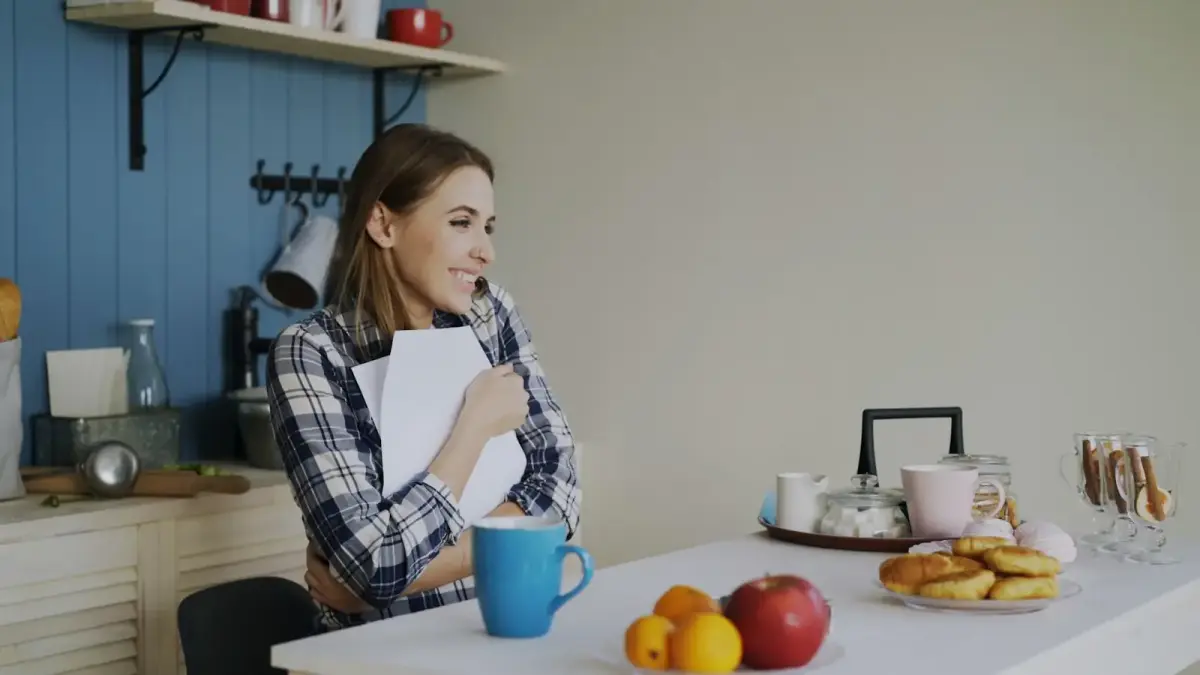
I sat down at my kitchen table last Tuesday morning with a cup of coffee that was already half gone and a pen that was almost out of ink, and I wrote “make coffee” on a fresh page of my notebook. Then I crossed it off.
I’d already made the coffee. I was drinking it. But something in me needed to see it written and removed. Something in me needed the line through it.
Then I wrote “reply to Laura’s text.” I’d done that in bed twenty minutes earlier, half-awake, thumb moving before my brain caught up. But onto the list it went. And then the line through it.
By the time I wrote the first thing I hadn’t actually done yet - “call the dentist” - I already had four items crossed off. Four things completed. Four small proofs that I had been busy, that I had not wasted the morning, that my existence between waking up and sitting down had been productive enough to justify sitting down.
I used to laugh about this. I used to call it my little quirk, my “type-A nonsense.” But I stopped laughing the day I realized I couldn’t sit on my own couch on a Saturday afternoon without a voice in my head asking what I had done to earn it.
What the research actually says about this behavior
There’s a surface-level explanation for this habit that gets passed around a lot. Dopamine. The completion effect. Your brain releases a small hit of reward when you check something off, and so you retroactively add finished tasks to get that neurochemical pat on the back.
That explanation isn’t wrong, exactly. A 2011 study published in the Journal of Personality and Social Psychology by researchers Baumeister and Masicampo found that the act of making a plan - writing tasks down - reduced the cognitive burden of unfinished goals. The brain treats a written plan almost like a completed action. It calms down.
But that research was about planning. About the relief of organizing what’s ahead. It doesn’t fully explain why someone would write down what’s behind them. Why a woman at fifty-three writes “showered” on a Tuesday morning list and draws a line through it like she’s filing a report.
The deeper explanation lives somewhere else entirely. It lives in the homes we grew up in. It lives in what rest meant - or didn’t mean - when we were seven, or twelve, or sixteen.
A 2019 study in Frontiers in Psychology found that children raised in environments where love or approval was conditional on performance developed what researchers call “contingent self-worth” - a sense of identity that is entirely dependent on output. These children don’t learn that they matter. They learn that what they do matters, and that they matter only as long as they keep doing it.
The to-do list with pre-crossed items is not a productivity tool. It’s a self-worth document.
The house where doing nothing was noticed
Think about the home you grew up in. Not the big moments - not the arguments or the holidays or the things a therapist might flag. Think about the small ones. Think about a random Tuesday when you were eleven.
What happened if your mother walked into the living room and you were just sitting there? Not reading, not cleaning, not doing homework. Just sitting.
In some homes, nothing happened. The parent walked through, maybe said hello, kept going. The child’s stillness was unremarkable.
In other homes, the stillness was a provocation. “What are you doing?” said in a tone that made it clear that nothing was not an acceptable answer. Or worse - no words at all, just a look. A sigh. A pointed glance at the dishes in the sink or the shoes by the door or the laundry that existed somewhere in the house, waiting.
The child in that home learned something that would follow her for decades. She learned that rest is not a state. Rest is a conclusion you reach after sufficient evidence of effort. And the evidence must be visible.
Psychologist Alice Miller wrote extensively about children who become what she called “the good child” - not because they were naturally obedient, but because they learned early that their emotional safety depended on being useful. Being good wasn’t a personality trait. It was a survival strategy.
The girl who stood up from the couch when she heard footsteps in the hallway, who walked to the kitchen and opened a cabinet so she’d look like she was about to do something - that girl grew up. She got a job, a house, a family of her own. And she still writes “unloaded dishwasher” on a list three hours after unloading the dishwasher, because the list is the hallway and the crossed-off items are her standing in the kitchen with the cabinet open.
The receipt for existing
Here’s what I want you to understand. The list is not about organization. The list is not about productivity. The list is not even really about getting things done.
The list is a receipt.
It’s a daily document that proves you earned the right to stop. That proves you did enough. That proves, when the voice in your head starts asking what you’ve been doing all day, that you have an answer.
And the reason you add things you’ve already finished is because the receipt has to be complete. It has to account for all of your time. There can’t be gaps. A gap is where the guilt lives. A gap is where someone could walk in and say, “What have you been doing?” and you wouldn’t have anything to point to.
Brene Brown has talked about how many women, particularly women over forty, carry what she calls “the never-enough problem.” Never rested enough, never productive enough, never present enough. The list with pre-crossed items is a perfect artifact of that problem. It is a woman trying to be enough by proving she has done enough, and needing the proof written down because her own memory of doing it doesn’t feel like evidence.
Think about that for a moment. You did the thing. You remember doing the thing. But it doesn’t feel real until you write it down and cross it off. The doing wasn’t sufficient. The documentation of the doing is what makes it count.
That’s not a planner habit. That’s a childhood speaking.
Why the habit gets worse, not better
If this were just a quirk - a harmless dopamine trick - it would stay the same size your whole life. A couple of extra items on the list, a small smile when you cross them off, no big deal.
But for most people who do this, the habit deepens over the years. The lists get longer. The items get smaller. “Got dressed.” “Ate breakfast.” “Moved laundry to dryer.” The things that appear on the list start to include acts of basic self-maintenance that no one would reasonably consider accomplishments.
And that’s the tell. That’s the part that reveals this isn’t about productivity at all.
A 2020 study published in the Journal of Research in Personality found that people with high contingent self-worth were significantly more likely to experience burnout, not because they worked harder than others, but because they could not psychologically recover from work. Rest, for them, was not restorative. It was anxious. It was a state that had to be justified rather than inhabited.
The list gets longer because the threshold for “enough” keeps rising. What earned you the right to sit down at thirty - a full day of work, a clean house, dinner on the table - doesn’t feel like enough at fifty. So you add more. You account for more. You document the shower and the coffee and the email because the morning itself needs to be earned, and the only way to earn it is to prove you were in it.
This is exhausting. And the exhaustion itself becomes another thing you feel you haven’t earned the right to feel.
The girl in the kitchen doorway
I want to talk to the part of you that still stands up when you hear footsteps.
Not literally - though maybe literally, too. I mean the part of you that cannot be caught doing nothing. The part that keeps a browser tab open to something work-related so your screen never looks idle. The part that answers “What did you do today?” with a list instead of “I don’t know, I lived.”
That part of you is not broken. She is not neurotic or type-A or obsessive. She is a girl who figured out, very early, that the safest version of herself was the busiest version. That visibility meant productivity. That love - or at least the absence of criticism - required output.
And the list she keeps now, at thirty-eight or fifty-three or sixty-one, with “called Mom” and “watered plants” and “took vitamins” crossed off before noon, is not a joke. It is not a meme about being organized. It is a document written by a nervous system that was trained to believe that rest without a receipt is rest that can be taken away.
Gabor Mate writes about how the body keeps the score of childhood adaptation long after the mind has forgotten the original rules. You may not remember the specific afternoon your mother’s face changed when she found you sitting still. But your body remembers. Your hand remembers. Your hand reaches for the pen and writes “made bed” on a list at 9 a.m. because somewhere inside you, a child is still standing in a kitchen doorway, needing to look like she was about to do something.
Putting down the pen
I’m not going to tell you to stop making lists. I’m not going to tell you the habit is unhealthy and you need to break it. That would be just another voice telling you that the way you cope isn’t good enough.
But I want you to try something small. The next time you sit down and feel the pull to write down what you’ve already done - just notice it. Don’t fight it. Just notice the feeling underneath the impulse. Is it satisfaction? Or is it relief? Is it “I like being organized” or is it “Now I have proof”?
Because if it’s proof, then what you’re really looking for isn’t a crossed-off list. What you’re looking for is permission. Permission to have done enough. Permission to sit without performing. Permission to exist in a room without a reason to be there other than the fact that you live there.
You earned that permission a long time ago. Not by doing anything. Not by making coffee or answering emails or watering the plants. You earned it by being born.
The receipt was never required. You just grew up in a house where no one told you that.
So here’s me telling you. You can sit down now. You don’t have to write it on the list first.