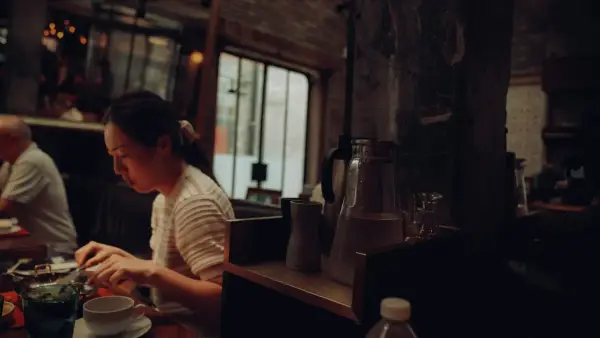
Psychology says people who do their grocery shopping at odd hours and prefer the self-checkout lane aren't being antisocial - they are people whose capacity for human interaction was spent long before they reached the store, and the empty aisle at nine in the evening is the only public space their body doesn't experience as a stage
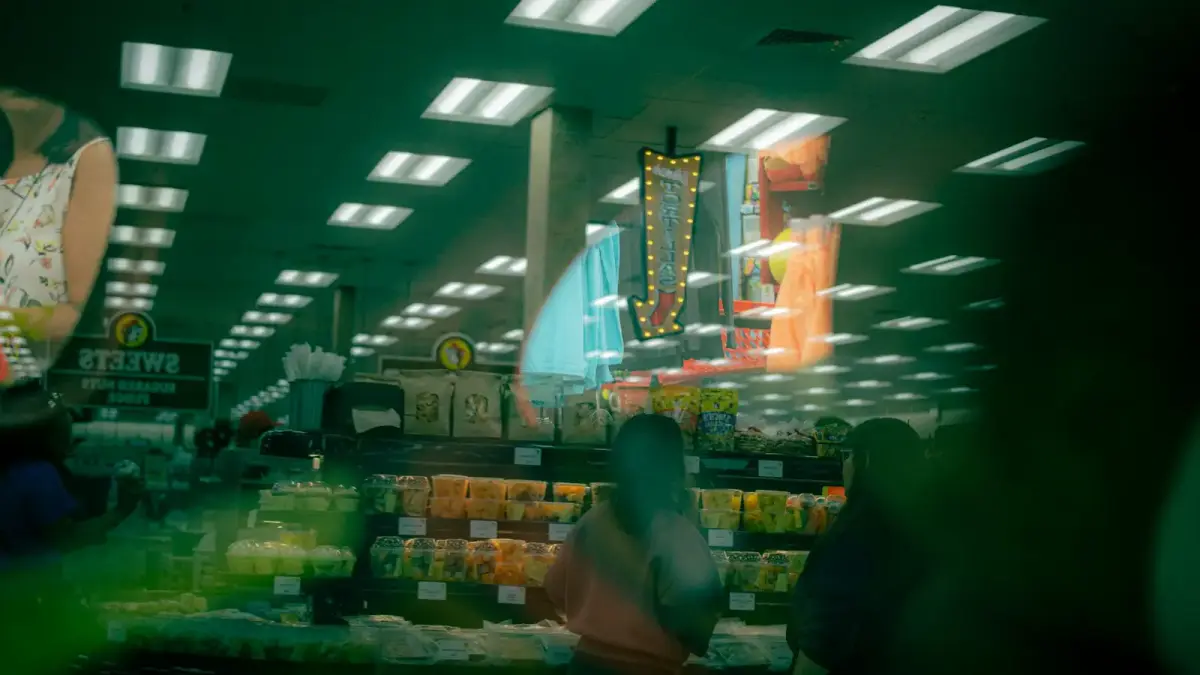
The parking lot was almost empty, and I felt my shoulders drop for the first time all day
I pulled into the grocery store at quarter past nine on a Tuesday, and the relief was physical. Not emotional. Physical. My jaw unclenched. My breathing slowed. The lot had maybe six cars in it, and the fluorescent glow through the windows looked almost peaceful from the outside.
I wasn’t there because I’d forgotten something. I was there because this was the first moment all day my body wasn’t bracing for someone else’s needs.
I’d spent eight hours in meetings where I tracked every microexpression across the table. I’d modulated my voice on three separate phone calls. I’d navigated a tense conversation with a colleague who needed me to be steady while they fell apart. I’d been warm and present for all of it, and I meant every word I said.
But by the time I grabbed a cart and walked into that quiet store, I had nothing left. Not for the chatty cashier. Not for the neighbor I might run into near the produce. Not even for the polite stranger who wanted to comment on the weather. The self-checkout lane wasn’t avoidance. It was the only option my nervous system could actually handle.
And for years, I thought something was wrong with me for feeling that way.
The label we keep getting wrong
There’s a quiet judgment that follows people who shop at odd hours. Who wear headphones in public. Who choose the self-checkout even when the staffed lane is shorter. The word that gets tossed around is “antisocial,” and it carries a sting - like you’re cold, like you don’t care about people, like you’ve opted out of basic human decency.
But that word doesn’t mean what most people think it means.
Antisocial, in clinical terms, refers to a pattern of disregard for other people’s rights and feelings. It’s a diagnostic term for behavior that’s manipulative, deceptive, or harmful. The person quietly scanning their yogurt at nine-thirty at night is about as far from that description as a person can get.
What’s actually happening is something much more interesting, and much more human.
A 2022 study published in the Journal of Research in Personality found that people who score high in social sensitivity - the ability to detect and respond to emotional cues in others - experience significantly greater cognitive fatigue after sustained social interaction. They aren’t tuning people out. They’re taking in too much. Their brains are doing more work per conversation than the average person even realizes is possible.
The researchers called it “social processing load.” I call it the reason your body steers you toward the empty aisle at nine in the evening without you even making a conscious decision.
Your nervous system was already working overtime before you left the house
Here’s what most people don’t understand about social energy: it doesn’t only drain during conversations. It drains during proximity. During awareness. During the low-level hum of being perceived.
If you’re someone who picks up on tone shifts, who notices when a room’s energy changes, who can feel when someone is upset before they say a word - your nervous system has been running complex social calculations since the moment you woke up. The morning commute. The open-plan office. The group chat that kept pinging. The lunch you ate with a colleague where you spent more energy reading their mood than tasting your food.
By evening, your social bandwidth isn’t low. It’s gone.
Daniel Goleman’s work on emotional intelligence describes this kind of awareness as a genuine cognitive skill - the ability to perceive, interpret, and respond to emotional information in real time. But what often gets left out of those conversations is the cost. Every act of perception requires energy. Every accurate read of someone’s emotional state is a small withdrawal from a finite account.
The people shopping at odd hours aren’t the ones who lack social skills. They’re the ones whose social skills have been running at full capacity all day. The store at nine p.m. isn’t a retreat from the world. It’s what’s left after they already gave the world everything they had.
The self-checkout lane is not a character flaw
There’s a specific kind of guilt that comes with choosing the self-checkout when a cashier is standing right there with an empty lane. You can feel it in your chest. The slight pull of obligation. The voice that says you should make small talk, you should be friendly, you should participate in the social contract the way a normal person would.
But here’s what I want you to hear: choosing the path that doesn’t require one more performance isn’t rudeness. It’s self-preservation.
A 2019 study in Frontiers in Psychology examined how introverts and highly sensitive individuals manage their energy across a typical day. The researchers found that these individuals didn’t avoid social contact because they disliked people. They managed social contact because their physiological response to interaction was measurably more intense. Heart rate variability, cortisol patterns, skin conductance - their bodies were literally working harder during the same exchanges that barely registered for others.
The self-checkout lane, in this context, isn’t a preference. It’s a pressure valve. It’s your body saying, “I’ve done enough today. Let me just get the milk without turning it into another interaction I have to navigate.”
And that’s not something to feel guilty about. That’s something to respect.
Headphones in public aren’t a wall - they’re a window into how much you already gave
I used to think the headphones thing was just a generational habit. Then I started paying attention to when I reached for mine.
It was never when I was rested. Never when I’d had a quiet day. It was always after the hard conversations. After the emotional labor of holding space for someone. After the meeting where I had to be diplomatic when I wanted to scream.
The headphones weren’t blocking people out. They were protecting what little I had left.
Susan Cain wrote about this in her research on introversion - the idea that solitude isn’t the absence of connection but the recovery from it. The person wearing headphones at the grocery store isn’t saying “leave me alone.” They’re saying “I already showed up for everyone today, and this is the only hour I have left that belongs to me.”
That distinction matters. Because the story we tell about people who seek quiet - that they’re unfriendly, that they don’t like others, that they’re somehow less connected to the human experience - is exactly backwards.
They’re often the most connected. They feel the most. They notice the most. And that’s precisely why they’re depleted by the time they reach the cereal aisle.
The people who avoid small talk are often the ones who take conversation the most seriously
This is the part that always gets missed. The assumption is that someone who avoids casual chat must not value human connection. But in my experience - and in the research - it’s the opposite.
People who find small talk draining tend to be people who can’t do conversation halfway. They can’t phone it in. When someone asks them how they’re doing, some part of their brain actually considers the question honestly. When a cashier makes a comment, they feel a pull to respond with genuine warmth, not a script.
That kind of engagement is beautiful. It’s also exhausting when you’ve already done it forty times before dinner.
A 2021 study in Psychological Science found that individuals who reported the highest satisfaction from deep, meaningful conversations also reported the highest fatigue from frequent surface-level interactions. The researchers suggested that these individuals weren’t socially avoidant - they were socially selective, not out of snobbery, but out of necessity. Their capacity for authentic engagement was real, and it had limits.
You’re not antisocial because you don’t want to chat at the checkout. You take social connection so seriously that you can’t manufacture it when you’re empty. There’s a massive difference between someone who doesn’t care about people and someone who cared about people all day long and has nothing left to give by sundown.
The quiet store at night is the only honest room you’ve been in all day
Think about what your day actually requires of you. The code-switching. The emotional regulation. The constant, invisible labor of reading rooms and managing impressions and being the version of yourself that each situation demands.
At work, you’re competent and steady. With your kids, you’re patient and present. With your partner, you’re attentive and warm. With your aging parents, you’re reassuring and strong. Each of those roles is real. Each of those versions of you is genuine. But holding all of them in a single day is a kind of performance that nobody talks about because it doesn’t look like performance.
It looks like just being a person.
The grocery store at nine in the evening - the one with the half-stocked shelves and the quiet hum of refrigerator cases - is the first room all day where you don’t have to be anything for anyone. You can move slowly. You can stare at pasta shapes for two full minutes without someone needing your attention. You can exist without performing, and your body knows the difference even if your mind hasn’t caught up yet.
That’s not antisocial behavior. That’s a person who finally found a room that isn’t asking anything of them.
You were never avoiding people - you were recovering from how deeply you let them in
If this is you - the late-night shopper, the self-checkout loyalist, the one who puts headphones in before walking into any public space - I want you to know something.
You’re not broken. You’re not cold. You’re not bad at being a person.
You are someone who takes human connection seriously enough that it actually costs you something. You listen with your whole body. You notice what other people miss. You carry the emotional weight of rooms you walked through hours ago.
And the quiet aisle at nine in the evening isn’t evidence that you’ve failed at being social. It’s evidence that you already succeeded - all day, in a hundred small ways that nobody saw and nobody will thank you for.
The empty store is yours. You earned it. Not as a consolation prize for being different, but as the natural, reasonable endpoint of a day spent feeling everything.
Let the self-checkout beep. Let the fluorescent lights buzz. Let yourself breathe in a room that isn’t asking you to be anything at all.
That’s not avoidance. That’s what rest looks like for a person who gave their whole heart to the day.