Psychology says people who have always preferred eating lunch alone are not avoiding connection, they are people whose nervous systems process social information at such depth that what most people experience as a casual meal is for them a full hour of involuntary translation they never agreed to perform, and the empty table by the window is not loneliness but the only place where their mind is finally allowed to stop interpreting
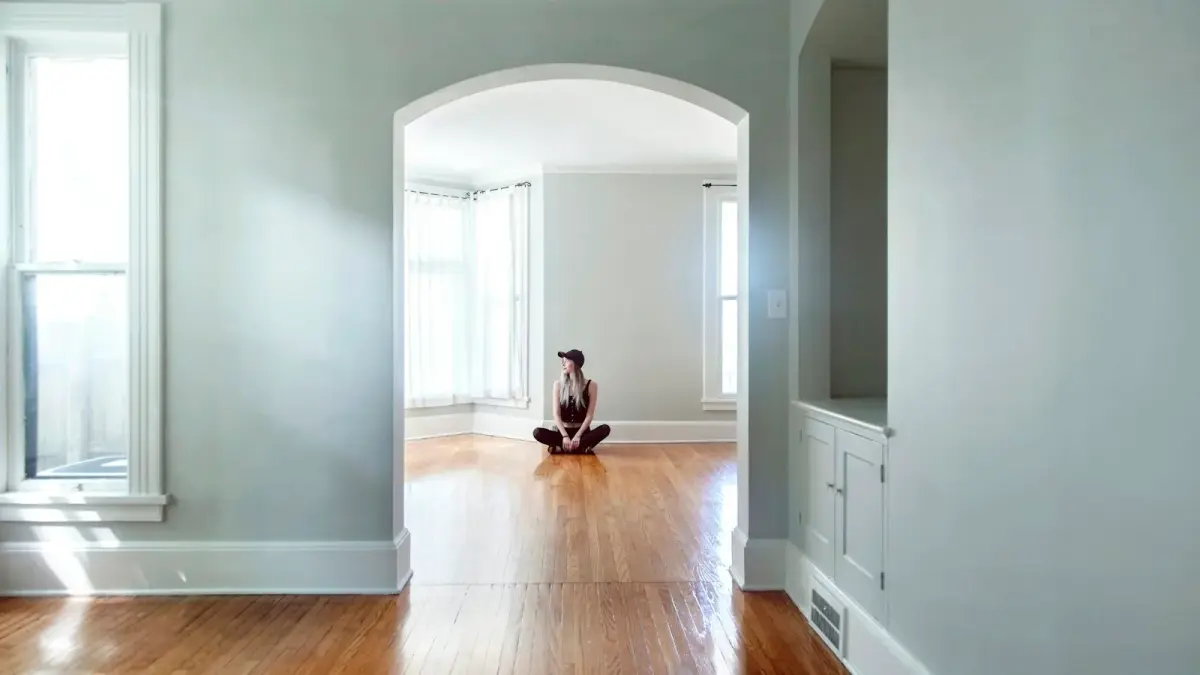
The Table Nobody Wanted
There is a corner booth at the sandwich place near my office that I have been quietly claiming for almost six years. It faces the window. It seats one comfortably, two awkwardly.
Nearly every weekday around noon, I slide into it with my lunch and my phone face-down. The feeling that washes over me the moment I sit down is the only word I can find for it - relief.
Not relief from people I dislike. Relief from the work of being among them.
I used to think this meant something was wrong with me. Choosing an empty table when a full one was available - when colleagues were waving me over, when there was a perfectly good seat next to someone I genuinely liked - felt like evidence of some social deficit I hadn’t figured out how to fix.
It took me years and a developmental psychology degree to understand what was actually happening. It wasn’t avoidance. It was recovery.
If you have always been the person who slips away at lunch, who finds a bench outside or a quiet corner in the break room, I want you to know something that took me a long time to fully grasp. You are not avoiding people. You are recovering from the sheer depth at which you experience them.
What a “Casual” Lunch Actually Costs Your Nervous System
Here is what most people experience when they sit down for a group lunch. Food, conversation, maybe a laugh, maybe a complaint about the afternoon meeting. Forty-five minutes that barely registers as an event.
Here is what you experience during that same meal.
The microexpression someone made when you sat down - was that surprise or reluctance? The shift in vocal pitch when one colleague mentioned the project deadline, and whether it was stress or sarcasm. The way two people across the table exchanged a glance you weren’t supposed to catch.
The person next to you chewing with their mouth slightly open, which your brain flagged as sensory input worth tracking even though you didn’t want it to. All of this happening simultaneously, involuntarily, while you try to eat a sandwich and respond to a question about your weekend.
A 2014 study published in the Journal of Research in Personality found that people who score high in sensory processing sensitivity - roughly 15 to 20 percent of the population - show measurably greater activation in brain regions associated with awareness, empathy, and depth of processing during social interactions. Their brains don’t just register conversation. They process the full emotional landscape of the room, whether they want to or not.
This isn’t shyness. This isn’t social anxiety. This is a nervous system that treats every human interaction as a dataset worth analyzing in full, and it’s exhausting in a way that’s almost impossible to explain to someone whose brain skims where yours dives.
The Translation Labor Nobody Sees
Susan Cain wrote in Quiet that introverts don’t lack social ability - they experience social stimuli more intensely, which means they reach their threshold faster. But even that description doesn’t quite capture the specific fatigue of what I’ve come to think of as translation labor.
When you process social information deeply, you are performing constant, invisible work. You are converting tone into meaning. You are converting facial movements into emotional states.
You are converting the gap between what someone said and what they meant into a map of how to respond in a way that will land gently enough not to disturb the room’s equilibrium. This isn’t optional. It runs in the background like software you never installed and can’t uninstall.
Most people do a version of this. But for deep processors, the translation is granular, continuous, and involuntary. You don’t choose to track the emotional undercurrent at the table - your brain just does it, the way some people unconsciously tap their foot to music.
A 2021 study in Frontiers in Psychology found that high-sensitivity individuals showed increased activity in the insula and prefrontal cortex - areas involved in self-awareness and emotional integration - even during low-stakes social interactions. The researchers described it as a brain that processes social stimuli as if they carry greater personal relevance.
As if. But for the people living inside those brains, there is no “as if.”
Every interaction carries personal relevance. Every casual lunch requires cognitive effort. By the time you stand up from the table, you’ve done an hour of labor that nobody saw and nobody will thank you for.
The empty table isn’t avoidance. It’s the only place in the building where you can put down the translator’s headset.
You Are Already Doing What the Wellness Industry Sells
Here is the part that caught me off guard when I first started researching this.
The solo lunch - the one people side-eye, the one that earns you “is she okay?” whispers from well-meaning coworkers - is functionally identical to what the wellness industry packages as mindful eating, nervous system regulation, and restorative solitude. And you’ve been doing it for years without anyone giving you a certificate.
You sit in relative quiet. You eat without performing for anyone. Your nervous system drops out of social monitoring mode.
Your prefrontal cortex, which has been running social calculations all morning, finally gets to idle. Your breathing slows. Your jaw unclenches.
You might not even notice these shifts because they happen the moment you sit down alone. It’s the same way your shoulders drop when you close the front door behind you at the end of the day.
Nobody told you to do this. Nobody taught you a four-step protocol. You just gravitated toward the empty table because your body knew what it needed before your mind had the vocabulary to explain it.
A 2020 study published in Psychological Science found that people who regularly engaged in voluntary solitude - solitude chosen freely, not imposed by isolation - showed lower cortisol levels and reported greater emotional clarity than those who spent equivalent time in low-demand social settings. The benefits were most pronounced in individuals who scored high in sensory processing sensitivity.
You weren’t being antisocial all those years. You were self-regulating with a precision that most people only achieve after downloading an app and paying $14.99 a month.
The Problem Was Never Your Ability to Connect
This is the reframe that changed everything for me, and I want to be careful with it because it matters.
For a long time, I assumed that my preference for eating alone meant I was bad at connection. That I couldn’t handle closeness. That something in my wiring made me less equipped for the casual, breezy social exchanges that seemed to come easily to everyone else.
But the research tells a different story. People who process social information deeply don’t connect less - they connect more. So much more that an ordinary interaction demands from them what a profound conversation demands from someone else.
The depth is always on. There is no casual mode. There is no surface-level setting.
When you sit across from someone at lunch, you aren’t just eating with them. You are attending to them. You are holding their emotional state alongside your own, running a continuous assessment of how the interaction is landing for everyone at the table.
That is not a deficit of connection. That is connection operating at a depth most people never reach and never have to recover from.
The reason you need the empty table isn’t that you can’t handle people. It’s that you handle them so thoroughly that your system needs somewhere to set the weight down.
The problem was never your capacity for closeness. It was the assumption that closeness should be effortless, and that if it isn’t, you must be doing it wrong.
You weren’t doing it wrong. You were doing it at full volume, in a world that treats half-volume as the standard.
What the Empty Table Actually Means
I still sit in that corner booth most days. I’ve stopped apologizing for it - to my colleagues, to myself, to the part of my brain that spent decades whispering that choosing solitude was the same as failing at togetherness.
It’s not the same. It never was.
The empty table is where your nervous system puts down the weight it’s been carrying since 8 a.m. It’s where your brain stops translating and starts resting. It’s where you get to exist without performing the exhausting, invisible labor of reading every room you walk into.
If you’ve always preferred eating alone, you probably already know this in your body, even if you’ve never had the words for it. You know that the relief you feel when you sit down by yourself isn’t loneliness wearing a mask. It’s your entire system exhaling.
There is something worth sitting with in that. The thing you’ve been quietly doing for years, the thing you’ve maybe felt guilty about, the thing people have raised eyebrows over - it was never a problem to solve.
It was your body’s way of keeping you whole in a world that asks you to process more than most people will ever understand.
You’re not avoiding connection. You’re honoring the cost of how deeply you experience it.
That empty table by the window was never a sign of something missing. It was always a sign of someone who knows exactly what they need - and has known for a very long time.