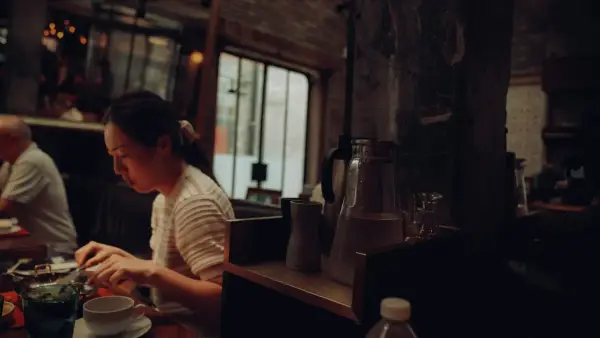
Psychology says people who stay up an hour after everyone in the house has gone to sleep are not night owls - they are someone who learned that the only hours that truly belong to them begin the moment the last person stops needing something, and the tiredness they carry every morning is the price of the only freedom they know
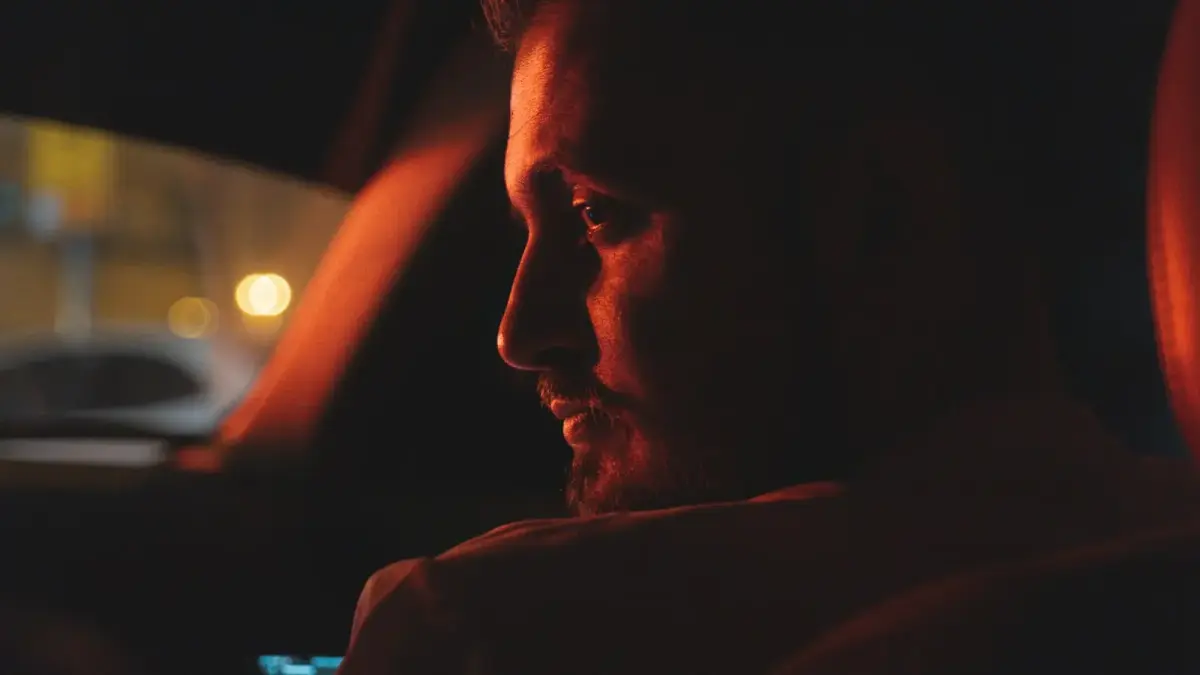
It’s 11:47 on a Tuesday and the house has gone still. The dishwasher hums through its final cycle. Someone left a light on in the hallway, but you don’t get up to turn it off because the glow is just enough to read by, and something about the way it falls across the living room makes this feel like a room you’ve never been in before.
You are not doing anything important. That’s the entire point.
The book in your lap has been open to the same page for twenty minutes. Your phone is face-down on the armrest, not because you’re being disciplined but because for the first time all day, you genuinely don’t care what’s on it. The tea went cold an hour ago. You know you’ll pay for this tomorrow - the alarm will feel violent, the morning will feel borrowed, and by 2 p.m. you’ll be running on something thinner than fumes.
But you won’t go to bed. Not yet. Because right now, for the first time since you opened your eyes this morning, no one is asking you for anything. And that feeling - that specific silence - is worth every minute of sleep you’re about to lose.
The “night owl” label and what it conveniently ignores
We have a tidy word for people who stay up late. Night owls. It sounds almost romantic - creative types burning candles, artists and dreamers who come alive after dark. The culture has built an entire personality archetype around it, complete with coffee mugs and t-shirts.
But that label does something convenient. It turns a pattern into a preference. It suggests that you stay up because you want to, because your circadian rhythm simply runs a few hours behind the norm.
And for some people, that’s probably true.
But for a very specific kind of person - the one sitting in the half-dark right now, not creating anything, not doing anything productive, just existing without being observed - the night owl label misses the point entirely.
You don’t stay up because you love the night. You stay up because the night is the only time you’re not performing.
The day asks something of you from the moment it begins. It asks you to be a partner, a parent, an employee, a friend, a functional adult who remembers appointments and answers emails and asks “how was your day?” with enough warmth that no one suspects you’ve been running on empty since noon.
And you do it. You do it well. People would describe you as dependable, steady, the person who holds things together.
What they don’t know is that every act of holding something together quietly costs you a piece of yourself. And the only time you get to pick those pieces back up is when everyone else has stopped watching.
The roots of borrowed time
This pattern rarely begins in adulthood. If you trace it back far enough, you’ll usually find a child who learned early that their needs came second.
Maybe you were the eldest sibling who managed the household’s emotional weather. Maybe you were the quiet kid who figured out that being low-maintenance was a form of love. Maybe your parents were wonderful but overwhelmed, and you absorbed the unspoken lesson that the world runs smoother when you take up less space.
A 2019 study published in the Journal of Personality and Social Psychology found that individuals with high dispositional empathy - people who instinctively attune to the emotions of those around them - reported significantly lower levels of what researchers called “identity clarity.” The more attuned you are to others, the less certain you become about who you are when no one is watching.
This isn’t a flaw. It’s a consequence of a particular kind of childhood - one where being good meant being available, and being available meant putting your own internal world on hold until the house went quiet.
For people who grew up this way, nighttime became the first unmonitored space. It was the only part of the day where no one needed you to be anything. No role to fill. No mood to manage. No audience requiring a performance.
And that pattern followed you into adulthood. Not because you’re broken, but because no one ever gave you permission to take that space during daylight hours.
What solitude actually does to your nervous system
There’s a reason those late-night hours feel so different from any other point in the day. It’s not just psychological. It’s physiological.
Dr. Matthew Dixon and his colleagues at the University of British Columbia published research in 2022 exploring what happens in the brain during periods of voluntary solitude - not loneliness, not isolation, but chosen aloneness. What they found was striking. Participants who engaged in even brief periods of intentional solitude showed measurable decreases in high-arousal emotions - both positive and negative. The nervous system didn’t just calm down. It reset.
This is what you’re doing at midnight without knowing it. You’re not procrastinating sleep. You’re regulating.
When you spend your entire day attuned to other people - reading the room, adjusting your tone, managing someone else’s frustration or disappointment or need - your nervous system stays in a state of low-grade activation. Not fight-or-flight, exactly. More like fight-or-flight’s quieter cousin: a constant, barely perceptible hum of alertness that never fully switches off as long as someone else is in the room.
The moment the last person falls asleep, that hum stops.
Your shoulders drop half an inch. Your breathing changes. The muscles in your face relax into an expression no one has ever seen because you’ve never worn it in front of another person.
That feeling you chase every night - the one you couldn’t name if someone asked - is your nervous system finally returning to baseline. It’s the sensation of your body remembering what it feels like to belong only to itself.
Reed Larson, a developmental psychologist who studied solitude for decades at the University of Illinois, found that adolescents who spent moderate amounts of time alone showed better emotional adjustment than those who were constantly surrounded by others. The key variable wasn’t the amount of solitude. It was whether the solitude was chosen. Voluntary aloneness restored something that social connection, no matter how loving, could not.
You’ve been conducting this experiment on yourself every night for years. The data has always been clear.
This is not a sleep problem - it’s a freedom problem
Here is where the reframe matters.
If you go to a doctor and say “I can’t fall asleep at a reasonable hour,” they’ll talk to you about sleep hygiene. Blue light. Melatonin. Consistent bedtimes. They’ll treat it as a problem of regulation, as though your body simply doesn’t know when to shut down.
And none of that is wrong, exactly. But it misses what’s actually happening.
You can fall asleep. You know how to fall asleep. Some nights you’re so tired your body practically begs for it by 9 p.m.
But you don’t go to bed because going to bed means ending the only part of the day that belongs to you. It means waking up tomorrow and starting the cycle again - the giving, the performing, the being-needed - without ever having touched the person underneath all of it.
Psychologists have a term for this. They call it “revenge bedtime procrastination,” and it was first described by a Chinese term, baofu xing aoshang, that translates roughly to “retaliatory staying up late.” The idea is that people who feel they have no control over their daytime hours reclaim a sense of autonomy by refusing to end the day.
But even that term - revenge - misframes it. There’s no anger in what you’re doing. There’s no rebellion.
There is only a person sitting in a quiet room, doing nothing in particular, feeling more like themselves than they have felt all day. And choosing, deliberately, to stay in that feeling for one more hour even though they know the morning will be harder for it.
That’s not revenge. That’s someone who has found the only door in the house that opens onto a room with no expectations, and they’re not ready to close it yet.
The tiredness you carry is the price of knowing yourself
Every morning when the alarm goes off too soon and the day feels like it starts at a deficit, you tell yourself you should go to bed earlier. You make promises. Tonight I’ll be in bed by ten. Tonight I’ll be responsible.
And then 10 p.m. comes, and the last door closes, and the house goes quiet, and you feel yourself arrive somewhere. Not a place. A version of you that only exists when no one is looking.
And you stay.
You stay because that person - the one who emerges in the silence - is someone you genuinely like. Someone with thoughts that don’t serve anyone else’s agenda. Someone who reads for no reason, stares out the window for no reason, sits in the stillness for absolutely no reason at all.
The tiredness you carry every morning is real. It has consequences. It makes the day harder, makes your patience thinner, makes you dependent on caffeine and willpower in ways that aren’t sustainable.
But it is also the cost of something essential. It is the price your body pays for the only hours in which your mind is free. And somewhere deep in the calculus of your nervous system, that trade has been deemed worth it, every single night, for years.
That should tell you something. Not that you have a sleep problem, but that you have a freedom problem. The tiredness is a symptom, but it’s not a symptom of poor sleep habits. It’s a symptom of a life that doesn’t leave enough room for you to exist as yourself during waking hours.
The person sitting in the dark is not wasting time
If you recognized yourself in any of this, I want you to hear something clearly.
You are not lazy. You are not undisciplined. You are not bad at sleeping.
You are someone who figured out, probably before you had the language for it, that the world takes more from you than it gives back during daylight hours. And rather than lose yourself entirely, you carved out a space - imperfect, exhausting, unsustainable - where you could remember who you were.
The fact that you need that space is not the problem. The fact that midnight is the only place you can find it - that’s the part worth paying attention to.
Maybe the real work isn’t learning to go to bed earlier. Maybe it’s learning to take up space while the sun is still out. To close a door in the middle of the afternoon and sit with yourself for twenty minutes without guilt. To say “I need an hour” and mean it. To let the people who love you see the version of you that currently only comes out after dark.
But that’s a longer conversation, and it doesn’t need to happen tonight.
Tonight, if you’re reading this in the half-dark with everyone else asleep, I just want you to know that someone understands exactly what you’re doing and why.
You’re not wasting time. You’re not being irresponsible.
You’re finding yourself in the only hours the world left you. And that quiet, stubborn refusal to give up even that - it’s not a flaw.
It might be the most honest thing about you.