Psychology says the person who always carries extra everything in her bag - extra tissues, a spare pen, a phone charger she never uses herself, a granola bar tucked into the side pocket for someone who might need it - is not exceptionally organized or anxious but someone who learned as a child that her place in any room was only as secure as her usefulness to the people in it
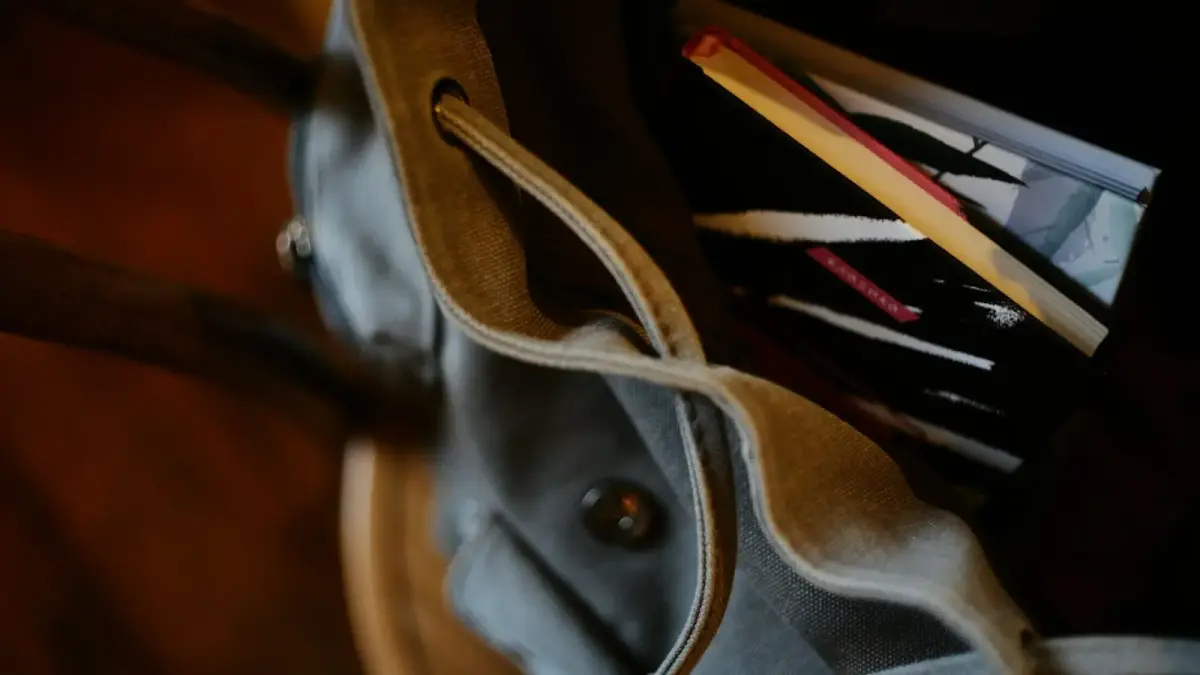
I emptied my bag onto the kitchen counter last Tuesday and just stood there looking at it. Two packs of tissues. A sewing kit I have never once opened for myself. Three pens, because what if someone needed one and the first two were out of ink. A phone charger that fits a model I don’t own. Band-aids in two sizes. A granola bar I packed three weeks ago for no one in particular.
My husband walked by and said, “You could survive a natural disaster with that thing.”
I laughed. But I also felt something catch in my chest, because the truth is I didn’t pack any of it for a disaster. I packed it for a moment. A very specific kind of moment - the one where someone around me needs something and I’m the person who has it. That moment where I reach into my bag and pull out the exact right thing and someone says, “Oh my god, you’re a lifesaver.”
That moment is not about tissues or granola bars. It never was.
If you know exactly what I’m describing - if your bag is heavy with things you carry for other people and you’ve never really stopped to wonder why - I want to talk about where this started. Because it didn’t start with preparedness. It started much, much earlier than that.
The girl who learned to earn the room
There is a particular kind of childhood that teaches you something very specific about belonging. Not every child learns this lesson. But the ones who do learn it young, and they learn it completely.
The lesson goes like this: you are welcome here because of what you provide.
Maybe it was a home where emotional needs ran high and resources ran low, where the child who anticipated what was needed before anyone asked was the child who got smiled at. Maybe it was a family where love was real but conditional in ways nobody would have named out loud. The parent wasn’t cruel. They were just busy, or overwhelmed, or carrying their own unprocessed pain - and the child who made herself useful was the child who got to feel safe.
A 2004 study published in the Journal of Personality and Social Psychology found that children who grew up in emotionally unpredictable households developed what researchers called “precocious caretaking behaviors” - an advanced ability to read a room, anticipate needs, and position themselves as indispensable. The researchers noted that these children didn’t develop this skill because they were gifted. They developed it because, in their environment, it was the most reliable path to attachment.
This is where the bag begins. Not in a store, not on an organizing blog. In a kitchen, a living room, a childhood bedroom where a small girl figured out that if she always had what someone else needed, she would never be asked to leave.
Usefulness as a belonging strategy
Here is what nobody tells you about people-pleasing: it is not weak. It is not passive. It is one of the most sophisticated survival strategies a child can develop.
The girl who became the one with the extra pencil in class. The teenager who always had gum, a hair tie, ibuprofen in her locker. The college student whose dorm room became the place everyone came when they needed something. These are not accidents of personality. These are the visible architecture of an invisible belief: I am allowed to be here because I am useful here.
Psychologist Harriet Braiker wrote extensively about what she called the “disease to please” - but I’ve always resisted that framing, because it pathologizes something that was, at its root, an act of intelligence. The child didn’t choose to be this way out of weakness. She chose it because it worked. It kept her close to the people she needed to survive.
The problem is that survival strategies don’t retire when the danger passes. They just keep running, long after the girl has grown into a woman who has her own home, her own money, her own life - and still packs a bag every morning like someone might revoke her membership in the world if she shows up empty-handed.
The weight of the bag nobody talks about
If you’re the person with the bag, you know something else too. You know the particular exhaustion of always being ready.
It’s not the physical weight, though your shoulder has opinions about that. It’s the mental weight. The constant quiet scanning - who might need what today? Is there anything I’m forgetting? What if someone asks and I don’t have it?
A 2019 study in Frontiers in Psychology examined what researchers called “anticipatory caregiving labor” and found that individuals who habitually prepared for others’ needs showed elevated baseline cortisol levels - not because they were anxious people, but because their nervous systems had been trained to stay in a low-grade state of readiness. Their bodies had learned that relaxing was a risk. That the moment you stopped anticipating was the moment you became unnecessary, and unnecessary meant unsafe.
This is the part that makes me emotional. Because from the outside, the woman with the big bag looks like she has it together. She looks competent, generous, thoughtful. People describe her as “the mom friend” and mean it as a compliment.
But inside that woman is a girl who is still, on some level, auditioning. Still proving that she has earned the right to be in the room. Still carrying the quiet terror that if she ever showed up with nothing to offer, people would look right through her.
Why “just stop over-preparing” doesn’t work
If you’ve ever been told to “just bring less stuff” or “you don’t need to carry all that” and felt a flush of something close to panic - this is why.
The bag is not a habit. The bag is a security system. Telling someone to stop carrying extra everything is like telling someone to stop locking their front door when they live in a neighborhood that taught them locks matter.
You can’t think your way out of a body-level belief. This is what researchers in developmental psychology call an “implicit relational schema” - a set of rules about how relationships work that was encoded before you had words for it. You didn’t decide that usefulness equals belonging. You absorbed it. It lives in your nervous system, not your logic.
Daniel Goleman’s work on emotional intelligence touches on this - the idea that our earliest relational experiences create templates that run in the background of every interaction we have as adults. The woman who packs for other people’s emergencies isn’t making a conscious choice each morning. She’s running a program that was written when she was seven years old and figured out that if she brought her mom’s reading glasses to the couch before being asked, her mom would let her sit there too.
That’s not dysfunction. That’s a child building a bridge to love with the only materials she had.
What your bag actually proves about you
Here is where I want to shift the frame entirely. Because I think we’ve spent too long treating this pattern as a problem to solve, and not enough time recognizing what it actually reveals about the person carrying it.
If you are the woman with the bag - the one who notices, who anticipates, who prepares, who thinks about what the people around her might need before they know they need it - you did not develop that skill in comfort. You developed it under pressure. And the fact that you turned that pressure into generosity instead of bitterness is not a small thing.
A 2017 study published in the Journal of Research in Personality found that individuals with high “prosocial sensitivity” - an acute awareness of others’ needs and a drive to meet them - scored significantly higher on measures of emotional intelligence, empathy, and relational depth. The researchers noted that this sensitivity often originated in early environments where emotional attunement was necessary for safety, but that in adulthood, it became a genuine interpersonal strength.
You read rooms. You carry warmth in physical form. You are the person people feel safe around, not because you perform safety, but because your entire nervous system has been calibrated to create it.
That is not a flaw. That is a superpower that was forged in a childhood that required you to be extraordinary just to feel ordinary.
The part where it gets to be yours
But here’s the thing I’m still learning, and maybe you are too. The bag can stay. The tissues, the pen, the charger, the granola bar - none of it has to go. What has to change is the story underneath it.
You are allowed to be generous because you want to be, not because you have to be. You are allowed to carry things for people because it brings you joy, not because it’s the entrance fee to every room you walk into. You are allowed to show up empty-handed on a Tuesday and still deserve your seat at the table.
The girl who learned to earn her place did something remarkable. She took an impossible situation and built a way through it that kept her connected to the people she loved. That deserves respect, not correction.
But that girl is not running your life anymore. You are. And you - the grown woman reading this - get to decide that your presence is the gift. Not the tissues. Not the phone charger. Not the granola bar tucked in the side pocket just in case.
You.
You were always enough to bring.