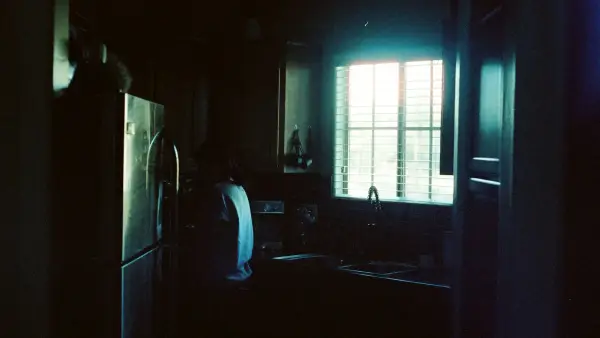
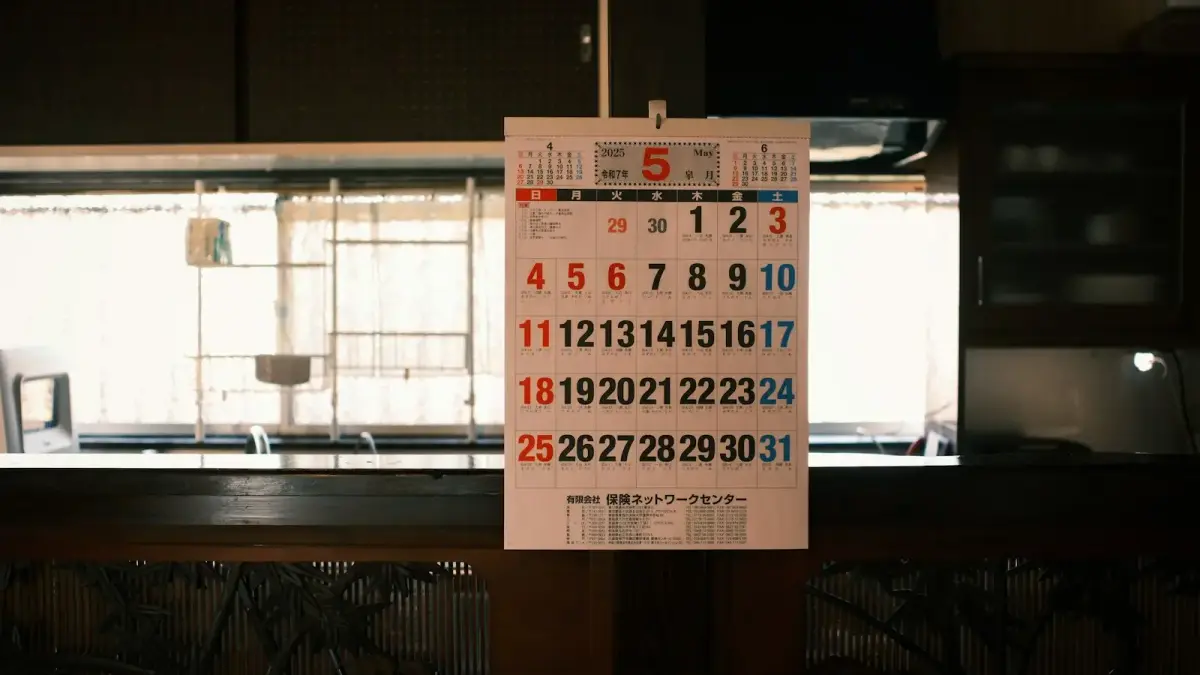
Psychology says the person who still keeps a paper calendar on the kitchen wall and writes every appointment in her own handwriting even though her phone sends reminders she has never once missed is not resisting technology - she is someone who learned as a child that plans spoken out loud could be revised without warning, that a promise made at breakfast could dissolve by the afternoon it was supposed to arrive, and she has spent her entire adult life making sure everything important exists in a form that cannot be quietly edited, deleted, or denied
She Never Forgot a Single Thing, and That Was the Point
I watched my mother write on the kitchen calendar every Sunday evening. She used the same blue pen, the same careful block letters, the same deliberate pressure that left faint grooves you could feel with your fingernail if you ran it across the paper.
Dentist appointments. School concerts. The day the furnace inspector was coming. My father’s work dinner. Her sister’s birthday.
She already knew all of it. She carried every date in her head the way some people carry song lyrics - effortlessly, permanently. The calendar was never about remembering.
It took me thirty years to understand what it was actually about.
When the Future Kept Changing Without Warning
I grew up in a household where plans were real until they weren’t. A Saturday trip to the lake could be mentioned Monday morning, referenced Tuesday night, and then simply never spoken of again by Friday. No cancellation. No apology. No acknowledgment that the words had ever been said.
You learn something specific from that kind of childhood. Not that adults lie - that’s too simple, too dramatic. You learn something quieter and harder to name. You learn that spoken things are provisional. That a plan exists only in the air between two people, and air moves.
A 2019 study published in the Journal of Personality and Social Psychology found that children who grow up in unpredictable family environments develop what researchers call “heightened environmental monitoring” - an ongoing, low-grade vigilance about whether conditions have shifted since they last checked. It’s not anxiety in the clinical sense. It’s something more functional than that. It’s a child’s perfectly logical response to a world where the rules kept updating without release notes.
My mother was one of those children. I didn’t know that then. I just knew the calendar was important enough that she never let anyone else write on it.
I remember once, in fifth grade, I wrote a playdate on the calendar in green marker. She didn’t yell. She didn’t even seem upset. She just quietly copied the information in her own handwriting underneath mine, in blue pen, and then the green marker entry lived there beside her version like a guest in someone else’s house.
I think she needed every word on that calendar to be in her hand. Not because she didn’t trust my handwriting. Because the act of writing it herself was the act of making it real. If her hand formed the letters, then she had been the one to anchor the plan into something physical. She could point to it. She could say: this is mine. I built this particular piece of the future, and I built it where you can see it.
The Pen Is Not Nostalgic - It’s Permanent
Here’s what a phone can do that a paper calendar cannot: it can delete an entry without leaving a trace. It can move a Thursday appointment to the following week and leave no evidence that Thursday was ever occupied. It can sync across devices, which means someone else can edit your future from another room.
For most people, this is convenience. For the person who grew up watching plans dissolve, it’s the exact architecture of the problem she spent her childhood inside.
The paper calendar solves something that no app has ever attempted to solve. It creates a record that cannot be quietly revised.
When she writes “Emma’s recital - 7pm” on the second Friday of March, that entry exists in ink, on paper, in a physical location. It cannot be dragged to a different date. It cannot be deleted with a swipe. If someone tries to say “we never planned that,” the wall disagrees.
This isn’t about technology preference. This is about evidence.
Dr. Bessel van der Kolk’s research on how the body stores traumatic experience has shown that people who grew up in environments of chronic unpredictability often develop what he calls “somatic anchoring behaviors” - physical rituals that create a felt sense of stability. The calendar on the wall. The list on the counter. The handwritten note tucked into a jacket pocket. These aren’t habits. They’re architecture. They’re the scaffolding a person builds around a life to make sure it holds still.
She Doesn’t Distrust the Phone - She Distrusts Impermanence
This is the part that most people get wrong when they tease her about it. When her kids roll their eyes and say “Mom, it’s all in the shared Google calendar,” they’re answering a question she never asked.
She knows the phone works. She has never missed a reminder. She has never failed to sync. The phone is not the problem.
The problem is that the phone lives in the same invisible, editable, deniable space that her childhood promises lived in. The problem is that digital information has no weight. No texture. No permanence you can touch.
And she needs to touch it.
She needs to see Friday’s plan in her own handwriting, in the same spot on the wall where she can glance at it while pouring her coffee. She needs that specific, physical, undeniable proof that the future is where she left it.
A 2021 study in Frontiers in Psychology found that the act of handwriting activates neural pathways associated with emotional regulation and a sense of personal agency in ways that typing does not. The researchers suggested that the physical act of forming letters by hand creates what they called “embodied commitment” - a neurological experience of having personally constructed and claimed a piece of information.
For the woman with the kitchen calendar, every entry she writes by hand is a small act of claiming. This will happen. I wrote it down. It’s real now.
The Calendar as the Most Honest Thing in the House
Here is a detail that might seem small but isn’t: she writes in pen. Not pencil. Pen.
Pencil can be erased. Pencil says “this might change.” Pencil is the language of the provisional, the tentative, the subject-to-revision.
Pen says: this is what we said. This is what was planned. If it changes, the original will still be visible underneath the crossing-out, and that visibility matters. That is the whole point.
Because what hurt her as a child was not that plans changed. Plans change. Everyone knows that. What hurt her was that they changed invisibly. That the original version of the future was erased so thoroughly that she sometimes wondered if she had imagined it. If the Saturday at the lake had ever been real or if she had just wanted it badly enough to invent it.
The crossed-out entry on a paper calendar is proof that something was once true. That she did not make it up. That the plan existed, even if it didn’t survive.
That is not a small thing for the person who spent her early life doubting her own memory.
There’s a word for what happens when someone repeatedly tells you that your recollection of events is wrong. When the trip you remember being promised gets rewritten as something you misunderstood. When the birthday party that was canceled becomes a party that was never really planned. Psychologists call it gaslighting when it’s deliberate, but in many families it isn’t deliberate at all. It’s just the way unstable people manage their own discomfort - by revising the record until the version that hurts them least is the version that everyone agrees on.
The paper calendar refuses to participate in that revision. It sits on the wall and holds the original version, in ink, where it can’t be talked out of existing.
What She Built Was Never Quaint
People describe her calendar as charming. Old-fashioned. A little quirky. They say things like “that’s so you” in a tone that means “that’s a little unnecessary but sweet.”
They don’t understand that what they’re looking at is one of the most sophisticated emotional engineering projects a person can build. She took a childhood defined by invisible revisions and quiet betrayals of expectation, and she constructed - with a five-dollar calendar and a blue pen - a system in which the future cannot be denied.
Every birthday recorded. Every appointment anchored. Every school play, every doctor’s visit, every anniversary pinned to the wall in ink that doesn’t move, on paper that doesn’t update, in a location that everyone in the house can see and no one can secretly alter.
She didn’t resist technology. She outgrew the need to trust systems she couldn’t verify with her own eyes and hands.
Psychologist Adam Grant has written about how the behaviors we dismiss as quirks often represent a person’s most creative adaptation to their earliest environment. The child who learned that spoken plans could vanish built an adult life around written ones. The child who learned that invisible things could be denied built a home around visible evidence. There is nothing quaint about that. There is something almost architectural about it.
You Might Recognize This in Yourself
Maybe you’re not a paper calendar person. Maybe your version is the screenshot of the text message, saved just in case. The email forwarded to yourself as a backup. The note in your phone that logs what someone said and when they said it.
Maybe your version is the way you repeat plans back to people - “so we’re meeting at six, right?” - not because you forgot but because you need to hear them confirm it one more time, out loud, where the air can carry the words back to you.
Maybe your version is the way you feel when someone says “I never said that.” That specific chill. That old, cold feeling of the ground shifting beneath a sentence you were standing on.
If you recognize this, I want you to know something. You are not rigid. You are not controlling. You are not old-fashioned or difficult or stuck in your ways.
You are someone who learned, very early, that the world could change its mind about you without telling you first. And you built a life in which the important things are pinned down, written out, made real in a form that cannot slip away.
That is not a flaw. That is the most reliable thing you have ever built. And the fact that you still maintain it - still write the appointments, still save the messages, still confirm the plans - means you are still, after all these years, protecting the child who needed someone to keep their promises in a form she could hold.
The calendar on your wall is not a relic. It is a record of every single time you chose to believe the future was worth planning for. And you have never once been wrong about that.