Psychology says women over fifty who suddenly cannot stop decluttering their homes are not having a midlife crisis or becoming minimalists - they are physically dismantling the evidence of decades spent curating a life designed around everyone else's comfort, and every bag carried to the donation center is a quiet act of reclaiming the only space they have left that might still become their own

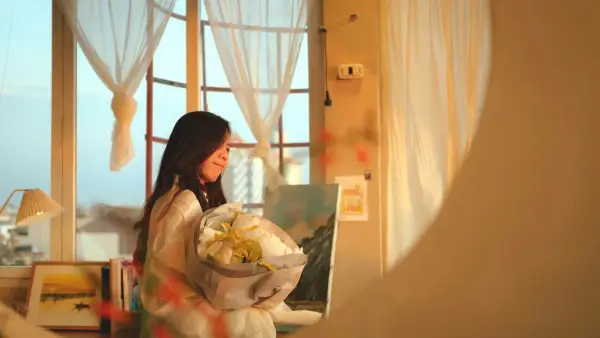
She was standing in the guest room on a Tuesday afternoon when something shifted. Not dramatically. Not with tears or a breakdown or some made-for-television moment of reckoning. She just looked around and realized that nobody had slept in that room in four years. The floral duvet cover was something she had picked out in 2009 because her mother-in-law preferred florals. The matching throw pillows were bought the same weekend. The nightstand still held a small basket of travel-sized toiletries - shampoo, lotion, a disposable razor - as though a guest might appear at any moment and need to freshen up.
She pulled a garbage bag from under the kitchen sink. Then she pulled three more.
By Thursday, the guest room was empty. By Saturday, she had moved on to the hall closet. By the following week, her husband found her in the garage, sorting through boxes of holiday decorations she had not opened since 2017, and he asked her if she was okay. She said she was fine. She was more than fine. She was doing something she could not yet name but that felt more honest than anything she had done in years.
If this sounds familiar to you - if you have been seized by the same quiet urgency - I want you to know that you are not losing it. You are finding it.
The guest towels nobody ever used
I want to start with the objects themselves, because they matter more than we think.
When researchers study the homes of women who have spent decades in caretaking roles, a pattern emerges that is difficult to ignore. The objects in those homes are not neutral. They are evidence - physical proof of a life organized around anticipating, accommodating, and performing for other people.
The guest towels are a perfect example. You know the ones. They sit folded in a linen closet or draped on a towel bar in a bathroom your family does not actually use. They are softer and nicer than the towels you dry yourself with every day. They exist for someone who might visit. Someone who might judge. Someone whose comfort you were trained to prioritize over your own, without anyone ever having to say it out loud.
When a woman in her fifties pulls those towels off the shelf and drops them in a donation bag, she is not organizing. She is making a decision. She is saying, quietly and without fanfare, that the hypothetical guest is no longer more important than the person who actually lives here.
What sociologists call role exit
There is a concept in sociology called role exit theory, developed by Helen Rose Fuchs Ebaugh in the late 1980s. Ebaugh studied people leaving defining roles - nuns leaving religious orders, doctors leaving medicine, divorced people leaving marriages - and she found a consistent pattern. People do not simply stop being what they were. They go through a process of disengagement, searching, and eventually creating a new identity that incorporates the residue of the old one.
What Ebaugh noticed is that the physical environment matters enormously during this transition. People rearrange their homes. They change how they dress. They alter the spaces they move through every day, because identity is not just something that lives in your head. It lives in your surroundings.
For women over fifty, the role being exited is often not a single role but a constellation of them. Mother of young children. Wife who manages the household to someone else’s standards. Daughter who maintained traditions she did not choose. Hostess. Volunteer. The woman who always had snacks available and clean sheets on the bed and a functioning system for everything.
When the children leave or grow self-sufficient, when the parents pass or are placed in care, when the marriage either ends or enters a new phase, something opens up. And the first thing many women do with that opening is start clearing out the physical artifacts of all those roles. Not because they are sad. Because they are ready.
The formal dining set that was never hers
A friend of mine - I will call her Catherine - told me about the dining room table she got rid of last spring. It was a beautiful table. Dark cherry wood, eight chairs, a matching hutch filled with china that had been in her husband’s family for decades. She had polished that table every week for twenty-three years. She had set it for Thanksgivings and Christmases and Easter brunches. She had arranged the china just so.
She hated it. She had always hated it.
Not violently. Not with resentment or anger. She hated it the way you hate something that was never yours to begin with - a quiet, low-grade sense of performing someone else’s taste and calling it home. The table came with the marriage. The china came with the family. The formal dining room itself was a stage she maintained for a show she had never auditioned for.
When she listed the set online and a young couple came to pick it up, Catherine said she felt something she did not expect. Not loss. Not nostalgia. Relief. The kind of relief that comes when you have been holding your stomach in for decades and you finally exhale.
Research on self-concept clarity - a person’s ability to define themselves in consistent, confident terms - shows that it tends to dip during major life transitions and then, if conditions are right, rebuild stronger than before. A 2013 study published in the Journal of Personality and Social Psychology found that people who actively restructured their environments during identity transitions reported higher self-concept clarity afterward than those who left things unchanged (Campbell et al., 1996, with follow-up work reinforcing the pattern).
Catherine did not just get rid of a dining set. She restructured the central room of her home around her own preferences for the first time. She bought a round table that seats four. She put a reading chair in the corner. The china hutch is gone. In its place is a bookshelf.
The craft supplies from the hobby she never wanted
This one cuts close for a lot of women I have spoken with. The scrapbooking supplies. The knitting needles. The calligraphy pens. The elaborate baking tools purchased during a season when she was trying to seem like someone who had passions rather than someone who was quietly disappearing into the logistics of other people’s lives.
I am not saying those hobbies were fake. Some of them were genuinely enjoyed. But many women I know picked up hobbies not because they were drawn to them but because they needed something to say when someone asked what they did for fun. The hobby was a performance of selfhood in the absence of actual selfhood. It was a way to answer the question without having to confront the fact that the real answer was: I do not know who I am outside of what I do for everyone else.
When those craft supplies go into the donation bin, it is not a rejection of creativity. It is an honest accounting. She is saying: I no longer need a prop to prove I am a person.
Psychologist Erik Erikson wrote about generativity versus stagnation as the central tension of middle adulthood - the need to create something meaningful versus the risk of feeling stuck. But what gets less attention is what happens when generativity has been entirely directed outward for decades. When every creative impulse went into making a home, raising children, supporting a partner, managing a community. The woman did not stagnate. She poured everything into other people’s growth. And now the containers are empty.
The decluttering is not stagnation. It is the beginning of redirected generativity. She is finally building something for herself.
Every bag to Goodwill erases someone she was told to be
Here is what I want you to sit with, if you are in the middle of this. Every time you carry a bag to the donation center, you are not just getting rid of things. You are getting rid of a version of yourself that was assembled from other people’s expectations.
The decorative pillows your sister said every living room needs. Gone. The formal shoes you bought for events you attended out of obligation. Gone. The kitchen gadgets from the phase when you tried to become the kind of woman who makes her own pasta because your neighbor did and you felt like you should. Gone.
This is not waste. This is excavation.
What remains after the clearing is the first honest inventory of who you actually are. And it might be sparse at first. It might be a half-empty closet and a room with no furniture and a kitchen with gaps where things used to be. That sparseness can feel frightening. It can look, to the people around you, like something is wrong.
Nothing is wrong. Something is finally right.
You are not decluttering because Marie Kondo told you to. You are not decluttering because you watched a documentary about minimalism. You are decluttering because your body knows something your mind is still catching up to - that you cannot become someone new in a space that was built entirely to house someone old. Someone borrowed. Someone assembled from obligations.
The space that might still become yours
I spoke to a therapist recently who works primarily with women in their fifties and sixties. She told me something I have not stopped thinking about. She said that in her experience, the women who declutter aggressively during this phase of life are not the ones who are falling apart. They are the ones who are putting themselves together - often for the first time.
She described it as spatial autobiography. The home becomes the text. Every room is a chapter. And the decluttering is an act of revision - not erasing the past but editing it. Keeping the lines that were true. Cutting the ones that were written for an audience.
I think about the woman in the guest room. The one with the floral duvet and the travel-sized toiletries. I think about what that room looks like now that she has cleared it. Maybe it is a reading room. Maybe it is a studio. Maybe it is still empty, and she goes in there sometimes just to sit in a space that asks nothing of her.
Whatever it is, it is hers. Not her mother-in-law’s. Not her children’s. Not designed for a guest who never came.
If you are in the middle of this - if your family is watching you fill bags and wondering what has gotten into you - you do not owe them an explanation. You do not owe anyone a justification for finally asking what in your own home belongs to you.
The answer might surprise you. It might be less than you expected. But everything that remains after the clearing - every object, every open space, every room that breathes a little easier - that is yours.
And it is enough to start with.
References:
Campbell, J. D., Trapnell, P. D., Heine, S. J., Katz, I. M., Lavallee, L. F., & Lehman, D. R. (1996). Self-concept clarity: Measurement, personality correlates, and cultural boundaries. Journal of Personality and Social Psychology, 70(1), 141-156.
Ebaugh, H. R. F. (1988). Becoming an Ex: The Process of Role Exit. University of Chicago Press.
Erikson, E. H. (1963). Childhood and Society (2nd ed.). W. W. Norton & Company.