She is 67 and just realized she still makes two cups of tea every morning - one the way she takes it and one with the extra sugar and no milk, the way he took it - and sets the second cup on the counter where it goes cold every single day, not because she has forgotten he died three years ago but because her hands have not yet accepted what her mind already knows, and the woman pouring tea for a man who will never drink it is not lost in grief but running a morning that her body refuses to edit
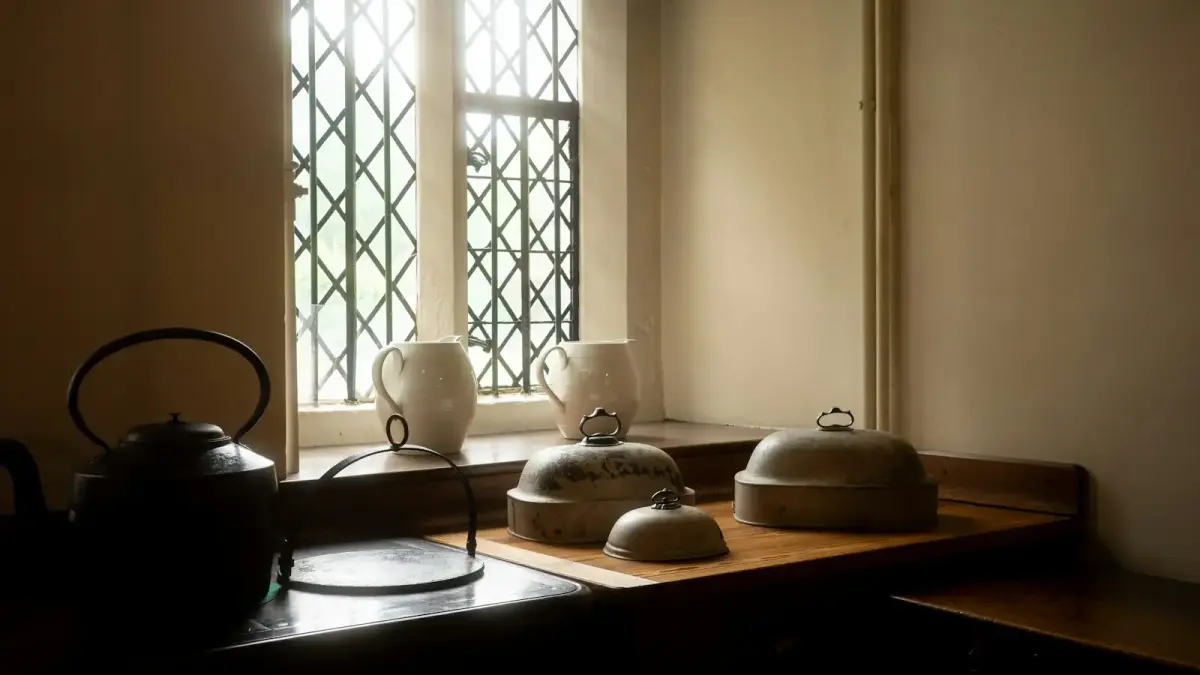
The kettle clicks off and her hands are already moving.
One mug from the left side of the cupboard - the blue one with the chip near the handle. One from the right - the larger one, the one that holds more because he always wanted more. Tea bag in each. Water poured. She reaches for the sugar bowl without thinking, drops in two spoons for his cup because one was never enough for him, and leaves the milk carton on the counter untouched because he never took milk. He said it ruined the taste. Forty-one years of marriage and she never once agreed with him on that, but she made it his way every single morning anyway.
She sets his cup on the counter, right side, near the window. And then she picks up her own cup and walks to the kitchen table and sits down and drinks her tea the way she always has.
The other cup goes cold. It goes cold every single day.
It was her daughter who noticed first. Visiting on a Sunday, standing in the kitchen doorway, watching. “Mom,” she said carefully, the way people speak when they’re trying not to break something. “You made two cups again.”
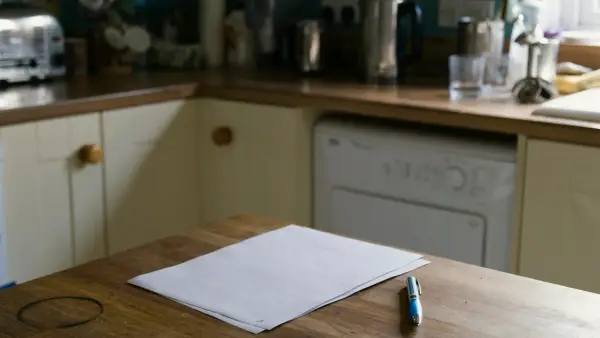
And that was the moment she looked down at the counter and saw the pale brown ring where his cup sits every morning - a tea stain the exact diameter of his mug, so faint you wouldn’t see it unless you knew to look. A circle drawn by a thousand mornings of the same gesture. A watermark left by love that doesn’t know how to stop.
The hands remember what the mind has already processed
She knows he’s gone. She is not confused. She signed the death certificate. She chose the casket. She sat in the front row and listened to people say kind things about a man she knew better than any of them, and she thought about the fact that nobody mentioned how he hummed while he cooked, or how he always forgot to close cabinet doors, or how he could never find his reading glasses even when they were on his head.
She sold his car four months after the funeral. She donated his shirts. She changed the beneficiary on the insurance.
Her mind has done the work of accepting what happened.
But her hands are running a different program. Her hands still reach for two mugs. Her hands still know the exact measurement of sugar he preferred - not level spoons, but slightly heaped, with the second one always a little less than the first because she’d learned, over decades, the precise ratio that made him say “perfect” without looking up from the newspaper.
This is not madness. This is not denial. This is what happens when you do something with love for forty years and then the reason disappears but the motion doesn’t.
Your body has its own kind of memory
There is a concept in psychology called procedural memory - the kind of knowing that lives not in your thoughts but in your muscles, your reflexes, your automatic routines. It’s the reason you can ride a bicycle twenty years after you last sat on one. The reason your fingers know your childhood phone number even when your conscious mind has forgotten it. The reason a pianist’s hands can play a piece their brain hasn’t thought about in a decade.
A 2021 study published in Frontiers in Psychology found that procedural memories - the motor routines we build through repetition - are remarkably resistant to cognitive updating. Your brain can know something has changed. Your body can refuse to agree. The researchers described it as a lag between declarative knowledge and embodied practice, and the lag can last months. Sometimes years. Sometimes it never fully closes.
She made his tea roughly 14,600 times across their marriage. That’s not a habit. That’s a physical language. It’s etched into her motor cortex the same way walking is, the same way breathing is. You cannot simply tell your lungs to stop inhaling because someone is no longer in the room.
Dr. Gabor Mate has written about how grief is not merely an emotional experience but a somatic one - something the body carries in its own way, on its own timeline, with its own logic. The body doesn’t process loss through understanding. It processes loss through the slow, reluctant extinction of routines that no longer have a recipient. And some routines resist extinction entirely, because they were never really about the task. They were about the person.
The rituals that outlive the people they were made for
Think about what a morning ritual really is when you share it with someone for forty years.
It’s not just tea. It’s the architecture of a day. It’s the structure that told her body: this is how we begin. The kettle is the opening sentence. His cup is the second paragraph. The placement on the counter is a punctuation mark. Remove any piece of it and the morning doesn’t read correctly. The grammar falls apart.
She tried stopping once. About eight months after the funeral, she stood at the counter and deliberately reached for only one mug. She boiled only enough water for one cup. She made her tea and sat down and drank it.
The morning felt wrong. Not sad - wrong. Like a word she couldn’t find. Like walking into a room and forgetting why she came. The absence of the second cup left a gap in the sequence that her body kept trying to fill, the way your tongue keeps finding the place where a tooth used to be.
She went back to two cups the next morning. Not because she decided to. Because her hands decided for her.
This is not about letting go
People talk about grief like it has stages, like there’s a conveyor belt moving you from denial to acceptance and you just need to stay on it long enough. But grief doesn’t work that way for everyone. Sometimes acceptance lives in one part of you while another part is still pouring tea for a man who will never drink it, and both things are true at the same time, and neither one is wrong.
A 2019 study in the Journal of Personality and Social Psychology found that bereaved spouses often maintain what researchers called “continuing bonds” - small, persistent rituals connected to the deceased partner - and that these rituals were not associated with prolonged distress. In fact, the study found the opposite. People who maintained small daily rituals connected to their late partners reported feeling more connected to their own sense of identity, not less. The ritual wasn’t holding them back. It was holding them together.
The second cup of tea is not a failure to move on. It is the body’s way of saying: I loved someone for forty years, and you cannot ask me to pretend that left no trace on how I move through a morning. The sugar, the placement, the temperature of the water - these are not symptoms. They are devotions.
The counter holds the shape of what was
Her daughter asked if she wanted to talk to someone. A grief counselor, maybe. Someone who could help her “work through” the tea thing.
She thought about it. She genuinely considered it. And then she thought about the stain on the counter - that pale circle left by hundreds of cups that nobody ever drank - and she realized she didn’t want it gone. She didn’t want someone to help her stop. She wanted someone to understand that stopping would erase the last place in her life where her hands still knew him.
The mind processes loss through language, through narrative, through the stories we tell ourselves about what happened and what it means. But the body processes loss through presence and absence - through the weight of a second mug, the absence of milk in a cup that used to be carried to a chair that is now empty. The body doesn’t have words for grief. It has gestures.
And sometimes the most honest gesture is the one that makes no logical sense at all.
She is not lost in grief - she is fluent in it
There is a difference between being stuck and being faithful. Between denial and devotion. Between a woman who can’t accept her husband is gone and a woman whose hands carry forty years of mornings that her brain has no authority to override.
She drinks her tea at the table. She reads the news on her tablet. She washes both cups in the sink when she’s done - hers and his - and places them back in the cupboard where they belong. Left side, right side. Ready for tomorrow.
Her hands will boil the water. Her hands will reach for two mugs. Her hands will add the extra sugar and leave out the milk and set the cup on the counter by the window where the light comes in, because that’s where he liked to stand.
The cup will go cold. It goes cold every day.
And the woman pouring tea for a man who will never drink it is not confused, not broken, not stuck in some early chapter of grief she hasn’t graduated from. She is running a morning that her body built across four decades of love, and the body does not take instructions from calendars or death certificates or well-meaning daughters who think healing means stopping.
Some mornings are not meant to be edited. Some rituals carry more truth than the facts that should have ended them. And sometimes the most precise measure of how deeply you loved someone is the second cup of tea that goes cold on the counter every single day - the one with the extra sugar and no milk - made by hands that remember what the mind has already agreed to release.
That is not grief refusing to leave.
That is love, still fluent, still faithful, still pouring.