She's 59 and Just Realized That Her Father's Whittling Every Evening on the Porch - Folding Knife and a Cedar Stick, Never Making Anything Recognizable, Just a Pile of Shavings at His Feet - Was Never a Hobby. It Was the Only Way He Knew How to Be Still Without Being Empty.
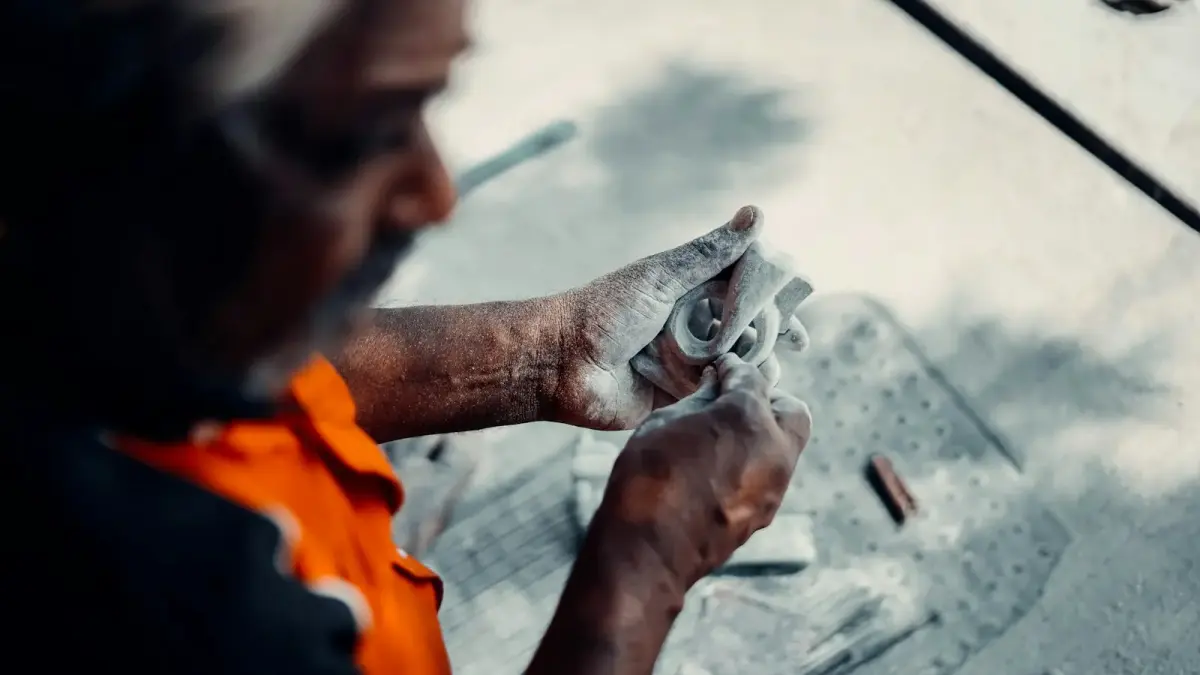
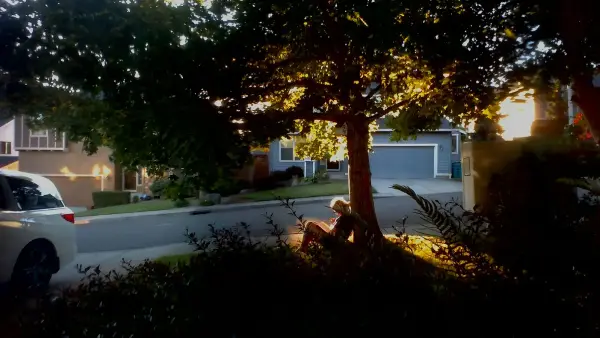
My father whittled every single evening of my childhood. He’d settle into the porch chair around seven, pull out his folding knife and a stick of cedar, and start peeling long curls of wood onto the floorboards. I’d watch through the screen door sometimes, waiting for a shape to emerge - a bird, a spoon, something I could hold and say my father made this.
Nothing ever emerged. Just shavings.
He’d sit there for an hour, sometimes longer, reducing a solid piece of wood to a pile of pale curls at his feet. Then he’d sweep them off the porch with the side of his boot, fold the knife closed, and come inside. My mother never commented on it. None of us did. It was just what Dad did after dinner the way other fathers watched the news or walked the dog.
I am fifty-nine years old. And last Tuesday, sitting in a restaurant with my daughter, I looked down and realized I had torn my paper napkin into a perfect spiral of tiny strips. The bread basket was full of little dough pellets I’d rolled between my thumb and forefinger without noticing. My daughter was mid-sentence about her son’s school, and my hands had been working the entire time - busy, purposeful, utterly unconscious.
And something shifted. Something I’d been looking at for decades without seeing.
He Never Made a Single Thing
That’s what I keep coming back to. In all those years of whittling - and I mean years, decades, every evening from spring through fall - my father never produced an object. Not once. There was no shelf of carved animals in the living room. No box of wooden figures he gave as Christmas gifts. No evidence that any of those hours on the porch had led to anything at all.
If you’d asked me at fifteen what my father was doing out there, I would have said wasting time. If you’d asked me at thirty, I would have said relaxing.
But neither of those was true.
He wasn’t relaxing. Relaxing implies a body at ease, a mind letting go. My father’s hands were never at ease. They needed occupation the way lungs need air - not as luxury but as function. The whittling wasn’t leisure. It was labor his nervous system required in order to exist in a quiet space without crawling out of his own skin.
I just couldn’t see it then because I didn’t have the vocabulary. And because I was doing the same thing.
The Napkin Confession
Here is what my hands do when I’m not watching them. They fold receipts into tiny squares. They peel the labels off water bottles in one continuous strip. They roll bits of bread into hard little balls. They pick at the corners of paper placemats until a small pile of confetti appears at my elbow.
They tear napkins into spirals. They braid the fringe on scarves. They click pen caps open and closed, open and closed, until someone across the table gently asks me to stop.
I have done these things my entire adult life. I have never once connected them to my father on that porch until last week.
A 2016 study published in Current Directions in Psychological Science found that repetitive hand movements serve as a self-regulation mechanism - a way the body manages emotional arousal when the conscious mind doesn’t have a strategy. The researchers called it “embodied regulation.” The hands do what the mind cannot bring itself to name.
My father didn’t have the words for what he felt after a day of work, after decades of a marriage that functioned but never quite reached each other, after raising children he loved fiercely but couldn’t figure out how to talk to. He didn’t have therapy or journaling or any framework for processing the low hum of unease that followed him through his days.
But he had a knife. And he had cedar. And his hands knew what to do even when the rest of him didn’t.
The Body Remembers What the Family Never Discussed
My father grew up in a house where silence was the weather. Not angry silence - not the kind that punishes. The kind that simply exists because nobody ever modeled anything else. His parents were good people who worked hard and said very little. Dinner was quiet. Evenings were quiet. Feelings were handled privately if they were handled at all.
He inherited that silence. And then he passed it to me.
Not the silence itself - I’m actually quite talkative. What he passed down was the body’s response to the silence. The restlessness. The inability to sit completely still without something in my hands, something to fold or tear or shape. The deep physical discomfort of unoccupied stillness.
A 2019 study in Frontiers in Psychology examined what researchers call “intergenerational transmission of emotion regulation strategies.” They found that children don’t just learn what their parents say about feelings. They learn what their parents’ bodies do with feelings. A mother who holds tension in her jaw raises a daughter who clenches her teeth at night. A father who copes through repetitive hand movements raises a child whose hands are never still.
This isn’t metaphor. This is neurobiology. The nervous system is a student long before the conscious mind enrolls.
Stillness Felt Like Drowning
I want to tell you something I’ve never said out loud. Empty-handed stillness terrifies me.
Not in a dramatic way. Not panic attacks or visible distress. It’s subtler than that. When my hands have nothing to do - when I’m sitting in a waiting room with no magazine, no phone, no thread to pull - something rises in my chest that I can only describe as a kind of internal static. A buzzing. As if my body is saying we are supposed to be doing something right now and the fact that we are not means something is wrong.
I’ve spent most of my life interpreting this as impatience. Or restlessness. Or just being “fidgety,” which is the word my mother used, always with a slight edge, as if my moving hands were a commentary on her ability to raise a calm child.
But it wasn’t impatience. It was the same thing my father felt on that porch. The same reason he reached for the knife.
Stillness without a task felt too close to the silence that defined his childhood home. And silence, in that family, wasn’t peace. It was the absence of connection. It was everyone sitting in the same room with their interior lives locked away, unreachable.
His hands whittled so his mind could stay in the room. My hands tear napkins for exactly the same reason.
The Inheritance Nobody Talks About
We talk about inheriting our parents’ eyes, their temper, their talent for music or math. We don’t talk about inheriting their coping mechanisms. Their body’s workarounds for emotions that were never given proper passage.
A 2021 study published in the Journal of Family Psychology found that somatic coping patterns - physical habits used to manage emotional discomfort - show remarkable consistency across generations, even when the specific behavior changes. A grandfather who paced becomes a father who drums his fingers becomes a daughter who shreds napkins. The strategy is identical. Only the medium shifts.
I think about my father’s hands a lot now. Those thick, scarred fingers holding the cedar stick steady while the blade peeled away another curl. He wasn’t making anything. He was making himself bearable to himself. He was giving his nervous system a job so it would stop scanning the silence for threats that weren’t coming.
And I think about my daughter, who I’ve watched twist her hair into knots during every phone call since she was sixteen. Who braids and unbraids the same strand while she talks, her fingers moving in a rhythm so practiced it’s become invisible to both of us.
Three generations. Three different materials. The same hands looking for something to hold because empty palms felt like an invitation for the quiet to swallow them whole.
What I Know Now That I Didn’t at Thirty
Here is the thing about being fifty-nine. You’ve lived long enough to see the pattern from above. Not while you’re inside it, not while you’re defending it or apologizing for it, but from a slight remove that only decades can provide.
My father wasn’t broken. He was a man from a generation that gave men almost no tools for emotional processing, and so his body invented one. The whittling was brilliant, actually. It was self-regulation without a manual, without a therapist, without a single self-help book on his nightstand. His nervous system figured out that rhythmic, repetitive hand movement calmed the internal noise, and it prescribed that remedy to him every evening at seven o’clock.
He wasn’t wasting time on that porch. He was keeping himself together.
And I’m not fidgety. I’m not impatient or restless or unable to sit still. I’m my father’s daughter, carrying his body’s wisdom in my own hands, using napkins and receipt paper instead of cedar, but running the same ancient program.
The Shavings at My Feet
I called my daughter after the restaurant. I told her about the napkin spiral and her grandfather’s whittling and the connection I’d finally made at fifty-nine. She was quiet for a moment. Then she laughed - not unkindly - and said, “Mom, I’m literally twisting my hair right now.”
We sat with that for a while. Two women on the phone, three hundred miles apart, both doing something with their hands that they’d never chosen and couldn’t quite stop.
I don’t want to stop. That’s the part I wouldn’t have understood at thirty. The fidgeting isn’t the problem. The fidgeting is the solution - the one my father’s body wrote in a language older than words, the one it passed to me without either of us knowing, the one I’ve apparently passed along again.
Some families hand down recipes. Some hand down jewelry or land or stories repeated at every holiday until the children can recite them in their sleep.
My family handed down the knowledge that the hands can hold what the heart can’t say. That sometimes the most honest conversation in the room is the one happening between your fingers and whatever they’ve found to fold.
My father is gone now. But every time I reach for a napkin edge without thinking, every time my fingers start their quiet work beneath the table, I feel him beside me on that porch. Both of us busy. Both of us still. Both of us finally, wordlessly, understood.