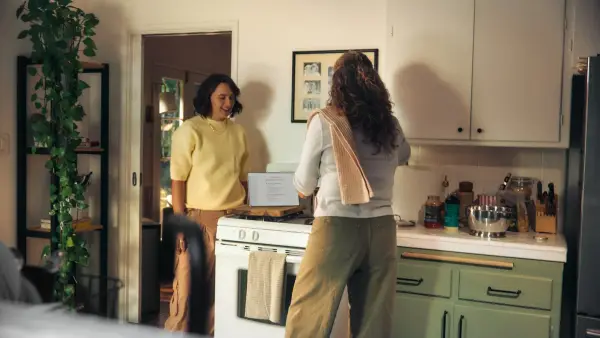
She's 60 and has finally understood that the reason she still flinches when someone is kind to her without being asked - remembers her coffee order, notices she's gone quiet, holds the door with intention - is not distrust but a girl who learned that unprompted tenderness was always the opening note of something that was about to go wrong
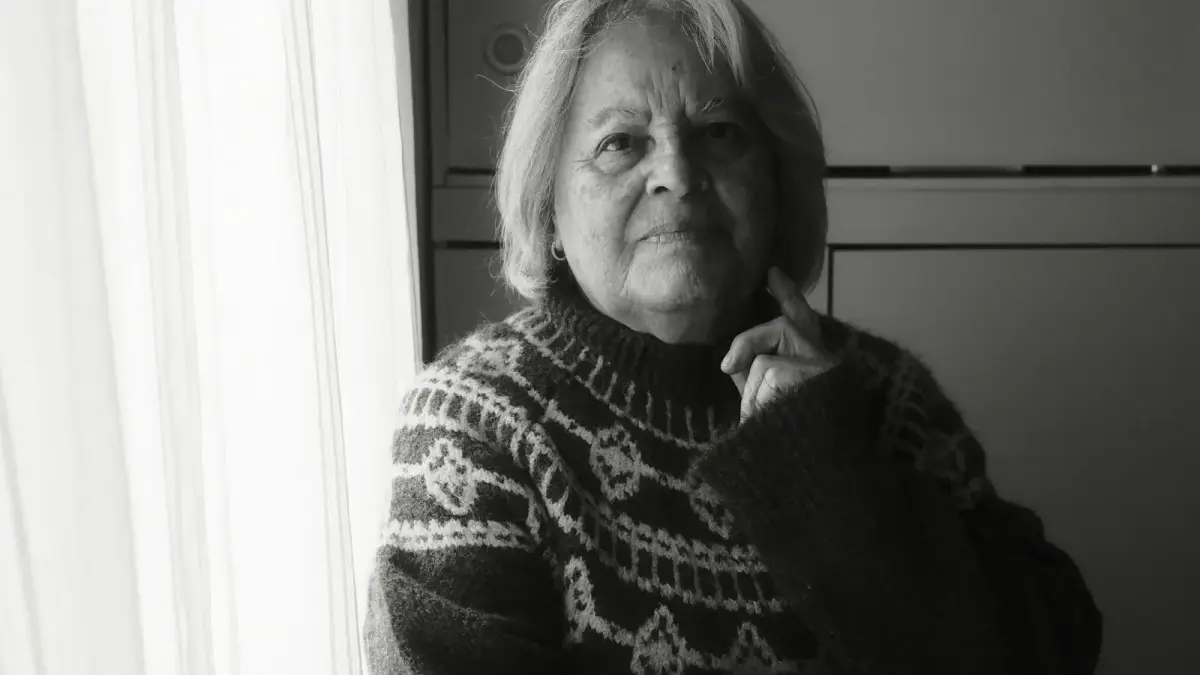
Last Thursday, my husband brought me a cup of coffee. He didn’t say anything. He just set it on the table next to my book, exactly the way I like it - too much cream, not enough sugar, the mug he knows I prefer because it fits my hands the right way. He kissed the top of my head and walked back to the kitchen.
And my whole body went tight.
Not dramatically. Not visibly. But somewhere between my ribs and my throat, something clenched. A door closed. A sentry woke up and started scanning the perimeter, looking for whatever was coming next. Because in the house I grew up in, that cup of coffee would have been the opening line of a conversation I didn’t want to have. The kiss on the head would have been the preamble to a favor, a guilt trip, or a silence that lasted three days.
I am sixty years old. My husband has been gentle with me for over thirty years. And there is still a part of me that watches his gentleness the way a sailor watches a calm sea - not with gratitude, but with suspicion.
The specific thing that happens
It’s not big kindness that triggers it. Big kindness I can handle. A birthday gift, an anniversary dinner, flowers after a fight - those come with reasons. They make sense. I can file them under the right category and accept them without my nervous system sounding alarms.
It’s the small, unprompted kindness that undoes me.
A friend who notices I’ve gone quiet at dinner and texts me afterward: “You seemed far away tonight. Everything okay?” My daughter who drops off groceries I didn’t ask for. A stranger who holds a door with genuine warmth - not obligation, not performance, but actual care in their eyes.
These are the moments when my body does something my mind has never authorized. My shoulders lift. My jaw tightens. My breath gets shallow and careful. I smile and say thank you and mean it - I do mean it - but underneath, some ancient machinery is whirring.
It’s looking for the cost.
It’s waiting for the second sentence.
Where the wiring started
My mother was not cruel all the time. That would have been easier to understand, honestly. Consistent cruelty gives a child something solid to stand on, even if it’s terrible ground. You learn the rules. You adapt.
What my mother gave me was weather.
She could be extraordinary. She would wake up on a Saturday morning and decide we were going to bake cookies and she would be warm and present and laughing in a way that made the whole kitchen feel golden. She would brush my hair and tell me I was beautiful. She would buy me a dress for no reason and lay it on my bed like a love letter.
And every single time, there was a second act.
The cookies preceded a request I couldn’t refuse. The hair-brushing came with a commentary on my weight that she delivered so gently it took me years to hear it as criticism. The dress meant I owed her something - my compliance, my silence, my performance as the happy daughter at whatever event she needed me to be perfect for.
I didn’t learn this consciously. No child sits down and builds a theory. But my nervous system - which is smarter than any theory - started making a map. Unprompted warmth equals incoming danger. Sweetness without context equals a transaction I haven’t agreed to yet. Tenderness is the wrapping paper. The box always has teeth.
The neuroscience of never feeling safe enough
A 2019 study published in Psychological Science found that adults who grew up in unpredictable home environments develop heightened sensitivity to ambiguous social cues - not negative ones, but ambiguous ones. Their threat detection systems fire not when something is clearly dangerous but when something is unclear. Kindness without an obvious reason is, to a hypervigilant brain, deeply unclear.
This is not a character flaw. This is architecture.
Dr. Stephen Porges’ polyvagal theory explains that the autonomic nervous system doesn’t just toggle between “safe” and “unsafe.” It reads the environment constantly, processing micro-signals - tone of voice, facial muscle movements, the speed of an approach - and makes a determination about safety faster than conscious thought can intervene. When a child’s early environment teaches the nervous system that warmth is an unreliable signal, the system doesn’t just become cautious. It recategorizes kindness itself as data that needs to be interrogated rather than received.
I didn’t choose to flinch when my husband brings me coffee. My vagus nerve chose for me, based on information it collected forty-five years ago.
And the devastating part is that it’s still right - not about him, not about now - but about then. It was right about then. The system did its job. It kept a little girl safe by teaching her to never let sweetness catch her off guard.
The problem is that the system doesn’t retire.
What it looks like from the outside
People who love me have felt it. I know they have, even if they’ve been kind enough not to name it.
My husband gives me a compliment and something in my face flickers before the smile arrives. It’s less than a second. But he’s seen it ten thousand times, and I know there are nights when it costs him something he doesn’t mention.
My daughter offers to help me with something and I say “I’m fine” so quickly it sounds almost aggressive. Not because I don’t want her help. Because accepting help I didn’t earn or request activates every alarm I have.
A friend says “I was just thinking about you” and my first thought - my actual first thought, before the warmth reaches me - is: what does she need?
I know how this sounds. It sounds ungrateful. It sounds like a woman who can’t receive love, and maybe that’s partly true. But it’s not the whole truth.
The whole truth is that I can receive love that I understand. Love with a clear origin. Love that I’ve earned through being useful, dependable, the one who shows up. Transactional love is the only love my body trusts, because transactional love was the only love my childhood made predictable.
Spontaneous love - the kind that arrives without a receipt - that’s the one that makes my whole system go on alert.
The pattern nobody warns you about
Research on attachment styles, particularly the work building on John Bowlby and Mary Ainsworth’s foundational studies, shows that anxious-preoccupied attachment doesn’t always look like clinginess or neediness. Sometimes it looks like a woman who is deeply competent, thoroughly self-sufficient, and almost impossible to surprise with kindness because she’s already braced for what kindness might cost.
A 2021 study in Frontiers in Psychology found that adults with histories of inconsistent parental warmth often develop what researchers call “reward ambiguity processing” - difficulty experiencing positive social interactions as purely positive. The brain treats unexpected kindness the same way it treats unexpected anything: as a potential threat requiring assessment before it can be experienced as pleasure.
Think about what that means for a lifetime.
Every cup of coffee set down gently. Every “I was thinking of you.” Every door held, every compliment given, every hand placed on the small of your back while you’re looking at something in a store. Every single one of those moments passes through a checkpoint before it can become joy. And sometimes, by the time it clears security, the moment is already over.
You spend your life one beat behind everyone else’s experience of being loved.
The woman I was supposed to be angry at
I spent my forties being angry. Therapy will do that - it hands you a flashlight and you walk through the house of your childhood and finally see all the furniture you’ve been tripping over in the dark. I saw the manipulation clearly. I named it. I processed it in fifty-minute increments with a woman who nodded and said “that makes sense” until I believed her.
But anger is its own kind of simplicity. My mother was not a villain. She was a woman who was never taught how to be kind without attaching conditions, because nobody was ever kind to her without conditions either. The transactional tenderness didn’t start with her. It just passed through her.
Understanding that doesn’t fix the wiring. But it softens the story.
And softening the story turns out to be the only thing that has ever, even slightly, softened the flinch.
What I’m learning at sixty
I haven’t fixed this. I want to be honest about that because I think there is a version of this essay that ends with a breakthrough, a moment of pure reception, a morning when my husband brings coffee and I just feel loved without the static. That essay would be more satisfying to read. But it wouldn’t be true.
What I’ve learned instead is something smaller and maybe more useful.
I’ve learned to let the flinch happen and not make it mean something about who I am now. The flinch is a memory. It’s my body remembering a house where sweetness was the sound before the storm. I don’t have to fight the memory. I don’t have to be ashamed of it. I just have to let it pass through me and then - and this is the important part - stay in the room.
Stay in the room with the coffee.
Stay in the room with the compliment.
Stay in the room with the friend who noticed I was quiet and bothered to ask.
Because the flinch takes about four seconds. And what lives on the other side of those four seconds, if I don’t leave, is the thing I’ve been waiting for my entire life.
It’s kindness that costs nothing. Tenderness with no second act. A cup of coffee that is just a cup of coffee.
The thing I want you to know
If you read this and felt your own shoulders tighten in recognition, I want you to understand something that took me six decades to learn.
You are not ungrateful. You are not cold. You are not broken or difficult or incapable of receiving love.
You are a person whose early warning system was built by a childhood that required one. The system worked. It kept you alive, alert, and one step ahead of the people who wrapped their agendas in affection. You should be proud of the girl who figured that out. She was brilliant. She was paying attention when the adults around her pretended nothing was happening, and she built a defense system so sophisticated it’s still running perfectly decades later.
The only problem is that you don’t live in that house anymore.
And the people bringing you coffee now - they’re not loading a second sentence. They’re not attaching conditions. They’re just loving you. Clumsily, imperfectly, without knowing that every small act of gentleness has to pass through forty years of security before it reaches you.
Let it pass through. And then let it land.
You’ve earned the right to receive something soft without bracing for what comes after. Not because you’ve done the work, or read the books, or spent enough years in therapy. But because you were always deserving of uncomplicated warmth.
You just never had anyone show you what it looked like when it came without a cost.