She's 62 and has just realized that the jar of buttons she keeps on the top shelf of her closet - buttons from coats that wore out decades ago, from shirts her children outgrew, from a dress her mother wore to church every Sunday until the fabric gave - was never a sewing supply but a census of every person she loved enough to save a piece of before letting the rest go
I found the jar last Tuesday while looking for a tablecloth I haven’t used since Thanksgiving.
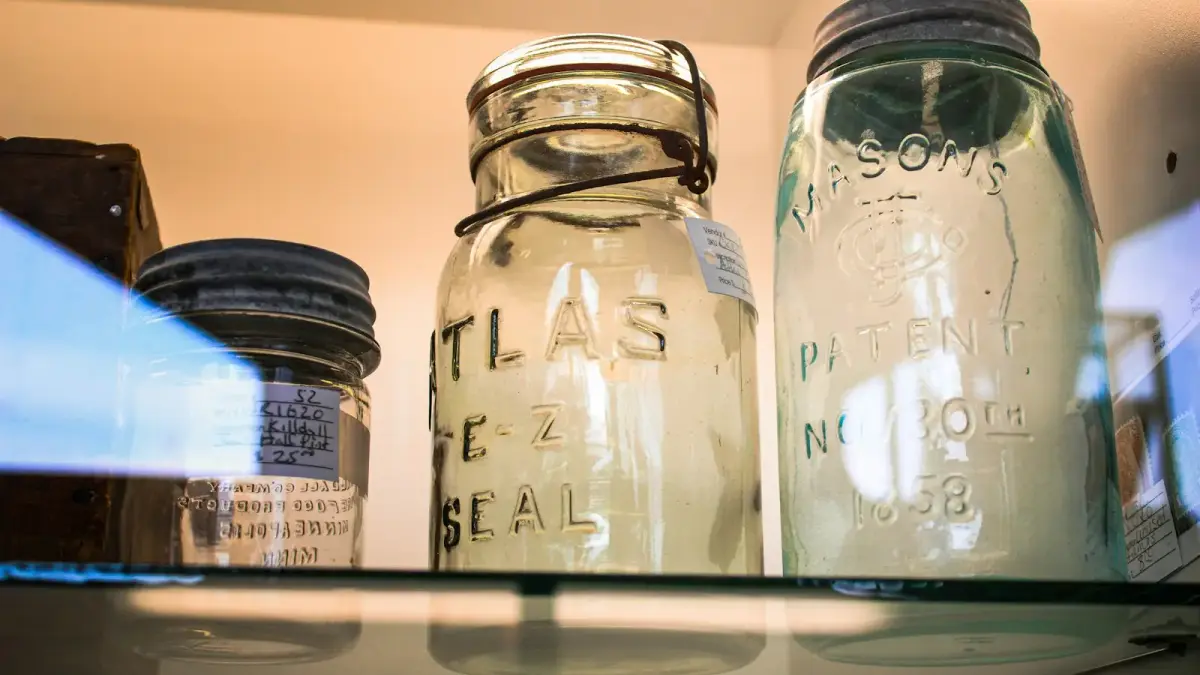
It was on the top shelf of my hall closet, behind a stack of linens that smell like cedar and a decade of stillness. A wide-mouth mason jar, heavy in my hand, full of buttons. Dozens of them. Maybe a hundred. All different sizes, different colors, different ages.
I unscrewed the lid and poured a few into my palm, and something happened that I wasn’t ready for.
I recognized them.
Not all of them. But enough. The oversized brown toggle from my father’s winter coat - the one he wore to walk the dog every morning until we didn’t have a dog anymore and then he still wore it to walk alone. Two small white buttons from a school shirt my son ruined with grass stains in the fourth grade. A smooth pearl-colored one from a blouse my mother wore to church for what must have been fifteen years, because I can see her in it the way I can see her in nothing else.
I sat on the floor of the hallway holding buttons like a woman reading a letter she didn’t remember writing.
And I understood, for the first time, that I had never once opened that jar to replace a button.
The Jar Was Never About Sewing
I always told myself the jar was practical. Every woman I knew growing up kept one. My mother had hers in a coffee tin above the washing machine. My grandmother kept hers in a ceramic bowl on the dresser. You snipped the buttons before you threw the garment away, because buttons were useful. You might need one someday.
But I have a sewing kit in the drawer by the kitchen. It came with buttons of its own - plain ones, perfectly matched. When a button falls off a shirt now, I go to that kit. I have never, not once in forty years, climbed up to the closet shelf and fished through a jar of mismatched buttons looking for a replacement.
The jar was never a supply. It was a record.
Every button in that jar is there because at some point I held a piece of clothing that was too worn or too stained or too small to keep, and before I folded it into a donation bag or cut it into rags, I paused. I took the scissors. I cut the buttons free.
Not because I would need them. Because throwing the whole thing away felt like too much.
What We Save When We Cannot Save the Person
There is a word in Japanese - mono no aware - that roughly translates to the bittersweet awareness of impermanence. It is not sadness exactly. It is the tender ache you feel when you notice that something beautiful is also temporary. A cherry blossom is more moving because it falls.
I think the button jar is my version of that.
A 2021 study published in the Journal of Consumer Research found that people assign disproportionate emotional value to objects that were physically touched or worn by someone they love - even when those objects have no practical use and no resale value. The researchers called it “contagion of essence.” We believe, on some preverbal level, that the person’s presence lingers in the thing they handled.
I believe that. I believe it because I can hold a brown toggle from a coat my father hasn’t worn in twenty-three years and feel the specific weight of his hand on my shoulder.
The buttons are not hardware. They are the last surviving witnesses.
Grief Dressed Up As Practicality
Here is what I think happened, and what I think happens to a lot of women who keep jars like mine.
We were not taught a language for grief that didn’t involve being useful. Our mothers didn’t sit us down and say, “When you lose something you love, you’re allowed to keep a piece of it just because it hurts to let go.” They said, “Save the buttons. You never know.”
So we saved the buttons. And we told ourselves it was sensible. And the jar filled slowly, over decades, one garment at a time, one goodbye at a time, until it became something we couldn’t explain to anyone else because we had never fully explained it to ourselves.
The psychologist Pauline Boss has written extensively about what she calls ambiguous loss - the kind of grief that doesn’t come with a funeral or a clear ending. A child outgrowing a shirt is not a death. A coat wearing thin at the elbows is not a tragedy. But something is still gone, and the body knows it before the mind catches up.
I think the button jar is where ambiguous loss lives. It is the place where women have been quietly archiving the passages of a household - the growth spurts, the worn-out years, the things that fit once and never fit again - without ever calling it what it is.
A Census of Size and Time
When I poured the buttons out onto the hallway floor that Tuesday afternoon, I noticed something I had never noticed before.
The buttons told a story in scale.
The tiniest ones came first. Pale pink, plastic, almost weightless. From infant clothes, probably. Onesies and cotton dresses so small they looked like they belonged to a doll. My daughter’s, I think, though I can’t be sure anymore because they’re from the years when everything was soft and blurred with sleeplessness and I was too tired to label anything.
Then the children’s buttons. Slightly larger. School uniform buttons. Buttons from little denim jackets. A red one from a raincoat my son wore until the zipper gave out and the sleeves stopped reaching his wrists.
Then the adult buttons. The more serious ones. Buttons from my husband’s dress shirts, from my work blazers, from the coat I wore through two pregnancies because I couldn’t justify buying a new one.
And then my mother’s buttons. I know which ones are hers because they are older than everything else in the jar. Fabric-covered buttons from the 1970s. A brass-toned button from a suit she wore to my college graduation. The pearl ones from that church blouse.
The jar is a timeline. It is a census of every body that moved through this house and how those bodies changed - from tiny to growing to grown to aging to gone.
The Body Archives What the Mind Cannot Narrate
A 2019 study in Frontiers in Psychology explored how people use physical objects to process grief, particularly grief that is ongoing or unresolved. The researchers found that holding or handling objects connected to a lost person activates the same neural regions involved in social bonding. The brain does not fully distinguish between touching a person and touching something that belonged to them.
This means that every time I’ve reached up to that shelf and held the jar - even without opening it, even without thinking about why - my brain was doing something my conscious mind refused to name. It was visiting. It was keeping contact.
I think about all the women I know who have jars like this. Tins of buttons. Boxes of fabric scraps. Drawers full of baby shoes that no baby will ever wear again. We keep these things and we feel slightly embarrassed by the keeping, as though we should be more practical, more able to let go.
But we are not keeping clutter. We are keeping evidence. Evidence that those years happened. That those people were real and warm and present in our kitchens. That time moved through our households one fastening at a time, and we noticed, even when no one else did.
What the Jar Knows That I Am Still Learning
I am 62 years old, and I have spent most of those years being the person who keeps track. I tracked the school schedules and the grocery lists and the prescription refills and the birthdays. I tracked who needed new shoes and who had outgrown their winter coat and whose collar was fraying at the fold.
I tracked the material life of a family, and when each piece of that material life reached its end, I performed a small ritual that I never recognized as ritual. I cut the buttons. I put them in the jar. I closed the lid. I put the jar back on the shelf.
And I moved on to the next thing that needed tending.
But the jar did not move on. The jar collected. The jar remembered. The jar held every small surrender I had made over four decades of loving people whose bodies and lives kept changing underneath my hands.
I read something once by the writer and trauma therapist Gabor Mate about how the body stores what the mind is not ready to process. How we hold grief in our muscles, in our habits, in the patterns we repeat without understanding why.
I think I stored my grief in buttons.
The Permission You May Not Have Given Yourself
If you have a jar like mine - or a tin, or a box, or a drawer - I want you to know something.
You are not being sentimental. You are not being foolish. You are not holding on too tightly.
You are doing something that humans have done for as long as we have loved each other and lost each other, which is to say, for as long as we have been human at all. You are keeping a piece. A small, tangible, holdable piece of a time that is not coming back.
And the fact that you dressed it up as practicality - “save the buttons, you never know” - does not make it less sacred. It makes it more. Because it means you found a way to grieve inside a life that never gave you permission to stop and do it properly.
The jar is not a sewing supply.
The jar is a love letter written in fasteners, one button at a time, by a woman who was always too busy taking care of everyone else to sit down and admit how much she missed them.
You can sit down now. You can hold the jar. You can let it be what it always was.
You were never saving buttons. You were saving proof that you loved them.
And you did. You loved them so well that even the buttons remember.