She's 63 and has finally understood that her generation's version of therapy was a long drive with the windows down and a song that said everything they couldn't, and the reason it worked had nothing to do with avoidance and everything to do with a nervous system that needed rhythm and motion more than it needed someone asking how that made you feel
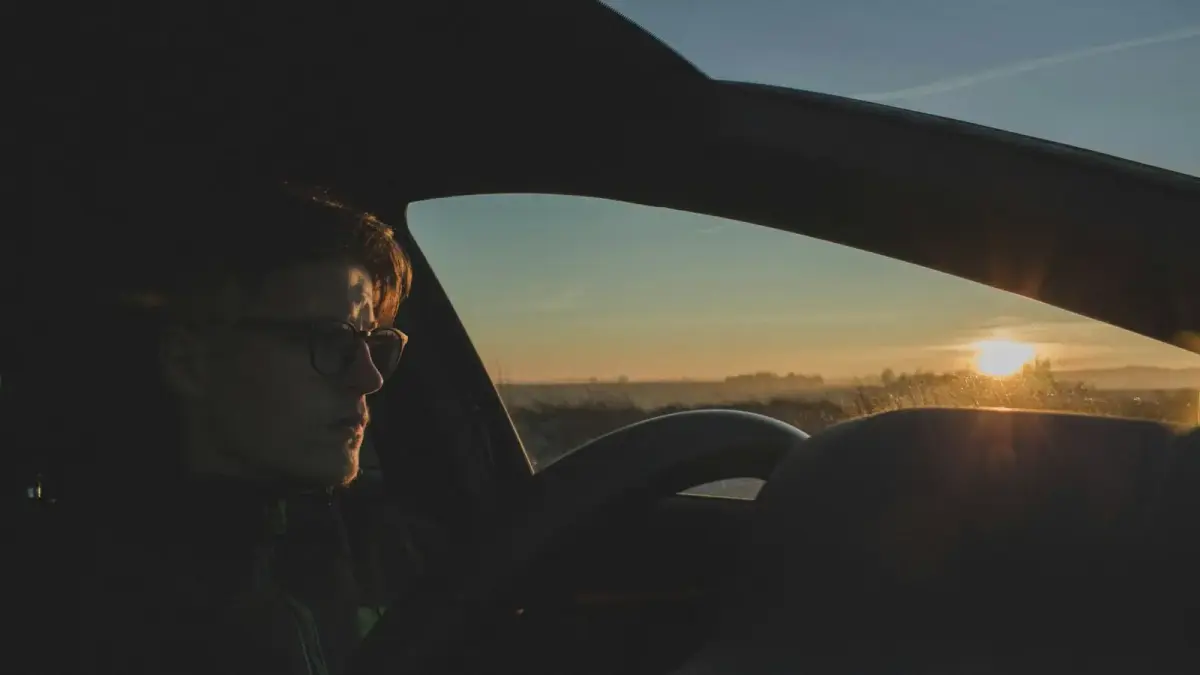
My mother used to disappear on Tuesday evenings.
She didn’t announce it. She didn’t explain. She’d finish the dishes, wipe her hands on the towel by the stove, pick up her keys from the hook by the door, and just leave. Forty-five minutes. An hour. Sometimes longer if the weather was nice and the roads were empty.
When she came back, something about her was different. Not fixed, exactly. Not cheerful. But settled. Like a snow globe that had finally stopped being shaken.
I asked her once, when I was maybe fifteen, where she went on those drives. She looked at me like the question didn’t quite make sense. “Nowhere,” she said. “I just drive.”
I’m 63 now, and I finally understand what she was doing. She was going to therapy. She just never called it that. She called it going for a drive. And for an entire generation of people who were raised to believe that talking about your feelings was either self-indulgent or dangerous, it was the most sophisticated form of emotional processing available - a moving room with no clipboard, no waiting area, and a soundtrack that said the quiet part out loud so they never had to.
The car was never about escape
There’s a version of this story that younger generations have been telling for decades, and it goes like this: our parents didn’t do therapy because they were emotionally avoidant. They bottled it up. They stuffed it down. They went for drives instead of dealing with their feelings.
I believed that story for most of my adult life. I told it to my own therapist, actually, in my late thirties, with a kind of gentle pity for my parents’ generation that I now recognize as spectacularly wrong.
Because here’s what I’ve come to understand. The car was never about running away from feelings. The car was the only place many of them had where feelings were allowed to arrive.
Think about it. The house was shared. The office was performative. The phone was a party line and then a family line and then a speakerphone in the kitchen. There was no private space. Not physically, and not emotionally. The culture said be strong. The family said don’t make a scene. The era said keep it together.
But the car - the car was yours. The door closed and you were alone, really alone, in a way that almost never happened anywhere else. And the road moved beneath you, and the wind came through the windows, and nobody could see your face.
That wasn’t avoidance. That was the creation of the only safe therapeutic space an entire generation knew how to build.
What the music was actually doing
Here’s where it gets interesting, and where modern psychology accidentally explains something your mother figured out on her own in 1983.
A 2020 study published in Frontiers in Psychology examined the neurological effects of music on emotional regulation and found that listening to emotionally resonant music activates the same neural pathways involved in processing personal memories and unresolved emotional experiences. The researchers noted that music bypasses the prefrontal cortex - the part of the brain responsible for verbal reasoning and social filtering - and reaches the limbic system directly, where raw emotion lives without language.
In other words, the song gets in before your defenses can stop it.
This is why your mother could hear three bars of a Carole King song and suddenly be crying on the highway, when she hadn’t cried in front of another human being in eleven years. The music wasn’t creating the emotion. The music was unlocking the door that every other part of her life had been deadbolting shut.
She couldn’t say “I’m lonely in my own marriage” to a person. She couldn’t even say it to herself. But Joni Mitchell could say it, and your mother could listen in the car at sixty miles an hour, and something in her chest could finally loosen without anyone watching.
That’s not avoidance. That’s emotional processing through the only medium that could get past the verbal defenses of a generation raised to never say the quiet part out loud.
The drive itself was doing the work
But it wasn’t just the music. It was the motion.
There’s a reason therapists now use EMDR - Eye Movement Desensitization and Reprocessing - to help people process trauma. The technique involves bilateral stimulation, which is just a clinical way of saying rhythmic, alternating activation of both sides of the brain. Your eyes move left and right. Or you hold buzzers that alternate between your hands. Or you listen to tones that shift from ear to ear.
The theory, supported by a substantial body of research including a 2014 meta-analysis in the Journal of EMDR Practice and Research, is that bilateral stimulation helps the brain move traumatic or stuck emotional material from short-term distress into long-term integration. It doesn’t erase the memory. It metabolizes it. Turns it from a wound into a scar.
Now think about what happens when you drive.
Your eyes sweep left to right across the road, over and over. Your hands hold the wheel at ten and two, and the vibration of the road moves through both of them. The landscape scrolls past in a rhythm - trees, mailboxes, fence posts, driveways - left to right, left to right, endlessly.
You are doing bilateral stimulation. You have been doing bilateral stimulation this entire time.
Your mother didn’t know the term. She didn’t need to. Her nervous system knew what it needed, and it got in the car and drove until the thing inside her that was wound too tight began to unspool.
The windows had a purpose too
I keep coming back to the windows, because every single person I’ve talked to about this mentions the windows. It was never a drive with the windows up and the air conditioning on. It was the windows down. Always.
There’s a reason for that, and it’s not nostalgia.
When you roll the windows down at speed, you create a rushing sensory experience - wind on your skin, the smell of cut grass or rain or pavement, the sound of air moving past your ears. This is what clinicians now call “sensory grounding,” and it’s one of the most basic tools for nervous system regulation. It pulls you out of the recursive thought loop - the replaying, the rehearsing, the arguing with someone who isn’t there - and anchors you in the physical present.
A 2021 study in Psychological Science found that sensory-rich environments significantly reduce rumination, the repetitive negative thinking pattern that fuels anxiety and depression. The researchers noted that the more senses engaged simultaneously, the more effectively the brain shifts from its default mode network - the part that worries and replays - into present-moment processing.
Wind through an open window at fifty-five miles per hour engages touch, hearing, and smell all at once. It is, neurologically speaking, a grounding exercise delivered at highway speed.
Your mother didn’t read that study. But she rolled the windows down every single time, because something in her body understood what her mind had no language for.
What they were really doing on those drives
Let me put it all together, because the picture that emerges is remarkable.
A person sits in a private, enclosed space - the only truly private space available to them. They begin moving, and the motion creates bilateral stimulation that activates emotional processing. They open the windows, flooding their senses and grounding their nervous system in the present. They play a song - carefully chosen, almost always the same few songs - that bypasses their verbal defenses and reaches the emotion they can’t access any other way.
For thirty minutes or an hour, they feel everything they’ve been unable to feel in the house, at work, at the dinner table, in the bed they share with someone who never learned to ask.
And then they come home. Settled. Quieter. Not fixed, but metabolized. The snow globe isn’t still, exactly, but the shaking has stopped.
That is a therapy session. That is a remarkably effective, intuitively designed therapy session that an entire generation built for themselves out of nothing but a car, a road, and a cassette tape - because nobody told them it was okay to sit in a room and talk about the thing that was breaking them, so they found another way.
The part that makes me want to cry
Here’s what gets me. Here’s the thing I can’t stop thinking about.
They didn’t know it was working. They didn’t know why it helped. They just knew that when the thing inside them got too big, they could get in the car and drive, and by the time they got home, they could breathe again.
And then their children grew up and went to therapy and learned the vocabulary - bilateral stimulation, nervous system regulation, emotional processing, somatic experiencing - and came home and looked at their parents with gentle, slightly condescending concern and said, “You know, Mom, you really should talk to someone.”
And she’d nod and say, “Maybe.” And then she’d pick up her keys and go for a drive.
She wasn’t resisting help. She already had help. It just didn’t look like what we’d been taught to recognize.
Daniel Goleman, who spent decades studying emotional intelligence, wrote about the ways people develop what he called “self-regulatory strategies” - personalized methods for managing emotional overwhelm that are often invisible to outside observers. He noted that many of the most effective strategies are non-verbal, body-based, and deeply intuitive. The people using them frequently can’t explain why they work. They just know they do.
Your mother knew. She just didn’t have the words. And nobody gave her credit for the knowing because it came wrapped in a Fleetwood Mac cassette and a Buick with the windows down instead of a copay and a diagnosis.
You were never avoiding your feelings
If you’re reading this and you’re in your fifties or sixties or seventies, and you’ve spent years quietly absorbing the implication that your generation didn’t “do the work” because you didn’t do it in a therapist’s office, I want you to hear this.
You did the work.
You did it on back roads and highways. You did it at ten o’clock at night when the house was finally quiet and you could slip out without explaining where you were going. You did it with the windows down and a song on the radio that knew the words you never learned to say.
You built yourself a moving sanctuary out of gasoline, motion, wind, and melody, and you used it to process things that would have swallowed you whole if you’d had to sit still with them in a quiet room under fluorescent lights.
The fact that you couldn’t name what you were doing doesn’t mean you weren’t doing it. The fact that nobody validated it doesn’t mean it wasn’t real.
It was real. It was sophisticated. And it was yours.
I think about my mother on those Tuesday evening drives. The window down. The road unreeling in front of her. Some song from 1975 doing the work that forty years of “I’m fine” could never do.
She wasn’t running away from anything. She was driving directly into the center of everything she felt, with the only companion that never asked her to explain herself - a three-minute song that said it all, so she didn’t have to.
If you’ve ever come home from one of those drives feeling lighter and not known why, now you know.
It was never avoidance. It was always healing. And you were doing it beautifully the whole time.