She's 66 and has just realized the reason she still keeps a bowl of butterscotch candies on the coffee table - the same amber discs in the same kind of cut-glass bowl on the same kind of crocheted doily her grandmother kept in her living room forty years ago - even though nobody in her house eats hard candy and the bowl has not been touched in months, is not nostalgia or decoration but the quiet construction of a shrine to the only house where she never had to explain herself
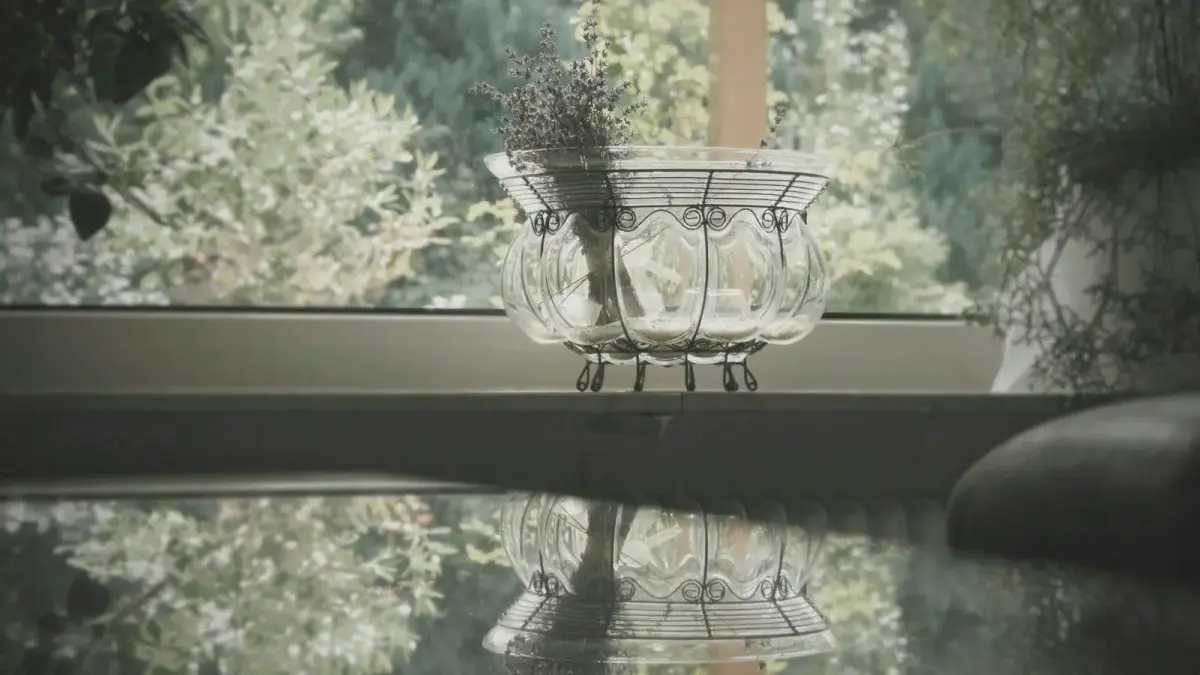
I noticed the butterscotch candies on a Tuesday in March. Not noticed them for the first time - they had been sitting on my coffee table for years, amber discs in cellophane wrappers inside a cut-glass bowl on a crocheted doily that was starting to yellow at the edges. I had dusted around them a thousand times. What I noticed, finally, was that nobody in my house eats butterscotch.
Not my husband. Not me. Not the grandchildren when they visit, because grandchildren in 2026 do not reach for hard candy when there are fruit snacks in the pantry. The bowl had not been touched in months. The wrappers at the bottom were stuck together from heat and time.
And I stood there in my own living room at sixty-six years old, holding a dust cloth, and understood with a clarity that made my knees feel strange that I had not put that bowl there for anyone. I had put it there for a room. For a room that hasn’t existed since 1986, in a house that was torn down to build condominiums, belonging to a woman who has been dead for twenty-three years.
I had built my grandmother’s living room without knowing it. And the butterscotch was not a candy dish. It was a coordinate. A pin dropped on the map of the only place I ever felt safe without having to earn it.
The Bowl That Nobody Uses
My grandmother kept butterscotch candies in a cut-glass bowl on a doily on the end table next to her chair. The chair was green velvet, worn thin on the arms. There was a clock on the mantel that chimed on the quarter hour - not loudly, just a small metallic reminder that time was passing and that was fine.
Her living room smelled like something baking, always. Not always the same thing. Sometimes bread, sometimes something with cinnamon, sometimes just the warm ghost of whatever had come out of the oven an hour ago. The afternoon light came through lace curtains and landed on that cut-glass bowl, and the bowl threw tiny rainbows on the wall behind it.
I was seven, eight, nine, ten. I sat on the floor near that end table and read books. I did not have to talk. I did not have to perform. I did not have to explain what I was reading or why I was quiet or whether I was happy or sad.
In that living room, I was allowed to simply be a person in a room. You would think that would be an ordinary thing. You would think every child gets at least one room like that. But if you are reading this and your chest just tightened, then you already know - not every child does.
The Homes Where You Had to Perform
My parents’ house was not unsafe. I want to be clear about that. I was fed and clothed and driven to school and told I was loved. But their house had a frequency to it - a hum of expectation that I could feel in my teeth.
My mother needed to know I was happy. My father needed to know I was doing well. Every room in that house was a stage where I performed the role of a daughter who was fine, who was thriving, who did not sit quietly on floors reading books when she could be outside making friends.
I learned early that silence worried people. That reading alone in a corner prompted questions. That existing without visible enthusiasm was treated as a symptom of something that needed fixing.
So I performed. I smiled. I narrated my inner life for people who needed narration. And then on Friday afternoons, my mother would drop me at my grandmother’s house, and I would walk into that living room with the green chair and the clock and the butterscotch and the rainbows on the wall, and I would sit on the floor and open a book and breathe.
She never asked me what I was reading. She never asked me if I was okay. She just let me exist in her living room like I was furniture, like I was the cat, like I was a plant on the windowsill that needed nothing but light and time.
What the Body Remembers Before the Mind Can Name It
A 2019 study published in Psychological Science found that sensory details - specific smells, textures, qualities of light - activate memory networks far more powerfully than narrative recall. We do not remember safety as a story. We remember it as a collection of physical sensations. The crinkle of cellophane. The weight of cut glass. The particular amber of a butterscotch disc held up to afternoon light.
This is why you cannot think your way back to the safest place you ever knew. You have to feel your way there. And your body has been doing this without your permission for decades.
I did not decide to buy a cut-glass bowl. I saw one at an antique store twelve years ago and picked it up because it felt right in my hand. I did not decide to fill it with butterscotch. I was in the grocery store and I passed the candy aisle and my hand reached for the bag before my brain registered what it was doing.
I did not decide to place it on a crocheted doily on my coffee table. I crocheted the doily myself, three winters ago, following a pattern I found online that I chose because it looked right. It looked like something that belonged under a bowl.
Every piece was collected over years. None of it was conscious. And when I stood in my living room in March and saw the whole thing assembled - the candy, the bowl, the doily, the table - I understood that I had been building something the way birds build nests. Not from blueprints. From instinct. From a body that remembers where it was allowed to rest.
The Archaeology of Safety
You are probably doing this too. Not with butterscotch, maybe. Maybe with a specific kind of throw blanket. Maybe with the way you arrange pillows on your couch, or the particular lamp you chose for the corner of your bedroom, or the mug you drink from every morning that looks exactly like one that sat on a counter in a kitchen where someone loved you without conditions.
A 2021 study in the Journal of Research in Personality found that adults unconsciously recreate environmental features from spaces associated with their earliest experiences of unconditional acceptance. The researchers called these “safety artifacts” - objects that serve no practical function but anchor a person to a felt sense of belonging.
I have spoken to friends about this since my butterscotch revelation. A woman I have known for thirty years told me she keeps a specific brand of hand soap in her bathroom - the same soap her aunt used - even though she does not particularly like the scent. A man in my book club realized he had been buying the same style of kitchen curtains for four decades because his grandfather had curtains like that above the sink in his farmhouse.
None of them had done it on purpose. All of them recognized, once they saw it, that they had been doing it for years. The body builds its shrines quietly, while the conscious mind is busy thinking about groceries and deadlines and whether the car needs an oil change.
Why We Build Shrines to Rooms, Not People
Here is what surprised me most. I did not recreate my grandmother. I recreated her living room.
I do not wear her perfume. I do not cook her recipes. I do not tell her stories or keep her photographs in prominent places. What I kept was the bowl. The candy. The doily. The surfaces.
And I think I understand why. My grandmother was a person, complicated and full and impossible to replicate. But her living room was a feeling. It was the physical architecture of permission - permission to be quiet, to be still, to exist without narration.
You cannot bottle a person. But you can reconstruct the room where that person let you be yourself. You can place the objects in the right configuration and hope that the feeling follows the form. And sometimes, on a Tuesday afternoon when the light comes through the window at the right angle and catches the cut glass and throws tiny rainbows on the wall - sometimes the feeling does come. For just a second. Like a door opening into a room that does not exist anymore, except that it does, because you built it.
The Quiet Permission You Are Still Looking For
Research from a 2023 study in Frontiers in Psychology suggests that the human need for what the researchers termed “unconditional spatial belonging” - the experience of being in a place where no performance is required - does not diminish with age. If anything, it intensifies. The older we get, the more precisely we remember the rooms where we were allowed to simply exist, and the more urgently we try to recreate them.
This is not weakness. This is not being stuck in the past. This is the deepest kind of emotional intelligence - your body knowing what your mind has been too busy to articulate. That somewhere, at some point, there was a room. And in that room, there was a chair. And next to the chair, there was a bowl. And in the bowl, there were amber-colored candies that nobody ate but everybody noticed, catching the light and throwing colors on the wall like small, quiet proof that beauty does not have to be useful to matter.
If you have a bowl of candy nobody touches, a blanket nobody uses, a mug that is chipped but irreplaceable - look at it. Really look at it. Ask yourself whose room it belongs to. Ask yourself whose house taught your body what safe felt like before your mind had a word for it.
You are not being sentimental. You are not being foolish. You are not decorating.
You are mapping the coordinates of a peace you knew once, deeply and completely, in a room where a clock chimed on the quarter hour and a woman let a girl sit on the floor and read and never once asked her to explain why she was so quiet.
The butterscotch is still on my coffee table. I dusted around it again this morning. I will not move it. I will not explain it to anyone who asks. It is not for them.
It is for a room. And the room is for a girl. And the girl is still sitting on the floor, reading, breathing, not performing - sixty years later, in a living room she built without knowing it, one amber candy at a time.