She's 67 and has finally understood that the Sunday phone calls she has been making to her grown children for fifteen years were never really about checking on them, they were her quiet, weekly admission that the version of motherhood she was best at ended somewhere around their senior year of high school, and nobody has ever been able to tell her what comes next
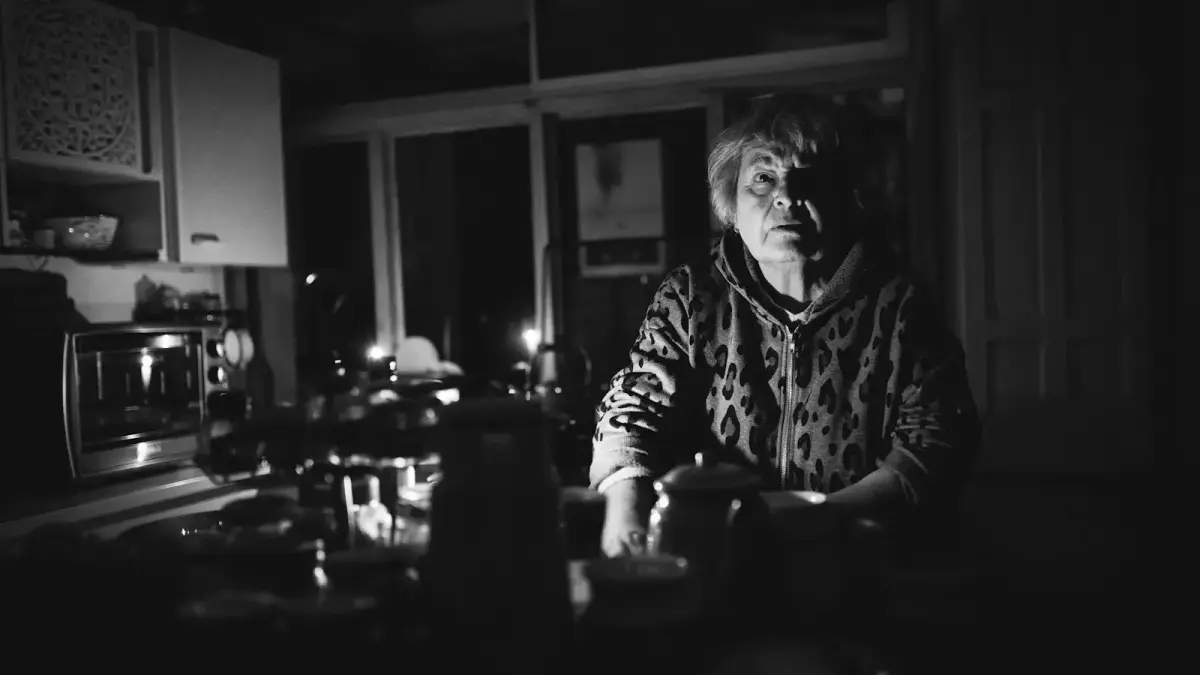
She puts the kettle on before she dials, even though she won’t drink the tea until after the call.
It’s a small ritual, one she’s been performing for fifteen years without ever naming it. She tidies the counter. She checks the clock - 10:04 is a good time, not too early to wake them, not so late she’s intruding on their Sunday. She rehearses the first sentence in her head, something light, something that won’t sound like she needed this call more than they did.
Then she picks up the phone, and for the thousandth time, she calls her grown child.
I want to tell you something about my own mother that took me until my forties to see. She wasn’t calling to check on me. She wasn’t worried. She wasn’t lonely in the simple way we mean when we use that word. She was doing something much quieter and much older than that, and she’d been doing it every Sunday since I moved out of her house at eighteen.
She was asking, in the only language she had, whether she was still a mother.
The call was always a ritual, not a conversation
If you listen to the calls carefully - and I mean really listen, the way you listen to a piece of music you’ve heard a hundred times - you’ll notice something.
The content is almost incidental.
She asks about the weather where you are. She mentions the neighbor’s dog. She tells you about something small she saw at the grocery store. She is, on the surface, making small talk. But the small talk is the surface of a ritual, and the ritual is the thing.
The ritual is: I was your mother once, in a way that filled the whole house. I would like to be your mother now, in whatever smaller way you’ll let me.
She won’t say that. She doesn’t have the words. She might not even know that’s what’s happening. But the phone call, every Sunday, at the same time, for fifteen years - that’s not a conversation. That’s a standing invitation for a role that no longer exists in its original form.
What she was best at ended, and nobody told her
Here is the thing nobody prepared her for.
She was good at a specific kind of motherhood. The motherhood of packed lunches and permission slips and knowing which teacher was fair and which one wasn’t. The motherhood of laying hands on a forehead and knowing, without a thermometer, whether the fever was a real one. The motherhood of a body in the house, a presence, a woman who arranged the whole shape of the day around small people.
That version of her ended sometime around their senior year of high school. She can probably tell you the week, if you ask her gently. Maybe it was a morning when nobody needed a ride. Maybe it was the first time she cooked a full dinner and two of the three chairs at the table stayed empty.
And here’s what makes it so strange, so unnamed, so quietly devastating. That version of her wasn’t a job she could retire from with a party. It wasn’t a phase she could celebrate completing. It was just who she was, and then one Tuesday, it wasn’t who she was anymore, and nobody sent a card.
The developmental psychologist Terri Apter has written extensively about how women in midlife often experience an identity shift that has no cultural ritual to mark it. A 2015 study in the Journal of Marriage and Family found that mothers who had organized their primary identity around active parenting often reported a kind of grief in the empty-nest transition that lasted years longer than they expected - not because they missed the work, but because they missed the self who did the work.
She didn’t just lose a role. She lost a version of herself that she had spent two decades perfecting.
Every call carries the same unspoken question
Listen again to the call. Listen to what she’s really asking.
She asks if you’re eating enough. She’s asking: am I still someone who gets to care for you?
She asks if you’re sleeping well. She’s asking: am I still someone whose concern matters?
She tells you to drive safely. She’s asking: am I still allowed to be afraid for you?
Every sentence is a small knock on a door she used to own the keys to. She’s not checking up on you. She’s checking whether there’s still a small, warm corner of your life where her mothering is allowed to live.
And here’s what breaks my heart a little. She’s often not sure of the answer. She worries she’s calling too much. She worries she’s calling too little. She worries that the tone in your voice last week meant you were tired of her, and she worries that if she doesn’t call this week, you’ll think she’s fading away.
Fifteen years of Sunday calls is not a habit. It is a fifteen-year-long quiet negotiation for a place that used to be hers without question.
The version of herself she was never taught to become
There’s a woman she was supposed to become after active motherhood, and nobody ever taught her how.
The culture didn’t teach her. Her own mother, who was from a generation where women were expected to simply absorb the loss and take up a hobby, didn’t teach her. The self-help books on the shelf at the library are mostly about younger women finding themselves, not older women re-finding themselves after the first self has gone quiet.
Carol Gilligan, in her work on women’s development, has long pointed out that women’s life stages have historically been mapped by men, and that the second half of a woman’s life - especially the part that begins when her primary caregiving role contracts - is one of the most under-described territories in all of psychology.
She’s walking through that territory with no map.
And so she reaches for the thing she knows. She picks up the phone. She dials the number. She performs the only version of motherhood that still has a form: a voice on a line, a small offering of concern, a gentle reminder that she is still here and still hers.
A 2019 study in Psychology and Aging found that older women who maintained regular, ritualized contact with adult children reported significantly higher wellbeing, but the researchers noted something subtle. The calls weren’t helping because the content was meaningful. They were helping because the ritual was meaningful. The phone call itself was a way of practicing a continued identity.
She’s not talking to her child. She’s practicing being someone.
What nobody told her about this stage
Nobody told her that the grief wouldn’t be loud.
She expected, maybe, a hard season and then a clear new chapter. She’d read the phrase “empty nest” and imagined it like a single event. The kids leave. You cry. You adjust. You find yourself again.
But it wasn’t one season. It was fifteen years of small, almost invisible losses. The year they stopped needing her advice about jobs. The year they stopped asking about recipes. The year they started having their own opinions about her house, her clothes, her choices.
Each one a tiny erosion of a shoreline she hadn’t known was eroding.
And nobody told her that the version of herself she was losing wasn’t a phase of her life, the way college was a phase or her first job was a phase. It was the organizing center of her personhood. Losing it wasn’t like graduating. It was like the slow removal of a spine she’d been building her posture around.
Mary Pipher, in her writing on older women, has said that women in this stage often feel “cultural invisibility” alongside “private grief,” and the combination is what makes the transition so silent. Nobody sees what’s happening, including, often, the woman herself.
She just knows that Sunday mornings feel heavy, and that the call helps, and that she can’t quite say why.
This isn’t decline, this is a self nobody prepared her for
Here is what I want her to hear, if she ever reads something like this.
She is not fading. She is not clinging. She is not, as she sometimes fears late at night, becoming the kind of mother her own children will one day dread hearing from.
She is in the middle of a developmental task that her culture failed to prepare her for, and she is doing it with more grace than anyone is giving her credit for. She is trying to find out who she is when the role that defined her has changed shape. She is using the only tool she was given - connection, care, the soft maintenance of a bond - to feel her way toward a self that still has somewhere to put her love.
The Sunday call isn’t weakness. It’s a bridge she’s building toward a version of herself that doesn’t exist yet, with materials she was never handed a manual for.
That’s not decline. That’s one of the hardest pieces of identity work a human being can be asked to do, and she’s doing it in silence, on her own, with a phone and a kettle and a quiet house.
A small note, in case this is you
If you’re the daughter, or the son, and you’ve been half-listening to the Sunday call for years, I want to say this gently.
She’s not asking for much. She’s asking for the smallest possible echo of a thing that used to be her whole world. Let the call last three more minutes than it needs to. Tell her one thing she can carry with her for the rest of the week. Ask her something only she would know.
And if you’re her, if you’re the woman at the kettle, the one rehearsing the first sentence, I want to tell you something.
You haven’t lost yourself. You’re becoming someone you were never given the language for, and the Sunday calls are the sound of you practicing.
You are allowed to take your time. You are allowed to not know yet. You are allowed to keep calling, every Sunday, at 10:04, for as long as you need - not because you’re holding on, but because you are, very quietly, still becoming.