There are siblings who were inseparable as children - who shared a bedroom, finished each other's sentences, built a private language nobody else could decode - who now sit across from each other at holiday dinners performing a version of closeness that both of them know is made entirely of memory, because somewhere in their twenties the person they knew best in the world became someone they loved from a distance they could never quite name
The bedroom where everything made sense
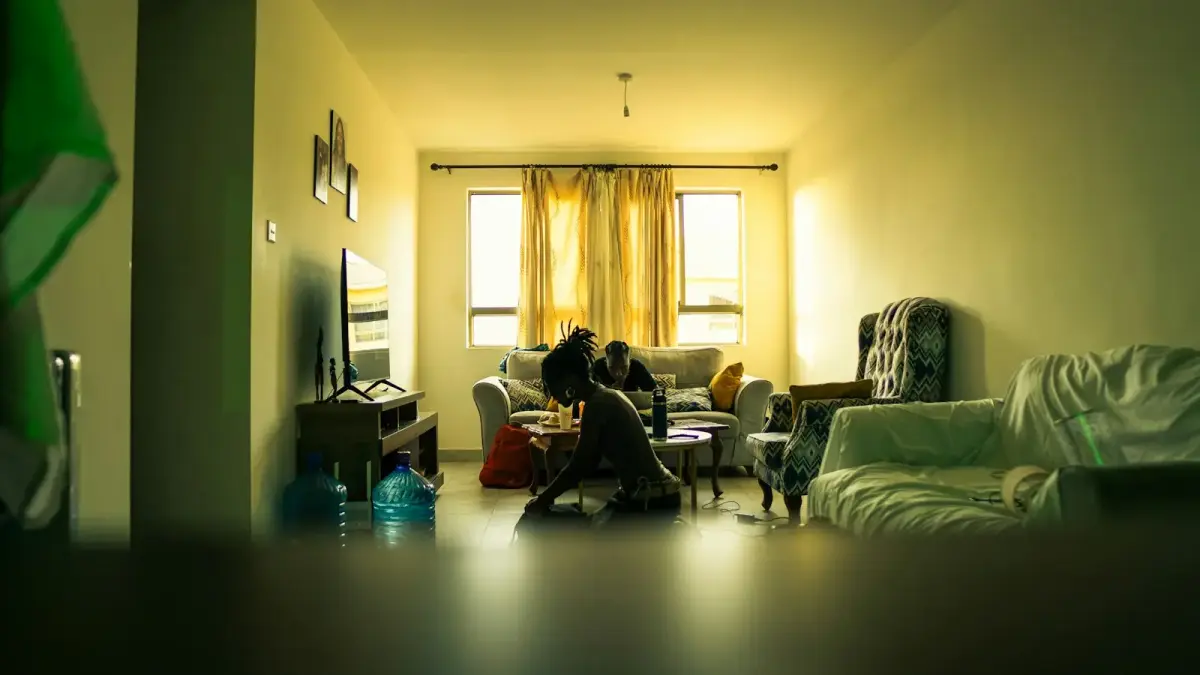
My brother and I shared a room until I was eleven. Twin beds pushed so close together that at night, if I reached out, I could touch his arm without even straightening my elbow. We had a signal - three taps meant are you awake, two taps meant yes, one tap meant I’m falling asleep but I’m glad you’re there.
Nobody taught us that language. We invented it the way children invent everything - out of need and proximity and the raw material of being the only two people in the world who understood what it sounded like when our parents argued through the floor.
We had words for things that didn’t have words. A specific face he would make across the dinner table that meant dad’s in a mood, don’t ask for anything. A hum I would do in the car that meant I’m bored, save me. We could hold entire conversations without speaking, and the adults around us had no idea anything was being said.
I am forty-six now. My brother is forty-three. We live eleven miles apart and see each other roughly four times a year. At holidays, we sit across the table and talk about his kids’ soccer schedule and whether Mom’s knee is getting worse. We hug when we arrive and hug when we leave and the hugs are real but they are also the whole thing. The entire relationship lives inside that two-second embrace and the words between the first sip of coffee and the moment someone suggests we should do this more often.
We should. We both know we should. We never do.
The bond that needed no maintenance
Here is what nobody tells you about the sibling bond in childhood: it requires zero effort.
You don’t choose it. You don’t maintain it. You don’t schedule it or nurture it or negotiate its terms. It simply exists because the other person is always there - in the next bed, at the other end of the hallway, sitting three feet away on the school bus every single morning for a decade.
The closeness isn’t built on shared interests or compatible personalities or the careful reciprocity that adult friendships require. It’s built on proximity. On the sheer relentless fact of being in the same rooms, eating the same dinners, hearing the same doors slam, absorbing the same silences.
A 2013 study published in Child Development found that sibling relationships in childhood are unique among human bonds because they combine the involuntary nature of family attachment with the peer-like equality that friendships provide. The researchers described it as a “hybrid bond” - part chosen, part given, sustained almost entirely by physical proximity and shared daily experience.
This is the part no one thinks about until it’s too late. The bond wasn’t strong because of who you were to each other. It was strong because of where you were to each other. And when the where changes, the bond doesn’t break. It does something worse.
It thins.
The decade nobody notices
The drift doesn’t announce itself. There is no fight, no falling out, no dramatic rupture that you can point to and say that’s where it happened.
What happens instead is quieter. You go to college, or you don’t. You move to a different city, or they do. You get a job that fills your evenings. You start dating someone who becomes your primary person, the one you call when something happens, the one whose opinion reshapes your decisions. And slowly, so slowly that neither of you notices, the person who used to be your first call becomes your third. Then your fifth. Then someone you think about calling but don’t because it’s been so long that calling would feel like an event, and you don’t have the energy for an event. You just wanted to tell someone that the sunset looked like the one from the beach trip in 1994.
Psychologist Toni Antonucci’s “convoy model” of social relationships describes how the people closest to us shift across the lifespan - not because of conflict, but because of changing roles and contexts. The innermost circle of our social convoy in childhood is dominated by family. By our thirties, that inner circle has typically been restructured around romantic partners, close friends, and colleagues. Siblings migrate outward. Not because they matter less, but because the architecture of daily life no longer keeps them close.
Your brother didn’t leave you. You didn’t leave him. Life simply stopped doing the work of putting you in the same room, and neither of you knew how to do that work yourselves. Because you had never had to.
Performing the memory of closeness
And so you develop a ritual. Maybe it’s the group text that stays active just enough to prove something. Maybe it’s the birthday call that lasts nine minutes and covers the same territory every year. Maybe it’s the holiday dinner where you sit across from someone you once knew better than anyone on earth and perform a version of that knowing that both of you recognize as incomplete.
The performance isn’t dishonest. That’s what makes it so painful. You genuinely love this person. You would do almost anything for them. If they called at three in the morning in crisis, you would get in the car. The love is not the thing that faded.
What faded is the knowing. The texture. The ten thousand small daily details that once made this person as familiar as your own breath. You don’t know what they worry about at two in the morning. You don’t know what they had for dinner last Tuesday. You don’t know the name of their closest friend at work or whether they’ve been sleeping well or what they’re reading or whether the thing they said about being fine actually meant fine.
You know who they were. You don’t know who they are.
And at the holiday table, you both pretend that the first thing is the same as the second thing. That shared history is the same as present closeness. That remembering the private language means you can still speak it.
A 2018 study in the Journal of Family Psychology found that adult siblings consistently overestimate their emotional closeness to each other, relying on what the researchers called “nostalgic intimacy” - a felt sense of connection grounded not in current interaction but in childhood memories of closeness. The study found that siblings who reported high levels of nostalgic intimacy often had very low levels of actual self-disclosure, emotional support, and regular contact.
You feel close. You are not close. And somewhere between those two facts lives a grief that doesn’t have a name.
The grief that isn’t grief
This is not estrangement. People who are estranged from siblings have a word for it, a framework, sometimes even a therapist helping them process it. Estrangement has edges. It can be explained at dinner parties.
What you have cannot be explained because it doesn’t register as a problem. Your sibling is not gone. They are right there, eleven miles away, reachable by phone, present at every Thanksgiving. Nobody is angry. Nobody has been wronged. If someone asked you whether you’re close to your brother, you would say yes without hesitating, because the alternative - saying no - would be a betrayal of everything you once were.
But the closeness you’re describing when you say yes is a museum exhibit. It’s the preserved version. It’s the childhood you shared, frozen in amber, held up as proof that the bond still exists in a form that resembles what it used to be.
The grief you carry is the gap between the relic and the living thing. Between the brother who could tell from the way you chewed your cereal that you’d had a bad dream, and the man across the table who asks how work is going and accepts fine as an answer because he doesn’t have the context to know it isn’t true.
Brene Brown has written that the most painful form of disconnection is not hostility but irrelevance - the moment when someone who once occupied the center of your emotional life becomes peripheral. Not because they failed you, but because the geometry of your life shifted and neither of you rebuilt the map.
That is what happened to you and your sibling. The geometry shifted. The map was never redrawn. And now you sit across from each other performing the old coordinates, both of you sensing that the landscape underneath has changed entirely.
What the three taps meant
I called my brother last month. Not for a birthday, not for a holiday, not because anyone was sick. I called because I had been thinking about the taps.
Three taps. Are you awake.
I wanted to ask him if he remembered. I wanted to know if he ever lies in bed at night and reaches across to a space that has been empty for thirty years and wonders what happened to the version of us that didn’t need a reason to reach out.
We talked for forty minutes. It was the longest conversation we’d had in years that wasn’t about logistics or health scares or who was bringing what to Mom’s house. And at one point he said something that I haven’t been able to stop thinking about. He said, “I think we forgot that we have to choose each other now. When we were kids, we were just given to each other.”
He’s right. That’s the thing that nobody tells you. The childhood bond was effortless because it was structural. Two people placed in the same small space with no choice but to know each other completely. The adult bond requires something entirely different. It requires intention. It requires choosing to call when there’s no occasion. Choosing to ask real questions and wait for real answers. Choosing to be inconvenienced by someone’s actual life rather than comforted by your memory of who they were at nine.
And that choosing is hard - not because you don’t love them, but because the muscles for it were never developed. You never had to choose each other before. You were simply there.
I think about all the siblings sitting at holiday tables this year, performing the old closeness, feeling the warmth of a bond that is mostly made of memory. I think about how many of them will hug goodbye and drive home and feel something unnamed settle in their chest - not sadness exactly, but a kind of tender bewilderment at how the person who once knew them best in the world became someone they love from a distance they never chose and can never quite close.
Three taps.
Are you still there.