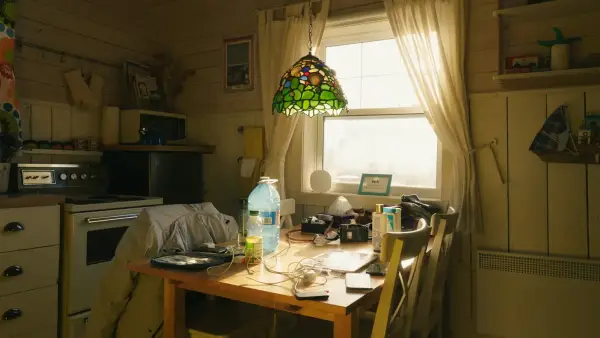
There is a specific kind of child who always knew which neighbor could be trusted in an emergency - who had mapped by age eight which front door to knock on if something went wrong at home, which adult would let them in without asking questions, which kitchen had food and which porch light meant someone was still awake - and the adult at fifty-two who sizes up every new person for whether they would answer the door at two in the morning is not guarded but a girl who built her own safety net because the one she was born into had holes
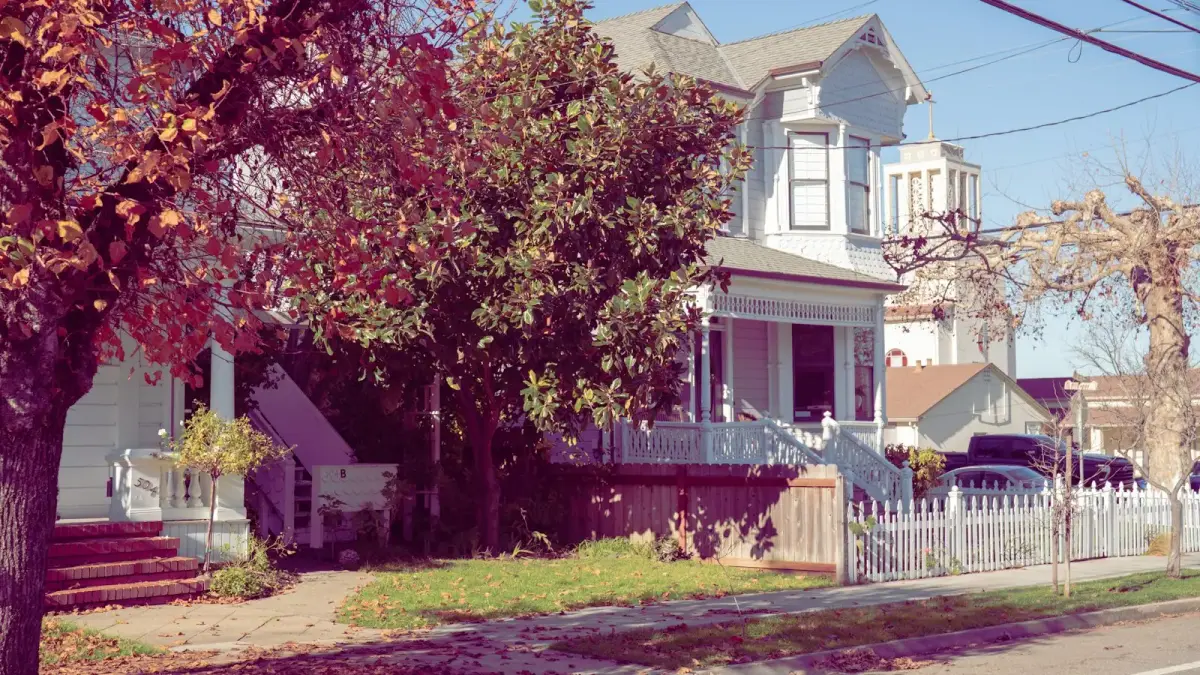
I was seven the first time I ranked the houses on my street.
Not consciously, not with a list. But somewhere in the part of my brain that was already working overtime, I understood that Mrs. Delgado’s side door was always unlocked and that she kept a jar of animal crackers on the counter without ever asking why you were visiting. I knew that the Pattersons had a television you could hear from the sidewalk, which meant someone was awake, which meant someone was home. I knew the blue house on the corner had a German shepherd that barked like the world was ending but a woman behind that dog who would make you a grilled cheese at six o’clock on a Tuesday without once glancing at the clock or wondering out loud where your mother was.
I didn’t know the word for what I was doing. I know it now. I was building a safety net with my bare hands because the one I’d been born into had holes big enough to fall through.
The Geography of Staying Safe
If you were this child, you remember the map. Not drawn on paper - drawn in your nervous system.
You knew which kitchen smelled like coffee at all hours, which meant a grown-up was functioning. You knew which screen door was loose enough to knock on without it sounding too loud, too urgent, too much like a kid who needed help. You knew which neighbor would open the door and just let you sit on their couch while some sitcom played, no interrogation, no phone call to your parents, no tight-lipped look of concern that would make everything worse when you got home.
You also knew which houses to avoid. The ones with drawn curtains that never opened. The ones where a man sat on the porch with a look that said he had his own problems and yours were not welcome.
This map was extraordinarily detailed. You updated it constantly, the way a sailor reads weather patterns. A new car in the driveway meant a visitor, which meant unpredictable. Lights out early meant don’t bother. A garden being tended on a Saturday morning meant a person who cared about something, and people who cared about something might care about you.
You were seven. You were doing the kind of environmental risk assessment that intelligence agencies train adults to perform. And nobody taught you. Nobody sat you down and said, “If things get bad, go to the Hendersons.” You figured it out yourself, through observation, through small tests, through the kind of trial and error that no child should have to run.
What the Mapping Really Was
John Bowlby spent decades studying what happens to children whose primary attachments are unreliable. His attachment theory described how a child’s earliest bonds become the blueprint for every relationship that follows. But what Bowlby also noted - and what gets less attention - is that some children don’t simply internalize insecurity. They adapt around it. They build.
A 2015 study published in the Journal of Research in Personality examined what researchers call “earned security” - the phenomenon of adults who had difficult childhoods but developed secure attachment styles anyway, not because their homes got better, but because they found supplementary sources of safety. Teachers, coaches, neighbors, the parent of a friend. The study found that these individuals didn’t just stumble into supportive relationships. They actively sought them out, often beginning in early childhood.
That’s what you were doing when you mapped the street. You weren’t being paranoid. You were being brilliant.
You were a child solving an engineering problem: the bridge between you and safety had gaps, so you built alternate routes. Every neighbor you tested, every kitchen you wandered into, every porch you sat on - that was structural reinforcement. You were constructing redundancy into your survival system because some deep, wordless part of you understood that one point of failure was too many.
The Testing That Nobody Saw
The tests were small. They had to be. A child running safety audits on the adults in her neighborhood cannot afford to be obvious about it.
You might ask to use the bathroom at a neighbor’s house just to see if they said yes without hesitation. You might mention, casually, that your mom had a headache and was sleeping - watching the neighbor’s face for whether they looked worried or just nodded and offered you a glass of juice. You might “accidentally” stay too long at a friend’s house past dinner to see whether that friend’s parent would feed you or send you home.
Each response got catalogued. Not consciously. The filing system lived in your body, in the part of your nervous system that was always scanning for the next available exit.
Some of you are reading this and realizing, for the first time, that not every child does this. That some children never think about which house to go to because it never occurs to them that their own house might not be enough.
That realization can sting. Let it. And then let it settle into something more accurate than shame: you were doing something extraordinary with very limited resources.
The Adult at Fifty-Two
Here’s where it gets interesting.
You grew up. You left the street with the blue house and the German shepherd and Mrs. Delgado’s animal crackers. You built a life. You have friends, maybe a partner, maybe colleagues who think you’re thoughtful and perceptive and a little hard to get close to.
But the mapping never stopped.
Every new person you meet gets run through the same assessment protocol you developed at seven. The questions have matured, but the architecture is identical. You are not wondering, “Do I like this person?” You are wondering, “Could I call this person at two in the morning? Would they answer? Would they come?”
Your inner circle is not built on shared interests or how much fun someone is at dinner. It’s built on crisis reliability. The people closest to you are the ones who passed tests they didn’t know they were taking - the friend who showed up without being asked when you were sick, the colleague who noticed something was wrong before you said anything, the partner who didn’t flinch when things got hard.
A 2020 study in Psychological Science found that adults who experienced childhood adversity often develop what researchers described as heightened interpersonal sensitivity - an increased ability to read social cues, detect emotional shifts, and assess trustworthiness. The study noted that this sensitivity is frequently mischaracterized as anxiety or guardedness, when it is more accurately understood as a sophisticated social monitoring system developed under pressure.
You are not guarded. You are precise.
The Paradox of the “Picky” Friend
People have probably called you selective. Maybe difficult to get close to. Maybe they’ve said you have walls, or that you take a long time to warm up, or that you hold people at arm’s length until they prove themselves.
What they don’t understand is that you are the person in any room with the most refined trust-assessment protocol operating. You have been running this software since before you could multiply. It is elegant, and it is mostly invisible, and it works.
The paradox is this: the person who seems the most cautious about relationships is often the person who understands them the most deeply. You know exactly what reliable looks like because you spent years searching for it with a flashlight in one hand and your heart in the other. You know exactly what safe feels like because you built the definition yourself, brick by brick, porch by porch, kitchen by kitchen.
Gabor Mate has written about how the adaptations children develop in unstable homes are not pathologies but rather intelligent responses to impossible circumstances. The child who mapped the neighborhood wasn’t exhibiting a disorder. She was exhibiting genius-level problem solving under constraints that no child should face.
That distinction matters. Because how you name what happened to you shapes how you carry it forward.
What the Map Costs You Now
I won’t pretend the mapping comes free.
It’s exhausting to assess everyone. It’s lonely to realize that your criteria for closeness are so specific that most people won’t meet them. It’s disorienting when someone is kind without conditions and your first instinct is to figure out what they want, because unconditional kindness was not a feature of your original operating environment.
Sometimes you catch yourself ranking the houses on whatever street you live on now. Not literally, maybe. But you know which neighbor seems solid. You know which friend could be woken up without resentment. You know, at all times, your nearest exit.
That constant readiness has a weight. It can look like control. It can feel like never fully relaxing into someone else’s care, because the last time you relied on someone else’s care, the net had holes.
But here is what I want you to notice: the system works. You have survived. Not by luck, but by skill. The same skill that kept you safe at seven is still keeping you safe at fifty-two. The question is not whether to dismantle it. The question is whether you can let it soften just enough to let in the people who have already passed every test.
The Porch Light That Was Always On
I still think about Mrs. Delgado sometimes.
She never asked me what was happening at home. She never made a phone call or filed a report or sat me down for a serious conversation. She just left the side door unlocked and kept the animal crackers where I could reach them.
I don’t know if she understood what she was doing. I don’t know if she noticed that I showed up more often on certain nights, or that I always looked at the windows before I knocked, or that I never stayed long enough for anyone to ask questions.
What I know is that she was a porch light. And I was a child who had learned to navigate by porch lights because the one inside my own house kept flickering.
If you were that child - the one who mapped the block, who tested the adults, who built an entire emergency response system out of observation and instinct and the desperate creativity of a kid who needed more than she had - I want you to know something.
You were never guarded. You were never too picky, too cautious, too slow to trust.
You were a girl who looked at a world that didn’t come with enough safety and said, quietly and without anyone noticing, I will build my own.
And you did. You are still doing it. And the fact that you are here, reading this, with your map still running in the background and your porch light inventory still up to date - that is not a wound. That is the proof that you were always, even at seven, exactly smart enough and exactly brave enough to save your own life.
The net you built has held you this whole time. You’re allowed to trust it. You’re allowed to trust yourself for building it.