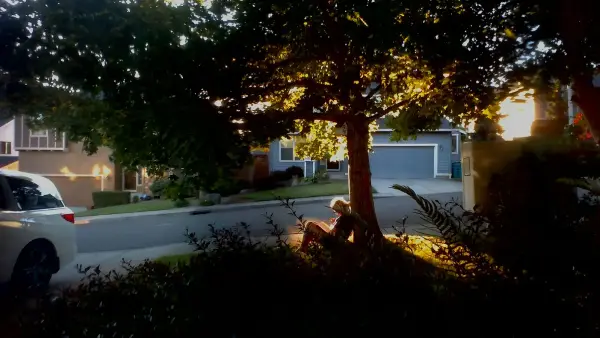
There is a specific kind of quiet that only exists in a house after the last child has left for college - not the silence of absence but the silence of a woman hearing her own life for the first time in twenty-two years
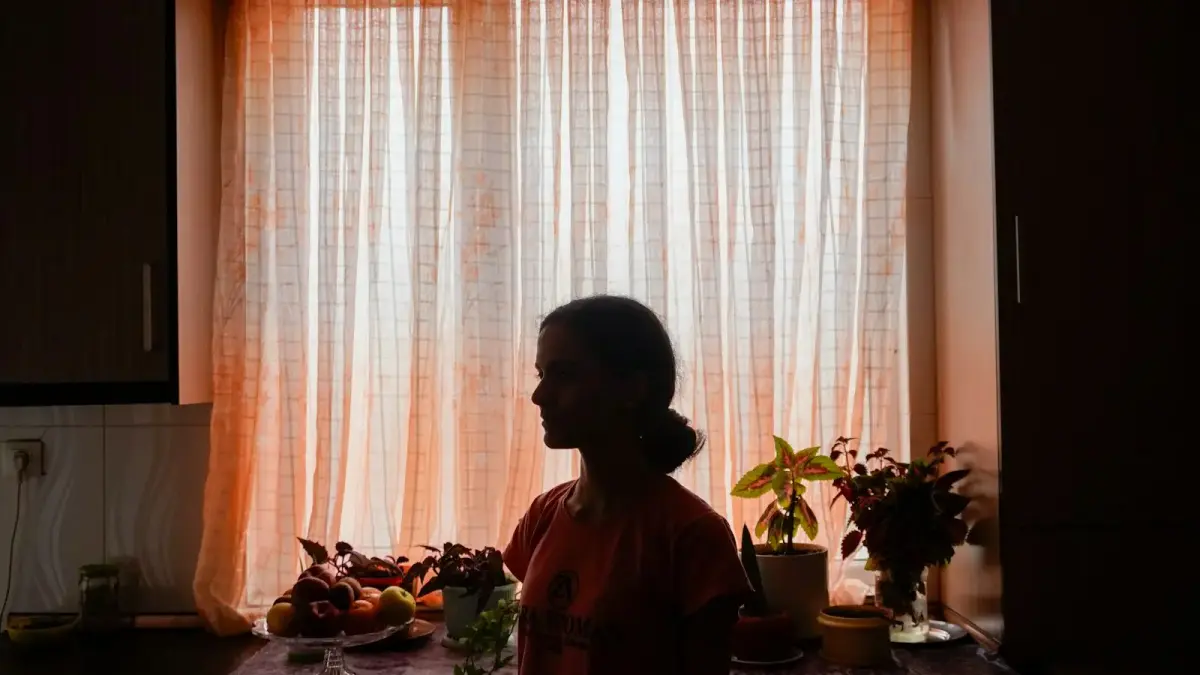
The kitchen at 6:15
I stood in my kitchen at 6:15 on a Tuesday evening and realized I had nothing to cook.
Not in the way you forget to go to the grocery store. Not in the way you look in the fridge and nothing sounds good. I mean I had no one to cook for. No one was coming down the hallway asking what’s for dinner. No one needed to eat before practice. No one was going to text from upstairs saying they weren’t hungry but could I make something anyway.
The stove was clean. The counter was empty. The house behind me was so still I could hear the refrigerator humming a note I had never noticed in twenty-two years of standing in that exact spot.
I didn’t cry. That’s the part no one tells you about. I didn’t feel sad, exactly. I felt like someone had handed me a musical instrument I used to play and I couldn’t remember where to put my fingers.
The quiet was not empty. That’s what startled me. It was full of something - a presence I didn’t immediately recognize. It took me several weeks to understand that the presence was me.
The operating system powers down
Here is what nobody prepares you for about the empty nest: it’s not the missing.
Everyone warns you about the missing. Your friends tell you to buy tissues. Your mother tells you it gets easier. The internet is full of essays about weeping in the Target parking lot after dropping your youngest at a dorm. And yes, there is grief. I don’t want to minimize it.
But underneath the grief is something stranger and harder to name.
For twenty-two years, I was the operating system of a household. I don’t mean that metaphorically. I mean I was the software that made everything run. I held the schedule. I knew who needed what by when. I tracked the permission slips and the orthodontist appointments and the emotional weather of every person under my roof.
I knew which child needed space after school and which one needed to talk immediately. I knew when the tension at dinner meant something had happened at lunch. I knew the difference between tired-crying and hurt-crying and scared-crying, and I responded to each one differently without thinking about it.
A 2018 study published in the Journal of Family Psychology found that mothers in dual-parent households carry roughly twice the cognitive labor of their partners - not the physical tasks of parenting, but the mental tracking, anticipating, and planning that runs underneath everything else. The researchers called it “invisible labor.” I would have called it breathing.
And then one August afternoon, the house didn’t need me to breathe for it anymore.
The laundry basket stayed empty. The hallway held no shoes but mine. The bathroom counter had one toothbrush. And the mental software that had been running nonstop since 2004 had nothing to process.
That is the disorientation no one talks about. Not the sadness of an empty house - the bewilderment of a woman whose central purpose has been gently removed without anyone offering a replacement.
The strange mathematics of unscheduled time
The first thing I noticed was the evenings.
They used to be structured by necessity. Dinner by six thirty. Homework supervision by seven. The negotiation about screen time. The fifteen minutes of connection I would try to squeeze in before someone retreated to their room. The bedtime rituals that evolved over two decades from stories and stuffed animals to brief hallway conversations and closed doors.
Now the evening stretched from five o’clock until sleep with nothing in between. No structure. No obligation. No person who needed anything from me.
I want to be honest about how this felt: it felt like standing in a room where the furniture has been removed. You know the room. You’ve lived in it for years. But without the furniture, it is enormous and echo-filled and you don’t know where to stand.
I tried to fill it. I signed up for a ceramics class. I started walking in the evenings. I reorganized the guest room. But there was a hollowness to all of it - not because the activities were meaningless but because I was choosing them for myself, and I had almost no practice doing that.
A 2022 study in Developmental Psychology tracked women through the empty nest transition and found that the most significant predictor of wellbeing wasn’t social support or marital satisfaction. It was what researchers called “identity complexity” - whether a woman had maintained multiple sources of identity beyond motherhood. The women who struggled most weren’t the ones who loved their children the most. They were the ones who had been the most devoted to the operating system.
I read that finding and felt it land in my chest like a stone.
What Erik Erikson knew about the passage no one names
Erik Erikson, the developmental psychologist who mapped the stages of human growth, described the central challenge of midlife as a tension between generativity and stagnation. Generativity is the drive to nurture, to build, to leave something for the next generation. Stagnation is what happens when that drive turns inward with nowhere to go.
Most people read Erikson and think generativity means having children. Raising them. Pouring yourself into their growth. And yes, that counts.
But Erikson meant something wider than parenting. He meant the human need to feel that your energy is going somewhere meaningful. That you are tending something alive.
What nobody told me - what I think nobody tells most women in their fifties - is that the empty nest is not the end of generativity. It is the terrifying invitation to redirect it. To stop tending everyone else and tend the garden of your own unfinished becoming.
The terror is real, by the way. Because when you have spent two decades as the person who holds everything together, redirecting your attention to yourself feels selfish. It feels indulgent. It feels like something you need to earn, and you can never quite convince yourself you’ve earned it.
But Erikson would say - and I think he would be right - that the opposite of stagnation at fifty-five is not continuing to mother adult children from a distance. It is finding new soil. Planting something that is yours.
The woman underneath the mother
There is a woman underneath the mother. I know she’s there because I catch glimpses of her.
She is the person who used to read novels on Sunday mornings before anyone else woke up. She is the person who once drove to the coast alone and sat on a rock for three hours watching the water and felt no guilt about it. She is the person who had opinions about architecture and knew the names of constellations and wrote terrible poetry in college that she meant every word of.
She got quieter over the years. Not silenced, exactly - just gradually turned down, like a radio losing signal. There were so many other frequencies to attend to. The children’s needs were louder and more urgent and more rewarding in the immediate way that being needed always is.
Adam Grant has written about how identity can narrow over time - how the roles that give us the most purpose can also shrink our sense of who else we might be. He calls it identity foreclosure, borrowing a term from developmental psychology. You become so fused with one role that you forget you contain others.
I think about the women I know who are in this passage. We meet for coffee and say things like “I don’t even know what I like anymore” and “I feel guilty reading a book at two in the afternoon” and “My husband asks what I want to do for dinner and I genuinely cannot answer because I’ve spent twenty years asking what everyone else wanted.”
These are not small complaints. These are women meeting themselves again after a long absence and finding the introduction awkward and unfamiliar.
Learning to hear your own frequency
The quiet in my house has changed over the months. It is no longer the shocking silence of absence. It has become something else - a kind of spaciousness.
I notice things now. I notice that I like eating dinner at seven thirty, not six thirty. I notice that I prefer the kitchen in the morning when the light comes through the east window and hits the counter in a specific way. I notice that I like silence - genuinely like it, not just tolerate it.
I am learning that I have a rhythm that is entirely my own. It is not the rhythm of the household. It is slower, stranger, more meandering. I don’t wake up thinking about what other people need. I wake up and listen to what I want, and the answer is often surprising.
Last Tuesday, I sat on the back porch at 6:15 PM - the same time I used to start dinner - and watched the swallows loop over the yard. I sat there for forty minutes. Nobody needed me. Nobody called my name. The swallows made their circuits and the sky turned colors and I stayed in my chair and let the evening arrive at its own pace.
It was not productive. It did not serve anyone. It was not generative in the way that feeding a family is generative.
But it was mine. The time was mine. The chair was mine. The decision to stay in it was mine.
A 2023 study in the Journal of Women and Aging found that women who successfully navigated the empty nest transition described a phenomenon researchers called “quiet flourishing” - a form of growth that looked nothing like the productivity-driven models of wellness. It was slower. More internal. Less visible. The women described feeling, for the first time, that their lives had a soundtrack they could actually hear.
The first room that is entirely hers
I want to tell you something about that kitchen.
It is the same kitchen. Same counters, same window, same stove I’ve stood in front of ten thousand times. But it holds a different kind of quiet now. Not the silence of a house that lost its people - the silence of a woman who is finally in the room with herself.
If you are standing in this passage right now - if you are the woman in the kitchen at 6:15 with nothing to cook and no one to drive anywhere and no homework to check and a whole evening stretching ahead of you like an unfurnished room - I want you to know something.
The quiet is not loss. It is not punishment for having given so much of yourself for so long. It is not evidence that your purpose is behind you.
The quiet is the first room that belongs entirely to you. You may not recognize it yet. You may not know where to put the furniture. You may stand in it for weeks feeling disoriented and strange and oddly guilty for having so much space.
But the woman in that room - the one who used to read novels and watch the water and have opinions she didn’t run past anyone - she has been waiting for you.
She is not disappointed that it took this long.
She is just glad you can finally hear her.