There is a generation of women in their sixties who tend vegetable gardens at first light, who pull weeds with bare hands and listen to the kettle without reaching for a phone, and somewhere in the last decade an entire industry began selling what they have been doing all along to people who never learned how to be alone with growing things
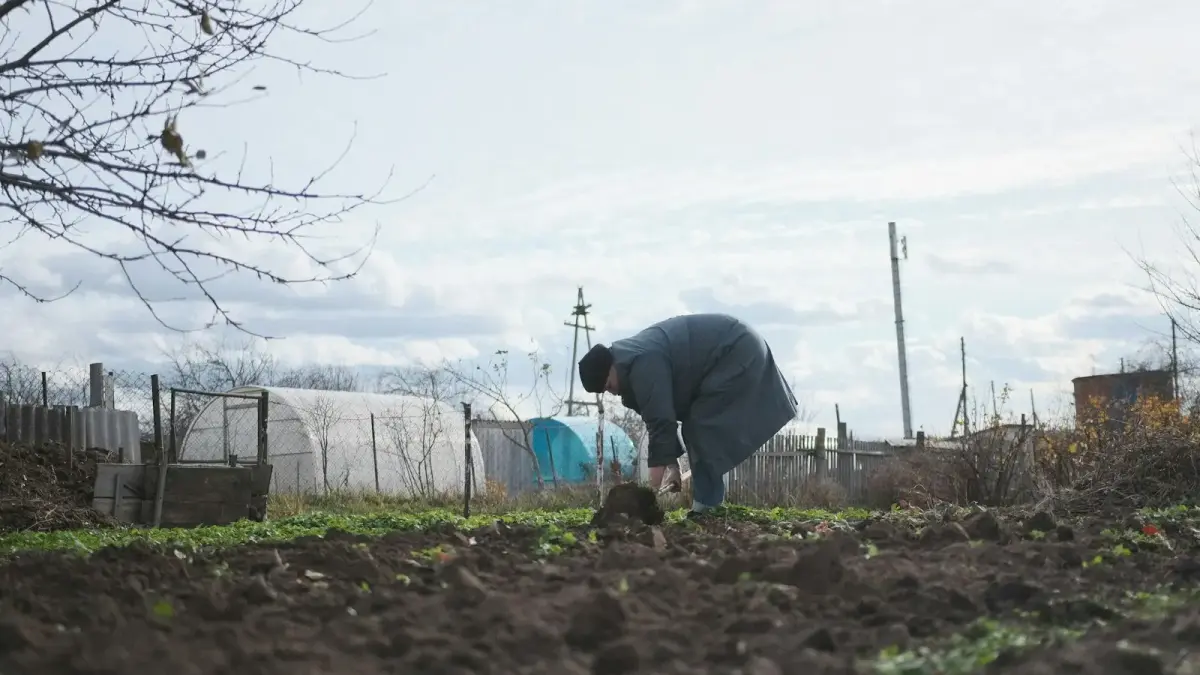
My mother has a trowel that has been hers since 1987. The handle is worn to the exact shape of her right hand, and there is a notch on the blade where she once struck a stone near the rhubarb and kept going anyway. She carries it out to the garden every morning before the kettle has finished, and she brings it back in before the news starts, and in between she does not speak much, and she does not check anything, and she does not, I suspect, think of any of it as practice.
I have watched her do this for most of my life. For a long time I did not notice it. Then I moved to a city and began reading about presence and stillness and the wisdom of the breath, and I realized, slowly and with some embarrassment, that I had been raised by a woman who had been doing all of it, in a blue cardigan, without a single word for it.
This piece is for her, and for every woman in her sixties who has been tending something, quietly, at first light. You were not waiting for the vocabulary to arrive. You were already fluent.
The kettle, the kale, the cracked plastic seed tray
There is a specific geography to these mornings, and it barely changes from one decade to the next. The kettle on the hob. The window above the sink that faces east. The cracked plastic seed tray on the draining board, the one that should have been thrown out three springs ago, still useful because it holds water and because it was free.
You walk to the window before you walk anywhere else. You check the light. You note, without naming it, whether the clouds are moving or sitting. You slip on the shoes by the back door, the ones with soil ground into the laces, and you step out.
The grass is cold. The kale is further along than it was yesterday. You crouch down and pull a weed, and the root comes out clean, and you feel something settle in your chest that you will not bother to describe to anyone, because there is nobody there, and also because it does not need to be described.
A 2020 review in Frontiers in Psychology examined the effects of gardening on mental health across dozens of studies and found consistent associations with reduced anxiety and depression, improved mood, and higher general life satisfaction. The researchers called it horticultural activity. You have always called it going out to check on things.
What they started selling, and what you already had
Somewhere around 2013, an industry arrived that had a great deal to say about mornings. It said you should feel the sun on your skin within thirty minutes of waking. It said you should ground yourself through the soles of your feet. It said you should notice five things you can see, four you can touch, three you can hear.
You have been touching four things before breakfast for forty years. The tap. The cold handle of the back door. The top of the fence post, to steady yourself as you step over the hose. The leaf of whatever is doing well this week, because you always greet the ones that are doing well.
There is no app that taught you this. There was a mother, probably, who did something similar, and a grandmother behind her, and a kitchen garden in a village you may or may not remember the name of. The knowledge travelled through hands, through the particular angle at which a woman leans over a row of beans, through the habit of not speaking during the first hour of the day.
Research on what scientists now call sensory grounding, the act of deliberately engaging the senses to regulate the nervous system, has shown measurable reductions in stress markers and improvements in emotional regulation. A 2021 paper in the Journal of Environmental Psychology documented that direct contact with soil and plants, particularly in the early morning, was associated with lower cortisol levels and improved self-reported calm. You were calm already. You just called it Tuesday.
The phone that stays on the counter
The wellness industry talks a great deal about digital detox, about screen hygiene, about the first hour of the day being sacred. It sells journals with prompts and boxes with timers, and small wooden boxes in which to lock your phone if you cannot be trusted.
Your phone is on the counter. It has been on the counter all morning. You are aware that it is there, the way you are aware that the tea towel is folded over the handle of the oven, but it is not something you reach for, because your hands are busy, and because the garden is not a place where the phone belongs.
You will pick it up later, around ten, to answer a message from your daughter. You will put it down again after. There is no drama in this, no resolution, no practice. It is simply the order of the morning, and it has been the order of the morning since before the phone existed, back when it was the radio that stayed off, and before that, when it was something else.
What the industry sells as discipline, you have always held as preference. You simply prefer the quiet. You prefer the sound of the kettle settling. You prefer the small noise of the blackbird in the hedge, which you can hear clearly because you are not listening to anything else.
The small daily geography
Consider the shape of your day, the route your feet take through the house, the particular windowsill where you keep the tomato seedlings in April. Consider the chair by the back door where you sit to take off your boots, the one with the cushion that has flattened in the middle because it is the chair you always use.
This is a geography. It has been mapped by repetition, by preference, by the slow accumulation of decades of mornings. It is as specific as a monastery, as private as a diary, and no one has ever written it down, because it did not occur to you that it was anything unusual.
The wellness industry would call this a ritual. It would suggest you light a candle to mark it. You have not needed a candle. You have needed a kettle, a window, a back door, a pair of shoes, and the knowledge of where the kale is this week.
A 2019 study in the Journal of Health Psychology found that older women with established morning routines involving outdoor activity and sensory engagement reported significantly higher well-being scores than peers with less structured mornings. The researchers noted that the most protective routines were not those described as exercise or mindfulness, but those the women described as simply the way they liked to do things.
The dignity of not having a word for it
There is a particular kind of silence that settles over a woman who has been tending a garden for forty years. It is not the silence of absence. It is the silence of a person who has already said what needed to be said to the thing in front of her, which is a row of beans, or a kettle, or the back of her own hand resting on the fence post.
This silence has been, for most of the last century, undervalued. It has been called quietness, or keeping busy, or not making a fuss. Nobody sat these women down and told them they were practicing anything. Nobody handed them a certificate. Nobody sold them the experience back at a markup.
And yet the research on biophilia, on the human need for contact with living things, pioneered by the biologist E. O. Wilson and expanded by decades of environmental psychology, keeps arriving at conclusions these women have lived in their bodies since girlhood. Plants calm us. Soil grounds us. The slow growth of something we tend rewires our sense of time. Morning light, taken in the eyes before a screen is taken in the eyes, resets the rhythms that govern sleep.
You were doing this. You are still doing this. You will do it tomorrow, probably, with the same trowel, which is older than most of the people now writing about mindfulness for a living.
For the woman reading this with her tea
If you are a woman in your sixties, and you are reading this with a cup of tea going cold beside you, and you can hear a bird outside, and you have already been out to check on whatever is growing this week, I want to say something plainly.
You did not miss the wellness wave. You were the wellness wave, and you were it before anyone named it, and you were it without charging anyone for it, and you were it in a cardigan, in a kitchen, in a garden, in the small geography of a life that has not needed an audience.
The vocabulary is arriving late to your door. You may take the words that feel right, or none of them, as you prefer. The words are not the thing. The thing is the kettle, and the kale, and the trowel from 1987, and the quiet first hour of the morning that has always belonged to you.
Keep going. The garden knows you. The light knows you. The bird in the hedge is, in its own small way, a colleague.
You have been tending something for a long time. It has, quietly and without any fuss, been tending you back.