There is a generation that practiced every form of self-care the wellness industry now sells for forty dollars an hour, they just called it going for a walk or having tea in the garden or sitting on the porch watching the evening settle in without needing to tell anyone about it
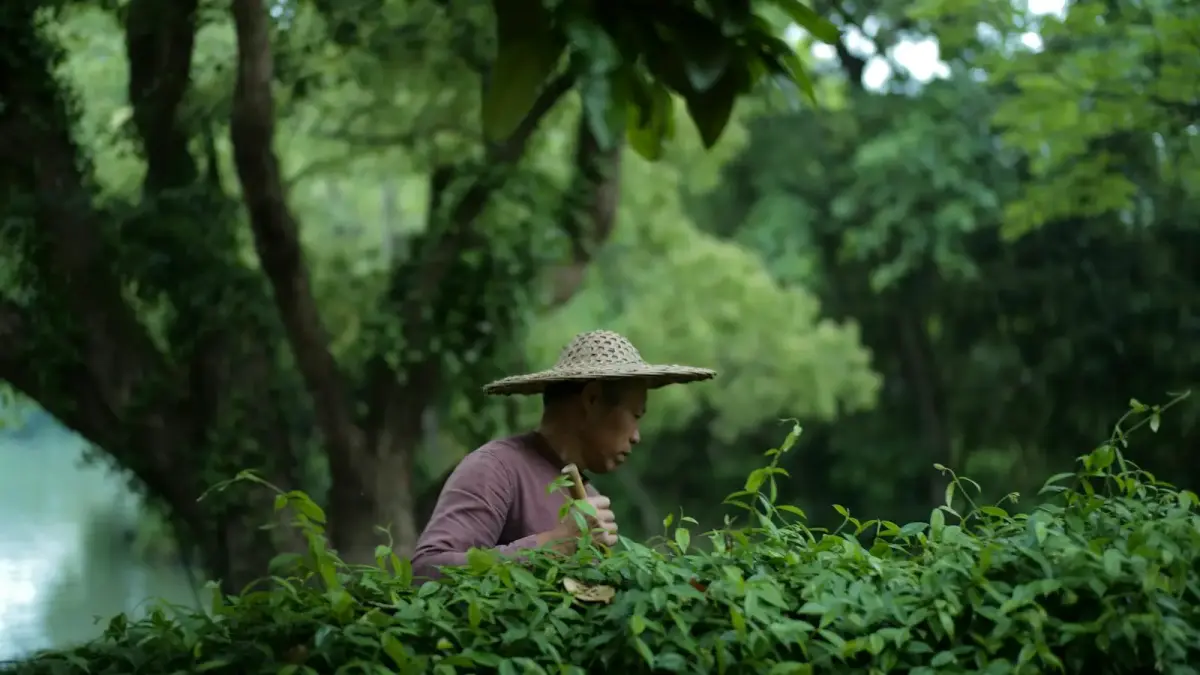
My mother used to sit on the back steps every evening after dinner with a cup of tea she’d made in the same chipped mug for as long as I could remember.
She didn’t announce it. She didn’t schedule it. She didn’t light a candle or put on ambient sounds or track it in a journal with a leather cover. She just went outside, sat down, and watched the yard get dark. Sometimes she’d be out there for ten minutes. Sometimes forty. The dog would settle next to her and neither of them seemed to need anything from the other except proximity.
I asked her once what she was doing out there. She looked at me like the question didn’t entirely make sense. “Just sitting,” she said. And then, after a pause: “It’s nice.”
I think about that pause a lot now. The way she didn’t need to justify it or name it or explain what it was doing for her nervous system. She wasn’t doing it for her nervous system. She was doing it because the evening was quiet and the tea was warm and there was nowhere else she needed to be.
She was sixty-three at the time. She had never heard the word “mindfulness” in her life.
The vocabulary that arrived forty years late
Somewhere in the last two decades, an entire industry appeared to teach people how to do what my mother did on those back steps.
Mindfulness. Grounding. Forest bathing. Digital detox. Breathwork. Sensory awareness. Intentional stillness. The language multiplied like a vine, climbing into podcasts and retreats and subscription apps that charge twelve dollars a month to tell you to notice the feeling of your feet on the floor.
And I want to be clear - I’m not mocking any of it. These practices help people. The research is real. A 2011 study published in Psychiatry Research found that eight weeks of mindfulness practice produced measurable changes in brain regions associated with self-awareness, compassion, and stress regulation. The science is sound.
But something gets lost when we look at the data and forget to look at the people who were already living it. There is an entire generation - people now in their sixties, seventies, eighties - who practiced every one of these techniques for decades without a single branded program or wellness retreat. They did it instinctively. Quietly. Without documentation.
They didn’t call it self-care. They called it Tuesday.
What they were actually doing
My father-in-law gardens. Not in the curated, Instagram-ready, raised-bed-with-a-hashtag sense. He gardens the way his father gardened and his father’s father before that. He goes outside in the morning, kneels in the dirt, and pulls weeds until his knees tell him to stop. He comes back in smelling like soil and says almost nothing about it.
What he’s doing, if you translated it into the language of modern psychology, is remarkable. He’s engaging in repetitive, low-intensity physical movement - which a 2019 study in the British Journal of Sports Medicine linked to significant reductions in depression symptoms. He’s practicing sensory grounding - hands in soil, sun on his neck, the smell of earth registering in a part of the brain that doesn’t deal in words. He’s experiencing what Mihaly Csikszentmihalyi called “flow” - that state of absorption where self-consciousness dissolves and time softens at the edges.
He doesn’t know any of this. He just likes tomatoes.
And that might be the most important part. The not-knowing. The absence of self-narration. He isn’t optimizing an experience. He’s having one.
The generation that was present before presence became a product
I’ve noticed something in my work as a writer covering mental health. The people who struggle most with mindfulness - who sit in meditation classes gripping their own thoughts like luggage they can’t put down - are often the ones who’ve spent their entire adult lives in a culture of constant self-monitoring. They’ve been told to track their moods, journal their triggers, audit their inner landscape with the precision of an accountant.
Meanwhile, the people who seem to embody presence most naturally are often the ones who never tried. Your grandmother who knits in the living room without the television on. Your neighbor who walks the same two-mile loop every morning and has for thirty years. The retired teacher who sits on the porch and watches the cardinals and doesn’t reach for her phone because it’s still a flip phone and she keeps it in a drawer.
These people aren’t behind. They’re not technologically resistant dinosaurs who missed the wellness revolution. They’re the ones who never needed it - because they never lost the thing the rest of us are paying to get back.
A 2022 study in the journal Frontiers in Psychology found that older adults consistently score higher on measures of emotional regulation and present-moment awareness than younger adults - not because they’ve practiced mindfulness techniques, but because age itself tends to shift attention away from future anxiety and toward present experience. The researchers called it a “positivity effect.” I’d call it something simpler. They stopped rushing. And the world got clearer.
The rituals we never thought to name
I want to catalog some of these, because I think they deserve to be witnessed.
The morning coffee made slowly in a percolator, poured into a ceramic mug, drunk at the kitchen table while looking out the window. Not while checking email. Not while assembling a to-do list. Just coffee and window and morning.
The afternoon nap taken without guilt, without a sleep-tracking app, without wondering whether it counts as a “sleep hygiene practice.” Just the body saying rest and the person listening.
The letter written to a friend in longhand. Not because letter-writing is making a comeback as a mindfulness exercise - though it is - but because that’s how you talked to someone who lived far away and you wanted them to know you were thinking of them.
The evening walk taken at the same time every day. Same route, same pace, same nod to the same neighbors. No fitness tracker. No podcast. Just the sound of your own footsteps and the particular quality of light that exists only in the last hour before dark.
The Sunday morning spent doing nothing in particular. Reading the paper. Refilling the bird feeder. Sitting in a chair that has the permanent impression of your body in its cushion. Existing without producing.
Adam Grant has written about how the most psychologically healthy people tend to have strong “recovery rituals” - habits that allow the nervous system to downshift without conscious effort. He frames it as a modern discovery. But the generation before us didn’t need a framework. They had porches. They had gardens. They had the unextraordinary discipline of doing the same quiet thing, in the same quiet way, for forty years.
What got lost in the translation
Here’s what troubles me. Somewhere along the way, we took these ordinary human practices - rest, silence, slowness, presence - and turned them into something you need to be taught. Something you need an app for. Something that requires a certification to facilitate and a credit card to access.
And in doing so, we accidentally sent a message to an entire generation: you’re doing it wrong. You need to upgrade. Your version doesn’t count because it doesn’t have a name.
I see this in small ways that break my heart a little. The seventy-year-old woman who feels embarrassed that she doesn’t meditate - she just prays, quietly, the way she always has. The retired man who wonders if he should “get into” yoga when he’s been stretching the same way every morning since 1979. The grandmother who reads that “forest bathing” is the newest wellness trend and doesn’t realize she’s been doing it every autumn for fifty years, walking through the same stand of maples and breathing in the cold air until her lungs feel new.
Gabor Mate has written about how healing often looks less like a dramatic transformation and more like a return - a coming back to something the body always knew. I think about that when I think about this generation. They didn’t leave. They didn’t lose the thread. They were standing in the clearing the whole time while the rest of us walked into the woods and then sold each other maps to get back.
The porch is still there
My mother is eighty-one now. She still goes outside after dinner. The mug has been replaced - the old one finally cracked along a fault line that had been there for years - but the ritual hasn’t.
She doesn’t know that what she’s doing has been validated by neuroscience. She doesn’t know that people pay eighteen dollars a month to be guided through something she does for free, every evening, without instruction. She doesn’t know that the wellness industry would describe her nightly routine as a “grounding practice integrated with sensory awareness and parasympathetic activation.”
She would laugh if I told her that. She would say, “I’m just sitting.”
And that’s the thing I want to say to everyone over fifty-five who has ever felt like the world moved past them while they were busy living quietly. You weren’t behind. You weren’t missing something. You were practicing, every single day, the thing the rest of us forgot how to do and are now desperately trying to learn.
You were present. You just never needed to call it that.
The tea was real. The garden was real. The porch, the evening, the sound of nothing in particular - all of it was real. And it was enough. It was always enough.