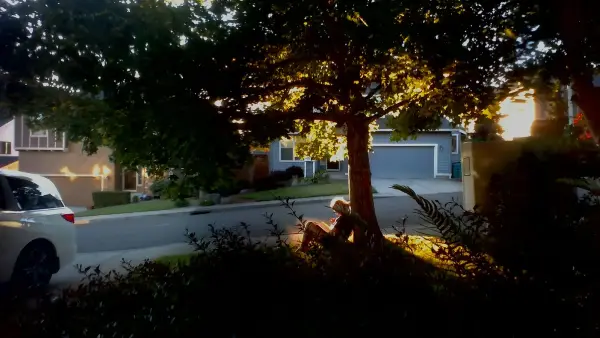
There is a particular kind of man who has never once told his wife he is in pain until it was already over - not the back that seized while shoveling the driveway, not the chest tightness he waited out in the garage, not the tooth that throbbed for three weeks before he mentioned it at dinner like it had just started that morning - because a boy who watched his father sit quietly through obvious discomfort and refuse every offer of help learned that a man's pain is a private jurisdiction, and the woman who finds the ibuprofen bottle empty again without explanation is not married to a stoic but to a boy who was taught that needing someone to know you are hurting is the first thing a man learns to need less
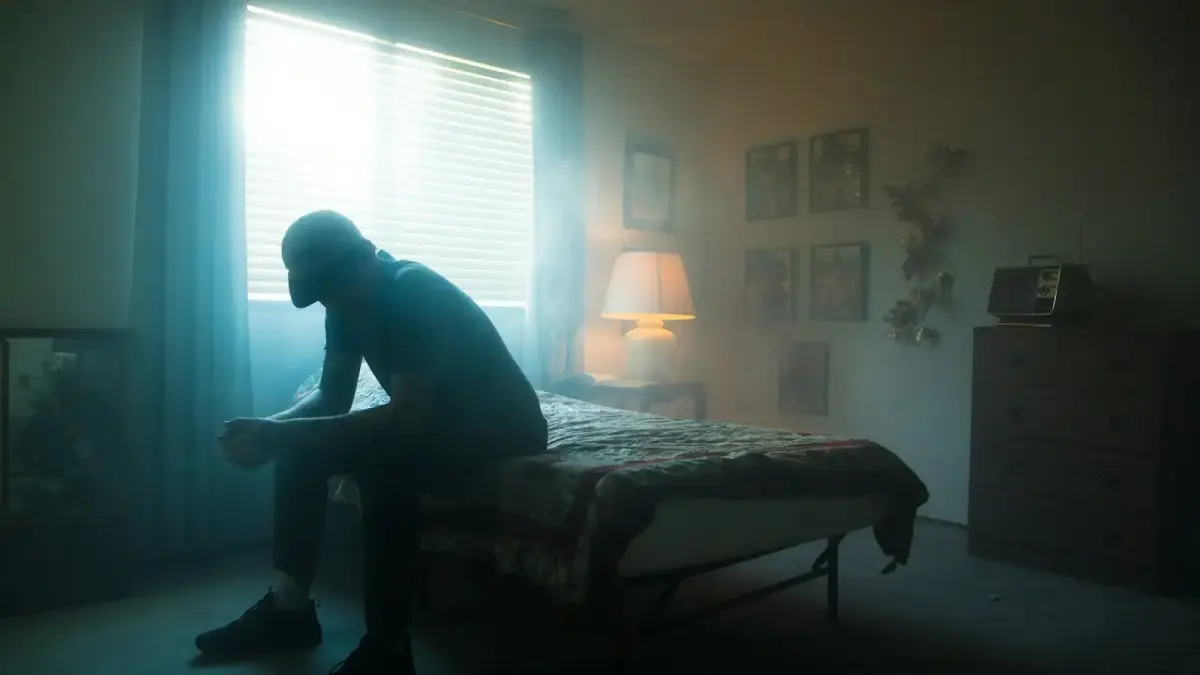
I watched my uncle carry a broken rib through an entire Thanksgiving dinner. He carved the turkey. He lifted my cousin onto his shoulders for the family photo. He laughed at every joke with his hand pressed flat against his side in a gesture so subtle that only my aunt seemed to notice it, and even she said nothing, because she had learned decades ago that asking him directly would only make him insist harder that nothing was wrong.
He told us about the rib on Christmas Eve, a full month later, and he mentioned it the way you’d mention a mildly interesting thing you read in a magazine. Past tense. Already healed. Already handled. Already none of your concern.
I remember thinking he was brave. I was twelve. I didn’t yet understand that what I was watching wasn’t courage. It was something a boy had memorized so long ago that it no longer felt like a choice.
The Empty Bottle on the Counter
You know this man. You may be married to him. You may have raised one without meaning to.
He is the one whose back went out three days ago, and you only know because you saw him grip the kitchen counter when he thought you were still upstairs. He is the one who drove himself to urgent care on a Tuesday afternoon and mentioned it on Thursday, casually, over pasta, like the visit had barely registered.
He is the one who answers “I’m fine” before you finish the question. Not because he’s dismissing you. Because the answer was decided before the pain even started.
The ibuprofen bottle empties itself in his house. The heating pad migrates from the closet to the couch and back again without anyone acknowledging it moved. There’s a limp that lives in the hallway at 2 a.m. and vanishes by breakfast.
If you’ve ever found the evidence of his pain before he offered it to you - the prescription he never mentioned, the brace stuffed in the back of the closet, the appointment on the calendar he didn’t bring up - then you already know what I’m describing. You are not married to a man who hides pain. You are married to a man who genuinely does not believe his pain is yours to hold.
What the Boy Watched
There is almost always a father in this story. Or a grandfather. Or an uncle who served the same purpose.
The boy watched this man move through discomfort without narrating it. He watched him come home from work with grease on his knuckles and blood dried beneath a bandage he’d applied himself. He watched him sit in a recliner with his jaw set and his eyes half-closed and heard his mother whisper “leave your father alone” as if pain were a room only one person was allowed to enter.
The boy did not learn a philosophy. He learned a physics. Pain goes inward. It doesn’t travel outward toward other people. Mentioning it creates weight. Weight becomes burden. Burden damages the people you love.
This is the inheritance that never appears in any will but gets passed down more reliably than property.
A 2015 study published in the journal Psychology of Men and Masculinities found that men who scored higher on traditional masculine norm adherence were significantly less likely to disclose physical symptoms to intimate partners - and that the concealment was most pronounced not in casual relationships but in the relationships they valued most. The closer the bond, the deeper the silence.
That finding should stop us in our tracks. It means the hiding isn’t about indifference. It’s about protection. The man who loves you most is the man most likely to keep his pain a private jurisdiction.
The Quiet Mathematics of Concealment
What looks like stoicism from the outside operates like arithmetic on the inside. He is always running a calculation, even if he doesn’t know he’s doing it.
If I tell her my back is bad, she’ll worry. If she worries, she’ll want me to see a doctor. If I see a doctor, there might be something wrong. If something’s wrong, she’ll carry that. If she carries that, I’ve taken something from her.
So he says nothing. He handles it. He waits it out in the garage or the bathroom or the car, sitting with his forehead against the steering wheel in a parking lot until the worst passes. And when it does pass, he walks back into the house and the conversation as if he’d only stepped out for air.
This isn’t toughness. This is a man who believes - at the level of bone, at the level beneath where language reaches - that his pain, if spoken, becomes a toxin in the air his family breathes.
The psychologist Terry Real has written extensively about what he calls “covert depression” in men - the way male suffering routes itself underground, expressing as withdrawal, irritability, or silence rather than direct disclosure. Real’s work reveals something important: the concealment isn’t a strategy. It’s a reflex that was installed before the boy was old enough to question it.
What She Learns to Read Instead
The woman married to this man becomes a detective by necessity.
She learns to read the way he stands up from a chair. She notices which hand he favors on which days. She registers the slight change in his breathing when he bends to tie his shoes.
She has a catalog of his tells. The way he goes quiet at 8 p.m. means something different from the way he goes quiet at noon. The pace of his footsteps on the stairs tells her more than his words ever will.
And here is the part that rarely gets named: this exhausts her. Not because she resents the detective work, but because she knows he’s in pain and he won’t let her stand next to him inside it. She’s right there. She’d hold it with him in a heartbeat. But he keeps handing her the clean version, the after-the-fact version, the version where everything is already resolved and her concern arrives too late to be anything but retrospective.
She is not married to someone who doesn’t trust her. She is married to someone who trusts her so completely that he has taken on the full-time job of making sure she never has to worry about him. And the cruelty of it is that this is exactly what makes her worry most.
The Garage as a Cathedral
Every man like this has a room. A space where pain is permitted to exist without audience.
For my uncle, it was his workshop. For others, it’s the garage, the car, the shower with the water running hot enough to excuse the stillness. It’s the walk around the block that takes forty-five minutes. It’s the couch at 3 a.m. when insomnia is a more acceptable explanation than the shoulder that won’t stop throbbing.
A 2021 study in Frontiers in Psychology examined how physical pain disclosure patterns differ by gender in long-term partnerships. The researchers found that men in relationships lasting more than fifteen years were the least likely demographic to report ongoing pain to their partners - and when they did disclose, the median delay between onset and disclosure was over two weeks. Two weeks of carrying something alone while sleeping next to the person who would carry it with them.
These private spaces aren’t about wanting solitude. They’re about having internalized the belief that pain is a solitary jurisdiction. That it belongs to you and you alone. That exporting it to someone else - even the person who chose to build a life with you - is a form of failure.
The garage is not where he goes to be alone. It’s where he goes to be in pain without it costing anyone anything.
The Inheritance He Didn’t Choose
The hardest part of this pattern is that it feels like virtue. It feels like love. He experiences his silence as generosity - I’m sparing her. I’m handling it. I’m being a good partner by not making my body her problem.
And he’s not entirely wrong. There is something genuinely caring in the impulse. The mistake isn’t in wanting to protect the people you love. The mistake is in believing that your pain, once witnessed by someone who loves you, becomes a weight they can’t bear.
That belief didn’t come from nowhere. It came from watching a man - usually a father - model the exact same thing. It came from a household where someone’s pain was indeed too much for the family to hold. It came from a boy’s perfectly logical conclusion: if I make my pain invisible, the people around me stay okay.
What the boy couldn’t see, because boys aren’t equipped to see it, is that his father’s silence wasn’t holding the family together. It was creating a household where love and honesty lived in separate rooms.
And now he’s replicating it. Not because he chose to. Because it’s the only architecture he knows.
What It Means When She Says “Tell Me”
If you recognize this man - if you love this man, or if you are this man - here’s what I want you to understand.
When she says “tell me when you’re hurting,” she is not asking you to hand her a burden. She is asking you to let her love the real version of you. The one with the bad knee and the sore back and the thing in your chest that might be nothing but keeps you awake sometimes.
She already knows. That’s the part he never quite grasps. She already feels the weight of what he’s carrying. The only difference between telling her and not telling her is that silence forces her to carry it alone, too - just from the other side of the wall.
A 2019 study in the Journal of Social and Personal Relationships found that partners’ perceived emotional concealment predicted higher relationship anxiety and lower satisfaction - not because the concealment itself was damaging, but because it signaled to the other partner that they weren’t trusted with the full truth. The silence a man intends as protection registers as distance.
You are not protecting her by hiding your pain. You are asking her to love a version of you that doesn’t fully exist.
And she would rather have the real one. The one who says “my back is killing me” while she’s right there to hear it. The one who lets the ibuprofen bottle empty itself honestly, in plain sight, without apology.
The boy who learned to need less was solving a problem that made sense at the time. But you are not that boy anymore. And the woman beside you is not the audience your father imagined when he taught you, without a single word, that a man’s pain was his alone to hold.
She can hold it. She has been holding the shape of it for years already - just the outline, just the silhouette she traces from all the things you almost say and don’t.
Let her hold the real thing. It is lighter than the silence. It always was.