There is a generation of men who still carry cash - not because they distrust technology or prefer the inconvenience but because a father who folded twenties into his front pocket before leaving the house every morning taught his son that a man who can reach into his pocket and handle any situation without asking a screen for permission is a man who will never leave anyone standing next to him unprotected, and the fifty-seven-year-old who still stops at the ATM every Monday morning is not behind the times but keeping faith with a preparedness his father never called love but practiced every single day
I watched my father count bills at the kitchen counter every Sunday night.
He would take the fold from his front pocket - always his front pocket, never a back pocket where someone could reach it - and lay each bill flat on the Formica. He sorted them by denomination. He faced them all the same direction. Then he would assess what Monday required, and he would set his alarm ten minutes early so he could stop at the bank on the way to work.
I was maybe nine when I asked him why he didn’t just write checks for everything. He looked at me the way you look at a child who has asked a question that reveals how much of the world they haven’t seen yet. He said, “Because a check is a promise to pay later. Cash is paying now.”
I didn’t understand then. I understand now.
The fold in the front pocket
There is a gesture that a certain generation of men perfected and never named.
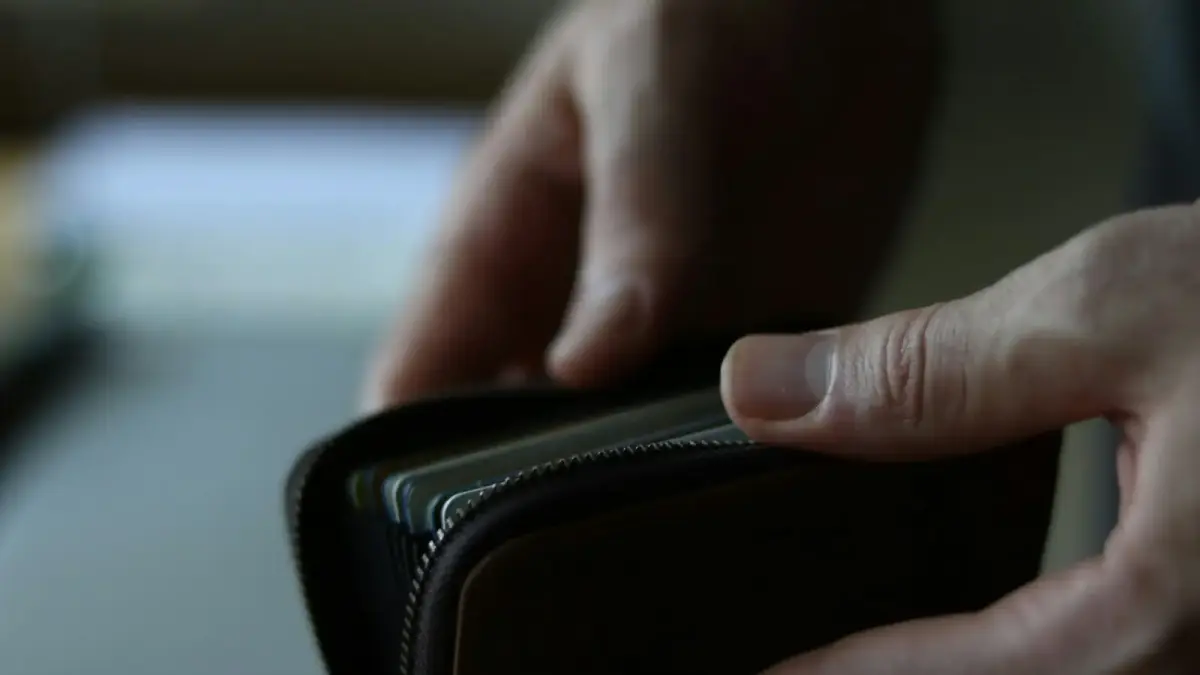
It happens in parking lots and restaurant lobbies and at the counter of the hardware store. The right hand moves to the front pocket. The fingers find the fold - not a wallet, not a clip, just bills folded once and held together by nothing but the pressure of the pocket itself. The correct amount emerges without counting. The man doesn’t look down.
My father could peel a twenty from a fold of mixed bills without breaking eye contact with the person he was paying. I thought this was a magic trick when I was seven. By the time I was thirty-seven, I realized it was practice. Decades of the same motion, the same denominations in the same order, the same readiness rehearsed until it became invisible.
A 2019 study published in the Journal of Consumer Research found that people who pay with physical cash experience a stronger “pain of paying” - a psychological friction that makes them more deliberate about every transaction. The researchers framed this as a disadvantage. They measured it against efficiency.
They missed what the friction actually meant.
For men like my father, the friction was the point. Every bill handed over was a conscious act. Every purchase was a decision made with your hands, not a notification you’d review later. You felt the money leave. You knew what you had left. You were never surprised.
What the ATM stop really means
I am fifty-three years old, and I stop at the ATM every Monday morning.
The branch is on the corner of Madison and Fourth, three blocks from my office. I park in the same spot. I walk in, because I don’t use the drive-through - my father never used the drive-through. I withdraw the same amount every week. I fold the bills once and put them in my front pocket.
My wife has asked me, gently, more than once, why I don’t just use the card for everything. She is not criticizing. She genuinely wants to understand why I add a step to my Monday that technology eliminated years ago.
I have never been able to explain it to her in a way that captures the whole truth. The best I’ve managed is: “My dad always had cash.”
But what I mean is something much larger than that.
What I mean is that my father walked through the world with a quiet guarantee in his pocket. He could tip the kid who bagged the groceries. He could buy a stranger’s coffee without waiting for a machine to find a signal. He could hand me a ten for the arcade without pulling out a phone and asking me for my username on some payment app. He could leave a twenty on the dresser for my mother when he knew she was going to the store later and didn’t want her to feel like she had to ask.
The cash was presence. It was a man saying, without ever saying it: I have already thought about what might be needed today, and I am ready.
The language his hands spoke
My father was not a man who said “I love you” with any regularity.
He was born in 1941. He was raised by people who had survived the Depression, and those people were raised by people who had survived everything before that. Emotional vocabulary was not part of the inheritance. What was part of the inheritance was a set of behaviors so consistent they functioned as grammar - a language spoken entirely through preparedness.
He checked the tire pressure before any trip longer than thirty minutes. He kept a flashlight in every room. He had a twenty in the glove box that was never spent - it was there for emergencies, and its permanence was the whole point.
Dr. Gary Chapman popularized the concept of love languages - the idea that people express affection through distinct channels that are often mismatched between partners. But Chapman’s framework centers on words of affirmation, quality time, physical touch, gifts, and acts of service.
My father’s language doesn’t appear on that list.
His language was readiness. It was the preemptive elimination of vulnerability. He loved by making sure no one near him would ever stand at a counter without enough cash, sit in a car with a flat tire without a jack and a spare, or walk into a dark room without knowing where the flashlight was.
A 2021 study in Frontiers in Psychology found that men who came of age before the digital economy tend to associate financial preparedness with personal responsibility to a degree that younger cohorts do not. The researchers called it a “generational script” - a set of inherited behaviors that persist long after the original conditions that created them have disappeared.
The conditions disappear. The script remains. The fifty-seven-year-old at the ATM on Monday morning is not performing nostalgia. He is running a program his father installed, and the program’s core function is: be ready to take care of someone.
Respectful incomprehension
My daughter is twenty-four. She pays for everything with her phone.
She holds it over a little reader and a chime sounds and the transaction is complete before I’ve finished reaching for my pocket. She is not wrong to do this. It is faster, easier, and she has a detailed record of every purchase she’s ever made, organized by category, searchable by date. She is more financially organized than I have ever been.
But when she sees me pull out cash at a restaurant, she gives me a look I recognize. It is the same look I gave my father when he insisted on stopping at the bank on a Saturday morning when I just wanted to get to the hardware store. It is a look of respectful incomprehension - the face you make when someone you love does something you cannot see the reason for, and you are kind enough not to push.
She doesn’t know that the cash in my pocket is not about the money.
She doesn’t know that when I hand a twenty to the valet, I am reenacting a scene I watched a thousand times. My father, peeling a bill from the fold without looking down, pressing it into someone’s hand with a nod that said: I see you, I appreciate the work, and I came prepared for this moment.
Dan Ariely’s research on behavioral economics has shown that the medium of payment changes the psychology of the transaction itself. Cash creates what he calls a “moral tax” - a heightened awareness that something of value is changing hands. Digital payment removes that awareness. The spending happens, but the feeling of spending doesn’t.
For my father, the feeling was everything. Each bill was a small ceremony of attention.
The morning everything felt less certain
There was one morning - I was fourteen - when my father couldn’t find his fold.
He searched the kitchen counter, the bedroom dresser, the pockets of yesterday’s pants. My mother watched him from the doorway with a cup of coffee, saying nothing, because she understood that what was happening was not about sixty or eighty dollars in mixed bills. It was about a man whose entire system of being had a gap in it.
He found the money twenty minutes later, in the jacket he’d worn to my sister’s school concert the night before. He was late to work. He never mentioned it again.
But I remember the look on his face during those twenty minutes. It was the face of a man who had briefly lost the ability to keep his promise - the promise that he would always be ready, that he would never be the person who had to say “I don’t have it on me.”
That look is why I stop at the ATM every Monday.
Not because cash is better than cards. Not because I’m stubborn or sentimental or behind the times. Because I made a quiet deal with myself, decades ago, watching a man flatten bills on a kitchen counter: I will always be ready. I will always have something to offer. I will never stand next to someone I love and be unable to reach into my pocket and handle what needs handling.
The promise folded once
The world has moved on, and I understand why.
Digital payment is faster, cleaner, more secure. My daughter is right that there is no rational reason to carry cash in 2026. The arguments are all on her side.
But rationality was never the currency my father dealt in.
He dealt in presence. In the weight of preparation. In the Sunday night ritual of counting and sorting and facing every bill the same direction - not because the cashier cared which way Washington faced, but because order was a form of respect, and respect was a form of love, and love was something you practiced with your hands before you ever tried to say it out loud.
The bills in my pocket are not money. They are a letter I carry from a man who never learned to write one. They say what he could never quite say at the kitchen table or in the car or standing in the doorway of my bedroom at night, checking to make sure I was breathing.
They say: I thought about what you might need today, and I made sure I had it.
If you carry cash - if you still make that stop on Monday morning, if you still feel the fold in your front pocket and find a steadiness there that no app has ever replicated - you are not behind the times.
You are keeping a promise that someone made before you were old enough to understand it. And the fact that you still keep it, long after the person who taught you is gone, is not stubbornness.
It is the quietest, most durable form of love I have ever seen.