There is a kind of conversation that only happens in a car at night, when the dashboard is the only light and neither person is looking at the other, and the reason we say things at seventy miles an hour that we could never say across a dinner table is that eye contact was the first thing our nervous systems learned to associate with being held accountable for the truth, and the dark cabin of a moving vehicle became the only confessional most people ever trusted
The Passenger Seat Confessional
I was nineteen the first time I told someone the truth about my family.
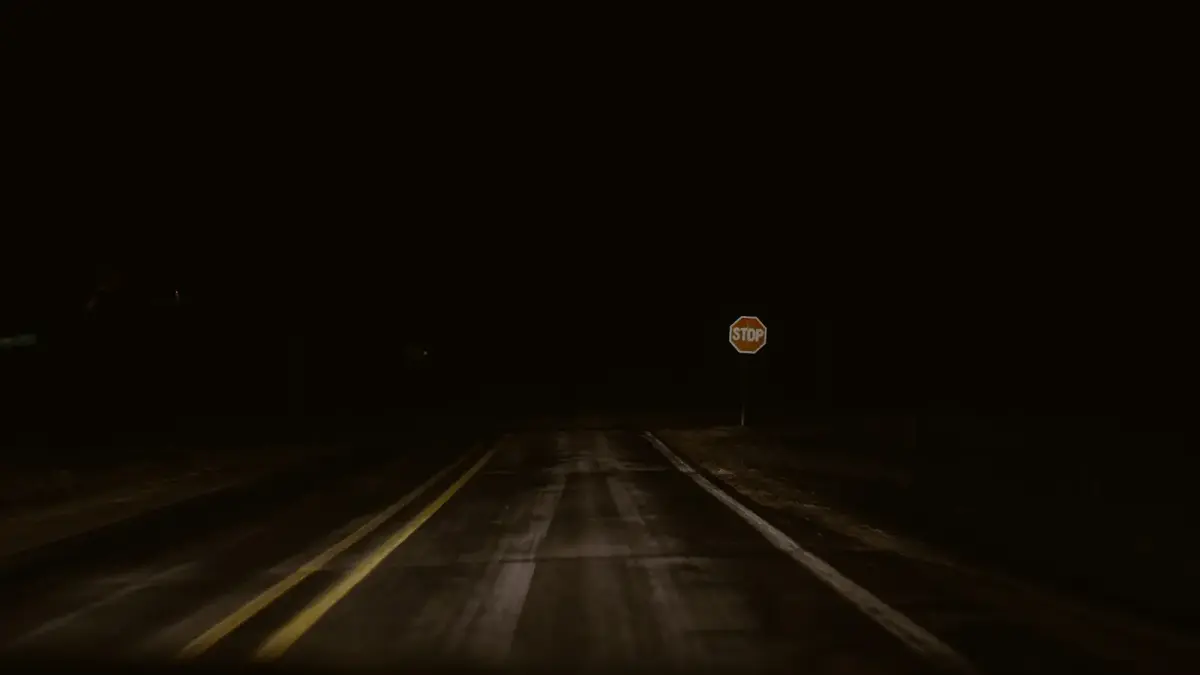
Not across from a therapist. Not at a bar with a friend who’d asked the right question. I was in the passenger seat of my buddy’s Civic, somewhere on I-95, two hours into a drive that didn’t really have a destination. The highway was empty. The dashboard threw a pale blue glow across his hands on the wheel. Neither of us had spoken for maybe ten minutes.
And then I just said it. The thing I’d been carrying for years. The thing that felt too large and too fragile for any room I’d ever been inside.
He didn’t turn to look at me. He kept driving. And somehow, that was the thing that let me keep talking.
I’ve thought about that night for twenty years. Not because of what I said - though that mattered - but because of where I said it. Because I’ve since learned that I’m not unusual. Nearly everyone I know has a version of this story. The car at night. The words that finally came loose. The strange safety of a dark cabin moving at highway speed.
And I’ve come to believe the car is doing something that no living room, no bedroom, no therapist’s office has ever quite figured out how to replicate.
Facing the Same Direction Changes Everything
Here is what most people don’t realize about a dinner table: it is an interrogation architecture.
Two people sit facing each other. Eyes available. Expressions readable. Every micro-reaction visible in real time. For casual conversation, this is fine. For small talk, it’s the default. But for the moments when someone needs to say the thing they’ve never said aloud, face-to-face seating becomes a surveillance system.
A 2019 study published in the Journal of Experimental Social Psychology found that people disclosed significantly more personal information in side-by-side seating arrangements than in face-to-face ones. The researchers noted that the reduction in direct eye contact lowered what they called “evaluation apprehension” - the fear of being judged in real time based on the listener’s facial response.
The car perfects this. You and the other person are facing the same direction. You’re not opposite each other. You’re beside each other. And that small geometric shift does something profound to the nervous system.
When two people face the same way, the brain reads the arrangement as cooperative rather than confrontational. You are, quite literally, oriented toward the same horizon. There is no sense of being examined. There’s just presence. Shoulder to shoulder, looking at the road, going somewhere together.
This is why fathers who couldn’t talk about their feelings at dinner could sometimes talk about them on a long drive. The architecture changed. The table was gone. And with it, the invisible witness box it had always been.
The Darkness Does the Real Work
But the side-by-side seating is only half the equation. The other half is the dark.
Darkness has been associated with disinhibition in psychological research for decades. A 2013 study in Psychological Science found that people in dimly lit environments were more likely to share personal secrets and engage in what the researchers called “self-disclosure.” The darkness didn’t make people reckless. It made them feel less observed.
This makes perfect evolutionary sense. For most of human history, the face was the primary channel of social information. Your expression could betray you. Your eyes could reveal what your words tried to hide. Being seen was, for most of our ancestors, synonymous with being known - and being known was not always safe.
The dark cabin of a car at night removes the face from the conversation.
You can feel the other person. You can hear them breathe. You know they’re right there, three feet away, close enough to touch. But you cannot read their eyebrows. You cannot see if their mouth tightened. You cannot watch their jaw clench when you say the thing you’ve been afraid to say.
And so you say it.
Not because you’re brave. Because the conditions finally allowed it. The darkness gave your nervous system something it almost never gets during vulnerable moments: the assurance that your face is not being read while you speak.
This is not weakness. This is your body knowing exactly what it needs in order to let the truth out.
Motion as Safety Signal
There’s a third element that makes the car so unique, and it’s the one nobody talks about.
The car is moving.
This matters more than you might think. A body in motion processes emotion differently than a body at rest. When you’re sitting in a living room having a hard conversation, your body is still, which means all of its resources are directed inward - toward the anxiety, the vulnerability, the discomfort of what’s being said.
But in a moving car, the body has a task. Subtle balance adjustments. Peripheral vision tracking. The low hum of tires on asphalt creating a kind of white noise that fills the silences so they don’t feel crushing. The vibration of the vehicle itself, which research on bilateral stimulation suggests may actually help the brain process difficult emotions - similar, in a very rough sense, to the mechanism behind EMDR therapy.
The motion does something else, too. It signals to the nervous system that this experience has a boundary. You are going somewhere. The conversation will end when you arrive. There is a natural limit, and that limit makes depth feel safer.
This is why “let’s go for a drive” has always meant something more than transportation. When a friend calls and says they need to drive, you both know what’s really being asked for. A container. A moving, dark, side-by-side container where the truth can come out without anyone having to stare at each other while it does.
The Conversations You Remember Most
Think about the conversations that actually changed your life. Not the ones you had in meeting rooms or across restaurant tables. The ones that rearranged something inside you.
I’d bet money at least one of them happened in a car.
The teenager who told their parent something they’d been hiding for months - but only after the sun went down and the highway opened up. The couple who fought bitterly at home but found resolution on the drive to her mother’s house, because the car turned them into partners instead of opponents. The friend who admitted, somewhere around mile forty, that they were not okay.
These conversations happened in cars because the car offered what no other space could: intimacy without surveillance. Closeness without confrontation. A confessional with a steering wheel.
My own father was a man of almost no emotional vocabulary. I can count on one hand the number of times he told me something real about his interior life. Every single one of them happened in his truck, at night, usually on the way home from somewhere. The cab of that truck was the only room in his world where the walls were thin enough for something honest to pass through.
I didn’t understand it then. I understand it now. He wasn’t withholding at the dinner table because he didn’t love us. He was withholding because his nervous system had learned, long before I was born, that being seen while being honest was dangerous. The truck took the seeing away. And what was left was just his voice in the dark, saying things that surprised us both.
Why the Car Is Not a Workaround
There is a temptation to frame this as a problem. To say that people who can only be honest in cars need to learn to be honest everywhere. That the reliance on darkness and motion is a crutch, and the goal should be face-to-face vulnerability at all times.
I used to believe that. I don’t anymore.
Daniel Goleman’s work on emotional intelligence has always emphasized that self-awareness includes knowing the conditions under which you function best. Susan Cain’s research on introversion demonstrated that the most meaningful contributions often come from people who need specific environments - quiet, low-stimulation, low-observation - to access their deepest thinking.
The car at night is the same principle applied to the heart instead of the mind.
Your nervous system is not being difficult when it clams up at the dinner table and opens up on the highway. It’s being intelligent. It’s recognizing that vulnerability requires safety, and that safety is not just about trust in the other person - it’s about the physical environment, the lighting, the geometry of where bodies are positioned in space.
Some truths need specific containers. Some confessions require the right room. And for many of us, the right room has four wheels and a dashboard that glows just enough to remind you someone is there without showing you their face.
The Architecture of Letting Someone In
What I’ve come to believe, after years of thinking about that night on I-95 and all the car conversations since, is that intimacy is not one thing. It’s not just willingness. It’s not just trust. It’s the intersection of willingness, trust, and environment.
We have spent centuries designing spaces for specific human needs. Cathedrals for awe. Libraries for focus. Bedrooms for rest. But we never designed a room for saying the unsayable. The car became that room by accident.
And maybe that’s what makes it so perfect. Nobody built it for confession. There is no altar. There is no expected script. There’s just the road and the dark and the person next to you and the strange, specific permission that comes from moving through the night together.
If you’ve had a conversation in a car that changed your life, you don’t need me to explain this. You already know. You know that some words can only survive in a certain kind of air. You know that your most honest self lives in a space that can’t be found on any map - just somewhere between the on-ramp and wherever you were pretending to go.
You weren’t avoiding the truth all those years you stayed quiet at the table. You were waiting for the right room.
And your nervous system, that ancient and brilliant thing, already knew which room it was.