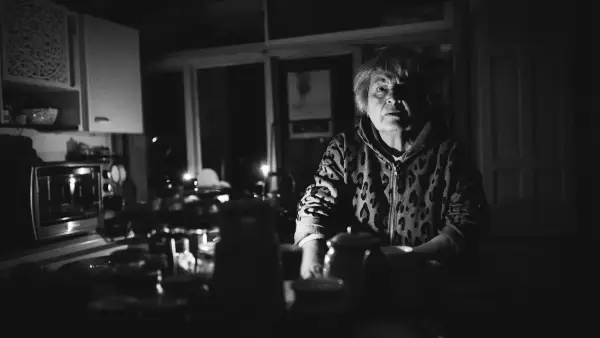
There is a particular kind of love that only exists in the sound of someone else moving through the house while you sit perfectly still - the footsteps upstairs, the kitchen faucet running, a cabinet door closing with the specific weight of the person who knows where everything is - and the reason that sound can bring you closer to tears than anything they have ever said out loud is that presence without performance is the rarest form of intimacy most people never learn to name
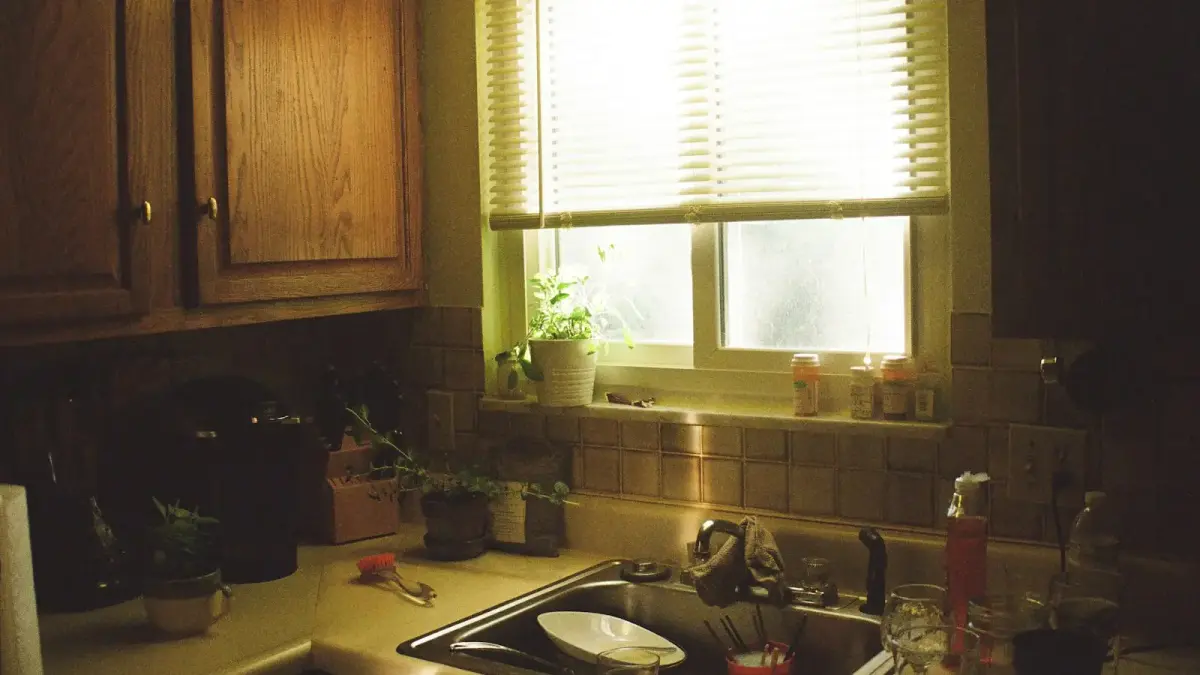
I was sitting in the living room last October, reading something I have already forgotten, when I heard my wife turn on the kitchen faucet. She let it run for a few seconds before filling the kettle. Then there was the soft thud of the cabinet where we keep the mugs. Then the click of the stove. Then nothing - just her standing there, waiting for the water to boil, existing ten feet away from me in a room I could not see.
And something about that sequence of sounds - so ordinary, so unremarkable, so perfectly her - made my throat tighten in a way I was not prepared for.
I did not call out to her. I did not get up. I just sat there, listening to the woman I have loved for twenty-three years make tea, and I thought: this is it. This is the thing I would miss most. Not the conversations. Not the vacations. Not even her voice saying my name. The sound of her moving through our house like water through a riverbed - following the grooves we carved together over decades.
The frequency only long love can hear
There is a version of love that nobody writes songs about. It does not arrive with urgency. It does not announce itself. It hums at a frequency so low you can go years without consciously hearing it - until the moment you do, and it undoes you completely.
It is the sound of someone else’s morning. The shower starting at 6:47 because it is always 6:47. The particular rhythm of their feet on the stairs - heavier on the way down, always skipping the second step because it creaks. The refrigerator opening and closing with a cadence you could identify blindfolded, because the person opening it has been reaching for the same shelf, in the same way, for longer than some people stay alive.
A 2019 study published in the Journal of Social and Personal Relationships found that couples in long-term partnerships develop what researchers called “relational attunement” - an unconscious awareness of each other’s physical rhythms and spatial patterns that deepens steadily over time. The study noted something remarkable. This attunement was a stronger predictor of relationship satisfaction than verbal communication. Stronger than how often they said “I love you.” Stronger than how well they resolved conflict.
The couples who felt most loved were not the ones who talked the most. They were the ones who had learned to exist in the same space like two instruments tuned to each other - not playing the same note, but resonating.
The architecture of someone else’s body in your home
You learn a person differently after twenty years. Not through what they tell you, but through what they leave behind in sound and motion.
You know exactly how hard they close the back door. You know the difference between their “looking for something” footsteps and their “just passing through” footsteps. You know the weight of their body settling into the couch from two rooms away, because the house shifts slightly - a creak in the floor, a sigh from the cushions - and your nervous system registers it the way it registers its own heartbeat.
You do not think about this. That is what makes it sacred.
Daniel Goleman, in his work on emotional intelligence, described something he called “neural resonance” - the way long-partnered brains begin to synchronize their stress responses, their sleep cycles, even their breathing patterns. Not because they are trying to. Because proximity, sustained over years, rewires the body.
Your partner’s sounds become part of your baseline. The hum beneath the hum. The thing your nervous system expects to hear, the way it expects gravity or air pressure. Not a luxury. A condition of the atmosphere you live in.
And you never notice the atmosphere until it changes.
When the house goes quiet
I have a friend named David who lost his wife three years ago. They were married for thirty-one years. When I asked him what the hardest part was, I expected him to say the mornings, or the holidays, or sleeping alone.
He said it was the silence.
Not emotional silence. Literal silence. The house sounded wrong. He would sit in his living room and the air would feel pressurized with absence - no footsteps above him, no water running, no cabinets opening, no television murmuring from the other room because she always had something on while she folded laundry. The house had lost its frequency. It was still a house, but it had stopped being a home in some acoustic way he could never fully articulate.
“I started leaving the radio on,” he told me. “Not because I wanted to hear anything. Because I could not stand hearing nothing.”
A 2021 study published in Psychological Science examined the grief responses of long-term partners and found that the loss most frequently described was not the absence of conversation or companionship, but the absence of what they called “ambient presence” - the passive, nonverbal awareness of another body sharing a space. Participants described it as losing a sense they did not know they had. Like suddenly being unable to feel temperature. The world still existed. It just stopped registering on a frequency they had spent decades calibrating to.
This is the grief that lives underneath grief. The missing that has no object you can point to. Not “I miss her laugh” but “I miss the sound of the house when she was in it.”
Presence without performance
We have been taught that love is a verb. Something you do. Something you perform. And there is truth in that - love requires action, attention, the daily choice to show up.
But there is another layer beneath the performance that we almost never talk about. The love that is not a verb at all. The love that is a noun - a state, a condition, a thing that simply exists in the room because two people have chosen the same room for long enough that their presence became the room’s defining quality.
Brene Brown has written about how vulnerability is the birthplace of connection. And she is right. But I think there is a form of vulnerability even quieter than the one she describes. It is the vulnerability of simply being in a house with someone without performing anything at all. Not talking. Not connecting. Not even being in the same room. Just being in the same structure - breathing the same air, producing the small sounds of a shared life - and trusting that this is enough.
That is what long love earns you. Not bigger declarations. Smaller ones. Ones so small they do not look like love at all, until you lose them, and then they are the only ones that mattered.
The kettle, the footsteps, the cabinet door
My parents were married for forty-four years before my father died. In the months after, my mother rearranged the kitchen three times. She told me she was just organizing. But I watched her, and I understood. She was trying to make the sounds come back.
She wanted to hear a cabinet open the way he opened it - with that particular gentle force, the handle pulled and released so the door swung out and tapped the wall once before settling. She was trying to recreate the acoustics of a body that was no longer there.
She could not, of course. Because the sounds were never about the cabinets. They were about the hand that opened them. The specific weight. The specific hesitation. The way a body accumulates habit over decades until its every movement becomes a signature that nobody else can forge.
This is what I mean when I say love lives in sound.
Not in the words spoken but in the evidence of someone existing near you. The proof of proximity. The acoustic fingerprint of a person who chose your house, your morning, your kitchen, your specific shelf in the refrigerator - not once, in a moment of passion, but ten thousand times, in moments of nothing.
The love that sounds like Tuesday morning
Here is what I want to say to anyone who has been with the same person for a very long time and sometimes wonders if the fire has gone out.
Listen.
Not to what they are saying. To what they are doing. To the footsteps on the stairs. To the faucet turning on. To the weight of them settling into bed at night - the mattress shifting, the sheets pulling, the sigh that comes right before sleep that they have made every single night for as long as you can remember.
A 2023 study in Frontiers in Psychology examined what researchers called “mundane intimacy” - the emotional significance of routine domestic behaviors in long-term couples. They found that the couples who reported the highest levels of deep attachment were not the ones who maintained grand romantic gestures. They were the ones who had developed what the researchers described as “a shared domestic soundscape” - an interwoven pattern of daily sounds and rhythms that functioned as a continuous, ambient expression of belonging.
Not “I love you.” But “I am here.”
Not “You are special.” But “You are home.”
The fire did not go out. It just stopped being a fire. It became something better. It became the heat in the walls. The warmth you stop noticing because it is everywhere, because it is the temperature of your life, because you have been warm so long you forgot that warmth is not a given.
That is what the footsteps are. That is what the faucet is. That is what the cabinet door closing with the specific weight of the person who knows where everything is - that is what all of it is.
It is someone saying, without saying anything at all: I am still here. I am still choosing this house. I am still choosing you.
And the reason it can bring you to tears on an ordinary Tuesday morning, sitting in a living room, listening to someone make tea - is that you finally heard it. The frequency that has been playing your entire marriage. The sound of being loved so steadily that it became the background music of your life.
You were never not hearing it. You just forgot to listen.