There is a particular kind of thinking that only happens at three in the morning, when the house is dark and everyone you love is sleeping and your mind decides this is the perfect time to review every careless word you said at a dinner party six years ago, and the reason it happens at night is not insomnia but a nervous system that spent the entire day performing adequacy and now, in the dark, finally drops the performance and lets the auditor do her work

The Audit Begins When the Applause Stops
I woke up at 2:47 last Tuesday. Not from a sound. Not from a dream. From a sentence.
It was something I had said to a colleague nine months earlier - a joke that landed slightly wrong, a comment about her coat that came out as more observation than compliment. She had paused for half a second before laughing. That half-second pause was what woke me. Not the joke itself. The pause. The tiny flicker of confusion across her face before she decided I meant well.
I lay in the dark beside my sleeping husband and replayed it four times. Each replay was worse than the last. By the fourth version, I had somehow convinced myself that she had told three other people about it, that my name was now associated with carelessness, and that the entire foundation of our working relationship was built on her tolerance of my awkwardness.
This is not insomnia. I want to be very clear about that. This is something else entirely.
The Daytime Contract
During the day, you and your nervous system have an agreement. You will hold yourself together. You will be warm but not too eager. Funny but not trying too hard. Helpful without being a pushover. You will read the room and adjust yourself accordingly, and your nervous system will cooperate by keeping the volume low on all the ways you might be failing.
This agreement works beautifully for about sixteen hours.
You go to work. You make small talk. You navigate the impossible social calculus of knowing when to speak and when to listen, when to laugh and when to be serious, when a hug is welcome and when it would be strange. You do this hundreds of times a day without even noticing. Every interaction is a tiny performance reviewed in real time by an internal committee that checks your tone, your timing, your facial expression, and whether that thing you said about Tuesday’s meeting sounded passive-aggressive.
But here is the part nobody explains. Your nervous system is not deleting these reviews. It is filing them. Every uncertain glance, every joke that got a slightly delayed laugh, every moment you said “you too” when the waiter said “enjoy your meal” - all of it goes into a folder marked “pending.”
And that folder does not open during business hours.
Why Darkness Is the Trigger
A 2021 study published in Frontiers in Psychology found that repetitive negative thinking increases significantly during nighttime hours, and not simply because people are tired. The researchers identified a neurological shift that occurs when external stimulation drops - when the room goes dark, conversations end, and the brain no longer needs to process incoming social data. In that silence, the default mode network activates. This is the part of the brain responsible for self-referential thinking, autobiographical memory, and - crucially - social evaluation.
In simpler terms, your brain has a setting for “deal with the world” and a setting for “deal with yourself.” The second setting needs quiet. It needs darkness. It needs everyone else to be asleep so it can finally turn its attention inward without interruption.
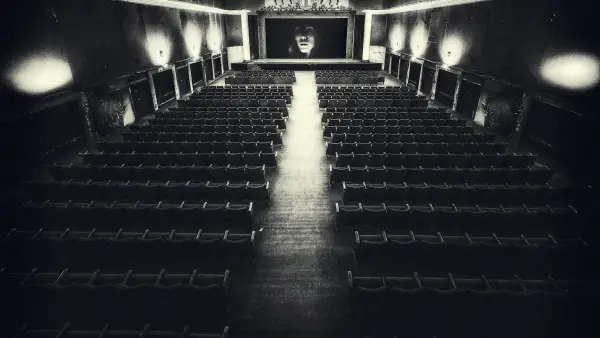
This is why the thoughts do not come at noon. At noon, you are too busy performing. At noon, the auditor is locked out of the room because the performer is on stage. But at three in the morning, the stage is empty. The lights are off. And the auditor walks in with her clipboard and starts going through the footage.
She is thorough. She is merciless. And she has been waiting all day.
The Inventory of Small Failures
The things your mind pulls from the archive at 3 AM are never the big things. They are never the moments that actually mattered - the serious conversation, the major decision, the real conflict. Those, strangely, you processed in real time. You cried about them, talked about them, made peace with them in daylight.
No. The 3 AM inventory is exclusively composed of things that should not matter.
The way you mispronounced someone’s name at a party in 2019. The email you sent with a period instead of an exclamation point, which you now realize might have come across as cold. The time you waved at someone who was not waving at you. The birthday you remembered one day late. The silence you left when your friend told you her mother was sick, because you could not find the right words fast enough and so you found no words at all.
These are the things the auditor reviews. Not because they are important, but because they were never resolved. They were too small to bring up, too minor to apologize for, too slight to justify a conversation. So they stayed open. Unprocessed. Filed under “pending” with no review date.
And at 3 AM, in the only private hours your nervous system gets, every pending file opens at once.
The Person the Room Seemed to Require
Here is what I have come to understand about the people who do this - who lie awake replaying small moments and rehearsing better versions of conversations that ended years ago.
They are not anxious in the clinical sense. They are not broken. They are people who spent their entire lives trying to be the person the room seemed to require.
The room wanted someone cheerful, so they were cheerful. The room wanted someone competent, so they were competent. The room wanted someone easy, undemanding, low-maintenance, so they swallowed their needs and became exactly that. And they did it so well, so seamlessly, so automatically, that they stopped noticing they were doing it.
But the body notices.
Psychologist and author Gabor Mate has written extensively about how the nervous system keeps a record of every moment we override our authentic response in favor of a socially acceptable one. The body does not forget the times you laughed when you wanted to cry, agreed when you wanted to object, or stayed quiet when something inside you was screaming to be heard. It files those moments away. And when the world finally goes quiet - when there is no one left to perform for - the file opens.
The 3 AM review is not your brain torturing you. It is your nervous system finally having a moment alone to process everything it was not allowed to process during the day.
The Nervous System’s Only Office Hours
Think of it this way. You work in an office where the phones ring constantly, meetings run back to back, and someone is always at your desk needing something. You have a stack of paperwork that needs attention - not urgent paperwork, not crisis paperwork, just the quiet administrative work of reviewing what happened and deciding how you feel about it. But there is never time. The phones keep ringing. The meetings keep happening. The people keep needing.
Then, at three in the morning, the office is empty. The phones are silent. No one is coming to your desk. And finally - finally - you can sit down with the stack of papers and go through them.
That is what your brain is doing when it wakes you to replay a conversation from six years ago. It is not being cruel. It is doing the only work it can do during the only hours it has to do it.
A 2019 study in the Journal of Research in Personality found that individuals who score high in conscientiousness and agreeableness - people who are deeply attuned to others’ emotional states and highly motivated to maintain social harmony - are significantly more likely to engage in nocturnal rumination. The researchers suggested that these individuals spend so much cognitive energy during the day monitoring and adjusting their social behavior that their brains require offline processing time to catch up.
You are not overthinking because something is wrong with you. You are overthinking because you spent all day caring - about the right words, the right tone, the right amount of warmth, the right response to someone else’s pain. And now your mind needs to audit the caring, because caring is the most important thing you do, and you want to make sure you did it right.
The Auditor Is Not Your Enemy
I used to hate the 3 AM thoughts. I used to fight them - deep breathing, counting backward, reciting song lyrics, anything to drown out the replaying. Sometimes it worked. Mostly it did not. The auditor is patient. She waits.
What changed for me was not learning to silence her but understanding what she was doing. She was not punishing me. She was checking my work. She was going through the day’s interactions the way a careful editor goes through a manuscript - not to tear it apart, but to make sure it says what I meant it to say.
Every moment she replays is a moment I cared about. The dinner party comment that keeps surfacing? It surfaces because I care about that person and I do not want to have been careless with them. The email with the wrong tone? It haunts me because I care about being understood. The silence when my friend needed words? It replays because I care about being present and I was not, and that matters to me.
The auditor is not cruelty. She is conscience. She is the part of me that refuses to be indifferent to how I land in other people’s lives.
What the Darkness Knows
There is a line from the psychologist Daniel Goleman that I think about often. He wrote that self-awareness is not about judgment - it is about attention. The people who understand themselves best are not the ones who are hardest on themselves. They are the ones who are willing to pay attention to what arises, even when what arises is uncomfortable.
The 3 AM thoughts are uncomfortable. They are unwelcome. They steal hours of sleep and leave you tired and vaguely ashamed in the morning, as though you did something wrong by caring too much about a conversation that everyone else forgot.
But they are also a form of attention. They are your deepest self, in the only quiet it gets, trying to tell you something about what matters to you. About who you want to be. About the gap between who you performed as today and who you actually are.
That gap is not a failure. It is proof that you are still paying attention. Still trying. Still awake to the fact that other people are real and that your words land somewhere inside them and that where they land matters.
So the next time you find yourself staring at the ceiling at three in the morning, replaying something small and irrelevant and years old, I want you to consider the possibility that this is not a malfunction.
This is your nervous system’s only office hours. And the auditor showed up because she still cares about the quality of your work.
That is not a disorder. That is a kind of devotion most people have stopped being capable of.
And you should know - even at three in the morning, even in the dark, even with the clipboard and the replaying and the quiet inventory of small imperfections - you are not broken. You are just thorough. Painfully, beautifully, exhaustingly thorough.
The world needs more people who lose sleep over a misplaced word. Not fewer.