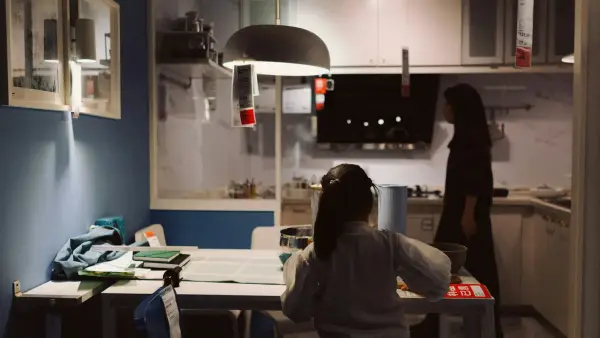
There is a particular kind of wealth that has nothing to do with money and everything to do with the person who knows how you take your coffee without asking, who hands you the right mug without being told which one, who remembers that you cannot eat walnuts and checks the menu before you do, and the reason these invisible acts of memorization bring you closer to tears than any grand gesture or anniversary gift ever could is that they are proof of someone who has been studying you for years the way a person studies a landscape they have decided to live in forever
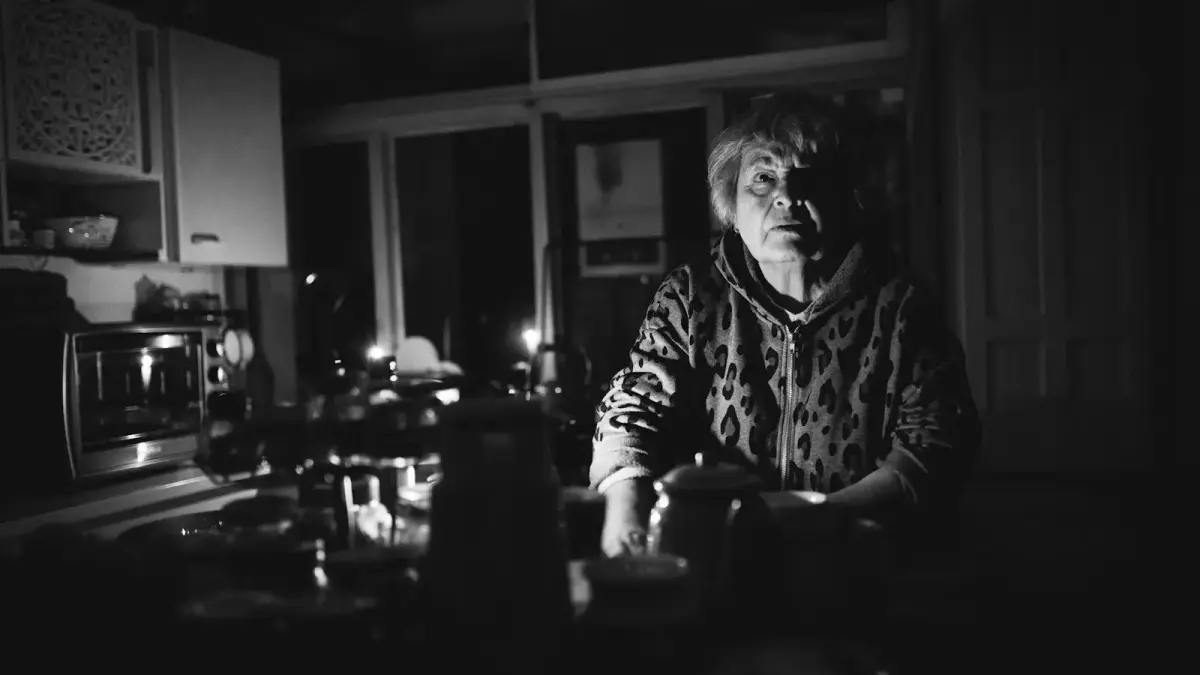
I cried in a restaurant last year because my husband moved the bread basket.
That sounds absurd, I know. We were at a place we had never been to before, a small Italian spot with candles on the tables and menus you had to squint to read. The bread came in a wicker basket lined with cloth, and it was placed directly in front of me. And without looking up from his menu, without pausing, without making any kind of event of it, he reached over and moved the basket to his side of the table.
Because I am trying not to eat gluten. Because I had mentioned this once, maybe twice, weeks earlier. Because he knew that if it sat in front of me all night I would tear off pieces without thinking, and then I would be frustrated with myself later.
He did not announce it. He did not say, “Here, I’ll move this since you’re avoiding bread.” He just moved it the way you adjust a picture frame that has gone slightly crooked - automatically, without ceremony, because you have been looking at the wall long enough to know what straight looks like.
And something about the quietness of that gesture broke me open.
The catalog no one asked them to keep
There is a file that exists in the mind of anyone who has loved you for a long time. It is not organized or labeled. It was never deliberately created. But it is enormous, and it contains things about you that you have never formally communicated.
It contains the fact that you sleep better when the window is cracked, even in winter. That you will say you do not want dessert and then eat most of theirs. That you get quiet - not angry, just quiet - when you are overwhelmed, and that the quietness is not a wall but a request for patience.
It contains your coffee order, yes. But also the mug you reach for first. The specific corner of the couch where you always sit. The way you always check your phone once, quickly, right before bed - not because you are expecting anything, but because it is a small ritual that settles you.
No one asked them to memorize these things. There was no assignment, no quiz, no reason to retain any of it. And yet they did. They built an entire encyclopedia of you, entry by entry, without ever being conscious they were doing it.
A 2021 study published in the Journal of Personality and Social Psychology found that feeling understood by a partner - what researchers call “perceived partner responsiveness” - was a stronger predictor of relationship satisfaction than frequency of conflict, shared interests, or even physical attraction. It was not agreement that made people feel loved. It was the experience of being seen accurately.
And nothing says “I see you accurately” quite like someone who remembers which mug is yours.
What memorization actually means
I think we underestimate what it takes to know someone this well.
We talk about love in terms of feeling - the rush, the warmth, the longing. But this kind of knowing is not a feeling. It is a practice. It is thousands of small observations collected over years, filed away without intention, retrieved without effort.
It is your mother knowing which coat you will want before you have checked the weather. It is your best friend ordering for you when you are running late because she already knows. It is your partner reaching for your hand at the exact moment in the movie when you are about to get anxious, not because you told them the scene would bother you, but because they have watched you watch enough movies to know.
This is not mind reading. This is something harder. This is sustained, patient, voluntary attention to another human being over a long stretch of time. It is the opposite of performative love. There are no witnesses. There is no applause. There is just the quiet accumulation of noticing.
Daniel Goleman, who spent decades studying emotional intelligence, described this quality as a kind of attunement - the ability to pick up on another person’s emotional frequency without them needing to broadcast it. It is not something that can be faked or fast-tracked. It requires years of presence.
And presence, real presence, is the most expensive thing anyone can give you. Because it costs them the one resource they cannot earn back.
The grand gesture problem
We have been taught, culturally, to value the big moment. The surprise trip. The elaborate proposal. The dozen roses delivered to the office where everyone can see.
And those things are lovely. I do not want to take anything away from the person who plans a surprise birthday party or writes a love letter on an anniversary.
But I want to tell you something I have learned after years of paying attention to what actually moves people, and it is this: the moments that bring us to our knees are almost never the grand ones.
They are the person who puts a glass of water on your nightstand before you go to bed because they know you always wake up thirsty. They are the one who turns the volume down on the TV slightly during the scene they know you will find too loud. They are the friend who texts you on the anniversary of a loss they were never told to remember but marked in their heart anyway.
A 2019 study in Frontiers in Psychology examined how couples perceive caring behaviors and found that small, consistent, everyday gestures were rated as significantly more meaningful than infrequent large gestures. The researchers concluded that what they called “micro-moments of care” were the primary mechanism through which people felt secure in their relationships.
It was not the proposal on the mountaintop that made someone feel safe. It was the aspirin on the counter before they mentioned the headache.
Why it makes you cry
Here is why these small things hit so hard, and I want to be honest about this because I think we owe ourselves the truth.
Most of us grew up with the quiet suspicion that we were too much to bother with. Not unloved, necessarily, but un-studied. We were cared for in broad strokes. Fed, clothed, kept alive. But the small details of who we were - our preferences, our textures, the specific shape of our anxiety - went largely unrecorded.
So when someone finally does record them, something old and tender in us cracks open.
The tears are not about the mug or the coffee or the bread basket. The tears are about the implication. They are about what it means that someone thought you were worth memorizing. That someone looked at the vast, complicated landscape of who you are and did not turn away but instead began to map it, quietly, one detail at a time.
Susan Cain, whose work explores the inner lives of quiet people, has written about how the deepest form of love is not passionate declaration but the willingness to pay close attention to another person. To truly study someone. To make them the subject of your ongoing, lifelong curiosity.
And when you have spent years believing you were background noise, discovering that someone has been listening closely enough to learn you by heart is almost too much to hold.
The landscape metaphor
I keep coming back to this image: someone studying you the way a person studies a landscape they have decided to live in forever.
Think about what that means. When you commit to a place - when you buy the house, when you plant the garden, when you decide this is where you will stay - you begin to learn it in a way that tourists never do. You learn where the light falls at different hours. You learn which floorboard creaks, which window sticks, where the wind comes through.
You do not learn these things because you are trying to. You learn them because you are there. Because you keep showing up, morning after morning, and the place reveals itself to you through sheer accumulated presence.
That is what long love does. It reveals people to each other. Not all at once, not through dramatic confession, but through the slow accumulation of mornings.
And the person who knows your coffee order without asking is not performing a magic trick. They are simply someone who has been in the kitchen with you enough mornings to absorb it. They have stood beside you enough times to know the rhythm of your hands, the pause before you speak, the way you sigh when you are content and the way you sigh when you are not, and how those two sounds are nothing alike.
The wealth that compounds
Financial wealth compounds. Everyone knows that. You put a little away, year after year, and eventually it becomes something significant.
But this other kind of wealth compounds too.
Every detail someone memorizes about you adds to a growing account of evidence that you matter. That you are not generic. That the specific way you exist in the world - your allergies, your morning rituals, your fear of parking garages, your inexplicable attachment to a chipped blue bowl - is worth someone’s cognitive real estate.
And unlike money, this wealth cannot be inherited or transferred. It cannot be bought. It can only be earned by the slow, irreplaceable act of paying attention.
I think about the couples I know who have been together for thirty, forty, fifty years. The ones who are still tender with each other. And the thing they all seem to have in common is not passion or compatibility or even shared values. It is this: they know each other’s inventory. They could write the user manual for each other’s hearts, not because they sat down to study, but because they never stopped noticing.
And that, I have come to believe, is the richest thing a person can possess.
What this means about you
If you are reading this and thinking about the person who moves the bread basket for you, who checks the menu for your allergies, who puts the glass of water by your bed - I want you to sit with something for a moment.
You were chosen as a subject of study. Not once, in some dramatic moment of commitment, but over and over again, in every small observation they ever made and held onto. Every time they remembered something about you that you never asked them to remember, they were saying, without words: I find you interesting enough to keep learning.
And if you are reading this and realizing that you are that person for someone else - that you are the one who knows which mug, which side of the bed, which song to skip in the car - I want you to know that what you are doing is not small.
You are building someone a home inside your memory. You are telling them, with every recalled preference and anticipated need, that they are not invisible. That the fine print of who they are is not too boring to read.
That is not a small love. That is the whole thing.