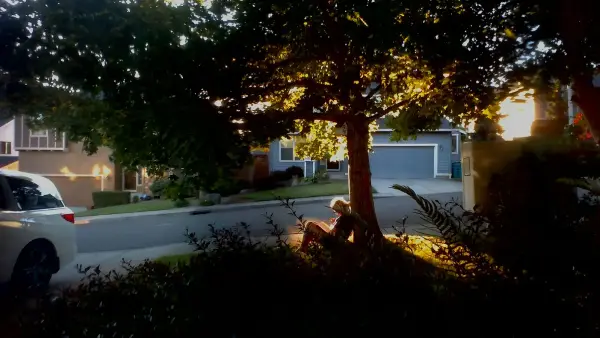
There is a kind of tiredness that arrives somewhere around fifty-eight that has nothing to do with the body and everything to do with a man who spent forty years building himself entirely out of usefulness - who measured his worth by what he could carry, what he could fix, what he could provide - and is now standing in a house where his children solve their own problems without calling, his wife runs everything he once thought only he could manage, and his industry has moved on to someone younger, and the exhaustion is not from working too hard but from the quiet discovery that nobody taught him how to exist in a world that no longer needs what he was built to give
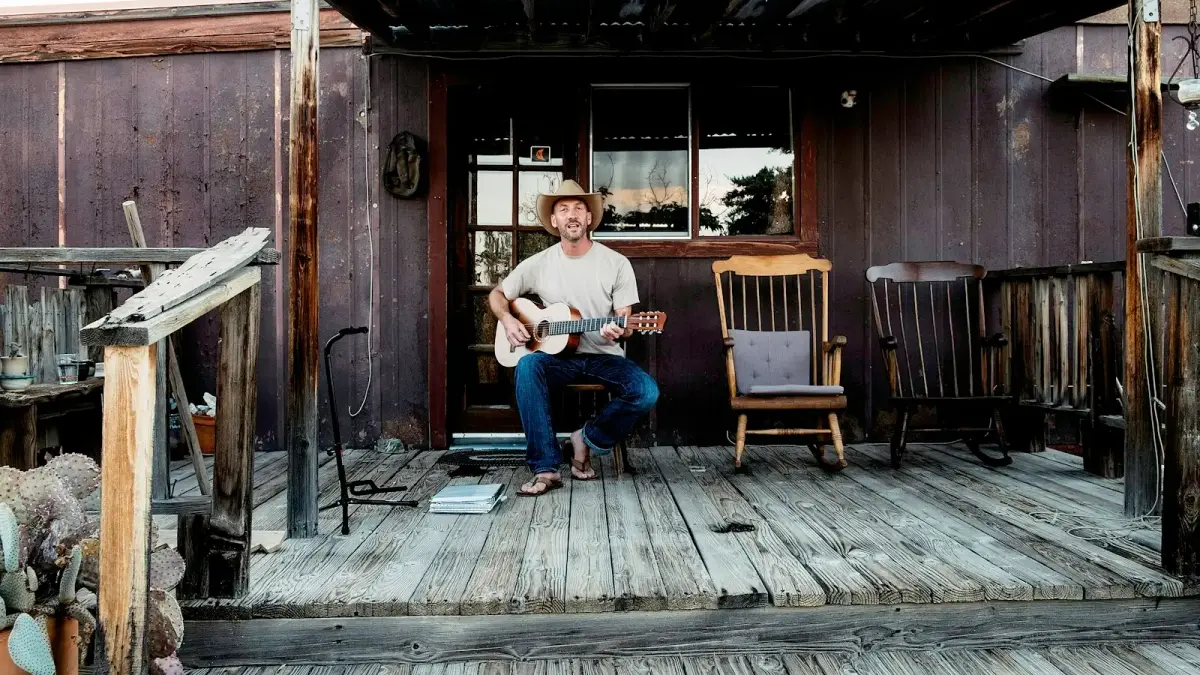
I noticed the tiredness on a Tuesday. Not the kind that coffee fixes or a long weekend cures. It was deeper than muscle, quieter than pain.
I had finished mowing the lawn - something I’d done every Saturday for twenty-three years - and I sat on the back steps afterward, not because I was winded but because I genuinely could not think of what came next. The lawn was done. The gutters were clean.
The car had gas. Nobody had asked me to do anything else.
And that was the problem.
For the first time I could remember, there was no next task. No one waiting on me to solve something.
No crisis that needed my particular brand of showing up, staying steady, and fixing it with my hands or my presence. I sat there for forty-five minutes before my wife came out and asked if I was okay.
I told her I was fine. That was the only language I had.
The template nobody questions
There is a script that gets handed to men somewhere around the time they stop being boys, and it is remarkably simple. You are what you do. You are what you can carry.
You are the problems you solve and the people who depend on you to solve them.
Nobody writes it on a card and puts it in your hand. It arrives through a thousand small lessons - the way the culture celebrates the man who works overtime, the way a neighborhood respects the guy who can fix anything, the way a family measures stability by what the provider brings home. You learn that the correct response to fear is usefulness and the correct response to sadness is action.
It is not a cruel script. It actually works beautifully for about thirty years.
You build a career. You raise children. You become the person people call when the basement floods, when the car won’t start, when someone needs to co-sign a loan or drive four hours to help move a couch.
You are the man who shows up. And showing up becomes so central to who you are that you stop noticing it is the only thing you know how to be.
A 2018 study published in the Journal of Men’s Studies found that men who scored highest on “provider role identity” reported the lowest sense of self outside their professional and familial utility. The researchers noted something striking - these men didn’t lack self-awareness.
They understood their identity was narrow. They simply had no alternative framework to step into.
That is not a failure of intelligence. That is a culture offering one door and calling it a hallway.
The calls that stop coming
Here is what nobody prepares you for. The obsolescence doesn’t arrive with a dramatic announcement. It seeps in like weather.
Your daughter calls less. Not because she loves you less but because she married someone competent, someone who fixes her leaky faucet and talks her through her work problems and drives her to the airport. She doesn’t need you to do those things anymore.
She calls to chat, sometimes, but chatting was never the currency you traded in. You traded in being needed.
Your son figures out his taxes on his own. He refinances his mortgage without asking your opinion.
He buys a car - a car - without calling you first. You find out about it at dinner, a week later, and you say something like “good for you” while something small and unnamed tightens behind your ribs.
Your wife - your wife is perhaps the most disorienting part. She didn’t leave. She did something more confusing.
She learned. While you were at the office for forty years, she became the person who manages the finances, schedules the doctor’s appointments, maintains the friendships, plans the holidays, and runs the household with an efficiency you never noticed because you were too busy being needed somewhere else.
She doesn’t need you to carry the groceries. She orders them online. She doesn’t need you to handle the bills.
They’re on autopay. She doesn’t need you to drive her anywhere. She has her own car, her own schedule, her own life that took shape in the spaces you left empty.
She still loves you. But she doesn’t need you. And for a man who was taught that those two things were the same, the difference is vertigo.
The toolbox that sits untouched
I keep a toolbox in the garage. It is well-organized. The wrenches are sorted by size.
The drill bits are in a labeled case. There is a level that my father gave me thirty years ago, and I kept it not because it is superior to a laser level but because it was his, and because the act of using it connected me to something I understood about myself.
Nobody borrows my tools anymore. My neighbor has his own. My son-in-law has a newer set.
The toolbox sits on the shelf like a museum exhibit of a man who used to be essential.
This is not self-pity. I need you to understand that.
This is description. This is what it looks like when the single metric you were given for measuring your own worth - what can you do for other people - slowly, gracefully, without cruelty, goes to zero.
Research from the Stanford Center on Longevity found that men transitioning out of long careers experienced what the researchers called “identity foreclosure” - a state where the self that existed inside the professional role simply has no structure to stand on once the role is removed. Women in the same study showed significantly more identity diversity. Not because women are inherently more complex, but because the culture gave them permission to be more than one thing.
Men got the provider script. One page. No appendix.
The word he cannot say
There is a word for what he feels, but he will not use it because it sounds too close to weakness, and weakness was the one thing the script explicitly forbade.
The word is grief.
He is grieving a version of himself that is still alive but no longer has anywhere to go. The man who could carry four bags of mulch without stopping. The man whose phone rang with problems only he could solve.
The man whose opinion was sought before large purchases and life decisions. That man is not dead, but his job is finished, and no one held an exit interview.
A 2021 paper in Psychology and Aging explored what the researchers termed “role exit grief” in men over fifty-five. They found that the emotional response to losing a functional identity closely mirrored the grief response to losing a loved one - denial, bargaining, a persistent sense of searching for something that is no longer there.
But because the loss is invisible - nobody died, nothing was taken - the grief has no socially recognized container. There is no funeral for relevance. No sympathy card for the man who used to be needed.
So he calls it tiredness. Because tiredness is allowed.
He says he’s fine. He says he’s just slowing down.
He watches more television than he used to, not because he enjoys it but because it fills the hours that used to be filled by purpose. He takes longer at the hardware store, walking aisles he doesn’t need anything from, because the hardware store is the last place that still speaks his language.
The strength nobody recognizes
I want to say something to the man sitting on his back steps, looking at a mowed lawn, wondering what comes next.
You are not obsolete. You are not useless. You are not broken, and you are not finished.
You are a man standing at the edge of a life you were never prepared for, and the fact that you feel lost is not evidence of weakness. It is evidence that you were handed one definition of worth - a definition that required you to be perpetually useful, perpetually strong, perpetually needed - and you fulfilled it with everything you had.
You did exactly what you were asked to do. You did it for decades.
The tiredness you feel is not from working too hard. It is from standing in the gap between the man you were built to be and the man you have not yet learned to become.
That gap is real. It is disorienting. And crossing it requires a kind of courage that has nothing to do with carrying heavy things.
It requires the courage to be a person who simply exists. Not because he is needed but because he is here. Not because he can solve your problem but because his presence, his voice, his particular way of noticing the world, has value that was never contingent on function.
Your children didn’t stop calling because you failed. They stopped calling because you succeeded.
You raised humans who can carry their own weight. That was the entire point.
Your wife didn’t learn to live without you because she doesn’t love you. She learned to live without your utility because you were gone for forty years, and she had to.
The fact that she stayed anyway - that she is still there, on the other side of the kitchen, asking if you want coffee - that is not evidence of your irrelevance. That is evidence that she loves the man, not just the function.
You were more than what you carried. You were always more than what you carried.
The toolbox can stay on the shelf. The phone can stay quiet. The lawn can wait.
You are allowed to sit on the back steps. You are allowed to not know what comes next. You are allowed to be tired in a way that has nothing to do with the body and everything to do with a man who is learning, late and without a manual, that he was always more than what he could do.
That is not the end of something. That is the slow, uncertain, achingly human beginning of something else.