There are women who plant the same flowers their mothers planted - who order the same roses from the same catalog, who put marigolds along the front walk in the same deliberate row, who kneel in the dirt every April and recreate a garden that belongs to a woman who has been gone for fifteen years - not because they love gardening but because a daughter who never learned how to say I miss you in a language her mother would have understood discovered that the only fluent conversation they ever had was conducted in roses and soil and the patient silence between a woman and the thing she is growing
I bought marigolds last Saturday. The same flat of marigolds I buy every April, from the same nursery on Route 12 that smells like wet earth and rubber hoses and the inside of my mother’s car on any given Saturday morning between 1987 and 2003.
I didn’t plan to cry in the parking lot. But there I was, fifty-three years old, holding a cardboard tray of flowers that cost eleven dollars, sobbing into the steering wheel of a car my mother never sat in. Because the marigolds smelled exactly right. And “exactly right” is not a scent. It’s a person.
My mother has been dead for nine years. I talk to her in the garden.
Not out loud. Not in prayer. Not in any way I could explain to someone who hasn’t done it. I talk to her the way she talked to me for most of my life - in proximity. In the quiet act of doing the same thing, in the same place, at the same time. Shoulder to shoulder with a ghost who never answers and never needs to.
If you are a woman who plants the same flowers your mother planted, you already know what I mean. And if you’re not, I want to try to tell you.
The flowers were never about the flowers
My mother kept roses along the south side of the house. Not because she was particularly romantic. Not because she loved the look of them. She kept roses because her mother kept roses, in a small yard in Scranton, Pennsylvania, in a house that was torn down before I was born.
I didn’t know that for a long time. I thought my mother just liked roses. It wasn’t until she was sick - really sick, the kind of sick that makes a person start handing out explanations they’d been holding onto for decades - that she told me why she’d spent thirty years fighting black spot and Japanese beetles on bushes that frankly never looked that great.
“They were Mama’s,” she said. And that was all she said.
A 2019 study published in the Journal of Environmental Psychology found that gardening behaviors are among the most consistently inherited domestic practices across generations - more stable than cooking traditions, cleaning habits, or holiday rituals. The researchers described gardens as “living heirlooms” that carry emotional meaning precisely because they require continuous, physical re-creation.
You can put your grandmother’s ring in a drawer. You can hang your mother’s painting and forget to look at it.
But a garden dies unless someone kneels down and does the work again. Every single year.
That’s the part that matters. The repetition. The re-choosing.
Every April, I choose my mother again. I choose her roses and her marigolds and her particular insistence that the impatiens go in the shade by the back steps. I choose the specific angle at which she planted things - not because I remember her instructions, but because my hands remember her hands, and they move the same way without being asked.
The garden is a room she still lives in
There is a theory in grief counseling called “continuing bonds,” developed by researchers Dennis Klass, Phyllis Silverman, and Steven Nickman in the mid-1990s, which challenged the old idea that healthy grief means letting go. Their work showed that bereaved people who maintain an ongoing psychological relationship with the deceased - who talk to them, who include them in rituals, who carry them forward - often adjust better than those who try to sever the connection entirely.
I didn’t know the theory when I started planting my mother’s garden. I just knew I needed somewhere to put her.
Not her memory. Not her legacy. Her.
The physical, dirt-under-her-nails, hair-falling-out-of-a-clip, humming-something-from-the-radio version of her that I cannot find anywhere else on this earth except on my knees in the soil she would have chosen.
There are women all over this country doing this. Women in their forties and fifties and sixties who walk into nurseries every spring and buy the same roses from the same catalog. Who line their front walks with marigolds in the same deliberate row. Who grow hydrangeas that have no business surviving in their climate, who fight the soil and the weather and the deer and the early frost, because the specific variety of hydrangea their mother grew is not a plant. It is a room. It is the last room where she is still alive.
And when you are in that room - hands in the dirt, sun on the back of your neck, no sound except birds and the occasional car going past - you are not gardening.
You are visiting.
The language you never found with words
Here’s the thing I’ve been circling around and might as well say directly. My mother and I were not close. Not in the way the word usually means. We didn’t talk on the phone every day. We didn’t share secrets. There were long stretches of my twenties and thirties where we spoke with a careful, measured politeness that was technically warm and emotionally about three inches deep.
I loved her enormously. She loved me in a way I could feel but never quite locate. And the gap between those two truths was the central frustration of my adult life.
We could not find a language.
She didn’t do feelings. She didn’t do processing. She didn’t want to sit down and talk about our relationship.
She wanted to know if I’d eaten, if my tires were rotated, if I was going to the doctor about that cough.
Love, in her vocabulary, was practical. It was structural. It held things up without drawing attention to itself.
The garden was the only place where that gap closed. When we gardened together - which we did two or three times a year, always in her yard, always without planning to - something shifted. The silence between us stopped being uncomfortable and became something else. Something almost holy. Two women doing the same quiet thing with their hands, not needing to look at each other, not needing to perform the version of closeness that neither of us could produce on demand.
A 2022 study in Frontiers in Psychology explored what researchers called “parallel presence” - the experience of emotional connection that occurs when two people share physical space and activity without direct interaction. The study found that this form of connection was especially significant in relationships where verbal communication was limited or strained. Participants described it as feeling “alongside” rather than “facing” - and for some, it was the deepest form of intimacy they had ever experienced.
That was us. We were alongside.
And when she died, I didn’t lose a garden. I lost the only room where our love made sense.
What your hands remember
I don’t plant roses the way I was taught. I plant roses the way my body knows. The distinction matters.
Teaching is verbal. Teaching is instruction. My mother never sat me down and said, “Here is how you prune a rose.” She never gave me a lesson. What she gave me was a thousand hours of proximity to her hands in the dirt, and what I absorbed from those hours lives somewhere deeper than memory.
It lives in my fingers, in the specific pressure I use to pack soil around a root ball. In the automatic way I test moisture by touch rather than looking. In the angle I hold the trowel. These are not things I learned. They are things I inherited, the way you inherit a jawline or a laugh - not through decision but through repetition so constant it became part of the body itself.
This is what makes a mother’s garden different from a mother’s recipe or a mother’s favorite song. You can follow a recipe from a card. You can listen to a song on your phone. But to recreate a garden, you have to use your hands. And the moment your hands start moving in the dirt, they remember hers.
It’s involuntary. It’s physical. And it is, for a few hours every spring, the closest thing to holding her hand that I will ever have again.
The grief that grows
People who don’t garden sometimes ask me if it hurts. Planting the same flowers. Kneeling in the same dirt.
Doing the work that belongs to a woman who can’t do it anymore.
It does. Of course it does.
But it isn’t the sharp, unbearable grief of the first year. It’s the other kind - the kind that lives in your body like a season. It comes when it comes. It arrives with the first warm day and the smell of turned soil and the particular shade of orange that grocery store marigolds turn in August. It arrives and I let it come and I put my hands in the earth and I stay there.
Psychologist and grief researcher Robert Neimeyer has written extensively about what he calls “meaning-making” in bereavement - the process by which people construct a coherent narrative around their loss that allows them to carry it forward rather than leaving it behind. The garden, for me, is that narrative. It is the story I tell myself every April. The story goes like this: she was here. She grew these things. I grow them now. The line is unbroken.
That is not a small thing. In a world that asks you to move on, to heal, to find closure - that bloodless, impossible word - the garden says something different. The garden says: you don’t have to finish grieving. You just have to show up. Put your hands in the dirt. Do the next thing.
And the next. And the next.
The flowers will come anyway.
A conversation that doesn’t need an answer
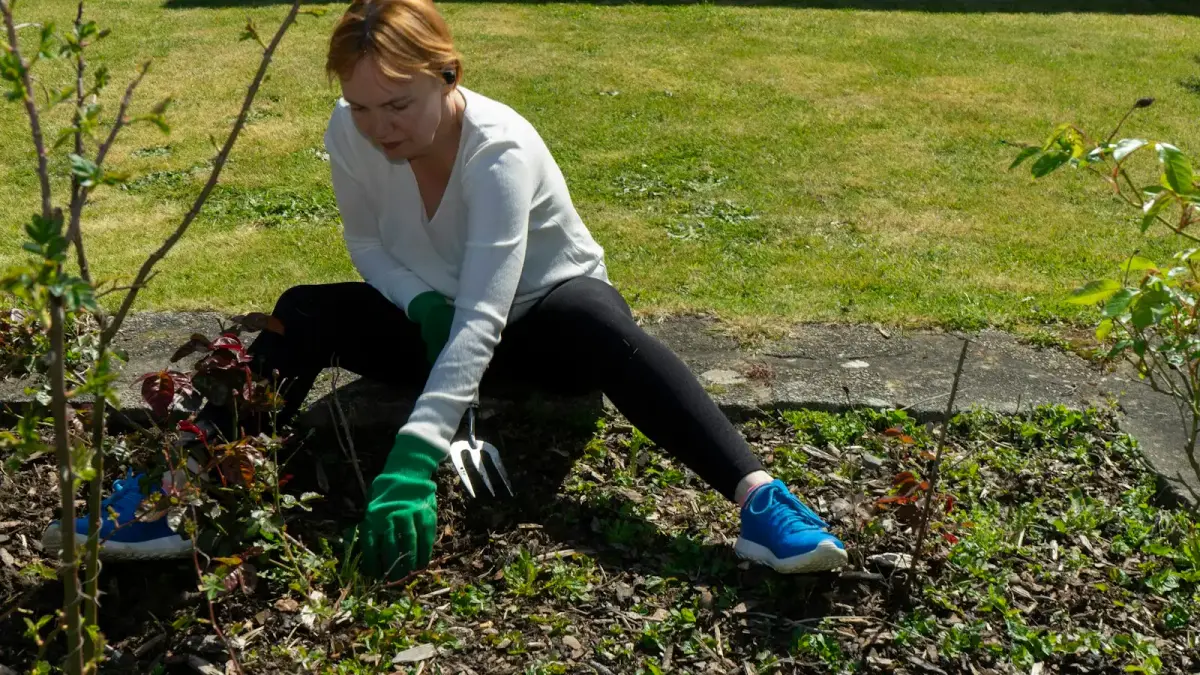
I planted the marigolds last weekend. Along the front walk, in a deliberate row, the way she did it. I put the roses in by the fence, where they get the most sun. I spent twenty minutes on my knees arranging impatiens in the shade by the back steps, knowing they’ll be leggy by July and gorgeous by September, which is exactly what she used to say.
Nobody walked past and understood what they were looking at. Nobody saw a conversation. They saw a woman in dirty jeans and a faded t-shirt, pushing flowers into the ground on an unremarkable Saturday morning.
But I was talking. In the only language she ever really heard. In the grammar of roses and the syntax of soil and the long, patient silence between a woman and the thing she is growing.
And somewhere - not in the sky, not in heaven, not in any place I could name or point to - she was listening. The way she always listened best. Not with words. Not with eye contact. With her hands in the same dirt. With her body in the same sun. With the quiet certainty that some things do not need to be said out loud to be absolutely, unmistakably true.
The garden doesn’t answer me. That’s the whole point. My mother didn’t answer me either, most of the time. She just showed up. She just did the next thing. She just kept the roses alive another year.
I understand now that this was the bravest thing she ever did. Not the gardening. The loving. In the only language she had. Without ever being certain it was received.
It was received, Mom. Every single season. It was received.