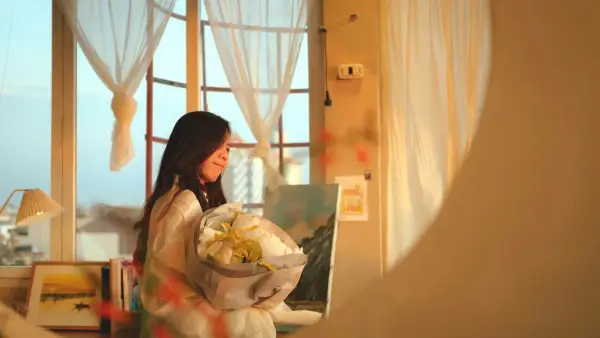
There are women who say 'I don't need anything for my birthday' and mean it so completely that their family takes them at their word, and nobody sees the way her face rearranges itself for one second when the day passes with nothing - not because she wanted a gift but because a girl who learned to want nothing trained the room to believe her, and the woman at fifty-four who truly does not need anything still has not solved the math of how to be seen by people she taught to stop looking
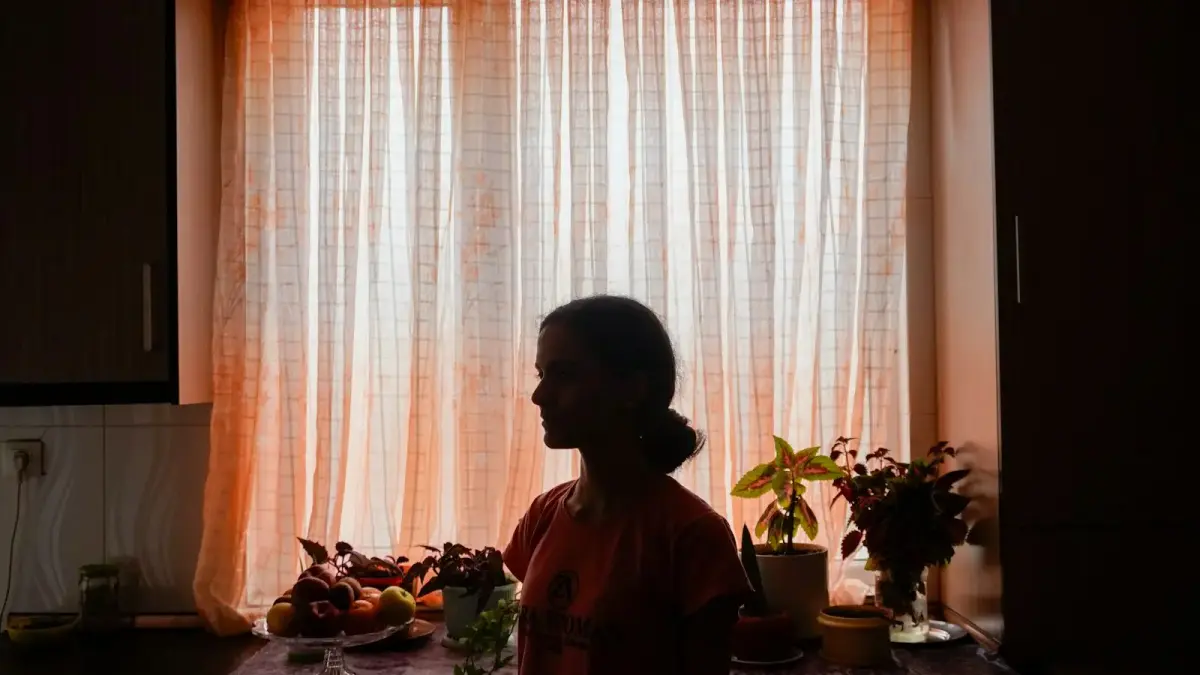
I turned forty-seven the year nobody called.
Not nobody - that’s not fair. My daughter texted a heart emoji at 11 p.m. My husband said happy birthday over coffee in the morning and then went to work. My mother left a voicemail I listened to while unloading the dishwasher.
And the thing is, I had told them all, many times, that I didn’t need anything. I meant it every single time I said it. I still mean it now. I do not need anything.
But I stood at the kitchen counter that evening, scraping leftover pasta into a container, and something moved across my chest - not sadness exactly, not disappointment, but something closer to recognition. Like catching your reflection in a window you didn’t know was there and seeing, for one disorienting second, what you actually look like from the outside.
I looked like a woman alone in a kitchen on her birthday. And I had built that scene myself, carefully, over decades.
The girl who stopped asking
She shows up in almost every woman I know. She’s nine, maybe ten, and she’s learning something no one is explicitly teaching her.
Maybe the household budget was tight. Maybe she watched her mother’s face tighten when she asked for the name-brand shoes. Maybe someone called her selfish once - just once - and the word lodged itself somewhere behind her sternum and never came out.
She began to notice that wanting things created friction. Not dramatic friction. Not abuse. Just a slight change in the room’s temperature when she said she wanted something. A pause before the yes. A sigh that wasn’t quite a sigh.
So she started solving for it. She asked for less. Then she asked for nothing. And the room relaxed.
A 2003 study by psychologist Dana Jack, published in the Harvard Review of Psychiatry, described a pattern she called “self-silencing” - the systematic suppression of one’s own needs and feelings to maintain relationships. Jack found that women who self-silence don’t just hide what they want. Over time, they stop knowing what they want. The performance becomes the identity.
That girl at ten wasn’t performing. She was adapting. She was reading the room with the fluency of someone whose emotional survival depended on it.
And she was so good at it that eventually, the adaptation ate the original feeling underneath.
The teenager who declined before anyone could say no
By fifteen, it was instinct. Someone would say, “What do you want for Christmas?” and she’d say, “Oh, I don’t know, whatever,” before the question had fully landed.
Not because she didn’t want things. She did. She wanted the leather journal in the bookstore window. She wanted concert tickets. She wanted someone to plan something for her without her having to orchestrate every detail.
But wanting felt dangerous. Not in a dramatic way. In a quiet, mathematical way. Wanting meant the possibility of not getting. Not getting meant feeling the gap. And the gap - between what you hoped for and what arrived - was where humiliation lived.
So she preempted it. She made herself so easy that no one could ever fail at loving her.
This is the part no one talks about. She wasn’t being noble. She was being strategic. If you never ask for anything, no one can ever give you less than you expected. The floor and the ceiling become the same height. You can’t fall if you’re already lying down.
The young woman who stopped wanting for real
Here’s where it gets complicated, and honest.
Somewhere in her twenties or early thirties, the performance became real. She genuinely did not want things. The muscle she’d used to suppress desire had been flexed so many times that the desire itself atrophied.
People would ask what she wanted for her birthday and she’d say “nothing” and mean it so completely that it wasn’t even humility anymore. It was just fact. The way you might say “I don’t like olives.” It wasn’t a position. It was just true.
Research on what psychologists call “need suppression” suggests this is not uncommon. A 2016 study in the Journal of Personality and Social Psychology found that people who chronically suppress their needs don’t just become better at hiding them - they actually experience less conscious awareness of those needs over time. The suppression rewires the wanting itself.
She became the easiest person in every room. Low-maintenance. Flexible. “Whatever you want” at every restaurant. “I’m fine with anything” at every holiday. “Don’t worry about me” at every family event.
And people loved her for it. That’s the cruelest part. The reward for erasing yourself is that everyone around you is more comfortable.
The mother who redirected everything
Then children came, and the redirection found its final form.
Every ounce of wanting that had been pressed out of her own life got poured into her kids’ birthdays. She planned the themed parties. She wrapped thirty presents. She made the cake from scratch at midnight because the store-bought one didn’t feel like enough.
She became the architect of everyone else’s joy. And she was brilliant at it. The birthday parties were beautiful. The Christmas mornings were magic. Her children grew up believing that celebration was something that happened to them, orchestrated by a woman who seemed to need nothing in return.
Nobody asked who planned her birthday. Nobody asked because there was nothing to plan. She’d said so herself.
Dr. Harriet Lerner, the psychologist who wrote The Dance of Anger, once observed that many women become so skilled at caretaking that they lose the ability to receive care - not because care isn’t offered, but because receiving requires a vulnerability they trained themselves out of decades ago.
That’s the trap. She can give endlessly. She cannot receive. Not because she’s strong, but because receiving means admitting she has a need, and the girl inside her still remembers what happened the last time she needed something out loud.
The morning the math stops working
She’s fifty-four. The kids are grown. The husband is good - genuinely good. He loves her. He also believes her.
That’s the sentence that breaks it open. He believes her.
She said she didn’t need anything and he believed her. Her kids said “What do you want, Mom?” and she said “Just having you guys is enough” and they believed her. Her friends asked what she was doing for her birthday and she said “Oh, nothing special” and they believed her.
Everyone in her life took her at her word. They did exactly what she asked. They loved her in exactly the way she trained them to love her.
And on the morning of her fifty-fourth birthday, she wakes up to a quiet house and makes her own coffee and sits at the kitchen table and something flickers.
Not anger. Anger would require someone to blame, and there is no one to blame. Not self-pity - she still genuinely does not want a gift. Not resentment toward her family, who did nothing wrong.
What flickers is something worse than all of those things. It’s the recognition that she is invisible in exactly the way she designed. She is unseen in precisely the manner she requested. The room is doing what she taught it to do.
And for one second - just one - she lets herself feel the weight of that.
The impossible math
Here is the equation she cannot solve: How do you ask to be seen by people you spent thirty years teaching not to look?
How do you say “I know I told you I didn’t need anything, and I meant it, and I still mean it, but also something in me aches when you believe me” without sounding irrational?
How do you explain that you don’t want a present - you want evidence that someone wondered about you? That the gift was never the point. The point was someone sitting with the question of you. Someone thinking, “What would make her happy?” and spending twenty minutes inside that question. The answer almost doesn’t matter. It’s the twenty minutes.
But she never said that. She never said it because she didn’t have the language for it until right now. And she never had the language because the girl who started this whole project at ten years old didn’t know there was a difference between “I don’t want anything” and “I don’t want to be the kind of person who wants things.”
Those are two completely different sentences. She’s been living inside the wrong one for forty-four years.
What the room never learned
The room she trained so carefully - her family, her friends, her whole life - never learned the difference either.
They never learned that when she said “Don’t make a fuss,” she meant “I’m afraid of what it would feel like if you made a fuss and it wasn’t enough.” They never learned that “I’m easy” meant “I’ve made myself easy so you’ll stay.” They never learned that the woman who needs nothing is often the woman who needed something so badly, so early, that she killed the need to survive the not-getting.
And they can’t learn it now. Not unless she teaches them. And teaching them means saying, out loud, “I have a need.” And that sentence - those four words - are the hardest words she’s ever had to consider saying.
Not because her family wouldn’t respond. They probably would. Her husband would probably feel terrible. Her kids would probably rally. Everyone would probably try.
But saying “I have a need” means dismantling the entire identity she’s built. The easy one. The low-maintenance one. The one who never makes a fuss. If she admits she needs something, who is she?
That question is more frightening than any birthday spent alone.
The woman in the kitchen
I want to tell you that there’s a clean resolution to this. Five steps to reclaiming your needs. A practice you can start tonight.
But I don’t think that’s honest.
I think the honest thing is this: if you recognized yourself anywhere in these words, you don’t need advice. You need someone to say what I’m about to say.
You were not wrong for learning to want nothing. You were a child solving an impossible problem with the only tools you had. The fact that you solved it so well that the solution became invisible - even to you - is not a flaw. It’s a testament to how adaptive and intelligent you were at an age when you should have been thinking about nothing more complicated than what flavor of cake you wanted.
You are allowed to feel the ache without understanding it fully. You are allowed to not want a gift and still want to be wondered about. Those two things can live in the same body.
And you are allowed - even now, especially now - to let one person see you.
Not all at once. Not with a speech. Maybe just by pausing, the next time someone asks what you want, and letting the silence sit for three seconds before you answer.
Three seconds of not rushing to make it easy for everyone else.
That’s not selfish. That’s just a woman letting the room catch up to who she actually is.