There is a generation of women who learned to drive in their thirties or forties because their husbands always drove, and the afternoon they first backed out of the driveway alone, the car was not transportation - it was the first machine in their life that went exactly where they wanted without asking anyone's permission first
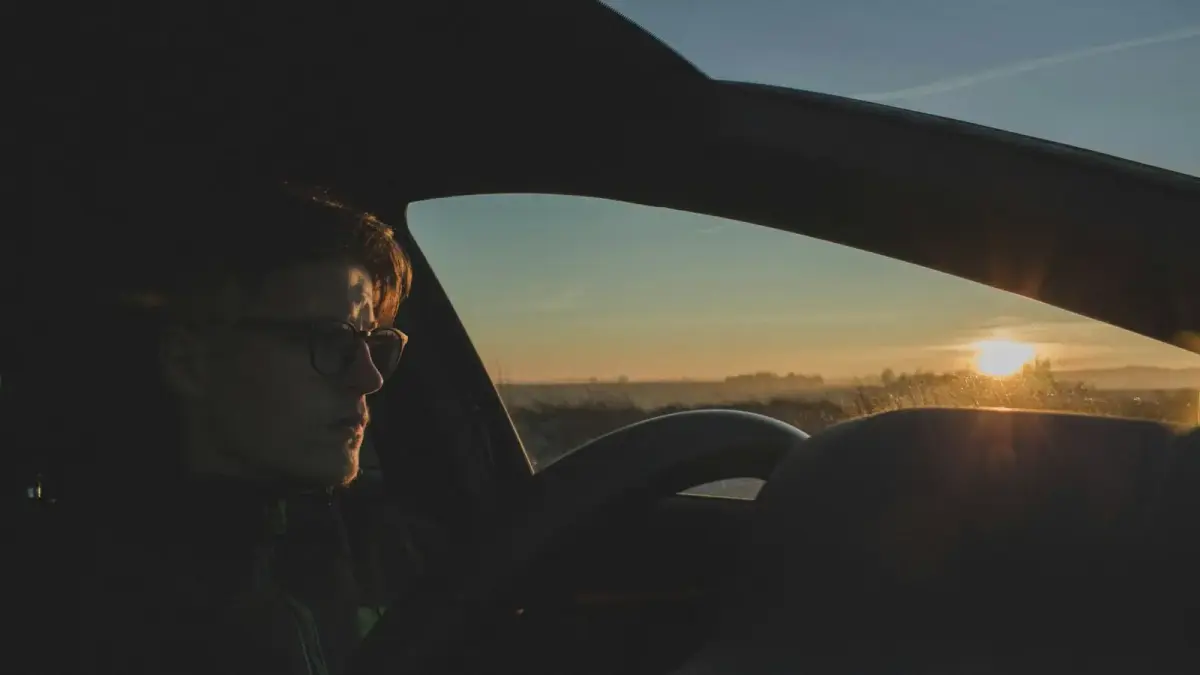
The parking lot where everything changed
She sat in the driver’s seat of a beige sedan in an empty church parking lot on a Tuesday afternoon. Her hands were at ten and two. Her knuckles were white. The engine was running but the car was not moving, and neither was she.
She was forty-three years old.
Her husband had dropped her off with a driving instructor twenty minutes earlier, kissing her on the forehead the way you kiss someone before a medical procedure. Something between encouragement and pity. She had watched him pull away in the car she’d ridden in for nineteen years, always on the left side, always looking out a window someone else was steering past.
The instructor said, “Whenever you’re ready.” And she realized that nobody had said that to her in a very long time. Whenever you’re ready. As if her readiness mattered. As if the world would wait for her to choose.
She pressed the gas pedal and the car moved forward, and something inside her chest moved forward too - something that had been sitting in a passenger seat for decades, watching the road go by, waiting to be taken somewhere.
The water they swam in
It wasn’t cruelty. That’s the part people don’t understand now, looking back with modern eyes on a world that operated by different gravity.
He drove because he drove. She rode because she rode. It was the shape of their marriage the way the kitchen was her domain and the garage was his - not because anyone sat down and negotiated these territories, but because the world had already drawn the map before they ever met each other.
A 2019 study published in the Journal of Family Issues found that transportation dependency in marriages was rarely the result of explicit restriction. It was structural. Couples fell into patterns during courtship that calcified into roles across decades. He drove on the first date, so he drove on the second, so he drove to the hospital when the first baby came, so he drove to every school event and grocery run and family vacation for the next thirty years.
She could have learned earlier. Probably. Maybe. But learning to drive would have meant naming the arrangement, and naming it would have meant questioning it, and questioning it would have meant admitting that something about the way they lived together had made her smaller than she was meant to be.
So she sat in the passenger seat and gave directions he didn’t follow and looked out the window at a world that moved at someone else’s speed.
It was the water they swam in. And fish don’t talk about water.
The errands nobody tracked
The first thing she did after getting her license was drive to a garden center eleven miles from her house.
She didn’t need anything from the garden center. That was the point. She didn’t need to justify the trip to anyone. She didn’t have to fold it into his schedule, or wait until Saturday when he was free, or explain why she wanted to go somewhere that wasn’t on the way to anywhere else.
She drove there, walked the aisles for forty-five minutes, bought a small pot of lavender she didn’t have room for, and drove home. The whole expedition took an hour and twenty minutes, and it was the most private thing she’d done in years.
This is what people miss about the car. It was never about transportation. It was about the ordinary, invisible, radical act of going somewhere without reporting it.
It was the radio station nobody else chose. It was the wrong turn she didn’t have to explain or apologize for. It was pulling into a parking spot at a coffee shop she’d never been to and sitting there with the engine off, just sitting there, in the particular silence of a car that had taken her exactly where she wanted to go.
Research by psychologist Susan Cain has explored how solitude functions differently for people who rarely experience it. For women who spent decades in houses full of other people’s needs - children, husbands, aging parents - the car became something almost sacred. A room with wheels. A door you could close that also moved.
The driving wasn’t the freedom. The choosing was the freedom. Every left turn was a sentence she wrote in her own handwriting.
What mobility does to the mind
There is a body of research that connects physical autonomy to psychological independence, and it says something that most of us already feel but rarely name.
A 2021 study published in the Journal of Environmental Psychology found that adults who gained independent transportation access later in life reported significant increases in self-efficacy - not just around driving, but around decision-making in general. The researchers called it “mobility-linked confidence.” The ability to move your own body through space, on your own terms, rewired something deeper than driving skills.
It makes sense when you think about it. For years, every errand was a negotiation. Every trip was a request. Want to visit your sister? Ask. Need to go to the doctor? Wait. Feel like driving to the coast to watch the water for an hour? That’s not even a category of thing you’re allowed to want.
When every movement requires someone else’s participation, you stop thinking of movement as something you do. You start thinking of it as something that happens to you. You become a passenger in the most literal sense - someone whose experience of the world is shaped entirely by where someone else decides to go.
And then you get behind the wheel and the car goes where your hands tell it to go. And something in your brain recalibrates. It thinks: oh. I can do this. Not just the driving. The deciding.
Psychologist Gabor Mate has written about how agency - the felt sense that your choices matter - is one of the foundations of mental health. When you spend decades outsourcing your physical movement to another person, you don’t just lose the ability to drive. You lose the daily practice of choosing, of turning left instead of right because you felt like it, of trusting your own sense of direction even when it’s wrong.
Getting the license back - or getting it for the first time - was never a driving lesson. It was a lesson in wanting things and going toward them without asking.
The women who kept driving
Some of them got their licenses and drove to the grocery store and back. That was enough. That was everything.
But some of them kept driving.
They drove to places they’d never been. They drove to the town they grew up in and sat outside the house that was torn down fifteen years ago. They drove to the ocean on a Wednesday morning when nobody expected them to be anywhere. They drove to a bookstore two towns over because someone mentioned it once and they wrote the name on a napkin and kept it in their purse for three years, waiting.
They discovered at fifty that the best version of themselves existed at sixty miles an hour with the windows down and nowhere particular to be.
A 2023 study published in Frontiers in Psychology examined “late-life autonomy behaviors” - actions taken by women over forty-five that represented their first independent decisions in domains previously controlled by spouses. Driving was the most commonly cited. But the researchers noted something remarkable: the women who began driving later in life reported a cascading effect. They started making other independent decisions too. They changed their hair. They took classes. They booked trips alone. They said no to things they’d always said yes to.
The car was the first domino. Not because driving is special, but because the steering wheel was the first object in their lives that responded to their hands and only their hands.
One woman in the study described it this way, and the researchers kept her words in the paper because they couldn’t say it better: “I realized the car didn’t care who I was supposed to be. It just went where I pointed it.”
The driveway, the mirror, the road
If you are a woman who learned to drive later than the world expected you to, I want you to know something.
You were never late.
You arrived at the driver’s seat at exactly the moment you were ready to sit in it, and the fact that it took decades doesn’t mean you were slow. It means you were living inside a story that hadn’t made room for you to be the one driving. And the afternoon you decided to learn - or the morning you woke up and realized you needed to - was not a correction of something broken. It was the beginning of something that had always been yours but had never been handed to you.
The driveway you backed out of that first time was just concrete. The rearview mirror was just glass. The road was just asphalt and painted lines.
But you know what it felt like. You know it wasn’t about the car.
It was about the moment you put your hands on something and it moved because you told it to. It was about the particular, startling, late-blooming realization that the world is full of places, and you are allowed to go to any of them, for any reason, or for no reason at all.
The road didn’t belong to anyone before you drove on it. But the afternoon you did, some stretch of it became yours. Not because you owned it, but because you chose it. Because you turned onto it without asking. Because you followed it to wherever it went and then you followed it home again, and the person sitting in the driver’s seat when you pulled back into the driveway was someone you were still learning to recognize.
Someone who drives now. Someone who goes where she wants.
Someone who was always capable of this - who just needed the world to stop riding along long enough for her to find out.