Women who were praised their whole lives for being low-maintenance in relationships often reach a point where they realize the reason nobody asks what they need is not cruelty or neglect, it is that they spent so many years saying "I'm fine with whatever you want" that the people who love them most took them at their word and genuinely forgot there was a woman in the room who had preferences of her own

The last time someone asked me what I wanted for dinner, I said “whatever you want” so fast it came out before the question was finished.
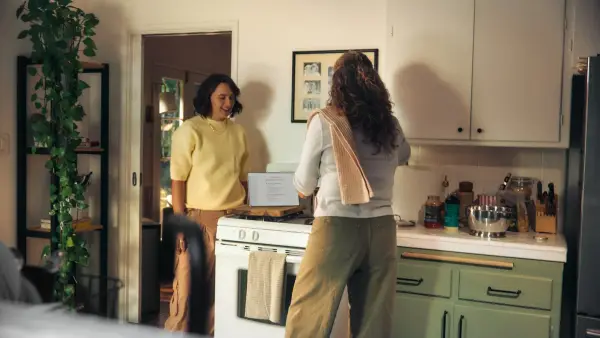
My husband paused. Not because the answer surprised him - he has heard it a thousand times - but because, for a moment, he looked like he was trying to remember whether I had ever given a different one. He couldn’t. Neither could I.
I stood in the kitchen afterward, alone, and felt something I couldn’t name. Not anger. Not sadness, exactly. Something closer to the slow, disorienting recognition of looking down and realizing you have been standing on a trapdoor for twenty years and the latch just shifted.
I was forty-seven years old. I had been married for nineteen years. And I could not tell you, with any confidence, what my favorite restaurant was. Not because I didn’t have one. Because I had stopped letting myself know.
Where the template comes from
If you are a woman reading this and something just tightened in your chest, I want you to think back. Not to your marriage. Not to your twenties. Further.
Think about the first time you learned what it looked like when a woman made things easy for everyone around her. Think about the kitchen. Think about your mother.
For many of us, the lesson arrived without words. We watched a woman accommodate. We watched her eat whatever was left after everyone else had served themselves. We watched her say “I don’t care” about the vacation destination and “it doesn’t matter” about the restaurant and “whatever works for you” about her own birthday.
And we watched what happened when she did this. The room relaxed. Her husband smiled. The evening went smoothly. Nobody fought. Nobody was inconvenienced. The machinery of the household hummed along without friction, and at the center of it was a woman who had made herself so frictionless that the gears didn’t even register she was there.
A 2018 study published in the Journal of Personality and Social Psychology found that girls as young as six begin to associate selflessness with femininity and likeability. By adolescence, the researchers noted, many girls had internalized the belief that having visible needs was incompatible with being loved.
We didn’t learn this from a textbook. We learned it the way children learn everything - by watching the woman who was the center of our world practice her own disappearing act, night after night, at the dinner table.
The praise that sealed it
Here is the part that makes this so difficult to undo. It wasn’t punishment that taught you to erase yourself. It was reward.
You were praised for it. Constantly. From every direction.
“She’s so easy.” Your parents said it to other parents at school events. “She’s so low-maintenance.” Your first boyfriend said it like it was the highest compliment a woman could receive. “You’re not like other girls” - meaning you didn’t ask for things, didn’t make scenes, didn’t require the kind of emotional tending that everyone seemed to find so exhausting in other women.
And it felt good. Of course it did. You were a child, and then a young woman, and the people you loved most were telling you that the thing that made you lovable was your ability to not need anything from them. That message lands in a developing nervous system like concrete. It sets. It becomes the foundation.
By the time you entered your first serious relationship, the blueprint was already drawn. You knew, without anyone having to tell you, that the way to keep love was to keep it easy. Don’t have complicated feelings. Don’t have strong preferences. Don’t make your partner work for the relationship, because work is friction, and friction is how people leave.
Psychologist Harriet Braiker wrote about what she called the “disease to please” - the pattern in which accommodation becomes so automatic that the person doing it can no longer distinguish between genuine flexibility and compulsive self-erasure. The tragedy, Braiker noted, is that the pattern usually begins as an adaptive strategy in childhood and only becomes visible as a problem decades later, when the woman finally notices the shape of what she has lost.
How you trained them without knowing it
This is the part that hurts. Not because it assigns blame, but because it assigns authorship.
Your partner does not ask what you want because you trained them not to. Not with cruelty. Not with control. With a thousand small, consistent, perfectly delivered signals over years and years of shared life.
Every time you said “I’m fine with whatever,” you were teaching. Every time you deferred on the movie, the vacation, the paint color for the bedroom, the name of the restaurant, the plan for Saturday, you were handing your partner a lesson: she doesn’t have preferences. She doesn’t need to be consulted. She is happy when you are happy.
And here is the thing that will break your heart if you let it - they believed you. They were not being cruel. They were not being dismissive. They were being good students of the curriculum you spent twenty years delivering.
A 2021 study published in Psychological Science examined long-term couples and found that partners’ ability to accurately predict each other’s preferences declined over time - not because they stopped caring, but because they increasingly relied on outdated mental models formed early in the relationship. The researchers called it “assumed similarity.” Once your partner decided you were easy, flexible, without strong needs, that model calcified. It became the truth of you in their mind.
You taught the people who love you that you don’t need anything. And they learned.
The moment you notice
It doesn’t arrive like a crisis. It arrives like a Tuesday.
You are standing in a restaurant and the waiter asks if the table is all right and your husband says “this is fine” without looking at you. Because of course it’s fine. You are always fine.
Or you are packing for a trip and realize he has planned the entire itinerary - every meal, every museum, every morning - and it is exactly what he wants to do, and it never occurred to him to ask because you have never, in nineteen years, expressed a preference strong enough to register.
Or your daughter says something offhand at the kitchen table. “Mom doesn’t care about that stuff.” And you feel a small, cold crack run through your chest because she is right. That is the version of you she knows. The one who doesn’t care about anything. The one who is fine with whatever.
And in that moment, you realize the architecture of what you have built. You constructed an entire relationship - a family, a home, a life - on the principle that your needs were the least important variable in every equation. And the structure held. It held beautifully. Everyone was comfortable. Everyone was happy.
Everyone except the woman who was holding the whole thing up by making herself weigh nothing.
Low-maintenance was never a personality
This is what I want you to hear, if you’ve read this far and something in you is aching.
Low-maintenance was never who you were. It was what you learned to do. There is a difference so vast between those two things that most of us spend our forties and fifties standing in the canyon between them, trying to figure out how we got here.
You were not born without preferences. You were not born flexible, easy, uncomplaining. You were born with the same capacity for desire and opinion and fierce specificity as anyone else. But somewhere along the way - in your mother’s kitchen, in your father’s approval, in the arms of the first person who loved you for how little you asked - you learned that the safest version of yourself was the smallest one.
Developmental psychologist Edward Tronick’s research on mother-infant communication has shown that children learn to suppress their own emotional signals when they discover that those signals are not met with attunement. The suppression doesn’t feel like suppression. It feels like preference. It feels like “I really don’t mind.” It feels like personality.
But it was never personality. It was strategy. And strategies that protect you at seven can imprison you at fifty.
What it looks like to come back
I will not tell you this is easy. It is not easy. It is one of the hardest things a woman in a long-term relationship can do - to suddenly, after decades, develop needs.
Because the people around you will be confused. They will not understand why you are suddenly upset about restaurant choices or vacation plans or the fact that nobody asked you what you wanted for your birthday. These are small things. They have always been small things. What they won’t understand is that every small thing is a proxy for the larger question you have been swallowing since you were a child: do you see me?
Start where you are. The next time someone asks where you want to eat, answer. Not “I don’t care.” Not “whatever you want.” Answer. Even if the answer feels absurd. Even if your voice shakes with the strangeness of it.
The next time your partner plans something and doesn’t consult you, say so. Not with anger. With the simple, radical act of presence. “I’d like to be asked.”
It will feel like too much. It will feel like you are being high-maintenance, demanding, difficult - all the things you spent your entire life building a fortress against becoming. But here is what I have learned, standing on the other side of that trapdoor at forty-seven.
Having needs is not high-maintenance. Having needs is being human. And the people who love you - the ones who took you at your word all those years - most of them are not going to be angry when you finally tell them the truth. Most of them are going to be heartbroken that you thought you had to hide.
You were never low-maintenance. You were a woman who learned, very early, that love had a price, and the price was her own disappearance. You have been paying it so long you forgot there was another way.
There is another way. It starts with the terrifying, world-altering act of saying what you actually want for dinner.