Women who have worn the same perfume for thirty years are not creatures of habit - they chose it at twenty-two, when they still made decisions based on what they wanted rather than what the room would approve of, and the bottle at fifty-three is the last surviving artifact of a woman who used to choose things without checking first
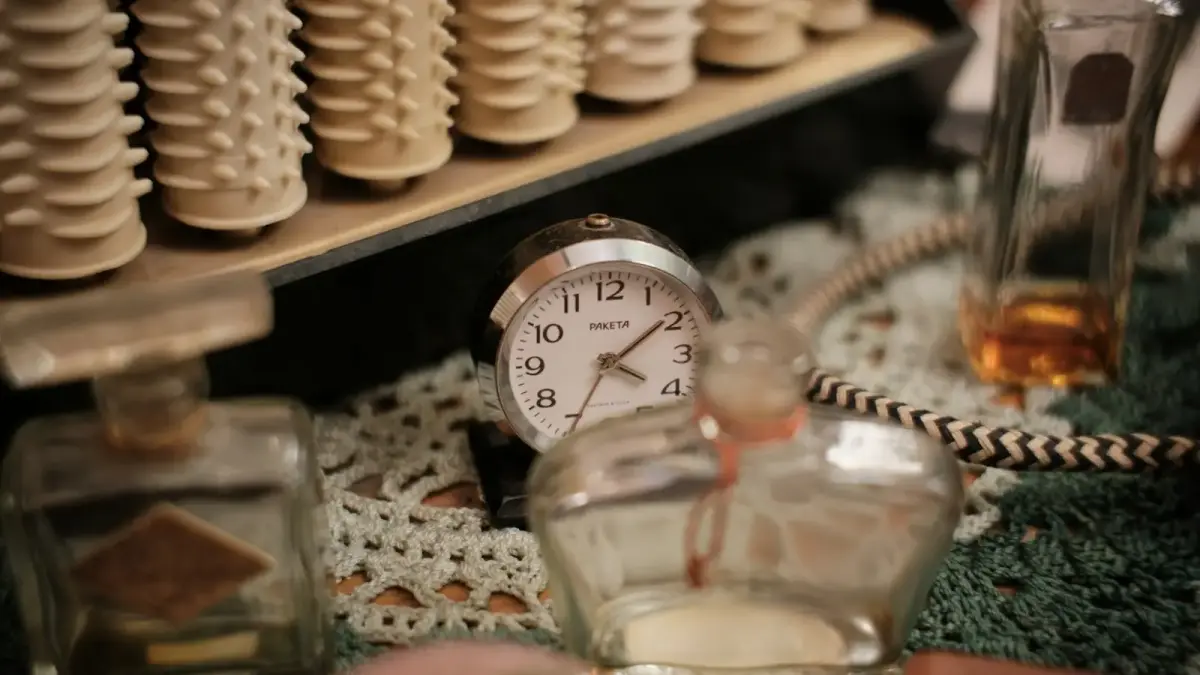
I watched my mother spray perfume on her wrists one morning when I was nine or ten. She did it the way other people check their keys before leaving the house - quick, automatic, without any ceremony at all. The bottle was nearly empty. She’d been using the same one since before I was born.
I asked her once why she never tried anything new. She looked at me like I’d asked why she still breathed with the same lungs.
“I just like it,” she said.
I believed her then. I thought it was preference, the way some people always order the same thing at a restaurant. But I’m older now, and I’ve spent enough years studying the quiet ways women lose themselves to understand what that bottle actually was. It wasn’t a fragrance. It was a fossil. The last preserved imprint of a version of herself that chose things freely - before marriage, before motherhood, before three decades of learning to ask permission with her eyes before she spoke.
She chose that scent at twenty-three, in a department store, alone. And she never put it down. Not because she couldn’t. Because nobody ever told her to.
The counter at twenty-two
There is a particular kind of freedom that belongs to a woman in her early twenties, standing at a department store fragrance counter with nowhere to be.
She is not choosing for anyone. She is not considering whether her partner will like it, whether it’s too bold for the office, whether her mother-in-law will wrinkle her nose at Sunday dinner. She lifts a glass tester to her wrist and breathes in, and the only question she asks is: do I like this?
That question - do I like this - will become increasingly rare over the next thirty years.
She doesn’t know that yet. She picks up three, maybe four bottles. She sprays each one on a different strip of paper. She holds them up like she’s choosing paint for a room she’ll live in alone. And then she finds it - the one that smells like the woman she already believes she is. Confident. A little mysterious. Warm but not sweet. Something with depth that she can’t quite name but recognizes instantly.
She buys it without checking her bank account. She doesn’t text anyone a photo. She doesn’t google reviews. She simply wants it, and so she takes it home.
A 2003 study published in the Journal of Personality and Social Psychology by Jennifer Campbell and colleagues found that self-concept clarity - the degree to which a person’s beliefs about themselves are clearly defined, internally consistent, and stable - tends to be highest in young adults who haven’t yet entered roles that require chronic self-monitoring. The woman at the perfume counter has high self-concept clarity. She knows who she is. The scent is not an experiment. It’s a confirmation.
She just doesn’t realize she’s preserving something.
The slow edit
Nobody sits a woman down at thirty and says: stop choosing things for yourself. It doesn’t work like that. It happens the way a river changes the shape of stone - so gradually that no single day feels like the day it started.
She changes her hair because he mentioned he liked it longer. She stops wearing red lipstick because a colleague once said it was “a lot.” She adjusts her laugh. She softens her opinions. She learns to phrase her preferences as questions. “Would it be okay if we…” instead of “I want to.”
Research on identity fusion in long-term relationships, particularly work by William Swann at the University of Texas, has shown that partners in deeply committed relationships often experience a blurring of self-other boundaries. For women especially - socialized to prioritize relational harmony - this can mean that the individual self doesn’t disappear so much as it gets quietly overwritten. The preferences remain, but they become provisional. Subject to revision. Open to input.
By forty, she has edited her wardrobe, her career ambitions, her weekend plans, her friendships, her posture, her volume, her speed of walking, and the way she enters a room. She has gotten so skilled at reading what other people want from her that she sometimes forgets there’s a version underneath that once wanted things independently.
But the perfume stays.
It stays because it operates below the threshold of social scrutiny. Nobody evaluates your perfume in a meeting. Nobody passive-aggressively suggests you try something different. It’s invisible labor that she does for herself alone - a two-second ritual performed in the privacy of her bathroom every morning, and nobody ever thought to have an opinion about it.
The fragrance survived because it was too small to be noticed. Too personal to be edited. Too quiet to be argued with.
The panic when it’s discontinued
If you’ve ever watched a woman in her fifties find out her perfume has been discontinued, you’ve witnessed something that looks like grief but doesn’t have a name.
She will drive to four stores. She will buy every remaining bottle she can find. She will check eBay. She will join online forums where strangers trade half-empty bottles of fragrances that no longer exist. And if you ask her why it matters so much, she probably won’t be able to tell you - not exactly. She’ll say something about how she just really likes it. How it’s her scent. How nothing else smells the same.
And she’s right. Nothing else will smell the same. But not because the chemistry is irreplaceable.
Rachel Herz, a neuroscientist at Brown University and one of the leading researchers on olfactory memory, has written extensively about how scent is the only sense directly wired to the limbic system - the brain’s emotional and memory center. A smell doesn’t just remind you of who you were. It returns you there. It collapses thirty years into a single inhale. The perfume at fifty-three doesn’t smell like flowers or musk or vanilla. It smells like twenty-two. It smells like choosing without permission. It smells like the last time her identity wasn’t a group project.
That’s what she’s afraid of losing. Not the fragrance. The proof. The physical, bottled evidence that there was once a woman who picked something off a shelf because she wanted it, and that woman is still in there, underneath every compromise and revision and quiet act of self-erasure.
The discontinued bottle is not a beauty product. It’s an artifact. And when it’s gone, she’s afraid the last uncurated part of her goes with it.
What she edited and what she kept
I want to be specific about this, because the weight of it lives in the details.
Over three decades, a woman might change her name. Not just once, at marriage, but again at divorce, and maybe again when she remarries - or when she decides, finally, to go back to the one she started with. Each time, the name reshapes how she introduces herself, how she signs emails, how she exists on paper.
She changes her body. Not always by choice, but she changes how she talks about it, how she dresses it, how much space she allows it to take up. She changes her address - sometimes across town, sometimes across the country, sometimes just down the hall to the smaller bedroom after the divorce.
She changes her opinions. Not because she’s fickle, but because she’s learned that holding firm opinions in certain rooms costs more than letting them go. She learns which thoughts are safe to say out loud and which ones she keeps folded up in a drawer.
She changes her voice. Literally. Research from the University of South Australia has found that women’s vocal pitch tends to shift in social contexts - higher when they’re trying to be agreeable, lower when they feel safe enough to speak from their chest. By fifty, most women have developed such refined social pitch-shifting that they don’t even notice it anymore.
But through all of this - the name changes, the body changes, the address changes, the opinion changes, the voice changes - one thing remained exactly as it was the day she chose it.
The perfume.
Not because she clung to it. Because nobody asked her to let it go.
The last uncurated thing
There’s a word in psychology - authenticity - that gets thrown around a lot. Be your authentic self. Live authentically. The trouble with that word is that it assumes you still have easy access to the self it’s referring to.
For a lot of women, especially women who have spent decades in caregiving roles, authenticity isn’t a switch you flip. It’s an archaeological dig. The authentic self is buried under years of accommodating, adjusting, reading the room, managing other people’s emotions, and performing a version of yourself that keeps the peace.
But scent bypasses all of that.
When she sprays that perfume in the morning, she is not performing. She is not checking whether it’s appropriate. She is doing something her body remembers even when her mind has forgotten how: choosing without consultation.
That’s why it matters. That’s why the same bottle, repurchased dozens of times over thirty years, is not a story about brand loyalty or habit or resistance to change. It’s a story about the one decision that was never subjected to committee review. The one preference that was never edited for someone else’s comfort. The one fragment of selfhood that survived intact - not because she protected it, but because it was small enough to go unnoticed.
And maybe that’s the quiet tragedy of it. That the only authentic choice still standing is the one nobody ever thought to take from her.
The woman underneath
If you recognize yourself in any of this - if you’ve worn the same scent for years, or held onto some other small, private preference that predates your current life - I want you to sit with something for a moment.
That choice you made, back when you were young enough to make decisions without running them through a filter of approval - that choice was not random. It was not shallow. It was you, speaking clearly, before the volume got turned down.
The perfume is not the point. The point is that you once knew how to want something without justifying it. You once walked into a room and picked the thing that felt like you, and you didn’t ask a single person whether it was the right call.
That woman is still in there. She didn’t leave. She just got quieter, the way all real things get quieter when they’re surrounded by noise.
The bottle on your dresser is not a habit. It’s a homing signal. A small, daily reminder that underneath every revision, every accommodation, every performance of the self that other people needed you to be - there is still someone who knows what she likes.
And she chose well.