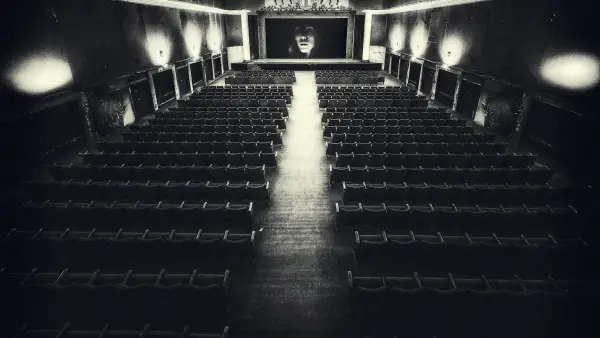
You have been rehearsing a conversation for years with someone who will never hear it - perfecting the argument in the shower, rewriting the speech on every long drive, delivering the definitive version to an empty kitchen at two in the morning - and the reason you cannot stop is not that you need them to understand, it is that a person who was never given the floor when it mattered learned that the only safe audience for the truth was a room with nobody in it
There is a version of a conversation I have been perfecting for eleven years. I know exactly where I would pause. I know the sentence I would let land before continuing, the one that would make the other person go quiet in that way people go quiet when they finally understand what they did.
I have delivered this speech in the shower more times than I can count. I have given it on the highway between exits, in parking lots after grocery runs, standing at the kitchen sink at an hour when no reasonable person is awake. The words have changed over the years. The tone has shifted. But the audience has never arrived.
If you have ever caught yourself mid-sentence in an empty room - arguing with someone who is not there, explaining yourself to a person who stopped listening years ago - you have probably wondered what is wrong with you. Why you cannot let it go. Why, after all this time, you are still composing the definitive thing you would say if they called.
Nothing is wrong with you. You are not stuck. You are not obsessed. You are someone who was never given the floor when it mattered, and you have been looking for a safe room to speak in ever since.
The speech that rewrites itself
The first version is always angry. You know this if you have lived it. The first draft of the conversation you rehearse is built out of fury - sharp, righteous, devastating. You imagine saying the thing that would finally crack the other person open and force them to see the damage they left behind.
That version lasts a few months. Maybe a year.
Then something shifts. The angry version starts to feel hollow. Not because the anger was wrong, but because the anger was never really the point. Underneath it was something quieter and harder to say out loud - the sentence that starts with “I needed you to” or “All I wanted was” or simply “Why wasn’t I enough.”
A 2019 study published in the Journal of Experimental Psychology found that when people mentally rehearse unresolved conversations, the emotional content of those rehearsals shifts predictably over time - from confrontation to explanation to something closer to grief. The researchers called it “cognitive reappraisal through internal dialogue.” What they were describing, without quite naming it, is the long, private process of a person trying to translate pain into language.
By year three or four, the speech is no longer an argument. It is a eulogy for something that did not die cleanly. You are not rehearsing what you would say to win. You are rehearsing what you would say to be understood, just once, by the person who made you feel invisible.
What triggers the rehearsal
It is never the big things. The anniversary of the falling out does not hit as hard as people expect. What gets you is the small, sideways ambush - a song in a grocery store, the smell of a particular laundry detergent, someone else’s father laughing too loudly in a restaurant.
You hear a phrase they used to say come out of a stranger’s mouth and suddenly you are back in the shower, mid-speech, reworking paragraph three of a conversation that will never happen.
There is a reason for this. Dr. Bessel van der Kolk’s research on how the body processes unresolved experience shows that sensory memory does not follow the same timeline as cognitive memory. Your mind may have filed the relationship under “over.” Your nervous system did not get the memo. It is still scanning for the conversation that would close the loop.
So the rehearsal is not a choice. It is a reflex. Something in your environment touches the open wire, and your brain does the only thing it knows how to do with unfinished emotional business - it tries, again, to finish it.
The courtroom with no judge
Here is what I think most people miss about this habit. It is not really about the other person. It never was.
The speech you rehearse is not for them. It is for you. It is the sound of a person who was talked over, shut down, dismissed, or left before they could finish a sentence - finally getting to complete a thought without interruption.
The shower becomes a courtroom. The car becomes a stage. The kitchen at two in the morning becomes the only therapy office that is open when the feeling arrives. And in all of these places, something crucial is true - there is no one there to cut you off. No one to change the subject. No one to make you feel like what you are saying does not matter.
That is the real pattern beneath the rehearsal. You are not practicing for a confrontation. You are practicing being heard. And the reason you can only do it in empty rooms is that empty rooms are the only places where your experience was never interrupted or invalidated.
A 2021 study in Frontiers in Psychology examined what the researchers called “inner speech elaboration” - the tendency to construct detailed internal monologues during periods of emotional distress. They found that individuals who reported higher levels of childhood emotional invalidation were significantly more likely to engage in extended internal dialogues as adults. The connection was not rumination in the clinical sense. It was compensatory expression. People who were not heard as children built private stages where they could finally speak.
The specific loneliness of perfect words with no audience
There is a particular kind of sadness that comes from having exactly the right thing to say and no one to say it to. You have spent years refining this speech. You know which word lands hardest. You know the pause that would make them reconsider everything. You have workshopped this thing in your head until it is airtight, compassionate, devastating, and true.
And it will never be delivered.
That is a grief most people do not talk about. Not the grief of losing someone, but the grief of finally understanding what happened and having nowhere to put that understanding. You did the work. You found the language. You translated years of confusion into something clear and honest and real. And the person it was meant for is gone, or unchanged, or so deeply committed to their version of the story that your version would bounce off them like rain off a window.
So you carry it. This beautiful, useless speech. This perfectly constructed thing that proves you understood what happened, that you were not crazy, that your feelings made sense. You carry it the way some people carry old letters they will never send - not because they expect a reply, but because the act of writing it was the only way to prove the feeling was real.
The version that gets quiet
Something happens around year seven or eight. Maybe later. Maybe never, for some people, and that is fine too.
The speech gets quieter. The angry version is long gone. The sad version has worn itself smooth. What is left is something you almost cannot call a speech at all. It is more like a sentence. Sometimes just a feeling shaped like a sentence.
“I wish you had stayed long enough to see who I became.”
“I was not asking for much. I was asking for you to be curious about me.”
“I forgive you. But I will never stop wishing it had been different.”
This is not letting go. Letting go is a phrase invented by people who have never had to rehearse a conversation in an empty kitchen at two in the morning. What this is, instead, is integration. The speech has finally become small enough to hold without it cutting you. The words are no longer a weapon or a plea. They are just the truth, sitting quietly in your chest, asking for nothing.
Adam Grant once observed that the people who struggle most with closure are often the people with the deepest capacity for emotional honesty - they cannot simply move on because moving on would require pretending the experience did not matter, and they are constitutionally incapable of that kind of dishonesty. The rehearsal is not a flaw. It is integrity that has nowhere to go.
You were never failing to move on
If you are still rehearsing, I want you to hear this. Not as advice. Not as a reframe. Just as something that is true.
The speech you have been practicing is not evidence that you are stuck. It is evidence that you felt something real and important and you have spent years trying to honor it with the right language. That is not weakness. That is an extraordinary act of emotional labor that no one asked you to perform and no one will ever thank you for.
The fact that you are still looking for the perfect words means you still believe that what happened to you deserves to be named accurately. You are not willing to reduce it to a cliche or file it away under “things that happen.” You insist on precision. You insist on truth. You insist that your experience deserves better language than “it is what it is.”
You are not broken for rehearsing. You are not obsessive. You are not unable to let go.
You are a person who was never given the floor when it mattered. And in the absence of an audience, you built your own stage, wrote your own script, and performed the truth to the only person who was always willing to listen.
Yourself.
The empty room was never the problem. The empty room was the only place that was safe enough. And the fact that you kept speaking into it, year after year, means something that no one has probably told you before.
You never stopped believing your voice was worth hearing. Even when no one else showed up to confirm it.