7 things that quietly happen to people who always notice when someone at the table stops talking - not because they are more empathetic than everyone else but because they grew up in a house where silence was never neutral and the person who went quiet was always the person about to change the entire evening, according to psychology
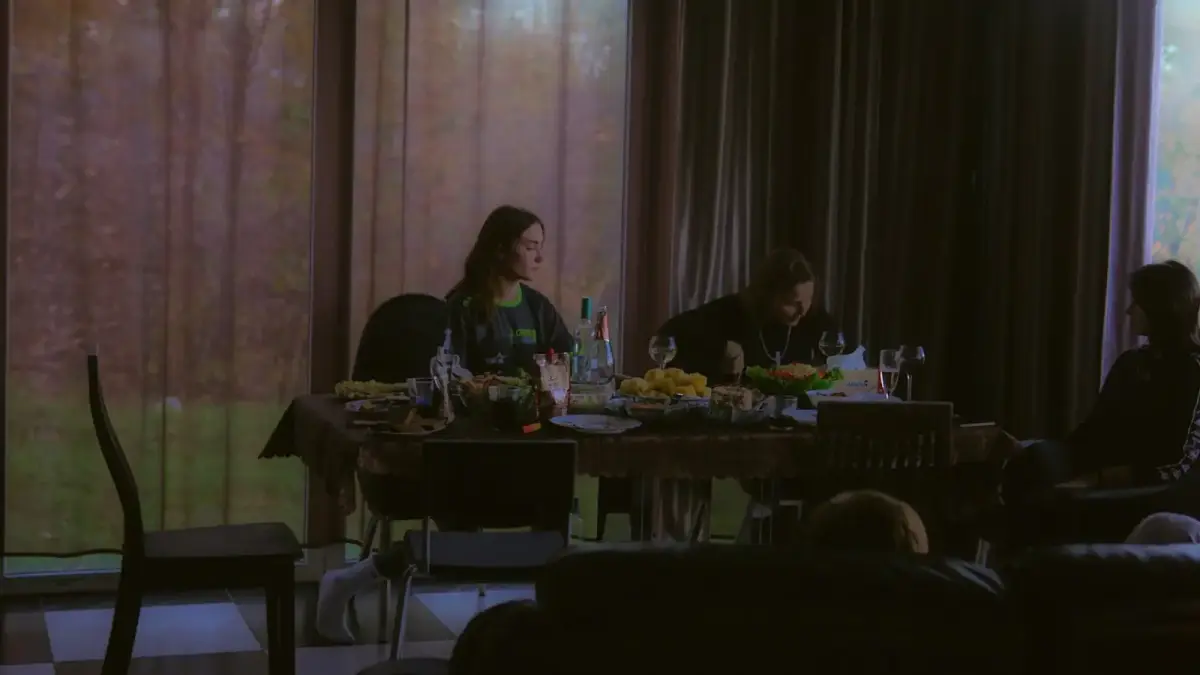
I was at a friend’s birthday dinner last year - twelve people, a long table, candles, wine, the whole thing - and somewhere between the appetizers and the main course, I watched my friend’s husband set his fork down and stop talking.
Nobody else noticed.
The conversation kept moving. Someone was telling a story about a vacation. Someone else was laughing. But I couldn’t hear any of it anymore because every cell in my body had locked onto that man and the particular way his jaw had tightened when his wife mentioned something about their kitchen renovation.
I spent the next forty minutes managing the energy at that table. Redirecting. Softening. Filling the silences before they could calcify into something dangerous. And by the time dessert arrived and he was laughing again, I was so exhausted I could barely hold my spoon.
My husband asked me on the drive home if I’d had a good time. I told him I had. But the truth is I hadn’t been at a birthday dinner. I’d been working a shift I never clocked into - running surveillance on twelve people’s emotional states so that nothing would rupture without warning.
I used to think this meant I was deeply empathetic. I’ve since learned something less flattering and more honest: I was trained.
A 2019 study published in the journal Development and Psychopathology found that children raised in unpredictable or volatile households develop what researchers call “threat-related attentional biases” - a heightened sensitivity to shifts in facial expression, tone, and social withdrawal that persists well into adulthood. It’s not a gift. It’s an adaptation. And the difference matters more than most people realize.
Here are seven things that quietly happen to people who carry this particular wiring.
1. They track the exact moment someone’s expression changes mid-sentence
Most people process conversations in broad strokes. They catch the general mood, the punchline, the topic. But if you grew up watching a parent’s face for the micro-shift that meant the evening was about to turn, you learned to read faces the way an air traffic controller reads a radar screen - in real time, with consequences for missing a blip.
You notice when someone’s smile stays on their mouth but leaves their eyes. You catch the half-second where a person’s attention turns inward - that tiny retreat behind the face - before they rejoin the conversation and pretend nothing happened.
Research from the University of Wisconsin-Madison, published in Psychological Science in 2015, found that individuals with early exposure to emotional unpredictability show faster neural responses to changes in facial affect - particularly shifts toward withdrawal or suppressed anger. Your nervous system doesn’t just notice these things. It was built to notice them before they escalate.
The problem is that you now do this in every room you enter. At work. At brunch. At your kid’s school play. You are running facial recognition software that was designed for a war zone, and you cannot turn it off just because the war ended twenty years ago.
2. They can tell the difference between comfortable silence and loaded silence within two seconds
There’s a silence that happens when two old friends are sitting on a porch and neither one needs to talk. And then there’s a silence that happens when someone has decided to stop participating in a conversation because something just broke inside them and they’re deciding what to do about it.
You know the difference immediately. You knew it at seven years old.
In your childhood home, silence was diagnostic. Silence at the table meant your father was cycling through something. Silence in the hallway meant your mother had made a decision you’d feel the weight of later. Silence was never just the absence of words. It was the presence of something gathering.
So now, decades later, when a room goes quiet, your body responds before your mind can catch up. Your shoulders tighten. Your breathing shallows. You start scanning for who stopped talking, when, and why - because in the house you grew up in, a two-second silence was the only warning you ever got.
3. They instinctively soften their voice when tension enters a room
You probably don’t even realize you do this. But the moment the emotional temperature of a conversation shifts - the moment someone’s tone gets an edge, or a disagreement starts hardening into something real - your voice drops. Not in volume. In texture.
You become warmer. Slower. More careful with your words. You start choosing phrases that de-escalate without drawing attention to the fact that you’re de-escalating.
This is a trauma response dressed up as social grace.
As a child, you learned that your voice could be a tool. That if you said the right thing in the right tone at the right moment, you could sometimes - not always, but sometimes - redirect the evening away from the cliff it was heading toward. You became the family thermostat. Not by choice, but by necessity.
And now you walk into every tense room as if your softness is the only thing standing between order and chaos. Even when it isn’t. Even when the tension has nothing to do with you. Even when the people involved are adults who can handle their own conflict without your careful, quiet intervention.
4. They redirect conversations away from topics that make someone uncomfortable before anyone else notices
You’ve been doing this so long it looks seamless. Someone mentions money, and you clock the way your friend’s partner shifts in their seat - and within three seconds you’ve pivoted the conversation toward something safer. Someone asks about a family member who’s become a sore subject, and before the person being asked can even formulate their discomfort, you’ve already offered an exit ramp disguised as a new topic.
People think you’re a great conversationalist. You are. But not for the reasons they assume.
You’re not steering conversations toward interesting places. You’re steering them away from dangerous ones. You learned this in kitchens and living rooms where the wrong topic at the wrong moment could turn a Tuesday evening into something that left marks - visible or otherwise.
A 2021 paper in Frontiers in Psychology explored what researchers call “preemptive emotion regulation” - the tendency of individuals from high-conflict backgrounds to manage other people’s emotional states before those states become fully activated. The authors noted that this skill, while socially impressive, comes at a significant personal cost: it requires a level of sustained vigilance that is cognitively exhausting and emotionally depleting.
You’re not just participating in conversations. You’re running them through a threat assessment filter in real time. And you’ve been doing it so long you’ve forgotten that most people just talk without checking first whether every word is safe.
5. They carry the emotional residue of other people’s moods home with them
The dinner ends. You get in your car. And for the next two hours - sometimes longer - you replay every moment that felt off. The look on someone’s face when a certain topic came up. The way two people didn’t quite make eye contact. The thing someone said that might have been a joke but might have been something harder.
You carry other people’s moods in your body like a sponge that was never wrung out.
This isn’t sensitivity in the poetic sense. This is your nervous system doing exactly what it was trained to do: hold onto emotional data because, in the house you grew up in, forgetting meant being blindsided. If you could remember exactly what mood your parent was in last night, you could predict what this morning would feel like. The emotional residue wasn’t a burden. It was intelligence. It was survival data.
But now you’re forty-seven and you’re lying awake at midnight trying to decode whether your coworker’s quietness at lunch meant she’s upset with you, when in reality she was just tired and thinking about her dentist appointment.
Your body doesn’t know the difference. It’s still cataloging everything, just in case.
6. They feel personally responsible when a social gathering goes wrong
If a dinner party gets awkward, your first thought isn’t “well, that was uncomfortable.” Your first thought is “what did I miss.” What sign did you fail to catch? What redirect did you fail to make? What tension could you have dissolved if you’d been paying closer attention?
This is the deepest layer of the pattern, and it’s the one that costs you the most.
Daniel Goleman’s research on emotional intelligence has explored how people who score exceptionally high on social awareness often carry an invisible sense of responsibility for the emotional outcomes of group interactions. But what his framework doesn’t always capture is where that responsibility was forged - in homes where a child genuinely was responsible for managing the emotional climate, because the adults had abdicated that role.
You were seven, and it was your job to make sure dinner went smoothly. You were ten, and you had memorized which combination of words and tone could keep your parent from leaving the table. You were thirteen, and you believed - truly believed - that if a holiday went badly, it was because you hadn’t done your job well enough.
That belief didn’t dissolve when you moved out. It followed you into every gathering, every workplace meeting, every family reunion. You still believe, somewhere beneath the rational part of your brain, that the emotional outcome of every room you enter is your responsibility.
7. They cannot enjoy a dinner if someone at the table seems unhappy, even if that person’s unhappiness has nothing to do with them
This is the one that breaks my heart, because I know it so well.
You’re at a beautiful restaurant. The food is perfect. The company is lovely. And one person at the table is having a hard day - maybe they got bad news, maybe they’re in the middle of a fight with their partner, maybe they’re just in a mood - and your entire experience collapses into monitoring them.
You can’t taste the food. You can’t follow the stories being told. You can’t be present in your own evening because your attention has been hijacked by someone else’s emotional state, and your nervous system will not release you until that person is okay.
A 2017 study in the Journal of Personality and Social Psychology found that individuals with heightened interpersonal sensitivity - particularly those whose sensitivity developed as an adaptive response to early adversity - show reduced capacity for personal enjoyment in social settings when they perceive emotional distress in others, even when that distress is mild, unrelated to them, and explicitly communicated as not their concern.
In other words: someone can tell you directly that they’re fine, that their mood has nothing to do with you, that you should enjoy yourself - and your body still won’t let you.
Because your body learned a long time ago that “I’m fine” was the most dangerous sentence in the house.
If you recognized yourself in this list, I want to say something important, and I want you to hear it the way I mean it.
The way you read rooms is real. The way you track silence and scan faces and carry everyone’s moods home in your chest - that’s not a character flaw. It’s evidence that you survived something that required an extraordinary level of emotional intelligence to navigate.
But you are allowed to put it down now.
You are allowed to sit at a dinner table and not work. You are allowed to let a silence be just a silence. You are allowed to notice that someone is having a hard time and choose - consciously, deliberately - not to make it your project.
The room will not fall apart. The evening will not collapse. The people around you are adults, and they can carry their own weight.
You learned to be the person who watches. Who softens. Who prevents. And that skill kept you safe in a house where safety was never guaranteed.
But you don’t live there anymore. And the person who went quiet at the table tonight is probably just thinking about whether they remembered to turn off the porch light.
You can let them think.
You can stay in your own evening for once.
You’ve earned that.