7 things that quietly happen to people who wake up before their alarm every single morning - not because they are disciplined or natural early risers but because a child who grew up in a house where the first person awake set the emotional weather learned that sleeping through the opening scene was never safe, and forty years later the body still rehearses wakefulness like a sentry who was never relieved of duty, according to psychology
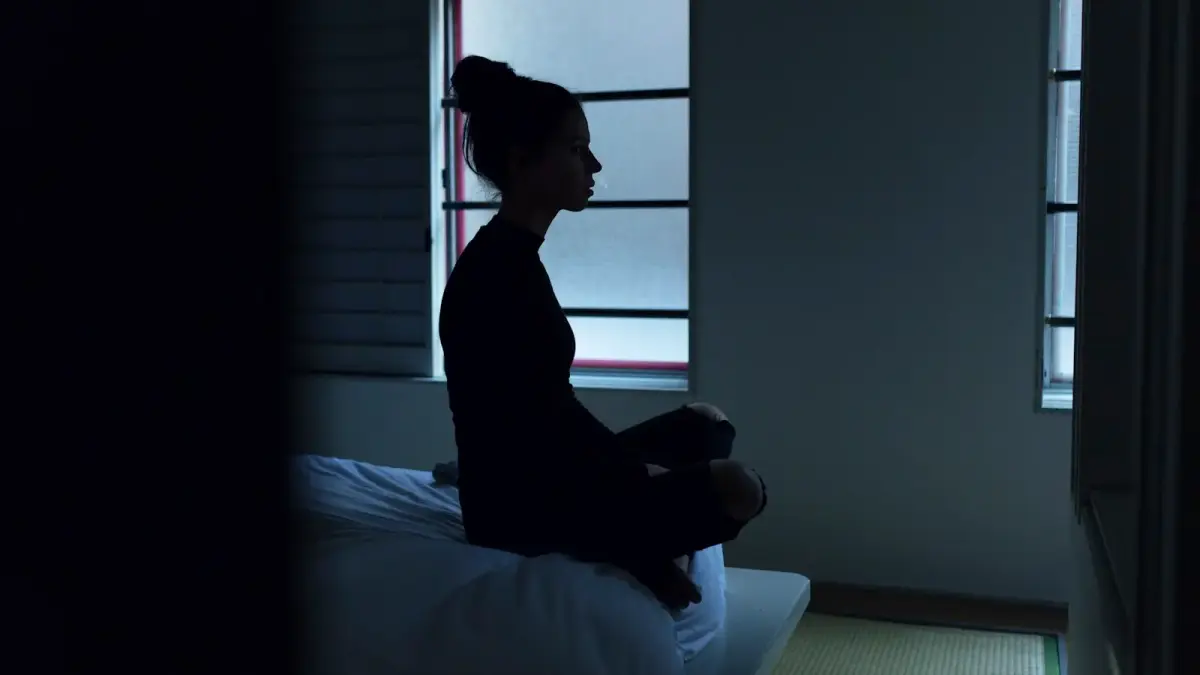
It is 4:47 AM. Your alarm is set for 5:00. You are already awake, eyes open in the dark, breathing quietly, listening.
You did not jolt awake. There was no nightmare, no noise from the street, no reason anyone could point to. Your body just decided - sometime around 4:30, maybe earlier - that this day would not catch you unprepared.
You lie still for a moment. Not because you are lazy. Because you are scanning. The house is quiet. The furnace hums. No footsteps, no cabinet doors, no voice pitched at that frequency you learned to read before you could read words.
And then you get up. Thirteen minutes before the alarm, like yesterday, like the day before that, like every morning for as long as you can remember.
People call you disciplined. They say you must be a natural early riser. They talk about circadian rhythms and morning routines and the kind of productivity content that fills Instagram reels with sunrise footage and gratitude journals.
But you know something they do not. You did not choose this. Your body chose it for you, a long time ago, in a house where the first person awake set the emotional weather for the entire day. And sleeping through the opening scene was never, ever safe.
Here is what quietly happens to people who carry that particular kind of wakefulness.
1. Your body wakes you up before the alarm as a form of reconnaissance
This is not a sleep disorder. It is not insomnia. It is something far more specific and far more intelligent.
Your nervous system learned, somewhere in childhood, that the transition from sleep to waking was the most dangerous part of the day. Not because anything violent necessarily happened. But because the emotional atmosphere of the house was decided in those first minutes, and if you were still asleep when it was being decided, you had no say in how the day would feel.
A 2011 study published in Psychoneuroendocrinology found that individuals who grew up in unpredictable home environments showed elevated cortisol awakening responses - a spike of the stress hormone in the first 30 minutes after waking. The body was not resting. It was preparing.
Your early waking is not a habit. It is a briefing. Your body opens your eyes before the alarm because it wants a head start on the day before the day starts happening to you.
2. You spend the first minutes listening - not for sounds, but for the emotional temperature of the house
Other people wake up and reach for their phone. You wake up and reach for information.
Before your feet touch the floor, you are already cataloguing. Is anyone else awake? What kind of awake are they - calm, agitated, moving quickly? Is the coffee maker already on, and if so, what does that tell you about who got there first and what mood they carried into the kitchen?
You learned this as a child. The sound of a parent’s footsteps told you everything. Heavy steps meant anger. No steps meant withdrawal, which could be worse. A cabinet door closed gently meant a manageable day. A cabinet door shut hard meant you needed a plan.
Forty years later, you still do this. You read the house before you enter it. Your partner might be sleeping peacefully beside you, and still you listen - not for danger exactly, but for data. Because the child in you still believes that knowing the emotional weather before everyone else wakes up is the only way to dress for it.
3. You have a fully formed contingency plan before your feet hit the floor
Most people stumble into their mornings. They improvise. They shuffle toward coffee and figure out the day as it unfolds.
You do not have that luxury. Or rather, your nervous system does not believe you do.
In the minutes between waking and rising, you have already run through the day. Not just the schedule - the emotional logistics. Who needs what from you. Where the friction points will be. What you will say if someone is upset. How you will adjust if the plan falls apart.
Dr. Gabor Mate has written extensively about how children in emotionally volatile homes develop what he calls “hyper-responsibility” - a sense that they must anticipate and manage the emotional states of those around them. This does not disappear with age. It just becomes so automatic that you mistake it for personality.
You are not a planner because you are organized. You are a planner because the child who did not plan got caught off guard, and getting caught off guard meant absorbing whatever mood was waiting downstairs.
4. You cannot sleep in even when given explicit permission
This is the one that baffles people. You are on vacation. There is nothing on the calendar. Your partner says, sleep in, you deserve it. And your eyes open at 4:47 anyway.
You have tried. You have closed your eyes and told yourself there is no reason to be awake. But your body does not believe you. It has forty years of evidence that says otherwise, and one weekend at a lake house is not enough to overwrite that evidence.
A 2017 study in Frontiers in Psychology examined how early-life stress shapes long-term sleep architecture. Researchers found that adults who reported childhood emotional unpredictability had significantly shorter sleep durations and more frequent early-morning awakenings - even decades later, even in objectively safe environments.
Your body is not being stubborn. It is being loyal to a version of you that needed this wakefulness to survive. It has not received the memo that the war is over, because no one ever sent one.
5. The alarm is not a wake-up call - it is confirmation that you already handled the transition
When the alarm finally sounds at 5:00 AM, you are already showered. Or dressed. Or sitting quietly with coffee, having moved through the house like someone who knows where every creaky floorboard lives.
The alarm is not for you. It never was. It is for the version of the morning that other people experience - the version where you are startled into consciousness and have to scramble to catch up.
You do not scramble. You have never scrambled. You were ready before the alarm went off because readiness was the only currency that bought you safety in a house where emotional storms arrived without forecasts.
There is something almost sad about how competent this makes you look. People admire your mornings. They ask what your routine is. They want to know your secret. And you smile and say something about liking the quiet, because the real answer - that you have been performing a security sweep of your own home since before the sun came up - is not the kind of thing you say at brunch.
6. Weekends feel more stressful than workdays because there is no structure to contain the vigilance
This one catches people off guard when you try to explain it. Weekends should be relaxing. No deadlines, no meetings, no commute. But for you, the absence of structure feels like standing in an open field during a lightning storm.
On a workday, the vigilance has somewhere to go. You channel it into preparation, into being ten minutes early, into having the report ready before anyone asks. The structure of the workweek gives your nervous system a container, and inside that container, the scanning feels productive instead of exhausting.
On a Saturday morning, there is no container. The vigilance is still there - it is always there - but there is nothing to aim it at. So it turns inward. You reorganize a closet. You deep-clean the kitchen. You start a project you do not need to start. Not because you enjoy it, but because stillness feels like the moment before something goes wrong.
Susan Cain’s research on introverted temperaments has shown that highly sensitive individuals often create structure as a form of self-regulation. But for you, the structure is not about preference. It is about survival architecture built in childhood and maintained ever since.
7. You have never been “a morning person” - you have been a first responder
This is the reframe that changes everything, if you let it.
You are not a morning person. You never were. “Morning person” implies a cheerful relationship with early hours, a natural preference for sunrise, a dispositional warmth toward the start of the day.
What you are is something different. You are someone whose nervous system was trained to arrive at consciousness before everyone else, scan the environment for threats, formulate a plan, and then perform calm. You are not greeting the morning. You are securing the perimeter.
A 2019 study published in the Journal of Personality and Social Psychology found that individuals with high trait vigilance - often rooted in early attachment disruptions - consistently reported feeling most at ease when they perceived themselves as being “ahead” of their environment. Not ahead in a competitive sense. Ahead in the sense that nothing could surprise them.
That is you at 4:47 AM. Not a morning person. A first responder who never went off duty.
If you recognized yourself in any of this, I want you to sit with something for a moment.
You are not broken. You are not anxious in some clinical, fixable way. You are carrying a skill that a very young version of you developed because they had to, and that skill kept you safe during a time when no one else was keeping you safe.
The early waking. The listening. The planning. The inability to rest even when you are told you can. These are not flaws. They are the fingerprints of a child who took responsibility for the emotional climate of an entire household and never quite put that responsibility down.
You do not need to be fixed. But you might need to be relieved.
Not all at once. Not by forcing yourself to sleep until 7:00 and calling it progress. But by beginning to notice, each morning when your eyes open in the dark, that the house is safe now. That you built this life. That the emotional weather outside your bedroom door is one you helped create, and it is not the weather you grew up in.
You were the sentry. You were extraordinary at it. And now, slowly, morning by morning, you are allowed to come inside.