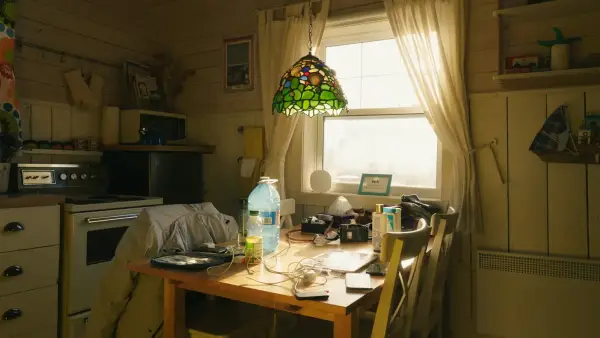
7 things that quietly happen to adults who grew up in homes that looked perfectly fine from the outside - the lawn was always mowed, the Christmas card was always smiling, the neighbors thought you had the ideal family - but inside nobody was actually talking to each other, and the emptiness you carry at forty is the echo of a house that performed togetherness without ever practicing it, according to psychology
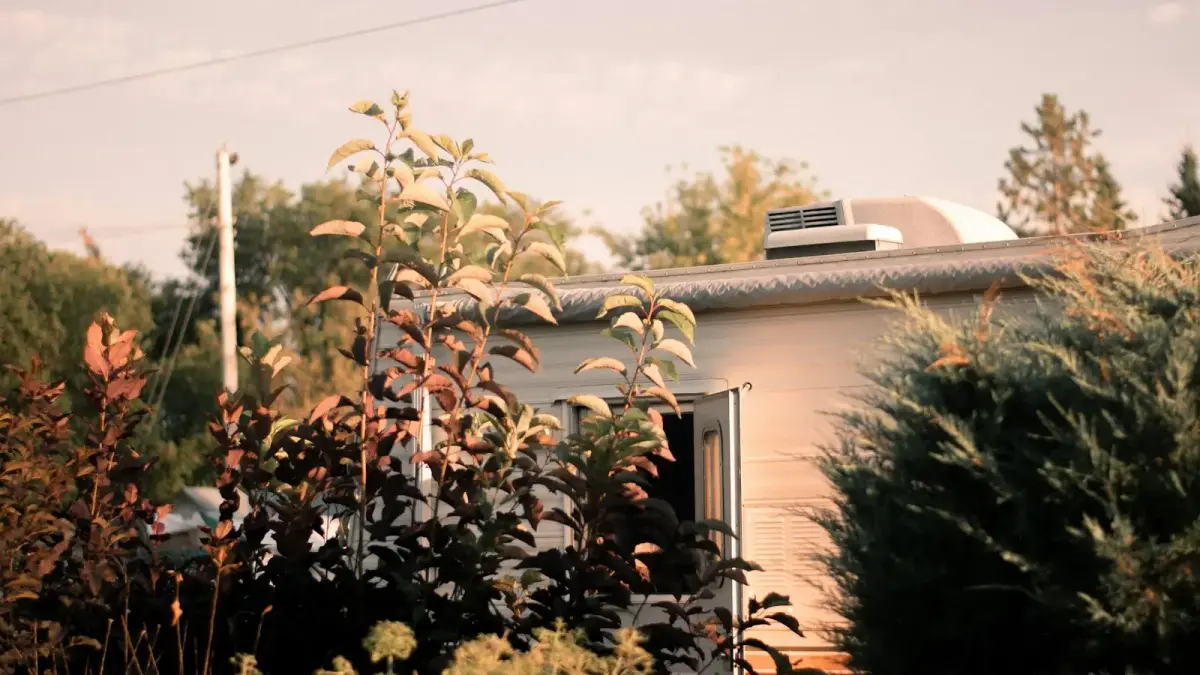
Our house looked like something out of a catalog.
The hedges were trimmed. The driveway was swept. My mother kept fresh flowers on the kitchen table even when nobody was sitting there to look at them. On weekends, my father would wash the car and wave to the neighbors, and the neighbors would wave back, and everyone seemed to agree - silently, collectively - that we were a family that had it together.
And we did. From the outside, we had it together beautifully. The Christmas card was always mailed on time. My brother and I wore matching sweaters and smiled on cue. Report cards went on the refrigerator. Permission slips were signed. No one yelled. No one drank too much. No one disappeared.
But no one talked, either.
Not really. Not about anything that mattered. We talked about logistics - who was picking up whom, what time dinner was, whether the gutters needed cleaning. We existed under the same roof in a kind of choreographed parallel, everyone moving through their routines with the precision of people who had agreed, without ever saying so, that surface was all we were going to do.
I didn’t have the language for it until I was well into my thirties. The house wasn’t broken. It was empty. And the emptiness you carry out of a place like that is one of the hardest things to explain, because nothing happened. That’s the whole point. Nothing happened.
If you grew up in a house that looked perfect from the outside but felt hollow on the inside, these seven things might sound uncomfortably familiar.
1. You don’t know how to start a real conversation, even with people you love
You can do small talk beautifully. You can ask about someone’s weekend, comment on the weather, navigate a dinner party with ease. But the moment a conversation turns toward something real - something vulnerable, something that requires you to actually say what you feel - you freeze.
Not visibly. You don’t panic or go silent. You redirect. You ask a follow-up question. You make the other person the subject. You’ve been doing this so long that most people think you’re a wonderful listener, and you are - but not because you chose to be. Because you never learned the other half of the equation.
A 2018 study published in the Journal of Family Psychology found that adults who grew up in “emotionally disengaged” households - families with low conflict but also low emotional expression - scored significantly lower on self-disclosure measures in close relationships. They weren’t withholding on purpose. They simply didn’t have a template for what it looks like to volunteer something true about your inner life.
Your family taught you how to be in a room with people. It never taught you how to be known by them.
2. You feel homesick for something you never actually had
There’s a particular kind of longing that doesn’t have a clean name. It’s not nostalgia, exactly, because nostalgia requires a memory to return to. This is more like mourning something that should have existed but didn’t.
You see a movie where a family sits around the dinner table arguing and laughing and interrupting each other, and something in your chest tightens. Not because you want conflict. Because you want the warmth underneath it - the assumption that everyone at that table is allowed to be messy, loud, and fully themselves.
Your table was quiet. Your table was polite. Your table was a place where everyone chewed and no one said anything that mattered.
Psychologist Dr. Jonice Webb calls this “the phantom limb of emotional neglect” - the ache for a connection that was never there, which makes it impossible to grieve in a way that feels legitimate. You can’t mourn what you never had. But you feel its absence every day.
3. You over-function in relationships because stillness feels like abandonment
You’re the one who plans the trips. Sends the birthday texts. Checks in on friends who haven’t called in a while. You keep the social machinery running because if you stop, you’re terrified that everything will just - drift apart. The way your family drifted apart while still living in the same house.
This isn’t generosity, though people call it that. It’s a survival pattern. In your childhood home, connection wasn’t something that happened naturally. If anyone was going to create warmth, it had to be manufactured. Deliberate. Performed. And you learned - early, wordlessly - that love requires constant effort or it disappears entirely.
A 2020 study in Frontiers in Psychology found that adults from emotionally disengaged families were significantly more likely to engage in “relationship maintenance overload” - investing disproportionate energy into keeping connections alive while struggling to trust that any relationship could sustain itself without their constant intervention.
You’re not clingy. You’re someone who grew up in a house where nobody reached for anyone, and you decided you’d never let that silence happen again, even if it exhausts you.
4. You have a complicated relationship with holidays and family gatherings
Holidays should feel warm. They’re supposed to. But for you, they carry a specific kind of dread - not because your family fights at Thanksgiving, but because your family doesn’t do anything at Thanksgiving. You sit in the same room. You eat the same food. You talk about the same safe topics. And then everyone goes home, and you feel emptier than before you arrived.
The performance is flawless. From the outside, it looks lovely. The table is set. The food is good. Someone takes a photo. But there’s a hollow center to the whole thing, like a beautifully wrapped box with nothing inside.
What makes this hard is that you can’t point to a villain. Nobody ruined Christmas. Nobody threw a plate. The dysfunction is the absence of something - the laughter that never gets past polite, the conversations that never go deeper than updates, the hugs that feel choreographed rather than felt.
And so you endure holidays rather than enjoy them. You show up because you’re supposed to, perform your role, and drive home wondering why something that’s supposed to feel like belonging always feels like acting.
5. You struggle to believe that people actually want to hear what you think
Not what you know. Not your opinion on a restaurant or a TV show. What you actually think - about life, about yourself, about the things that keep you up at night. Somewhere deep, you carry the conviction that your inner world is not particularly interesting to other people.
This isn’t low self-esteem in the traditional sense. You might be confident at work, skilled in your field, perfectly functional. But when it comes to sharing the contents of your actual emotional life, there’s a voice that says: nobody asked. Nobody wants to know. Keep it light.
A 2019 study in Psychological Science found that children raised in families with low emotional reciprocity - families where feelings were neither shared nor solicited - internalized what researchers called a “disclosure tax.” They came to believe that sharing personal thoughts was an imposition rather than an invitation. That speaking honestly about their inner experience would burden the listener rather than connect with them.
Your family never told you to be quiet. They just never asked what you were thinking. And after enough years of not being asked, you stopped expecting anyone to wonder.
6. You attract people who are comfortable with distance, then feel lonely inside the relationship
There’s a pattern here, and it’s worth naming. You tend to end up in relationships - romantic, platonic, even professional - with people who are warm enough to feel safe but emotionally unavailable enough to feel familiar.
Not cruel people. Not cold people, exactly. Just people who are comfortable keeping things at a certain depth and never going further. People who text back but don’t call. People who show up but don’t ask how you really are. People who care about you in a way that would look perfectly fine from the outside.
Sound familiar?
Attachment researchers have long documented this pattern. Dr. Amir Levine’s work on adult attachment styles shows that people tend to unconsciously seek relational dynamics that mirror their earliest emotional environment - not because those dynamics are satisfying, but because they’re recognizable. If your first experience of family felt like proximity without intimacy, you’re wired to gravitate toward exactly that.
You’re not choosing wrong. You’re choosing what your nervous system learned to call love. And it looked like people in the same room who never quite reached each other.
7. You feel guilty for calling any of this a problem
This might be the most painful part. You read a list like this, and something in you resonates - deeply, privately, in that place you don’t show anyone. But immediately, another voice steps in.
“Other people had it so much worse. At least your parents stayed together. At least nobody hit you. At least you had a home, food, stability. What right do you have to call this a wound?”
Every right.
A 2021 study published in the Journal of Personality and Social Psychology found that adults who experienced what researchers classified as “sub-threshold emotional neglect” - neglect that doesn’t meet clinical criteria but produces measurable psychological effects - reported the highest rates of guilt and self-invalidation when describing their childhoods. They minimized their own pain more aggressively than any other group, including survivors of overt abuse.
Because the “fine” family doesn’t leave bruises. It leaves a quiet conviction that you have no right to hurt, which makes the hurt feel even more isolating. You can’t point to the damage because the house looked beautiful. The lawn was mowed. The Christmas card was perfect.
And you? You were fine. You were always fine.
I want to say something to the part of you that still believes you’re making this up.
You’re not.
A house can be clean and empty at the same time. A family can be functional and disconnected. A childhood can be safe and still leave you with a loneliness you carry into every room you enter for the next thirty years.
The neighbors saw the lawn. They saw the car in the driveway and the lights on in the kitchen and the family walking to the mailbox on a Sunday morning. They saw everything that was visible, and all of it looked fine.
But you lived inside that house. You know what it sounded like when the front door closed and nobody said anything. You know the particular quality of silence in a home where four people are sitting in four separate rooms, each one alone in a house full of people.
That silence shaped you. It taught you that closeness is a performance, that love is logistics, that the appropriate depth for any conversation is shallow.
You’ve spent your adult life trying to unlearn that. Sometimes you succeed. Sometimes you find yourself at a dinner table with people you love, and you open your mouth to say something real, and the old instinct kicks in - keep it light, keep it surface, don’t be the one who makes it heavy.
But the fact that you’re reading this means you already know. You already feel the gap between the family everyone saw and the family you actually had. And naming that gap - even just to yourself, even just today - is not ungrateful.
It’s honest.
And honest might be the one thing that beautiful house never was.