8 things people who always sit with one leg tucked underneath them - who cannot seem to put both feet on the floor at the same time, as if half their body is still deciding whether to stay - reveal about what their childhood taught their nervous system, according to psychology
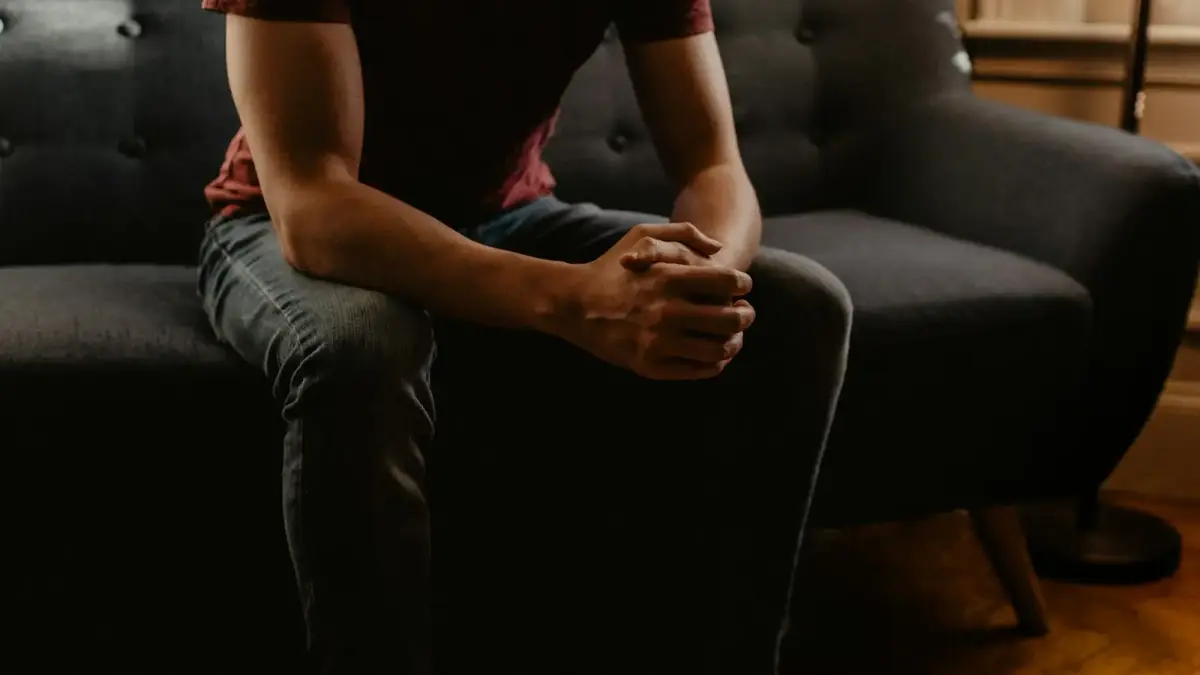
I noticed it about myself in my late thirties. I was sitting in a therapist’s waiting room - one leg folded beneath me, the other foot on the floor - and a woman across from me was doing the exact same thing. We looked comfortable. Casual, even. Like two people who simply preferred sitting that way.
But my therapist pointed something out a few sessions later that I haven’t been able to unlearn. She asked me to put both feet flat on the floor and just sit. Nothing else. Just sit with my full weight in the chair.
I lasted about forty seconds before I pulled my leg back underneath me. It wasn’t a choice. It was a reflex. My body did not want to be all the way down.
That moment started a years-long fascination with what our sitting postures actually reveal - not about preference, but about the nervous system underneath. And what I’ve found, both in the research and in hundreds of conversations since, is that people who always tuck one leg beneath them are carrying a very specific kind of story in their body. It looks like a quirk. It’s actually a blueprint.
Here are eight things that sitting posture tends to reveal.
1. They were the child who was always asked to get things
Not in a cruel way, necessarily. Sometimes it was just the household rhythm. You were the one sent to grab the remote, fetch a glass of water, check on the baby, answer the door. You were the designated mover.
And your body adapted. You stopped sitting all the way down because you’d just have to get up again. One leg stayed tucked and ready - a kind of physical shorthand for “I know I’ll be needed in a minute.”
A 2017 study published in Frontiers in Psychology found that children who take on functional roles in a household early - fetching, serving, mediating - develop postural habits that persist well into adulthood, even when the original demands disappear. Your body kept the job long after you quit.
2. They don’t trust stillness
This is the one that cuts deepest. For a lot of people who sit this way, being completely still doesn’t feel peaceful. It feels suspicious.
Stillness, in the homes they grew up in, was the space right before something happened. The quiet before a door slammed. The pause before someone’s voice changed. You learned that calm was not a state to rest in - it was a warning to pay attention to.
So your body found a middle ground. You sit, but you don’t fully land. One leg stays coiled beneath you like a spring. You’re at rest and ready to move at the same time, and you’ve done it for so long that it feels like comfort. It isn’t. It’s a compromise between your need to relax and your body’s refusal to believe it’s safe to.
3. They scan exits without realizing
Ask someone who tucks one leg under them where the nearest exit is in any room, and they’ll usually know. Not because they checked. Because their body checked for them.
Dr. Stephen Porges’ polyvagal theory describes this as a nervous system operating in a state of “mobilization without panic” - not fight or flight, exactly, but a chronic low-grade readiness that hums beneath conscious awareness. Your eyes drift to doorways. You choose seats near walls. You angle your body toward open space.
The tucked leg is part of this architecture. It positions you to stand faster, turn quicker, leave sooner. You’re not anxious in the clinical sense. You’re just never fully arrived.
4. Relaxation feels like a performance to them
You know how to look relaxed. You do it well. Feet up on the couch, show on in the background, drink in hand. You look like someone who’s unwinding.
But inside, you’re monitoring. The volume of voices in the next room. Whether the energy in the house has shifted. Whether someone’s mood has changed between when they left the kitchen and when they came back.
A 2019 study in the Journal of Research in Personality found that adults with hypervigilant attachment styles often describe relaxation as something they perform rather than experience. They know the postures. They know the rituals. But their nervous system never actually downshifts. The tucked leg is part of the performance - it looks casual enough to pass, while keeping your body one motion away from standing.
5. Their body keeps one foot in “leave” mode
This one is literal. Watch someone who sits this way and you’ll notice the foot that stays on the floor is almost always planted. Ready. Weighted. It’s the foot they’d push off from if they needed to stand.
The tucked leg isn’t the active one - it’s the stored one. The foot on the floor is the engine. Their body has organized itself around the possibility of departure at all times. Not because they want to leave, but because leaving quickly was once the safest option available to them.
This isn’t drama. This is a child who learned that the difference between being okay and not being okay was sometimes measured in how fast they could get out of a room. The posture stayed because the lesson was written in muscle, not memory.
6. They were the first to notice a mood shift in the house
Before anyone said a word, you knew. The way a cabinet closed a little harder than usual. The silence that replaced music. The specific rhythm of footsteps that meant someone was upset.
You were the household barometer. And your body adapted to that role by staying half-alert at all times. The tucked leg, the angled posture, the slightly forward lean - these are the physical signatures of someone whose childhood job was emotional surveillance.
Gabor Mate has written extensively about how children in unpredictable environments develop somatic responses that outlast the environment itself. Your body is still doing the job it was trained to do. It doesn’t know the house is different now. It doesn’t know the footsteps belong to someone safe.
7. They confuse vigilance with comfort
This is the cruelest trick of all. You genuinely believe you sit this way because it’s comfortable. And in a sense, it is - because your nervous system has been wired to feel most settled when it’s partially activated.
Full stillness feels wrong. Both feet on the floor feels exposed. Sitting all the way back in a chair feels like giving something up. So you fold one leg under and call it preference, the same way you call sleeping lightly “being a light sleeper” instead of what it actually is - a body that never learned how to fully stand down.
A 2021 study published in Psychological Science examined how individuals with early-life stress often develop a baseline arousal level that is higher than average, and that this elevated baseline becomes subjectively experienced as “normal.” You don’t feel tense because tense is your resting state. You don’t notice the vigilance because you’ve never known its absence.
8. They have never fully sat down in their entire adult life
This sounds like an exaggeration, but spend a day watching yourself and you’ll see it. You perch. You fold. You lean. You sit on the edge, the arm, the back of the couch. You sit cross-legged on chairs meant for feet-on-the-floor sitting. You tuck, curl, and adjust.
What you don’t do is plant both feet on the ground, put your full weight into the seat, and let the chair hold you. Because that requires something your body never learned to do - trust that the surface beneath you will stay steady.
This isn’t about furniture. It’s about the world. You grew up in a place where the ground shifted, emotionally if not literally. And your body decided, very early, that the safest way to sit was to never fully commit to it.
If you recognized yourself in most of this list, I want you to know something. There is nothing wrong with the way you sit. Your body made a brilliant decision a long time ago, and it kept you safe when safety wasn’t guaranteed.
But you’re allowed to notice it now. You’re allowed to feel both feet on the floor and stay there for a minute, even when your leg starts to pull back underneath you. You’re allowed to let the chair hold your full weight.
You don’t have to earn the right to settle. You don’t have to be useful before you can be still.
The tucked leg kept you ready. But you’ve been ready long enough. You’re allowed to land now.