She is 62 and just realized she apologizes to furniture - says 'sorry' when she bumps into the kitchen counter, whispers 'excuse me' to a chair she needs to move, murmurs 'I'm sorry' to a door she closes too loudly - not because she thinks objects have feelings but because a girl who was told she was too loud, too clumsy, too much learned that her body was always one wrong movement away from upsetting someone, and the woman who apologizes to a coffee table at sixty-two is not absent-minded but still negotiating with a world that taught her every collision was her fault
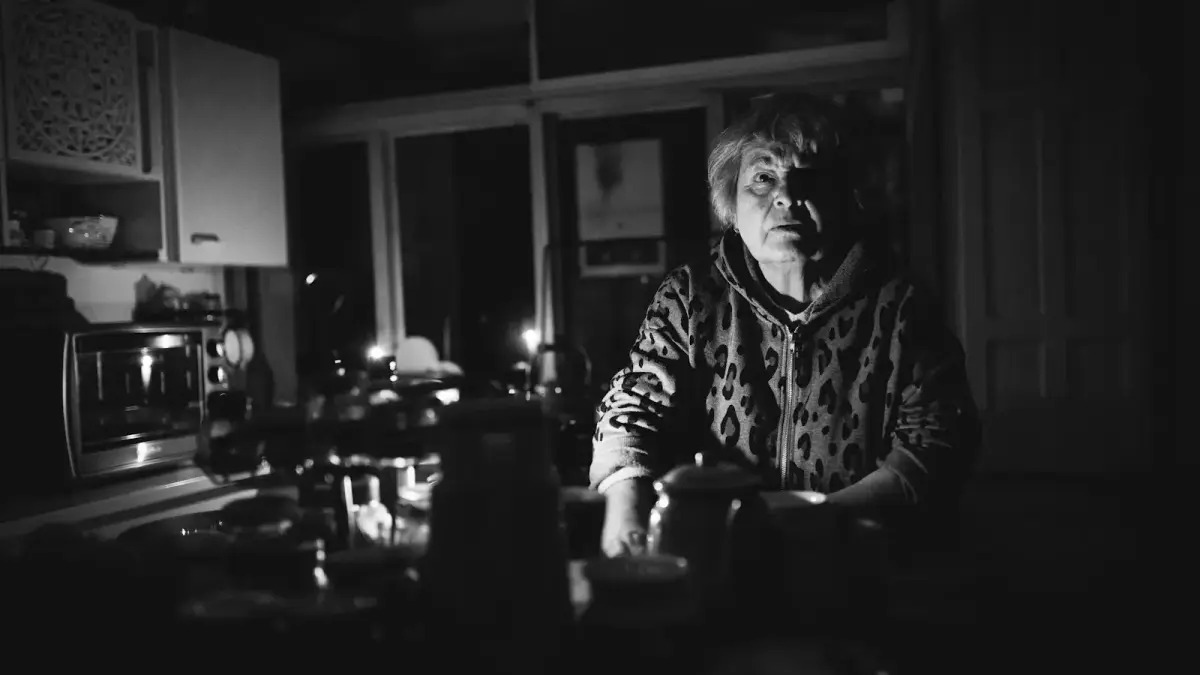
I bumped into the kitchen counter last Tuesday morning while reaching for my coffee mug, and the word left my mouth before I even registered what had happened.
“Sorry.”
I said sorry to a slab of granite. I stood there in my kitchen at six-thirty in the morning, alone, apologizing to a countertop that has never had feelings, never been offended, never once required an explanation for why my hip grazed its edge.
And the thing is, it wasn’t the first time. It wasn’t even the tenth time that week. I whisper “excuse me” when I need to move a dining chair out of my path. I murmur “I’m sorry” when I close a cabinet door louder than I intended. I once caught myself mouthing an apology to a bookshelf I nudged while vacuuming.
My daughter was visiting last month when she heard me do it. I’d bumped the corner of the coffee table and instinctively whispered my little sorry. She looked at me with this expression I couldn’t quite read - somewhere between amusement and heartbreak - and said, “Mom, you just apologized to a table.”
I laughed it off. Called myself scatterbrained. But something about the way she said it stayed with me, like a small stone dropped into still water. And the ripples kept moving outward until I couldn’t pretend they weren’t there anymore.
The girl who was always bumping into things
I was not a quiet child. I was tall for my age, energetic, the kind of girl who entered rooms at full speed and left a trail of minor disturbances behind her. Knocked over a glass at dinner. Banged her knee on the coffee table. Let the screen door slam on the way out.
And every single time, someone corrected me.
“Watch where you’re going.” “Be more careful.” “You’re like a bull in a china shop.” “Why can’t you just be gentle?”
The words were never screamed. That’s important. Nobody was cruel. Nobody intended harm. But the message was steady and relentless: your body is a problem. The way you move through the world creates disturbance. You take up too much space, make too much noise, leave too much evidence that you were here.
I learned the lesson the way all children learn their deepest lessons - not through a single dramatic event, but through a thousand small repetitions that eventually became indistinguishable from the truth.
By the time I was ten, I had already developed the reflex. Bump something, apologize. Make a noise, explain yourself. Take up space, justify it. My body was always one wrong movement away from upsetting somebody, and the only way to stay safe was to preemptively declare that every collision was my fault.
When your nervous system writes the script
Here’s what I didn’t understand for fifty years: the apologies weren’t a personality quirk. They weren’t absent-mindedness or a charming eccentricity. They were a survival strategy that had been written into my nervous system so early and so deeply that my body kept performing it long after the original audience had left the room.
A 2019 study published in Psychological Science found that shame - particularly shame experienced in childhood around physical behavior - gets encoded not just as an emotional memory but as a motor pattern. The body literally learns to brace, to shrink, to signal submission in the moments after perceived transgression. The researchers described it as a “postural echo” - the body replaying its oldest learned responses to contact and collision.
That phrase stopped me cold when I first read it. A postural echo. That’s exactly what it feels like. Not a thought, not a decision, but an echo. My hip touches a counter, and before my conscious mind can even register the sensation, my mouth is already forming the word. Sorry. As if my body has been waiting sixty years for the next bump, the next collision, the next proof that I have once again failed to move through the world without disturbing it.
Dr. Gabor Mate writes about this with such clarity it almost hurts. He describes how children who are repeatedly corrected for their physicality - their volume, their speed, their clumsiness - don’t just learn to be quieter. They learn that their physical existence is conditional. That their right to occupy space depends on how invisible they can make themselves while doing it.
I didn’t learn to be careful. I learned to be sorry.
The woman who moves through rooms like a guest
If you’d watched me in my twenties and thirties, you might have described me as polite. Considerate. Maybe a little timid, but in a way that seemed socially appropriate.
You wouldn’t have seen the calculation happening underneath.
Every room I entered, I was unconsciously mapping. Where are the edges? What might I bump? How do I get from the door to the chair without brushing against anyone, knocking anything, making any sound that might draw attention to the fact that I have a body and that body is moving?
I held my purse close to my side so it wouldn’t swing. I pulled my elbows in at restaurants. I stepped around people’s feet with exaggerated care, as if the floor were made of something that might crack.
A 2021 study in Frontiers in Psychology examined what researchers called “spatial apologetics” - the unconscious ways that people who experienced childhood shaming around physical behavior continue to minimize their physical footprint in adulthood. The participants, mostly women over forty, described remarkably similar patterns. Turning sideways in hallways when there was plenty of room. Saying “sorry” when someone else stepped on their foot. Treating every shared space as if they were borrowing it and might be asked to leave.
I read those findings and thought about every party I’d ever attended where I spent most of the evening pressed against a wall, not because I was shy but because it was the position that required the least negotiation with the physical world.
I wasn’t being modest. I was being careful. And I was being careful because somewhere deep in the architecture of my body, a girl was still being told she was too much.
The apology that outlived its audience
My mother passed away eleven years ago. My father has been gone for twenty. The teachers who told me to settle down, the relatives who called me clumsy - most of them are no longer here. The audience I was performing for has largely left.
But the performance continues.
That’s the part that gets me. The people who taught me to apologize for my body are gone, but my body hasn’t gotten the memo. It’s still rehearsing for a correction that isn’t coming. Still bracing for a voice that will never speak again.
I bump a counter at sixty-two, and my nervous system responds as if my mother is standing right there, lips pressed thin, waiting for me to acknowledge that I’ve done it again. Been too much. Moved too fast. Failed, once more, to float through the world without evidence.
Brene Brown talks about this phenomenon - the way shame doesn’t need an external trigger once it’s been fully internalized. It becomes self-generating. The voice that once came from outside takes up residence inside, and it is meticulous. It never misses a bump. Never lets a noise go unaddressed. Never allows a collision to pass without its tax.
When I apologize to the coffee table, I’m not talking to the coffee table. I’m talking to every person who ever made me feel that my body owed the world an explanation for existing. The table is just the occasion. The apology is much, much older.
What the sorry is really saying
When I started paying attention - really paying attention - to my apologies, I noticed something I hadn’t expected.
They weren’t all the same.
The sorry I whisper to the counter is quick and flat, almost reflexive. But the one I murmur to a door I’ve closed too loudly has a different quality. There’s a wince in it. A flinch. As if the sound of the door is proof that I’ve lost control of my body, and I need to immediately signal that I know, I know, I should have been more careful.
The “excuse me” I say to a chair I need to move is the most telling of all. Because I’m not apologizing for contact. I’m apologizing for need. For requiring the world to rearrange itself to accommodate my passage through it. The chair is in my way, and rather than simply moving it, I first apologize for the inconvenience of having a body that needs to get from one place to another.
This is what it looks like when a girl spends her formative years learning that her physical needs are impositions. She doesn’t grow out of it. She grows around it. She builds an entire adult life on top of that foundation, and the foundation holds, invisibly, for decades. Until one morning in the kitchen, her daughter watches her apologize to a table, and something cracks just enough to let the light in.
You are not absent-minded
If you recognized yourself in any of this, I want to tell you something, and I want you to hear it as gently as I mean it.
You are not scatterbrained. You are not silly. You are not losing your mind because you say sorry to a doorframe.
You are a woman whose body learned, very early and very thoroughly, that it was always one collision away from being too much. And your nervous system - loyal, vigilant, still working from its oldest instructions - keeps doing what it was taught to do. It keeps apologizing. Not because you owe anything to the kitchen counter, but because a long time ago, you were taught that you owed something to the world every time your body made contact with it.
The apologies to furniture are not evidence that something is wrong with you. They are evidence that something was wrong with how the world received you.
And noticing them - really noticing them, the way I did that morning with my coffee growing cold on the counter - is not a small thing. It’s the beginning of understanding that the sorry was never really about the bump. It was about a girl who needed permission to take up space and never quite received it.
You can give yourself that permission now. Not all at once. Not perfectly. Maybe you’ll still whisper sorry to the counter tomorrow morning. That’s okay.
But maybe, just once, you’ll bump into something and let the silence hold. And in that silence, you might hear something you haven’t heard in sixty years.
The sound of a woman moving through her own kitchen without apology. And the kitchen not minding at all.