8 things people who finally feel safe for the first time in their adult life quietly struggle with, because a nervous system that spent decades in survival mode doesn't know what to do when the emergency is actually over, according to psychology
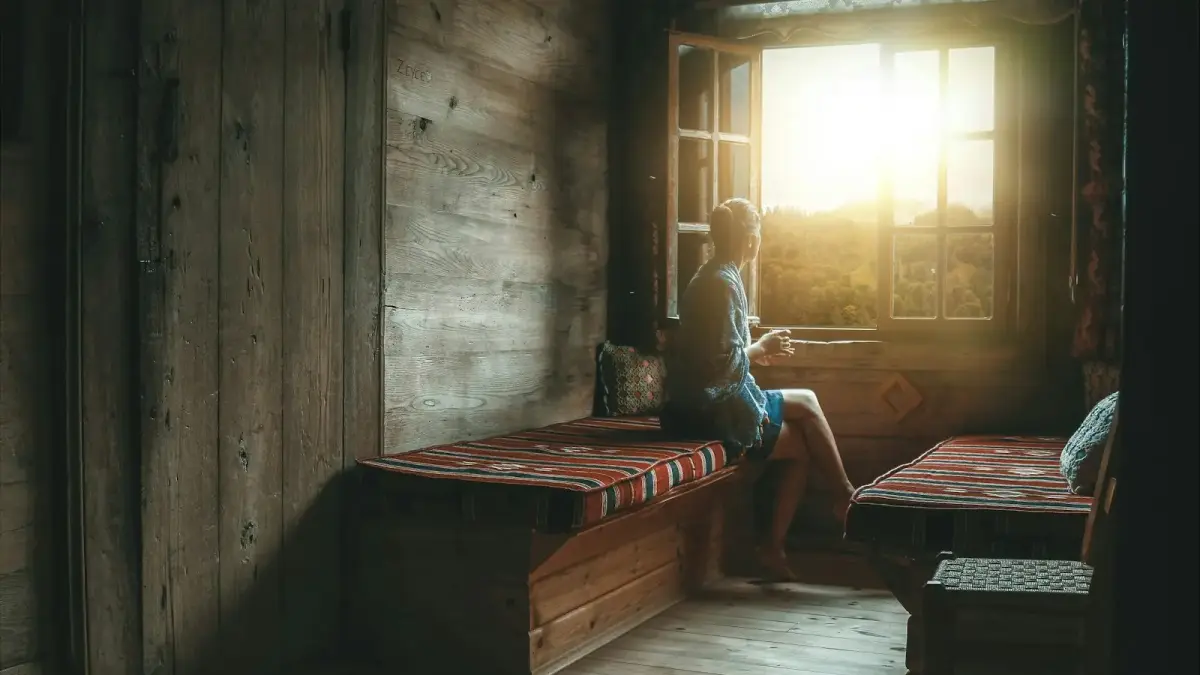
I remember the first morning I woke up and realized nothing was wrong.
No crisis. No phone call I was dreading. No bill I couldn’t cover. No argument simmering from the night before. Just a quiet Saturday, sunlight on the kitchen counter, coffee brewing, and my hands shaking for absolutely no reason.
I sat there thinking something must be coming. Something terrible must be about to happen, because this much stillness couldn’t possibly be real. I had spent so many years braced for impact that when the collisions finally stopped, my body didn’t celebrate. It panicked.
If you’ve lived through a chaotic childhood, a difficult marriage, years of financial precarity, or any long stretch where your nervous system had to stay switched on just to keep you alive - you know exactly what I’m describing. You finally get to the other side. You build something stable. And instead of the relief you imagined, you feel this strange, nameless disorientation. Like you made it to shore, but you’ve forgotten how to stand on solid ground.
You’re not ungrateful. You’re not broken. Your body just spent decades learning the rules of a world that no longer exists - and it hasn’t caught up yet.
Here are 8 things people in that exact position quietly struggle with.
1. You keep waiting for the other shoe to drop
You’re having a good week. Maybe a good month. The job is steady. The relationship is calm. And somewhere in the back of your mind, a voice keeps whispering: this can’t last.
You find yourself scanning for threats that aren’t there. You check your bank account three times a day even though you know it’s fine. You replay a kind conversation with your partner looking for the hidden meaning, the buried resentment, the thing they didn’t say.
A 2004 study published in Psychological Science found that people with prolonged exposure to unpredictable stress develop a cognitive bias toward threat detection - even in objectively safe environments. Your brain learned that anticipating disaster kept you alive. It’s not going to stop just because the disaster stopped.
This isn’t pessimism. It’s a survival skill that hasn’t received its retirement notice yet.
2. You sabotage good things because your body doesn’t trust them
The promotion comes through and you immediately start thinking about quitting. The relationship deepens and you pick a fight over something that doesn’t matter. Someone offers you help and you refuse it, even though you’re exhausted.
It looks like self-destruction from the outside. From the inside, it feels like self-preservation.
When your nervous system spent years equating calm with the moment right before everything fell apart, goodness starts to feel like a setup. Your body doesn’t distinguish between “this is peaceful” and “this is the eerie quiet before the storm.” They feel identical.
So you do the thing that feels most familiar - you create the crisis yourself. At least then you know when it’s coming. At least then you’re in control.
3. You feel guilty for having it easier now
You think about the version of yourself who worked two jobs and slept four hours a night. The version who held everything together with nothing. And now you’re here, in a warm house, with enough - and instead of feeling proud, you feel like you’re betraying that person.
There’s a strange loyalty we develop to our own suffering. It becomes part of our identity. When the suffering lifts, it can feel like losing yourself.
A 2016 study in the Journal of Personality and Social Psychology identified what researchers called “survivor’s guilt” in individuals who escaped prolonged hardship - a persistent sense that comfort is undeserved, particularly when others who shared their circumstances didn’t make it out. You might think of family members still stuck in the cycle, friends who didn’t get the same breaks. Your relief gets tangled up with shame.
Having it easier now doesn’t mean you had it easy. Those aren’t the same sentence.
4. Rest makes you anxious instead of relaxed
Someone tells you to take a day off and your chest tightens. You sit on the couch with nothing to do and your leg starts bouncing. You try to read a book and can’t make it through two pages because your brain keeps generating a to-do list that doesn’t exist.
This one is deeply biological. When your system has been flooded with cortisol and adrenaline for years, the absence of those chemicals doesn’t feel like peace. It feels like something is missing. Your body interprets stillness as danger because stillness was never safe before.
Research published in Psychoneuroendocrinology in 2013 demonstrated that individuals with chronic stress histories show heightened cortisol reactivity during rest periods - meaning their stress hormones actually spike when they try to relax. Your body is not being difficult. It’s doing the only thing it knows how to do.
You didn’t forget how to rest. You may never have learned in the first place.
5. You don’t know what to do with free time
For years, every hour was accounted for. Every moment had a purpose - earn money, solve a problem, manage someone’s emotions, keep the wheels from falling off. Survival doesn’t leave room for hobbies.
Now someone asks what you do for fun, and you genuinely don’t know. You stand in a bookstore and feel overwhelmed. You try to pick a show to watch and end up scrolling for forty minutes before giving up. A free afternoon stretches in front of you and it feels less like a gift and more like a void.
This isn’t laziness and it isn’t depression - though it can look like both. It’s the disorientation of a person who was never allowed to want things just because they wanted them. Your desires got filed under “irrelevant” a long time ago. Retrieving them takes patience.
You’re not empty. You’re just out of practice being a person instead of a crisis manager.
6. You still flinch at small things - a phone ringing, an unexpected knock, a certain tone of voice
The doorbell rings and your heart rate doubles. Your phone buzzes at 10 p.m. and your stomach drops. Someone raises their voice slightly - not even in anger, just in excitement - and your whole body goes rigid.
These are what psychologists call “conditioned startle responses,” and they’re remarkably persistent. A 2011 study in Biological Psychiatry found that heightened startle reactivity can persist for years after the removal of the original stressor, particularly in individuals with early life adversity. The neural pathways that were carved by danger don’t smooth over just because the danger is gone.
You know the knock is probably the delivery driver. You know the phone call is probably nothing. But your body doesn’t process knowledge. It processes pattern. And the pattern it learned was that unexpected sounds meant something bad was about to happen.
Be patient with your flinch. It kept you alert when alertness was the only thing between you and harm.
7. You cry at random moments of ordinary beauty
You’re driving and a certain song comes on and suddenly you’re pulling over because you can’t see through the tears. Your kid laughs at something silly and your throat closes. You watch an elderly couple holding hands in a grocery store and you have to leave the aisle.
These aren’t sad tears. They’re the tears of a nervous system that is finally safe enough to feel what it couldn’t feel before. When you’re in survival mode, your body suppresses emotional processing - it doesn’t have the bandwidth. Grief, tenderness, longing, wonder - all of it gets packed away in a box marked “later.”
When safety arrives, “later” arrives with it. And it doesn’t come neatly. It comes in waves, triggered by the smallest moments of beauty your guarded heart finally lets in.
This is not you falling apart. This is you thawing.
8. You feel like an imposter in your own stable life
You walk through your house and some part of you feels like a visitor. You sit at dinner with people who love you and think, if they really knew where I came from. You describe your life to someone and it sounds like you’re talking about a stranger.
There’s a disconnect between the life you’ve built and the identity that was forged in chaos. The person who survived doesn’t quite recognize the person who’s living. You feel like you’re performing normalcy rather than experiencing it.
This is one of the least discussed consequences of prolonged hardship - the identity gap that opens when your circumstances finally change but your self-concept hasn’t caught up. You still see yourself as the person who can’t afford the thing, who doesn’t belong in the room, who is one mistake away from losing everything.
You’re not pretending. You’re just still learning that this version of your life is the real one too.
If you recognized yourself in these words, I want you to hear something clearly.
The fact that safety feels strange to you is not a sign that something is wrong with you. It’s a sign of how long you went without it. Your nervous system is not malfunctioning - it’s recalibrating. And recalibration is slow, unglamorous, non-linear work.
You might feel like everyone else knows how to just be happy and you somehow missed the lesson. You didn’t miss anything. You were busy surviving. And surviving took everything you had.
The peace will start to feel real. Not all at once, and not on a schedule you can predict. But one morning you’ll wake up and the quiet won’t scare you. You’ll pour your coffee and sit in the stillness and your hands won’t shake. And you won’t even notice it’s happened until much later - because that’s what genuine safety feels like. It doesn’t announce itself. It just stays.
You made it here. Let yourself arrive.