8 things that quietly happen to people who always need to sit facing the door in a restaurant - it is not paranoia, it is the body language of a child who grew up scanning for danger at home and never received the message that the room behind them was safe, according to psychology
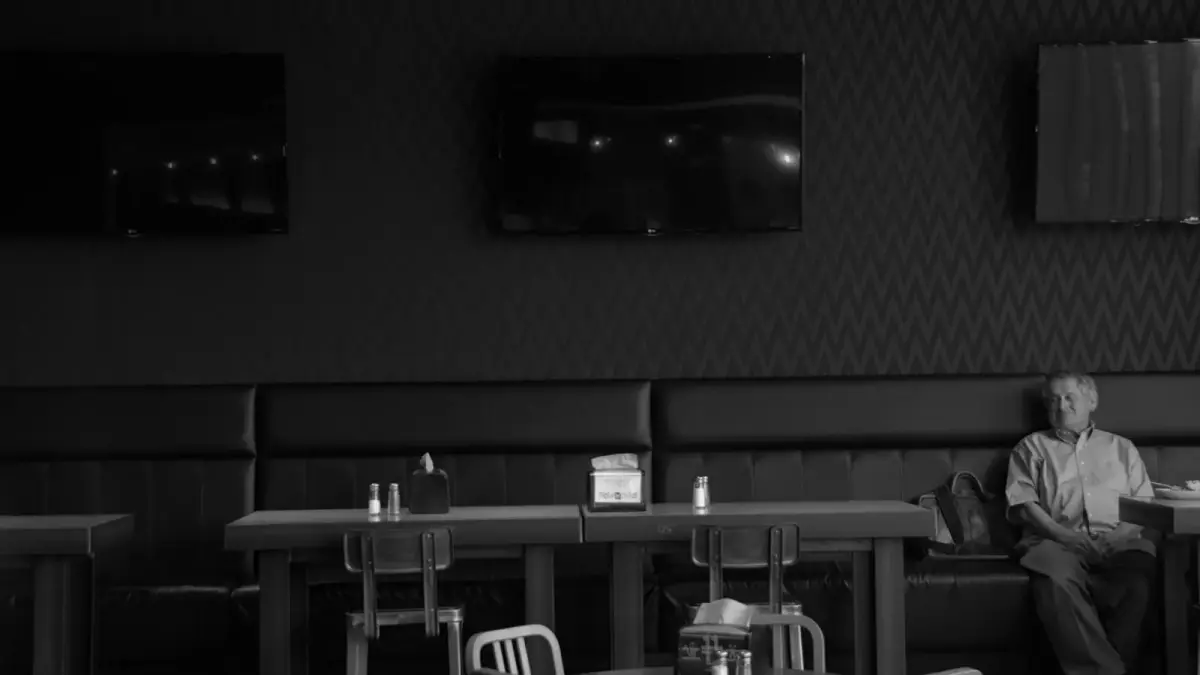
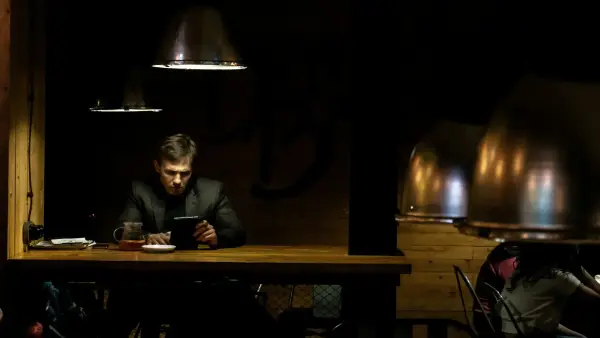
I noticed it on a Tuesday night, sitting across from a friend at a small Italian place near my apartment. She had taken the seat facing the wall without thinking. I had, without thinking, taken the one facing the door.
She was telling me about her week. I was listening. But some quieter part of me was also watching a man stand up three tables over. Tracking a waiter who moved too quickly behind me. Registering the couple near the entrance whose conversation had shifted in tone.
I was not afraid. I was not expecting anything. But my body was doing what it has always done - positioning itself where it could see everything, everyone, every possible shift in a room’s emotional weather.
I have spoken to hundreds of people who do this exact thing. They rearrange chairs. They trade seats with their partner before the menus even arrive. They feel a low, humming discomfort when someone seats them with their back to the room. And almost none of them call it what it is.
It is not paranoia. It is not a quirk. It is the body language of someone whose nervous system learned very early that rooms could change without warning - and that the safest thing you could do was never stop watching.
Here are eight things that quietly happen to people who carry this pattern.
1. They learned to read a room before they learned to read a book
Children who grow up in unpredictable homes develop a skill that looks, from the outside, like social intelligence. They can walk into a room and immediately sense the temperature. Who is angry. Who has been drinking. Who is about to leave.
A 2005 study published in the journal Development and Psychopathology found that children raised in volatile households develop heightened sensitivity to facial expressions - particularly anger and threat cues - at a significantly younger age than their peers. Their brains literally rewire to prioritize emotional detection.
This is not a gift. It is an adaptation. The child who can read a room at five is not precocious - they are surviving. And the adult who sits facing the door at fifty-three is still running that same surveillance software, decades after the original threat disappeared.
2. They do not feel safe with their back to open space
This one is so physical it almost defies language. It is not a thought. It is not a belief. It is a sensation - a tightening between the shoulder blades, a low-grade alertness that hums louder whenever they cannot see what is behind them.
Sitting with your back to a room full of strangers triggers something primal in people with this pattern. It is the body saying: I cannot track what I cannot see. And for a nervous system that was trained on unpredictability, that is not a minor discomfort. It is a small emergency.
They will trade seats. They will quietly reposition a chair. They will choose the booth over the table every single time. And if you ask them why, most will shrug and say, “I just prefer it.” They are not lying. They genuinely do not have conscious access to the reason. The body decided this policy long before the mind had a vote.
3. They are exhausted in ways that do not match their activity level
Hypervigilance is expensive. It costs energy the way a phone running twelve background apps costs battery. You cannot see it draining, but by evening, you are at four percent and you have no idea why.
People who scan rooms - who track exits, monitor voices, notice shifts in body language across a crowded space - are running a constant, low-level threat assessment. It is not dramatic. It does not look like anxiety from the outside. But it burns through the same neurological resources as sustained concentration, because that is exactly what it is.
A 2019 study in Frontiers in Psychology found that individuals with elevated hypervigilance showed significantly higher levels of cognitive fatigue, even during periods of objective safety. Their brains simply did not downshift. The surveillance protocol kept running whether or not there was anything to surveil.
This is why they cancel plans. Why they need long mornings alone. Why a simple dinner out can leave them feeling like they ran a marathon. It is not the dinner. It is the watching.
4. They flinch at sounds that other people do not register
A door closing too hard. A glass breaking in a kitchen somewhere behind them. A voice that rises suddenly two tables away. These sounds pass through most people without a ripple. But for the person facing the door, each one is a small voltage spike.
It is not that they are scared. It is that their startle response was calibrated in a home where sounds meant something. A door slamming meant someone was angry. A glass breaking meant a fight was escalating. Raised voices meant the evening was about to turn.
The body remembers this. It does not care that you are fifty-three and sitting in a well-lit restaurant with a person who loves you. It hears the sound and runs its old protocol: assess, locate, prepare. The whole sequence takes less than a second. Most people at the table never notice. But the person who flinched lost a small piece of their evening to a childhood that ended thirty years ago.
5. They are often the calmest person in a crisis
This is the paradox that confuses everyone around them. The person who cannot sit with their back to a door - the person whose nervous system is always slightly activated - is frequently the one who stays completely composed when everything actually falls apart.
It makes a strange kind of sense. They have been rehearsing for emergencies their entire lives. Their body has been running threat simulations since childhood. When a real crisis arrives, they do not need to shift into a new gear. They are already there.
Bessel van der Kolk, in his work on trauma and the body, describes this as a state of perpetual readiness that can paradoxically produce calm under pressure. The nervous system that never fully relaxes does not need time to activate. It simply redirects the vigilance it was already spending.
People notice this. They say things like, “You’re so steady in a crisis.” They mean it as a compliment. And it is one. But it is also the visible surface of something heavier - a nervous system that never learned how to not be ready.
6. They know where every exit is within thirty seconds of entering a building
They do not plan this. They do not think about it. It happens the way breathing happens - automatically, below the level of conscious decision. Walk into a restaurant, a theater, a conference room, and within half a minute, they have already mapped the exits.
This is not the behavior of someone who watches too many thrillers. This is the behavior of a child who needed to know, at all times, how to leave a room quickly and quietly. A child who learned that the difference between safety and danger was sometimes just a clear path to the door.
The mapping becomes invisible in adulthood. They do not announce it. They do not even notice they are doing it. But put them in a room with no clear exit - a crowded elevator, a packed venue with blocked aisles - and you will see the discomfort surface. The jaw tightens. The breathing shortens. The body says: I need to know how to leave.
7. They struggle to enjoy meals because they are managing the room
Here is the quiet tragedy of this pattern. They sit down to dinner with someone they love. The food is good. The conversation is warm. And some part of them is not there.
That part is tracking the server approaching from the left. Noticing the shift in energy from a nearby table. Registering a child running toward them from behind. Processing the ambient volume for any spikes. It is not that they want to do this. It is that their nervous system does not ask permission.
A 2021 study in Psychological Science found that individuals with heightened threat sensitivity showed reduced capacity for sustained positive emotion during social experiences. In plain language: the brain that is busy scanning cannot fully arrive in the moment it is scanning.
This is why they sometimes seem distant at dinner. Why they lose the thread of a conversation and have to ask you to repeat yourself. They were not ignoring you. They were monitoring a room that did not need monitoring, because a room forty years ago did.
8. They do not know that other people do not do this
This might be the most important one. For years - sometimes for decades - people with this pattern believe that everyone positions themselves to face the door. That everyone maps exits. That everyone tracks the emotional weather of a room full of strangers.
They think this is normal because it was their normal. It was the air they breathed. A child who grows up scanning does not know that other children are not scanning. They assume the world is doing what they are doing, and that they are simply slightly better at it.
The realization that other people sit with their backs to a room and feel nothing - no hum, no tightness, no quiet inventory of every face and sound - is often the moment the ground shifts. It is when they begin to understand that what they have been doing all these years was not personality. It was protection. And the child who wrote that protocol deserved to need it far less than they did.
If you read this and felt something tighten in your chest, I want you to know: there is nothing wrong with you.
The part of you that needs to see the door is not broken. It is not irrational. It is the part of you that kept a small person safe in a home where safety was not guaranteed. It did its job. It did it beautifully.
The work now - the slow, gentle, unglamorous work - is not about forcing yourself to sit with your back to the room. It is about recognizing that the scanning is happening. Naming it. Understanding where it came from. And then, on the nights when you can, letting yourself stay in the conversation a little longer before your eyes drift to the door.
You learned to watch the room because you had to. You are allowed to learn, slowly and on your own terms, that some rooms do not need watching.
That the person sitting across from you is safe. That the evening is just an evening. That the door behind you is just a door.