8 things that quietly happen to people who check their work email one more time before bed - not because they are workaholics but because a child who grew up in a home where tomorrow's crisis was always already forming never learned that the day had a safe ending, and the inbox at midnight is a body still trying to confirm that nothing has gone wrong while they were not looking, according to psychology
I did it again last night.
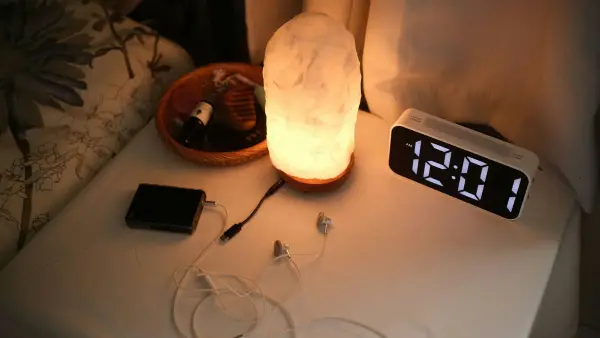
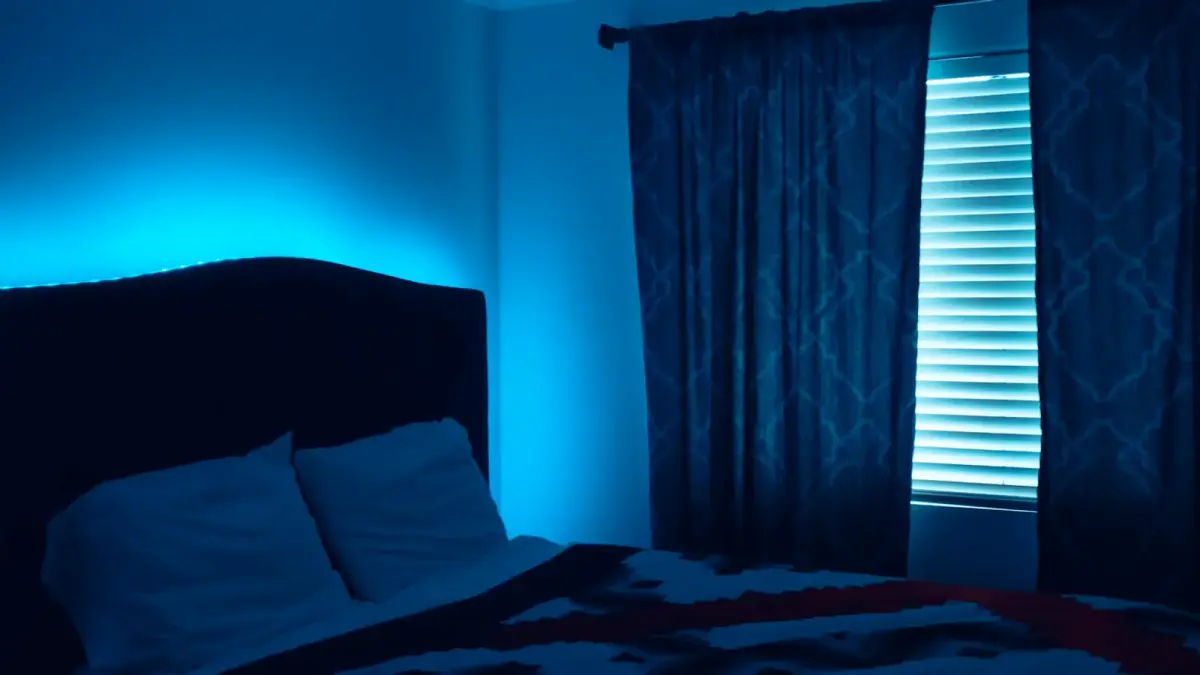
It was 11:14 p.m. I had already brushed my teeth. The lamp was off. My partner was breathing that slow, easy rhythm that means they crossed into sleep ten minutes ago. And I picked up my phone, opened my work email, and scrolled through a dozen subject lines I had already read six hours earlier.
Nothing had changed. Nothing was urgent. Nothing required a response before morning.
But I could not put the phone down until I had confirmed that. Until I had swept the perimeter one final time and verified that no crisis was forming while I was not paying attention.
People have told me this is a boundary problem. That I need to “unplug” and “practice better work-life balance.” And I have nodded along, because those are reasonable things to say to someone who checks their inbox at midnight.
But they are not the real explanation.
The real explanation is much older than any job I have ever held. It goes back to a kitchen table where the mood could shift between dinner and dessert. To a childhood where tomorrow was never guaranteed to be calm, and the only thing that helped me sleep was scanning for whatever might go wrong next.
Psychology has a name for this. Several names, actually. And the research makes it clear that this is not about your job. It is about the nervous system you built when you were too young to know you were building anything at all.
Here are 8 things that quietly happen when you are someone who cannot let the day end without one final check.
1. Your body treats the end of the day like a threat, not a reward
Most people experience bedtime as a wind-down. For you, the transition from day to night activates something closer to alertness. The quiet is not soothing - it is suspicious.
A 2019 study published in Psychoneuroendocrinology found that adults who experienced chronic unpredictability in childhood showed elevated cortisol levels during evening hours, precisely when cortisol should be dropping. Their bodies had learned that nighttime was not a period of safety. It was the window when bad things announced themselves.
So you check the email. Not because your boss expects it. Because something deep in your wiring expects the other shoe to drop right around now.
2. You are not scanning for information - you are scanning for danger
There is a difference between reading your email and patrolling it. You are not looking for action items. You are looking for tone shifts, unusual subject lines, messages from people who do not normally write at this hour.
You are reading between the lines the way you once read a parent’s face when they walked through the front door. Is this a good night or a bad one. Is this a calm inbox or is something building.
You learned this skill before you had language for it. Dr. Gabor Mate has written about how children in unstable homes develop an exquisite sensitivity to environmental cues - not because they are anxious by nature, but because reading the room accurately was the difference between a peaceful evening and a frightening one.
That skill did not retire when you grew up. It just found a new room to read.
3. You experience a specific kind of relief that other people do not understand
When you check your email and find nothing alarming, something releases in your chest. A small exhale. A loosening you might not even notice consciously.
This is not satisfaction. It is the absence of the threat you were bracing for.
Other people do not get this particular relief at 11 p.m. because they were not carrying that particular tension. They close their eyes and the day is over. You close your eyes and the day is over only after you have confirmed it is safe to let it be over.
A 2021 study in Journal of Anxiety Disorders described this pattern as “safety-seeking behavior” - actions taken not to produce a positive outcome but to prevent a feared one. The relief is real. But it is the relief of a guard who finished their shift, not a person who is simply going to sleep.
4. You have a complicated relationship with “relaxing”
People tell you to relax. To take a bath. To put the phone in another room. And you have tried these things. Some of them even feel nice for a few minutes.
But underneath the lavender candle and the herbal tea, there is a part of you that does not believe the day is allowed to simply end. That feels irresponsible about rest. That associates letting your guard down with something going wrong while you were not watching.
This is not a personality flaw. This is what happens when relaxation was never modeled as safe in your early environment. When the adults around you were always bracing for something - a phone call, an argument, a financial disaster that was always one paycheck away - you absorbed the message that vigilance was love and rest was reckless.
5. You carry responsibility for things that are not actually yours to carry
You check the email, but the email is almost beside the point. What you are really doing is maintaining a posture of readiness. You are making sure that if something does go wrong, you will not be the person who was caught off guard.
Susan Cain has written about how conscientious, sensitive people often take on ambient responsibility - the unspoken work of making sure everything is okay, even when no one asked them to. For people who grew up in unpredictable homes, this tendency runs even deeper. You are not just conscientious. You are a child who once felt responsible for the emotional weather of an entire household.
The inbox is just the current address of that old weight.
6. You mistake hypervigilance for being good at your job
Here is the quiet trick your nervous system plays on you. Because your pattern of checking and scanning and monitoring has occasionally caught something real - an email that did need a quick response, a problem that was easier to solve at night than in the morning - you have built a narrative around it.
You tell yourself this is dedication. Work ethic. Being on top of things.
And some of it is. But a 2020 study in Frontiers in Psychology found that individuals with high hypervigilance scores often could not distinguish between genuine productive alertness and trauma-driven scanning behavior. They rated both experiences identically, even though one was purposeful and the other was compulsive.
You are good at your job. That part is real. But the midnight email check is not evidence of that. It is a separate thing entirely, wearing the same clothes.
7. You feel a strange guilt when you do manage to stop checking
On the rare nights when you do put the phone down early - when you are exhausted enough or distracted enough to skip the ritual - something uncomfortable sits in your stomach. Not anxiety exactly. More like the feeling of having forgotten something important.
This is guilt, and it has nothing to do with work.
It is the guilt of a child who learned that being vigilant was a form of love. That watching for trouble was how you took care of people. That if you stopped paying attention and something went wrong, it would be your fault for not catching it.
That guilt does not respond to logic. You can tell yourself a hundred times that nothing bad will happen if you skip one night of inbox patrol. The guilt does not care about your reasoning. It cares about the promise you made to yourself when you were eight years old - that you would never stop watching.
8. The one thing you are actually looking for is not in the inbox
This is the part that matters most.
You are not looking for emails. You are looking for confirmation that tomorrow is going to be okay. That nothing fell apart while you blinked. That you can go to sleep and the world will still be standing in the morning.
A 2018 study published in Journal of Personality and Social Psychology examined what researchers called “intolerance of uncertainty” and found that it was one of the strongest predictors of evening anxiety and pre-sleep cognitive arousal. People who struggled most to fall asleep were not people with the hardest jobs. They were people who could not tolerate not knowing what was coming next.
And that intolerance did not start at work. It started in a home where not knowing what was coming next meant not knowing whether you were safe.
The inbox cannot give you what you are actually looking for. No amount of refreshing will ever be enough, because the reassurance you need is not informational. It is emotional. It is the thing a child needed to hear at bedtime and never quite did: tomorrow is handled. You do not need to watch for it. You can just sleep.
If you recognized yourself in this, I want you to know something.
You are not bad at boundaries. You are not addicted to work. You are not failing at self-care because you cannot seem to put your phone in a drawer at 10 p.m. like all the wellness articles tell you to.
You are a person whose nervous system learned very early that the world required monitoring. And you have been doing that job faithfully, quietly, for decades - long past the point when anyone asked you to.
The fact that you are tired of it - that some part of you knows this is not really about email - is not a sign of weakness. It is a sign that you are ready to let someone else watch the door for a while. Even if that someone is just the part of you that knows, finally, that the night is allowed to be quiet.
You can put the phone down. Tomorrow will still come. And you will handle it the way you have always handled it - not because you scanned for it at midnight, but because you are the kind of person who always finds a way through.
That has never been about your inbox. That has always been about you.