Children who always pretended to be asleep when their parents checked on them at night often become adults who have perfected the art of seeming fine, not because they distrust the people who love them but because a child who learned at seven to regulate their breathing and hold their body perfectly still in the dark never stopped rehearsing the version of themselves that costs nobody any worry

I remember the footsteps.
Not the heavy kind - my father walked softly down the hallway, almost apologetically, the way people move when they’re trying not to wake someone. The floorboard outside my door would creak, and my entire body would go still. Not the stillness of actual sleep. The stillness of a child who had already decided what this moment needed to look like.
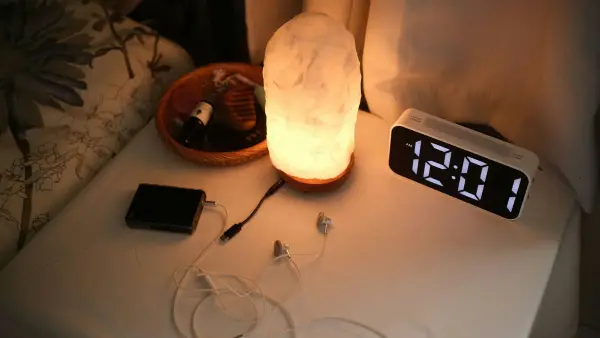
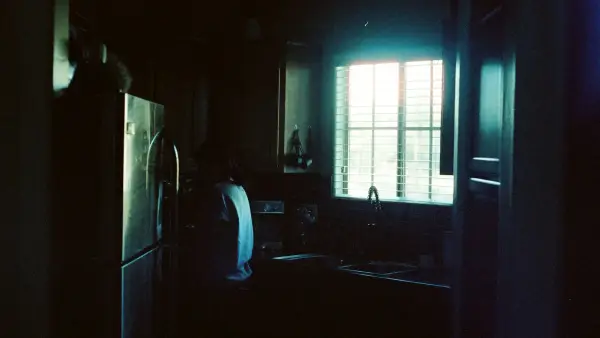
The door would open. A stripe of hallway light would fall across the carpet, warm and yellow, stretching toward the foot of my bed. I would regulate my breathing - slow, deep, even - and hold my body in a position that looked relaxed enough to be believable. Eyes closed. Jaw loose. Hands unclenched. And my father would stand there for a moment, maybe two, listening for the rhythm that told him everything was fine.
Then the door would close. The light would disappear. And I would lie there in the dark, heart beating faster than it should have been, wondering why I had just done that.
I was seven years old.
I didn’t have the language for it then. I didn’t know I was performing. I just knew, in some wordless part of my body, that a sleeping child was an easier child. A sleeping child meant nobody had to sit on the edge of the bed and ask questions neither of us knew how to answer. A sleeping child meant the house could settle.
If you were that child - the one who lay perfectly still and measured their breathing against the silence - I want you to know something about what that performance eventually became.
Your body learned calm before your mind had a name for it
Most people think of emotional regulation as a skill you develop in adulthood - something you pick up in therapy or read about in a self-help book. But for children who performed sleep, the body was already doing the work years before the conscious mind caught up.
A 2017 study published in Developmental Psychology found that children as young as five can engage in sophisticated physiological self-regulation when they perceive emotional tension in their environment. Their heart rates slow. Their breathing patterns shift. Their muscles relax - not because they feel relaxed, but because their nervous system has identified calm as the safest thing to project.
This is not the same as being calm. This is the body rehearsing calm as a survival strategy.
You weren’t sleeping. You were performing the absence of need. And your body got so good at it that by the time you reached adulthood, you could do it without thinking - in meetings, in arguments, in hospital waiting rooms, in the passenger seat of a car during a conversation that was quietly breaking your heart.
The child was protecting someone, and it probably wasn’t themselves
Here’s what I’ve come to understand about the pretend-sleep performance: it was almost never about the child. It was about the parent standing in the doorway.
Some children pretended to sleep because the alternative was a conversation they could feel coming - the kind where a parent sits on the bed and asks “is everything okay?” in a voice that makes it clear that the parent needs everything to be okay. The child could sense that the question wasn’t really an invitation. It was a hope. And the kindest thing to do was confirm it.
Other children pretended because they understood, on some preverbal level, that the household needed to be at peace. A child still awake at ten o’clock meant something was wrong. A child still awake meant someone might have to address it. And in a house where the emotional bandwidth was already stretched thin, a sleeping child was one less problem.
Arlie Hochschild’s research on emotional labor - originally published in her 1983 book The Managed Heart - described the phenomenon of “surface acting,” where a person deliberately modifies their outward expression to match what a situation requires, regardless of what they actually feel. Hochschild was writing about flight attendants. But that term has always, to me, described what happens in a child’s bedroom when the door opens and the light comes in.
That child was surface acting. At seven. In the dark. For an audience of one.
The template that follows you into every room
The problem with learning a skill this early is that it doesn’t stay in the bedroom. It follows you.
The child who pretended to sleep becomes the teenager who says “I’m fine” so quickly it sounds rehearsed - because it is. They become the young adult whose friends describe them as “so easy to be around” and “never any drama,” and they hear that description and feel a complicated mix of pride and something heavier, something that whispers: they like the performance, not you.
They become the adult who can sit through devastating news with a face that gives nothing away. Who can regulate their breathing during a difficult conversation so well that the other person genuinely believes they’re unaffected. Who has trained their entire nervous system to project peace, even when - especially when - peace is the last thing they feel.
This is not dishonesty. I want to be clear about that.
This is a pattern that was built by love. A child doesn’t perform sleep for a parent they don’t care about. They perform it because they’ve absorbed, at a cellular level, the idea that their composure is a gift they can give to the people around them.
The tragedy is that the gift comes at a cost, and the child never agreed to the price.
What the nervous system remembers
Stephen Porges’ polyvagal theory offers a framework for understanding what happens in the body of a child who performs calm. The theory describes how the vagus nerve - the longest nerve in the autonomic nervous system - governs our physiological responses to perceived safety and threat.
In moments of social stress, the body can enter what Porges calls a “dorsal vagal” state - a kind of freeze response that mimics calm. The heart rate drops. The muscles go slack. From the outside, it looks like peace. From the inside, it feels like disappearing.
For children who regularly performed sleep, this freeze response becomes deeply familiar. The body learns that stillness equals safety. That slowing down your breathing is the fastest way to make a stressful moment pass. That the best thing you can be, in any room, is undetectable.
And because the nervous system doesn’t distinguish between a childhood bedroom and an adult boardroom, the pattern persists. You find yourself going still during conflict. You notice your breathing becoming deliberately even when someone raises their voice. You feel yourself performing relaxation during moments that call for something more honest.
A 2021 study in Frontiers in Psychology found that adults who reported high levels of childhood emotional suppression showed significantly elevated physiological markers of self-regulation during social stress - their bodies were working harder to appear calm than the bodies of people who had never learned to hide.
They weren’t more relaxed. They were better at the performance.
The cost of being the person who worries nobody
There is a particular kind of loneliness that belongs to people who have perfected the art of seeming fine. It’s not that they don’t have people who love them. It’s not that they distrust those people. It’s that they’ve been rehearsing the low-maintenance version of themselves for so long that they genuinely don’t know how to stop.
You want to tell someone you’re struggling. You open your mouth. And what comes out is measured, composed, slightly minimized - the version of the truth that costs the listener the least amount of emotional energy. You watch them accept it. You watch the relief in their face. And some part of you - the part that’s been performing since childhood - files that away as confirmation: this is what people need from you.
The cruel irony is that the people who love you most are often the ones you perform for the hardest. Not because you don’t trust them. But because a child who learned to protect a parent from worry doesn’t unlearn that pattern just because the parent is now a partner, a best friend, a therapist. The audience changes. The performance doesn’t.
You become the person everyone leans on and nobody checks on. The one who gets through the crisis and then falls apart alone in the car afterward, breathing hard against the steering wheel, finally feeling everything you held at bay for the last three hours.
You were never pretending to be strong - you were pretending not to need
I think there’s a misunderstanding about people like us. The assumption is that we’re stoic. Tough. Emotionally self-sufficient. And from the outside, I understand why it looks that way.
But the child who pretended to sleep wasn’t performing strength. They were performing the absence of need. There’s a difference.
Strength says: I can handle this. The absence of need says: there’s nothing here to handle. I’m asleep. I’m fine. The house is quiet. You can close the door.
That distinction matters because it changes what the healing looks like. You don’t need to learn how to be vulnerable, exactly. You need to learn that having needs doesn’t make you a burden. That being awake - visibly, honestly awake - when someone opens the door is not an imposition.
It’s an invitation.
You can stop holding your breath now
I still catch myself doing it. Someone asks how I am, and I feel my body begin its old choreography - the slight relaxation of the jaw, the softening of the eyes, the measured exhale that says everything is fine before I’ve even decided whether it is.
But more often now, I pause. I let the question sit for a second. I notice the impulse to perform and I let it pass through me without acting on it.
Sometimes I say, “Honestly? Not great.” And the world doesn’t end. The person doesn’t leave. The house doesn’t fall apart.
If you were the child in the dark bedroom, measuring your breath against the silence, I want you to hear this: what you did was not a flaw. It was an act of love performed by someone far too young to understand the cost. You gave your family the gift of your composure, and you’ve been giving it to everyone since.
But you’re allowed to exhale now. You’re allowed to be awake when someone opens the door. You’re allowed to let your breathing be ragged and honest and imperfect.
You spent decades rehearsing the version of yourself that costs nobody any worry. You are allowed to finally meet the version that tells the truth - not because the performance failed, but because you are worth more than the peace you’ve been keeping.