Psychology says people who need to read the entire menu three times before ordering are not indecisive - they are people whose childhood taught them that choosing wrong had real consequences, and the twenty minutes they spend studying a laminated card at a diner at fifty-three is not about the food but about a nervous system that still believes the wrong choice will tell the table something about them the right choice would have kept hidden
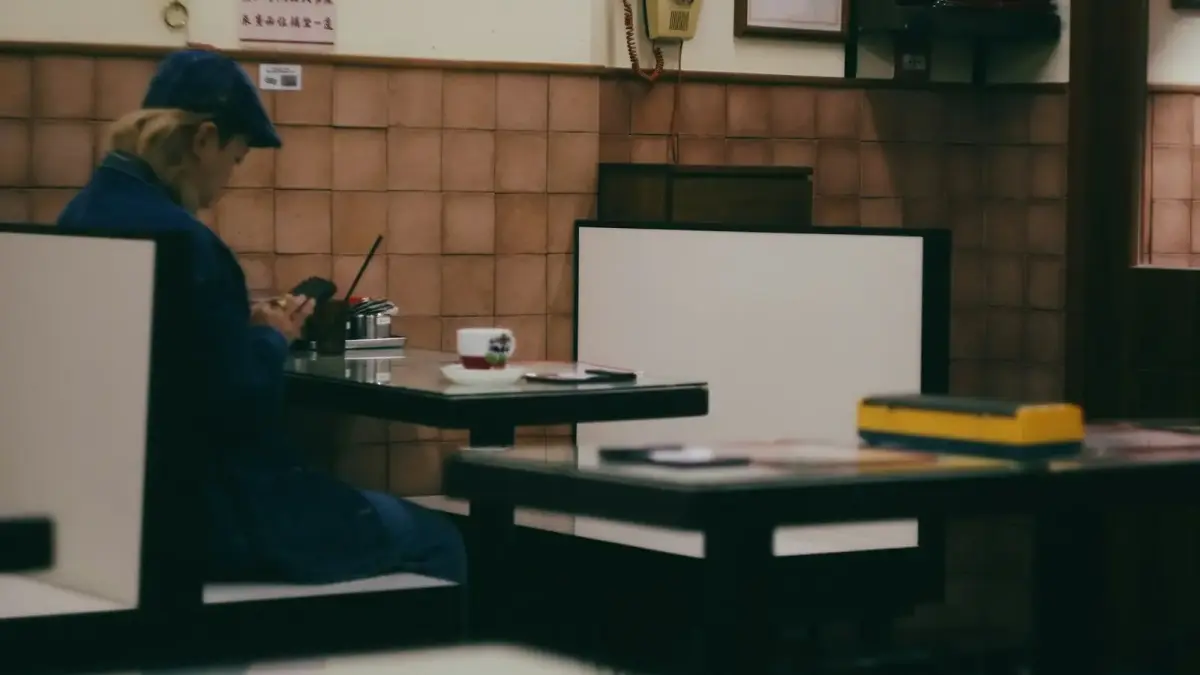
Last Tuesday I sat in a booth at a diner off the highway - the kind with sticky laminated menus and a waitress who calls everyone hon - and I watched my own hand flip the menu back to page one for the third time.
Everyone at the table had already ordered. My friend was sipping her coffee. My partner had closed his menu after thirty seconds and asked for the club sandwich like it was the simplest decision he’d ever made.
And I was still there, scanning the breakfast section again, running calculations I couldn’t have named if you’d asked me.
The waitress came back. “Still deciding, sweetheart?”
I smiled and said yes. But that wasn’t quite right.
I wasn’t deciding. I was doing something much older than deciding. I was searching for the answer that wouldn’t reveal anything about me that I wasn’t ready to have seen.
If you’ve ever felt your chest tighten over something as ordinary as a dinner order - if you’ve ever envied people who can glance at a menu and just pick something - I want you to stay with me here. Because what’s happening in that moment is not a personality flaw. It’s a very old program running on hardware that was installed decades before you ever sat in a restaurant by yourself.
The kitchen table where it started
There is a specific kind of childhood experience that turns every choice into an exam.
It doesn’t require cruelty. It doesn’t require raised voices or slammed doors, though sometimes those were part of it. What it requires is a pattern - one that most people who lived it wouldn’t even call a pattern, because it was just the weather of their household.
The pattern looks like this: a parent asks a child what they want. The child answers honestly. And the parent’s reaction tells the child that honest wanting is dangerous.
Maybe it was a sigh. Maybe it was “Why would you want that?” said in a tone that made “that” sound like a character defect. Maybe it was a parent who asked what you wanted for dinner and then made something else entirely, teaching you that your preferences were noted but irrelevant.
Or maybe it was subtler - a flicker of disappointment across a face, gone before anyone else would have caught it, but you caught it because catching it was your entire job.
In homes like these, the question “what do you want?” was never neutral. It was an invitation to expose yourself. And what you learned - not with your mind but with your body, your gut, your nervous system - was that choosing wrong meant something far worse than getting a meal you didn’t love.
Choosing wrong meant being seen in a way that felt unsafe.
The exam that never ended
Barry Schwartz, the psychologist who spent decades studying the paradox of choice, identified a crucial distinction between what he called “satisficers” and “maximizers.” Satisficers choose the first option that meets their criteria. Maximizers need to evaluate every possibility before committing, because they experience choosing as a high-stakes event with a correct answer.
Schwartz found that maximizers reported significantly lower satisfaction with their choices even when those choices were objectively better. They agonized longer, regretted more, and compared more.
His research showed this wasn’t about intelligence or thoroughness. It was about what choosing felt like internally - and for maximizers, it felt like a test.
What Schwartz’s framework captures beautifully, but doesn’t fully explain, is where the test came from. Because nobody is born treating a restaurant menu like a final exam.
That association gets built somewhere. And for a lot of people, it got built at a kitchen table where a child’s preferences were weighed, judged, and found wanting.
A 2012 study by Jennifer Crocker and colleagues, published in the Journal of Personality and Social Psychology, examined what they called “contingent self-worth” - the degree to which a person’s sense of their own value rises and falls based on external outcomes. They found that people with high contingent self-worth didn’t just want to make good choices. They experienced every choice as a referendum on their identity.
Getting it right meant they were acceptable. Getting it wrong meant something was wrong with them.
And the strongest predictor of contingent self-worth? Early environments where approval was conditional on performance. Homes where love was available, but only when you earned it by being right, being good, being the version of yourself that caused the least friction.
It was never about the salmon
If you’re someone who agonizes at a restaurant, I want you to notice what’s actually happening the next time you feel it.
You’re not weighing the salmon against the pasta. You’re running a series of calculations that have nothing to do with food. You’re wondering what your choice will say about you.
Whether ordering the most expensive thing makes you look indulgent. Whether ordering the cheapest thing makes you look like you don’t belong.
Whether asking for substitutions will inconvenience the table. Whether the thing you actually want is somehow the wrong thing to want.
You are, in other words, trying to find the choice that makes you invisible. The choice that won’t draw attention, won’t invite commentary, won’t give anyone at the table a reason to form an opinion about you that you didn’t authorize.
This is not indecision. This is hypervigilance dressed up as a dinner order.
And it extends so far beyond restaurants. It’s the forty-five minutes you spend choosing an outfit before a casual brunch. It’s the email you rewrite six times before hitting send.
It’s the gift you return twice because you’re not sure it says the right thing. It’s the way you stand in the grocery store aisle comparing two nearly identical products as though one of them contains a hidden verdict about your judgment.
A 2019 study published in Frontiers in Psychology found that adults who exhibited high choice anxiety - defined as persistent distress during low-stakes decision-making - showed elevated cortisol responses comparable to those triggered by social evaluation threats. Their bodies were treating a choice between brands of cereal the same way they’d treat being judged by a room full of strangers.
Because for these adults, that’s exactly what choosing was. Every decision was a social evaluation. Every preference was evidence.
And the stakes of being seen making the wrong choice were written into their biology long before they understood what was happening.
The child who is still at the table
Gabor Mate has written about how childhood adaptation strategies - the brilliant, creative ways children survive emotionally volatile environments - become the very patterns that cause adults the most pain. The child who learned to suppress their needs to keep the peace becomes the adult who can’t identify what they want. The child who learned to monitor a parent’s mood becomes the adult who is exhausted by every social interaction.
And the child who learned that choosing wrong had consequences becomes the adult who cannot order a sandwich without a pang of anxiety that they cannot name.
Here is what I want you to understand about the version of you that sits in a restaurant booth reading the menu for the third time while everyone else has already moved on to conversation.
That person is not failing at a simple task. That person is a child sitting at a kitchen table, trying to read the room before answering a question that feels like a trap.
The grown-up body is fifty-three. The nervous system is six. And the six-year-old is doing exactly what kept them safe - scanning for the answer that will make the evening go smoothly, that won’t invite the sigh, that won’t produce the flicker of disappointment that once felt like the withdrawal of love.
The menu is the last exam a child is still taking. And they are studying so hard because they still believe that getting it right is the only thing standing between them and being seen as someone who wants the wrong things.
What the right choice was protecting you from
There is something underneath all of this that rarely gets named, and I think it’s worth naming now.
The fear was never really about the choice. It was about what the wrong choice would reveal.
In homes where preferences were policed, a child learns something devastating: that who they naturally are - what they want, what they’re drawn to, what delights them - is somehow incorrect. Not just impractical or expensive or inconvenient, but fundamentally misaligned with what a good person, an easy child, a lovable kid would want.
So the child starts curating. They learn to want the things that produce approval. They learn to suppress the preferences that produce friction.
And over time, they lose access to their own desires entirely - not because those desires disappeared, but because wanting freely became associated with danger.
This is why the menu is so hard. It’s one of the few moments in adult life where you are explicitly asked what you want, in front of other people, with no way to defer or deflect.
You can’t say “whatever you’re having” forever. Eventually someone hands you a laminated card and waits for you to want something out loud.
And that - wanting something out loud, in front of witnesses - is the thing your childhood taught you was the most dangerous act available.
The person who shows up anyway
I want to close with something that I think gets lost when we talk about patterns like this.
You still go to restaurants.
You still open the menu. You still sit with the discomfort. You still, eventually, say the words out loud - “I’ll have the salmon” - even though something in your chest tightens as you say it, even though a small part of you holds its breath waiting to see if the table reacts, waiting to see if you chose wrong, waiting for the flicker.
That is not a small thing. A child who learned that choosing was dangerous grew into an adult who chooses anyway. Not effortlessly, not without the old calculations running in the background.
But consistently, daily, in a hundred small moments that nobody else at the table notices.
The twenty minutes you spend studying the menu is not a waste of time. It’s not a flaw in your personality. It is what it looks like when someone whose nervous system was calibrated for a world where preferences had consequences sits down at a table in a world where they are allowed to want the pasta just because they want the pasta.
You are not indecisive. You are a person who is still, after all these years, brave enough to choose - even though choosing was the first thing that taught you that wanting was a risk.
The menu is just a menu. But the fact that you keep opening it - that you keep trying to hear your own hunger through all that old noise - is one of the quietest, most stubborn acts of courage I know.