Children who always carried a book everywhere they went - to restaurants, to family dinners, to the back seat of the car, to the dentist's waiting room, to bed with a flashlight under the covers - often become adults who cannot sit in a room without something to read, hold, or scroll through, because the safest place in an unpredictable house was inside someone else's story
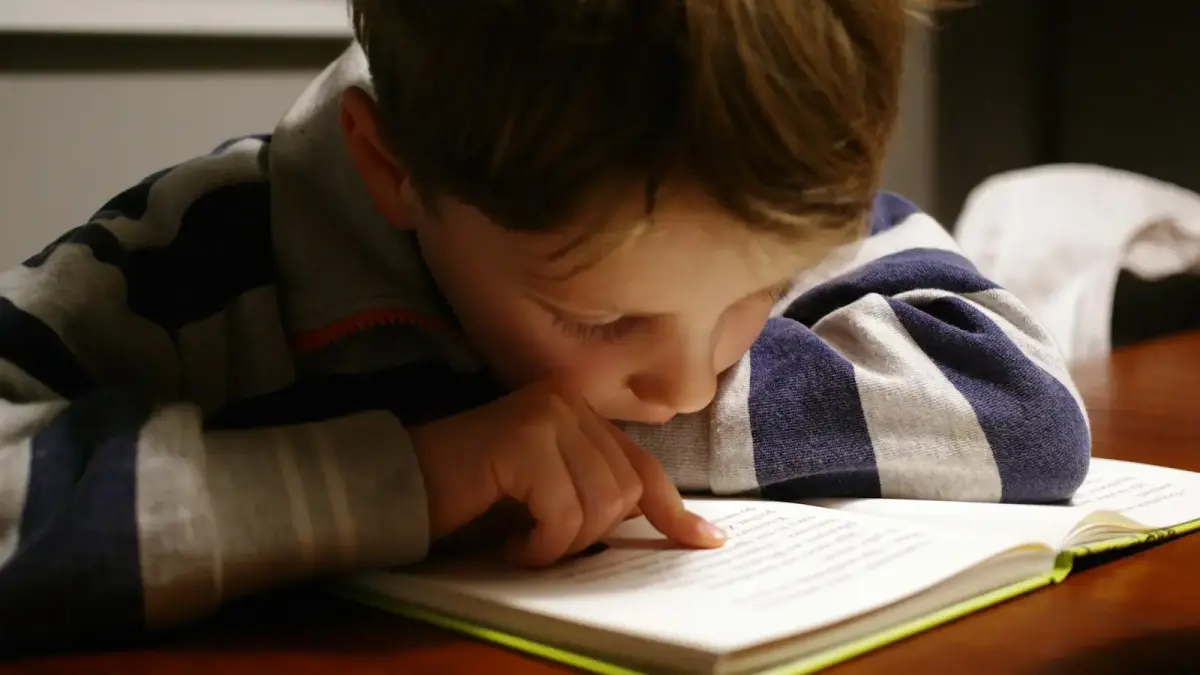
I was nine years old, sitting under the dining room table at my grandmother’s house on Thanksgiving, reading a paperback copy of Bridge to Terabithia while the adults above me argued about something I can’t remember now. I remember the carpet under my knees. I remember the way the tablecloth hung down like a curtain, blocking out the room. And I remember turning pages faster than I normally would - not because I was excited about the story, but because each page was a door and I needed to keep walking through them.
Nobody came looking for me. The “bookworm” kid was always somewhere with a book. That was just who I was.
Except it wasn’t who I was. It was what I had learned to do.
If you were that child - the one who brought a book to restaurants, who read in the back seat on every car ride, who tucked a flashlight under the covers long after you were supposed to be asleep - then you already know what I’m about to say. That book was never just a hobby. It was the most reliable exit you had from a room you couldn’t physically leave.
And if you’re now an adult who always has something to read, hold, or scroll through, you haven’t outgrown the habit. Your nervous system simply upgraded the technology.
Here are nine ways that childhood pattern followed you into adulthood - and why every single one of them makes more sense than you think.
1. You cannot fall asleep without reading something first
The ritual is non-negotiable. Whether it’s a novel, an article on your phone, or the same three paragraphs of something you’ve already read twice - you need the transition. Going from awake to asleep without passing through someone else’s words feels like jumping off a ledge without looking down first.
This isn’t insomnia. This is what happens when a child learned that the space between the day ending and sleep arriving was the most unpredictable hour in the house. Voices carried down hallways. Doors opened and closed. The book was the thing that held your attention hostage in a safe direction while the house settled into something quiet enough to trust.
A 2019 study in Social Science & Medicine found that reading before sleep significantly reduced physiological stress markers compared to screen-based media or no activity at all. Your body figured this out decades before the researchers did.
2. You feel genuine anxiety when you’re caught without something to read
The doctor’s office. A long flight. A waiting room where you left your phone in the car. The feeling that rises isn’t boredom - it’s something closer to panic.
Because boredom implies you have nothing to do. This is different. This is your nervous system recognizing that you are in a room, with no control over what happens next, and no portal to step through if it gets bad.
You’ve probably developed workarounds for this. A book in every bag. An offline reading app on your phone. The habit of scanning a room when you walk in, automatically cataloging every magazine, pamphlet, or posted sign - just in case. You don’t know you’re doing it, but your body does.
3. You instinctively reach for something to read when the emotional temperature in a room shifts
This is the one people rarely talk about. A couple starts arguing at the next table in a restaurant, and your hand goes to your phone before your conscious mind registers what happened. Your partner raises their voice slightly, and you suddenly remember a very important article you were halfway through.
It’s not avoidance in the way people usually mean that word. It’s a survival strategy you perfected at eight years old, sitting on the living room floor with a book while your parents had the same argument they had every Thursday night. The book didn’t make the argument stop. But it gave you a place to put your eyes, your attention, your entire self - somewhere that wasn’t the war zone unfolding three feet away.
4. You always have multiple books going at once
One on the nightstand. One in your bag. One on your phone. Maybe a fourth that you started three months ago and left face-down on the kitchen counter, still open to page 147.
People who grew up in stable homes tend to finish one book before starting another. But a child who used reading as regulation learned something different - you needed options. Because some nights you needed fantasy and escape, and other nights you needed something real and grounding, and other nights you needed something so dense and intellectual that it occupied every available corner of your brain, leaving no room for whatever was happening outside your bedroom door.
That pattern doesn’t go away. It just looks like a very enthusiastic reading habit instead of what it actually is - a carefully maintained emotional pharmacy.
5. You use reading or scrolling as a buffer in social situations
You show up to the party early and read on your phone until other people arrive. You take your book to the coffee shop even when you’re meeting a friend, just in case they’re late. You scroll through articles at family gatherings - not because you’re antisocial, but because the book was always your chaperone.
A 2021 study in Frontiers in Psychology found that children who developed solitary coping strategies in response to household unpredictability often maintained those strategies into adulthood, even in environments that were objectively safe. Your nervous system doesn’t update its threat assessment just because you moved out of that house twenty years ago.
The scroll is the modern version of the book held up like a shield at the dinner table. Different screen. Same function.
6. You have a physical need to hold something - a book, a phone, a Kindle
This one surprises people when they notice it in themselves. It’s not about content. It’s about the object.
Watch yourself the next time you sit down in an unfamiliar room. Your hands will find something. A phone. A coffee cup. A menu. The corner of a cushion. And if they can’t find anything, you’ll feel a low-grade restlessness that you can’t quite name.
A child who always carried a book didn’t just carry a story. They carried a physical anchor - something that belonged to them in rooms that didn’t feel like theirs. The weight of it in their hands was a form of grounding before anyone had taught them that word. Your hands remember what your mind has mostly forgotten.
7. You have unusually deep empathy and emotional intelligence
Here’s the part that isn’t a wound. Here’s the part that’s a gift.
A child who spent thousands of hours living inside other people’s experiences - feeling what characters felt, understanding motivations that were never explained to them, sitting with grief and joy and terror and hope that belonged to someone who didn’t even exist - that child grew into an adult who can read a room the way most people read a headline. You catch the shift in someone’s tone before they know it shifted. You feel the thing someone isn’t saying.
Research by psychologist Raymond Mar, published in the Journal of Research in Personality, found that people who read literary fiction consistently demonstrated higher scores in empathy and theory of mind. You didn’t just escape into books. You were training, every single night, to understand what it feels like to be someone other than yourself. That training made you extraordinary at loving people - even when it exhausts you.
8. You struggle to be fully present without an available exit
This is the harder one to sit with. Because presence - real, unguarded, nothing-in-your-hands presence - requires trusting that the room you’re in won’t turn on you. And that trust was broken early.
You might be wonderful at conversation, deeply engaged, laughing and listening and making the people around you feel seen. But somewhere in the background, there’s a part of your brain that knows exactly where your phone is, how many pages are left in the book on the nightstand, and what you’ll read next if this moment becomes too much.
That’s not a character flaw. That’s the architecture of a mind that learned, very young, that being fully absorbed in the present moment without a backup plan was dangerous. You’re not distracted. You’re prepared.
9. Bookstores and libraries still feel like the safest places on earth
You walk into a bookstore and something in your chest unclenches. The smell. The quiet. The rows and rows of exits, each one bound in paper and waiting to be opened.
Libraries were the first place many of us went where nobody yelled. Where the rules were gentle and the silence was chosen, not tense. Where you could sit for hours and no one asked why you were so quiet, because everyone there was quiet, and it was the first time your quietness didn’t feel like a problem that needed solving.
If you still feel that particular kind of peace in a library - if you walk in and your shoulders drop two inches and your breathing slows - that’s not nostalgia. That’s your body remembering the first place it ever felt completely safe.
I used to be embarrassed about it. The constant reading. The inability to sit still without something in my hands. The way I would disappear into a book in the middle of a family barbecue and emerge blinking two hours later, surprised that the world was still there.
I thought it meant I was broken. Too sensitive. Too absent. Too in my head.
But I understand it differently now. That child who carried a book everywhere wasn’t avoiding life. She was surviving it - creatively, quietly, with the only tool anyone had ever given her that actually worked.
And if you were that child, I want you to hear this: the book was never the problem. The book was the most brilliant, compassionate, resourceful solution a small person could find for a very big situation.
You carried a whole world in your backpack because the one you were standing in didn’t feel safe enough to stay in with both feet. That wasn’t weakness. That was the kind of intelligence that no test ever measures.
You’re still carrying worlds with you. You always will. And that’s not something to fix. That’s something to finally, gently, be proud of.