Children who were always the one to knock on the bedroom door after a family argument - carrying a glass of water or cracking a small joke to test whether the storm had passed - often become adults who cannot tolerate unresolved tension for even a single hour, because their childhood taught them that the space between a fight and its repair was the most dangerous window in the house, and the urgency they carry at forty-five is a child still racing to close a gap before it becomes permanent
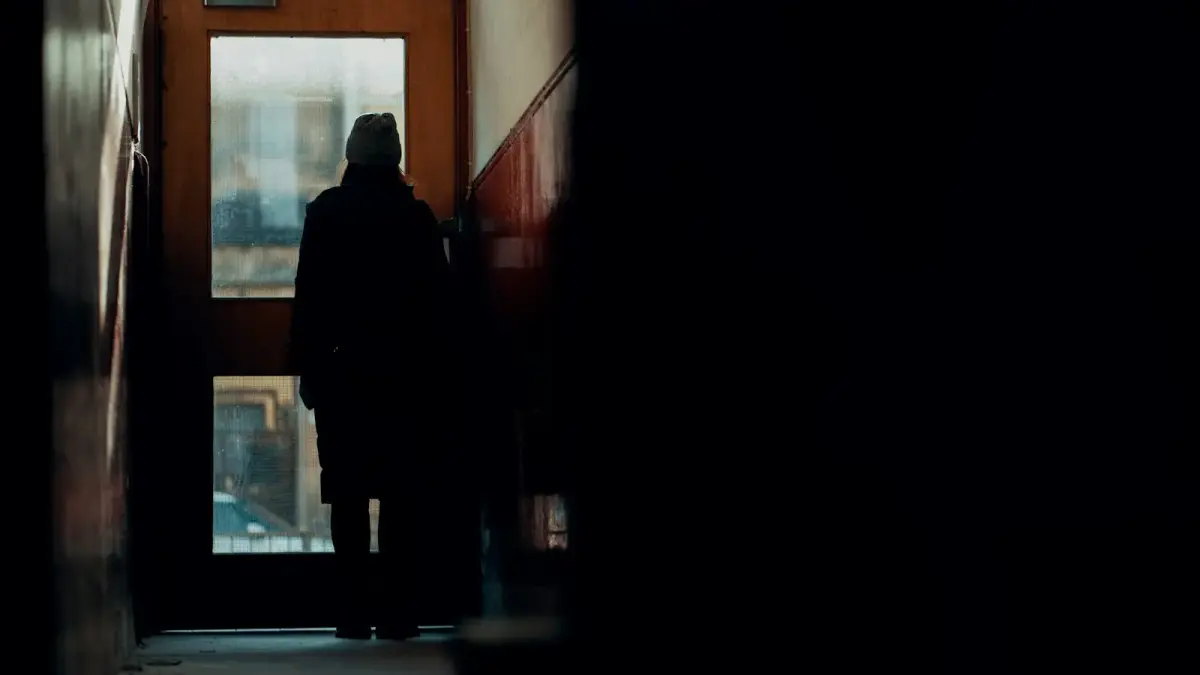
The Glass of Water You Carried at Eight Years Old
I was nine the first time I realized I had a system. My parents had argued over something I can no longer remember - maybe the bills, maybe a comment someone made at dinner - and the house went silent in that particular way where the air itself seems to hold its breath. I sat on my bed for maybe ten minutes, which at that age felt like an hour. Then I filled a glass of water from the bathroom tap, walked to their bedroom door, and knocked.
“Thought you might be thirsty,” I said.
I didn’t care about the water. The water was a test. If my mother took it and her voice was soft, the storm had passed. If she didn’t open the door, or if she opened it with that flat expression that meant she was somewhere else entirely, then I knew: it wasn’t over. And if it wasn’t over, anything could happen.
That glass of water was the most sophisticated emotional instrument I had. I didn’t have language for repair. I didn’t know how to say, “Are we okay?” I just knew that the silence after a fight was where things broke, and if I could interrupt the silence with something small and warm, maybe I could keep everything together.
If you recognize this - the knocking, the small joke, the excuse to check in - then you already know what I’m about to describe. And you probably still do some version of it at forty, fifty, sixty years old.
The Dangerous Window
Every family has conflict. That part is universal. What’s not universal is what happens in the space between the fight and its resolution.
In some homes, that gap is short and unremarkable. People raise their voices, then someone apologizes, or they shift to a different topic, or they hug awkwardly in the kitchen twenty minutes later. The gap closes itself. Children in these homes learn that conflict is temporary and survivable.
But in other homes, the gap is where everything lives. The fight ends and then there’s silence - not peaceful silence, but loaded silence. Hours of it. Sometimes days. Sometimes the gap never closes at all, and the family just moves on without ever acknowledging what happened, leaving the wound to calcify underneath daily routines.
A 2015 study published in the Journal of Family Psychology found that children’s stress responses are shaped less by the conflict itself and more by whether they witness resolution. Kids who saw their parents argue and then repair showed no long-term elevation in cortisol. Kids who saw the argument but never the resolution showed chronic activation of their stress response systems.
The fight wasn’t the trauma. The gap was.
And the children who learned this earliest - the ones who felt that dangerous window in their bones - became the ones who rushed to close it.
The Rituals of a Child Who Cannot Wait
You didn’t have couples therapy language at seven. You didn’t know about rupture and repair. But you invented your own repair rituals with whatever tools a child has.
The glass of water. The knock on the door with a homework question you already knew the answer to. The joke at dinner designed to make someone - anyone - laugh, because laughter meant the freeze was thawing. Walking into the living room and sitting near a parent without saying anything, just being a warm body in the room, hoping your presence alone might soften whatever had gone rigid.
Some of you made yourself useful. You cleaned the kitchen. You set the table without being asked. You brought a blanket to the couch where your father was sitting with his jaw clenched. These weren’t chores. They were offerings. Tiny acts of service designed to say: I’m here, please come back, please let this be over.
What’s remarkable is how strategic these rituals were. You learned to read the room with extraordinary precision. You knew which parent to approach first. You knew the difference between angry silence and sad silence. You knew that sometimes humor worked and sometimes it made things worse. You developed a whole emotional vocabulary before you could name a single feeling.
Gabor Mate has written about how children in tense households develop what he calls a hypervigilant attunement - a nervous system wired to detect micro-shifts in the emotional weather around them. It’s not anxiety in the clinical sense. It’s a finely calibrated survival instrument. And it works. The child who can read the room often does prevent things from escalating. They become remarkably good at emotional triage.
The problem is that the instrument never turns off.
What Forty-Five Looks Like When You Were Eight
Fast forward three decades. You’re in a relationship. You have a disagreement with your partner - nothing catastrophic, just the ordinary friction of two people sharing a life. Maybe it’s about how they spoke to you in front of friends. Maybe it’s about the division of household labor. Maybe it’s about nothing at all, really, just two people who are tired and rubbing against each other’s edges.
Your partner says they need space. They want to take a walk, or sleep on it, or just not talk about it right now.
And something in you ignites.
Not anger. Something worse. A full-body alarm that says: the gap is opening. The silence is starting. If you don’t close this now, it will harden. It will become permanent. You will lose this person - not in a dramatic way, but in the slow, imperceptible way your parents lost each other, through accumulated silences that no one ever broke.
So you follow them into the other room. You send the text twenty minutes after they asked for space. You write the long email at midnight. You can’t sleep, can’t eat, can’t focus on anything else until the tension has a name and a resolution. People in your life have called you intense, clingy, controlling, unable to let things go.
But you know - somewhere underneath the urgency - that this isn’t about control. This is about a child standing outside a bedroom door with a glass of water, terrified that if they wait too long, the door will never open again.
The Neuroscience of Urgency
A 2019 study in Frontiers in Psychology examined adults who reported high levels of childhood parentification - children who took on caretaking roles in their family of origin. Researchers found that these individuals showed heightened amygdala activation when exposed to interpersonal conflict, even conflict that didn’t involve them. Their brains responded to unresolved tension between other people as though it were a personal threat.
This isn’t a character flaw. It’s a neurological pattern laid down in childhood and reinforced thousands of times before you were old enough to vote.
Your nervous system learned that unresolved conflict precedes abandonment. Not always literal abandonment - sometimes it was emotional withdrawal, a parent who checked out for days, a household that went cold and stayed cold. But the lesson was etched deep: the gap between the fight and the repair is when you lose people. Close the gap. Close it now. Close it at any cost.
This is why you can’t “just relax” when someone tells you to give it time. Your body genuinely doesn’t believe that time heals this particular wound. Your body believes that time is the wound.
The Cost of Being the One Who Always Knocks
There’s a price for being the person who cannot tolerate the gap. And the price is usually paid in exhaustion, resentment, and a slow erosion of your own boundaries.
You become the one who always apologizes first - not because you were wrong, but because the discomfort of the silence is worse than the discomfort of swallowing your own feelings. You learn to prioritize other people’s emotional states over your own, because your own feelings were never the point. The point was always to restore equilibrium. Your needs could wait. The relationship couldn’t.
Over time, this creates a strange paradox. You’re excellent at reading and responding to other people’s emotions, but you may have very little practice sitting with your own. You know what everyone else in the room is feeling. You have almost no idea what you’re feeling - because the moment a feeling arises, your first instinct is to figure out how it affects the people around you and what you need to do about it.
Daniel Goleman’s work on emotional intelligence describes this as a lopsided empathy - highly developed awareness of others, underdeveloped awareness of self. It’s not a lack of emotional intelligence. It’s emotional intelligence that was built for one purpose: keeping other people okay.
Learning to Stand Outside the Door Without Knocking
Here is the part where I’m supposed to give you five steps for healing, but I’m not going to do that. What I want to say instead is something simpler and, I think, more honest.
The urgency you carry is not a dysfunction. It was a solution. It was the best solution a small person could invent in a situation where no one was offering better options. You kept the peace because no one else was keeping the peace. You closed the gap because no one else was closing the gap. You were, in every meaningful sense, doing the emotional work of an adult when you were still too young to reach the top shelf.
The work now - and it is work, slow and uncomfortable - is learning to stand outside the door without knocking. To let the gap exist for an hour, a day, and discover that it doesn’t always harden into something permanent. That some gaps close on their own. That the people in your life now are not the people who raised you, and their silence may genuinely mean “I need a minute,” not “I’m leaving.”
A 2021 study in the Journal of Personality and Social Psychology found that adults with secure attachment relationships showed a gradual decrease in conflict-related anxiety over time - not because they stopped caring, but because repeated experiences of successful repair without their intervention slowly rewired their expectations. The gap became less dangerous because they let it exist and nothing catastrophic happened.
You can learn this. Not by forcing yourself to be calm, but by letting yourself be uncomfortable and noticing - really noticing - that the silence didn’t destroy anything.
The Water Was Always for You
That glass of water you carried down the hallway? The joke you cracked in the kitchen doorway? The blanket you draped over a parent who hadn’t asked for one?
Those were acts of love. Real, serious, courageous love from a person who hadn’t yet learned that love shouldn’t require that much bravery from someone that small.
You’re not controlling. You’re not clingy. You’re not “too much.” You are someone who learned very early that love requires maintenance, that silence is a language, and that sometimes the bravest thing a person can do is knock on a door when they’re terrified of what they’ll find on the other side.
The only thing that’s changed is that you no longer have to be the only one who knocks. You can wait. You can let someone else come to you. You can sit with the discomfort and discover that you survive it - that the gap doesn’t swallow you the way it once threatened to.
And if no one has said this to you before: that child who walked down the hallway with a glass of water deserved to have someone bring water to them. That child deserved to have their storm met with the same tenderness they offered everyone else.
You still deserve that. You always did.