Children who always checked the backseat of the car before getting in - who opened closet doors all the way before turning off the light, who pulled back the shower curtain every single time even in their own bathroom - often become adults who scan every parking garage, walk the perimeter of every hotel room before setting down their bag, and cannot settle into any new space until their eyes have confirmed that every corner is accounted for, not because they expect danger but because a child who learned that surprise was never neutral in her house trained her body to clear every room before her mind was allowed to rest in it
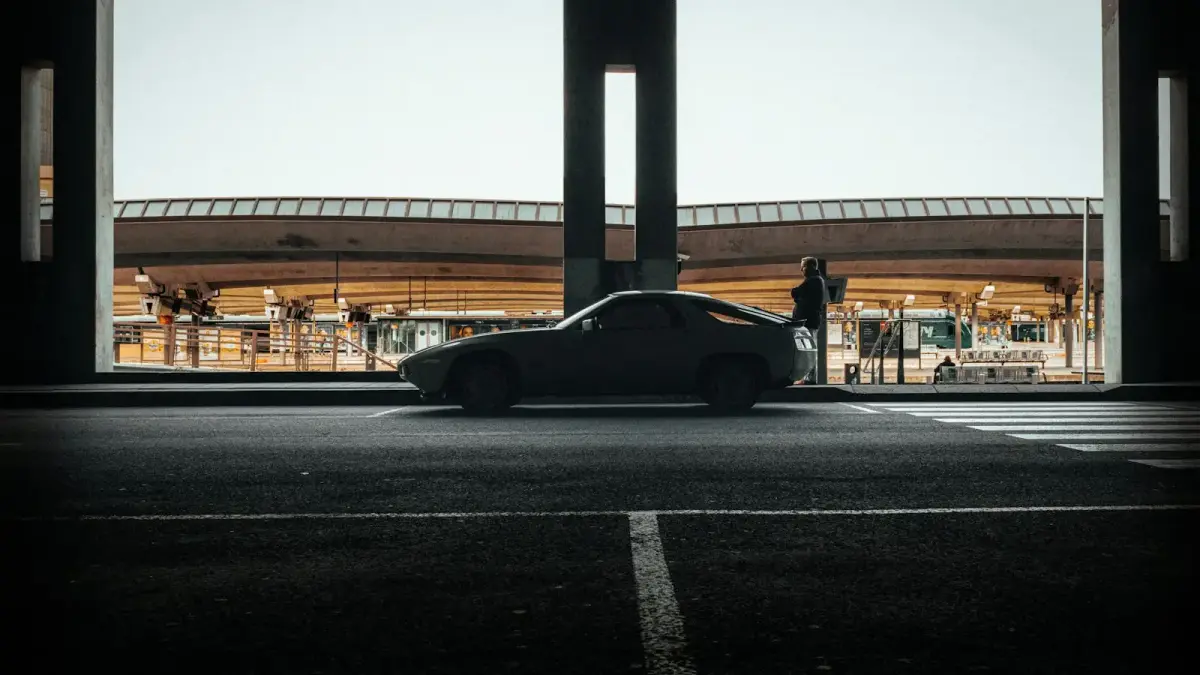
I still check the backseat of my car before I get in.
Not a quick glance. A full look. I open the door, lean forward slightly, and let my eyes sweep the space behind the driver’s seat. It takes maybe two seconds. I have never once found anything there. I have never stopped doing it.
When I was a kid, I thought this was about monsters. About some creature from a movie I half-watched through my fingers at a sleepover. But the truth is simpler and harder to explain. I grew up in a house where the atmosphere could change without warning. Where a quiet room could become a loud one between the time I walked down the hallway and reached the kitchen. My body learned, long before I had the words for it, that you never walk into a space you haven’t cleared first.
If you recognize yourself in any of this - the curtain check, the closet scan, the way you always know where the exits are - I want you to know something. You are not paranoid. You are someone whose nervous system learned its lessons early and never forgot them.
Here are the behaviors that connect the child who checked every corner to the adult who still does.
1. You checked the backseat before getting in the car - and now you scan parking garages like you are mapping them
As a child, you never just opened the car door and climbed in. You looked first. Maybe you crouched down to see under the car, too. The backseat had to be confirmed empty before your body would agree to sit down.
Now, as an adult, you notice things in parking garages that other people walk right past. The van with tinted windows parked too close to your driver’s side. The stairwell that echoes differently than it did last time. The camera angle in the corner.
A 2015 study published in Development and Psychopathology found that children who grew up in unpredictable home environments showed heightened attention to environmental cues - not because they were anxious by nature, but because their brains adapted to detect subtle changes in their surroundings as a survival strategy. You are not surveilling a parking garage. Your body is doing what it was trained to do in a kitchen that could go from calm to chaos in three seconds.
2. You opened closet doors all the way before turning off the light - and now you walk the perimeter of every hotel room before you unpack
You remember this one. The closet door couldn’t just be closed. It had to be opened fully, pushed flat against the wall, so there was no gap. No sliver of darkness between the door and the frame where something could hide. Only then could the bedroom light go off.
The adult version is quieter but identical in structure. You check into a hotel and the first thing you do is walk the room. Open the bathroom door. Pull back the shower curtain. Look behind the desk. Peer at the balcony if there is one. Your partner might already be bouncing on the bed or checking the room service menu. You cannot rest until the space has been accounted for.
This is not about danger. This is about a body that learned it could only relax in spaces it had verified. The closet door ritual was never about what was inside the closet. It was about gaining certainty in a house where certainty was rare.
3. You pulled back the shower curtain every time - and now you check behind doors in your own home
Even in your own bathroom. Even when you were the only person home. Even when you had just walked in thirty seconds earlier. The shower curtain had to be pulled back.
You still do a version of this. Maybe you check behind the front door after closing it. Maybe you open the laundry room door fully instead of leaving it cracked. Maybe you walk into your bedroom and glance at the window, confirming it is latched, even though you latched it this morning.
A 2019 study in Clinical Psychological Science found that individuals with histories of childhood unpredictability showed persistent environmental monitoring behaviors well into adulthood - even in objectively safe settings. The researchers called it “threat detection in the absence of threat.” Your body is not looking for an intruder. It is completing a checklist it wrote when you were seven years old.
4. You always knew where the exits were - and now you sit facing the door in every restaurant
This one surprises people when they notice it. You walk into a restaurant and something in you registers the layout before you even think about the menu. The kitchen door. The front entrance. The hallway to the restrooms that probably leads to a back exit.
You prefer the seat facing the door. Not aggressively. Not like some action movie character. You just feel more settled there. If someone else takes that seat first, you manage. But something in your chest stays slightly tighter for the whole meal.
As a child, you always knew the fastest route out of any room where voices were rising. You knew which doors stuck and which ones opened quietly. You knew whether the back door was locked or unlocked on any given night. That knowledge wasn’t paranoia. It was competence. You were a child who got very, very good at reading rooms.
5. You tested the silence before entering a room - and now you pause at thresholds without knowing why
There was a thing you did before walking into certain rooms. You paused. Listened. Tried to read the quality of the silence - whether it was peaceful silence or the kind of silence that meant someone was about to start something. You calibrated your entrance based on what you heard.
Now you still pause at doorways. Your hand on the frame. A beat of stillness before you step through. People probably don’t notice. You barely notice. But your body is still running that old diagnostic - reading the air pressure of a room before committing to being inside it.
Dr. Stephen Porges’ polyvagal theory describes this as neuroception - the way the autonomic nervous system evaluates safety below the level of conscious awareness. Your body is not being dramatic. It is being exactly as careful as it learned to be.
6. You memorized the sounds of your house - and now unfamiliar noises in safe places make your whole body go still
You knew what every sound in that house meant. The specific creak of the third stair. The difference between the front door opening gently and the front door opening with force. The particular pitch of a cabinet being closed versus being slammed. Your ears mapped that house the way a bat maps a cave.
As an adult, you sleep lightly in new places. A hotel’s ice machine down the hall. A neighbor’s door closing in an apartment building. A sound you can’t immediately identify in a friend’s guest room. Your body goes completely still - not frozen in fear, but frozen in assessment. You are listening with your whole nervous system, waiting to categorize the sound before you allow yourself to exhale.
This is the legacy of acoustic hypervigilance. Your childhood ears learned to decode intent from sound. Your adult ears never stopped listening for it.
7. You counted the cars in the driveway before going inside - and now you read a room’s emotional weather before you speak
Before you walked into your house after school, you checked the driveway. You counted the cars. You noted which ones were there and which were missing. This told you what kind of house you were about to walk into - which version of your parent would be waiting, or whether you would have the place to yourself for a blessed hour.
The adult equivalent is social. You walk into a meeting, a party, a family gathering, and before you say a single word, you read the room. Who looks tense. Who has been crying. Who is performing calm. Whether the energy is genuinely relaxed or if something happened ten minutes before you arrived.
People sometimes tell you that you are perceptive. Emotionally intelligent. Good at reading people. And you are. But the origin of that skill is not some natural gift. It is a child counting cars in a driveway, trying to predict what was on the other side of the front door.
8. You kept your bedroom door at a specific angle - and now you need to control your environment before you can rest
Not fully closed, because then you couldn’t hear what was coming. Not fully open, because then you were exposed. You found the exact angle - maybe four inches, maybe six - that gave you both information and protection. If someone moved that door, you noticed immediately.
Now you have your rituals before bed. The thermostat set to the right number. The doors locked in a specific order. The phone placed screen-down on the nightstand. The blinds adjusted to let in exactly the right amount of streetlight. These are not preferences. They are the conditions your nervous system requires before it will agree to let you sleep.
A 2017 study in the Journal of Traumatic Stress found that adults who experienced childhood environmental unpredictability were significantly more likely to engage in pre-sleep environmental checking and arrangement behaviors. The researchers noted that these rituals functioned as “safety signals” - external confirmations that the body used to down-regulate its threat response system. You are not controlling. You are completing the protocol that lets your guard come down.
9. You never fully relaxed in shared spaces - and now settling into a new place takes longer than it should
This is the one that ties them all together. As a child, you could never quite let go in shared spaces. The living room where anyone could walk in. The kitchen where the mood could turn. Even family vacations, which were supposed to be fun, kept your system running at a low hum of alertness because unfamiliar spaces meant unfamiliar variables.
Now, when you move into a new apartment, start a new job, or visit someone’s home for the first time, there is a lag between arriving and settling. Other people seem to land and immediately belong. You land and spend the first hour - or the first week - quietly mapping. Where are the walls. Where are the windows. Where are the exits. Where will I go if I need a moment alone. What does the silence here sound like.
You are not slow to warm up. You are thorough. Your body needs to know the geometry of a space before it will let you rest inside it.
If you read this list and felt something loosen in your chest, I want to sit with that for a moment.
These behaviors are not flaws. They are not signs that something is wrong with you. They are evidence that a younger version of you figured out how to navigate a world that did not feel safe - and did it so well that your body still runs those programs decades later.
You do not need to stop checking the backseat. You do not need to force yourself to sit with your back to the door. You do not need to feel embarrassed about walking the perimeter of a hotel room while your partner is already ordering room service.
What you might benefit from is recognizing what those habits actually are. Not quirks. Not paranoia. Not leftover fear from a scary movie. They are the survival architecture of a child who got very good at making unsafe spaces feel manageable. And that child deserves your respect, not your correction.
The rooms are safe now. Your body is still making sure. And honestly, there is something kind of beautiful about a nervous system that never stopped trying to protect you.