Children who collected small things they found on the ground - smooth stones, buttons, acorn caps, broken glass worn soft by weather - and carried them in jacket pockets often become adults who keep everything, because a child who discovered the only beautiful things she could rely on were the ones she physically picked up and put in her pocket never learned to trust that beauty would still be there if she left it behind
I still have a small wooden box on my bookshelf that I cannot throw away. Inside it there is a bottle cap from a root beer I drank on a dock with my grandfather when I was nine, a smooth grey pebble from a lake I visited once and never returned to, and a brass button I found in the parking lot of my elementary school the day my best friend moved away.
Nobody else would look at that box and see anything worth saving. But I can pick up any one of those objects and feel the entire afternoon come flooding back - the temperature of the air, the exact quality of the light, the way my chest felt tight with something I didn’t yet have a word for.
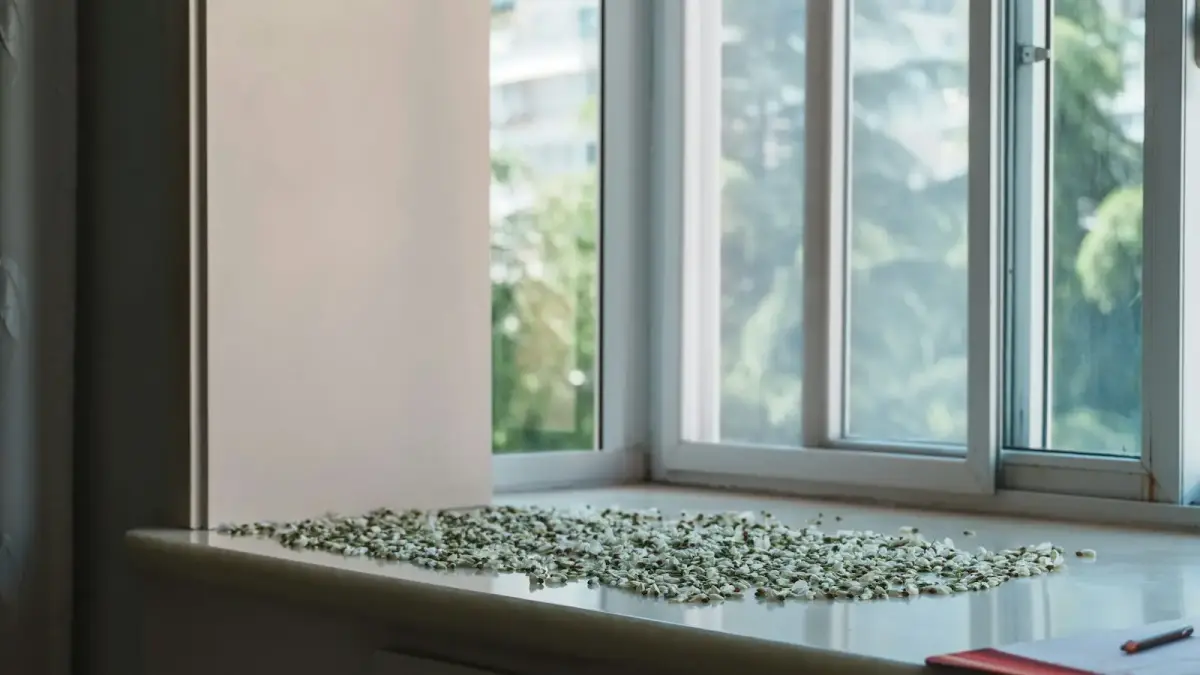
If you were a child who did this - who picked things up off the ground and kept them, who lined stones on your windowsill and checked that they were still there before bed, who filled your jacket pockets with proof that something good had happened today - then I already know something about your childhood. And I know something about who you became.
You became someone who keeps things. Not because you’re messy or sentimental to a fault. Because you learned, very early, that the world doesn’t always keep its promises. So you started keeping your own evidence.
Why some children collect and others don’t
Not every child who picks up a pretty rock is doing the same thing. Some children collect for fun, for play, for the simple pleasure of categorization.
But some children collect because they need to. The difference has everything to do with how reliable the world around them felt.
The British psychoanalyst Donald Winnicott spent decades studying what he called “transitional objects” - the blankets, stuffed animals, and yes, small collected items that children use to bridge the gap between themselves and an unpredictable world. His research found that these objects become psychologically essential when the child’s environment doesn’t provide consistent comfort. The object becomes the comfort instead.
A 2019 study published in the Journal of Research in Personality found that adults with insecure attachment styles were significantly more likely to form strong emotional bonds with personal possessions and to experience distress at the thought of losing them. The roots, the researchers noted, almost always traced back to childhood.
Here are eight ways that childhood collecting quietly shaped the adult you became.
1. You sorted stones by color and size on your bedroom floor, and now you organize memories the same way
The child who arranged her collection wasn’t just playing. She was creating order in a world that felt disorderly.
Maybe the house was loud and unpredictable. Maybe the moods of the adults around you shifted without warning. But those stones - they stayed where you put them. They didn’t change overnight. They didn’t suddenly become something else.
As an adult, you probably organize your memories with the same careful attention. You remember the date things happened. You remember what someone was wearing when they said something that mattered. You keep mental categories of good days, sorted and filed, because you learned early that if you didn’t actively hold onto the good moments, they would dissolve as though they had never happened at all.
2. You carried treasures in your jacket pocket and touched them throughout the day, and now you keep your phone full of screenshots and saved messages
That smooth stone in your pocket was a grounding object. You would reach in and close your fingers around it during a hard class, a tense dinner, a lonely recess. It was proof. Evidence that somewhere, at some point, something good had happened to you.
Now your phone serves the same purpose. You screenshot kind text messages. You save voicemails you’ve already listened to dozens of times. You keep a folder of photos not because you’ll look at them often, but because deleting them would feel like erasing the moment itself.
Gabor Mate has written about how children who grow up in emotionally inconsistent environments develop what he calls a heightened need for “proof of connection.” The saved messages aren’t clutter. They’re anchors.
3. You kept broken things because they were still beautiful, and now you hold onto relationships long past their expiration
Not everything in your childhood collection was whole. You kept cracked shells. Pieces of colored glass with edges worn smooth by weather. Buttons missing their thread.
You saw beauty in broken things because, on some level, you understood brokenness. You knew what it felt like to be cracked and still have something worthwhile inside.
As an adult, this translates into a tendency to stay. In friendships that have gone cold. In relationships where you’re doing all the giving. You keep holding on because you still see the original beauty, even when everyone else has stopped looking. It’s a kind of loyalty that comes from the deepest part of you - and it’s both your greatest strength and the thing that costs you the most.
4. You hid your collection where no one could find it, and now you keep your emotional life intensely private
The box under the bed. The pouch in the back of the closet. The special drawer nobody else was allowed to open.
You didn’t hide your collection because you were ashamed of it. You hid it because you had learned that the things you loved were vulnerable. Maybe a sibling broke something. Maybe a parent threw things away during a cleaning spree. Maybe you watched something precious get dismissed as junk.
A 2021 study in Frontiers in Psychology found that children who experienced “emotional invalidation” - having their feelings or interests dismissed by caregivers - were significantly more likely to develop secretive emotional habits as adults. Not dishonesty. Privacy. A deep, practiced instinct to protect the things that matter most by keeping them invisible.
5. You counted your collection before bed each night, and now you mentally replay conversations to make sure they really happened
The counting was a ritual. You would take everything out, touch each piece, confirm it was still there, and put it back. Only then could you sleep.
This wasn’t obsessive. It was adaptive. In a world where things disappeared - where a parent’s good mood could vanish between breakfast and dinner, where a promise made on Monday was forgotten by Wednesday - you needed to verify. You needed to check.
Now you do the same thing with people. After a good conversation, you replay it. After someone says something kind, you turn it over in your mind, examining it from every angle. Did they mean it? Will they still mean it tomorrow? You’re not being insecure. You’re performing the same ritual you’ve performed since you were six years old - checking that the good things are still there.
6. You assigned stories to objects nobody else noticed, and now you attach meaning to things other people consider ordinary
That acorn cap wasn’t just an acorn cap. It was the one you found the morning your dad was in a good mood and let you walk slowly through the park instead of rushing. That feather wasn’t just a feather. It was from the afternoon you felt, for twenty minutes, completely safe.
Adam Grant has written about how certain people possess what he calls “meaning-making capacity” - the ability to construct emotional significance from ordinary experiences. What he frames as a skill, though, often started as a survival strategy. When the big things in your childhood couldn’t be counted on - stability, consistency, unconditional love - you learned to find meaning in the small things. Because the small things were yours.
7. You gave away your best piece to someone you loved, and now gift-giving is the truest language you speak
At some point, you took the best stone in your collection - the smoothest one, the one with the perfect stripe of white through the middle - and you gave it to someone. A friend. A teacher. Someone who had been kind to you.
That gift meant more than anything you could have bought. It was a piece of your private world, handed over voluntarily.
As an adult, you are probably someone who gives deeply considered gifts. Not expensive ones. Meaningful ones. You remember what people said they liked six months ago. You find the exact thing that connects to a conversation no one else would recall. A 2018 study in the Journal of Personality and Social Psychology found that the most emotionally significant gifts are those that demonstrate “attentive listening over time” - and you have been practicing that particular skill since before you could read.
8. You kept everything because nothing else was being kept for you, and now you are the person who remembers everything for everyone
This is the one that will land hardest, so take a breath.
You kept those stones and buttons and broken bits of glass because no one was keeping anything for you. No one was writing down your milestones in a baby book. No one was saving your drawings on the refrigerator. No one was holding onto your childhood on your behalf.
So you did it yourself. You became your own archivist. Your own witness.
And now you are the friend who remembers every birthday. The partner who recalls the exact date of the first time you said something that mattered. The parent who saves every scribbled drawing and every lost tooth. You keep everything for everyone because you know, more deeply than most people will ever understand, what it feels like when no one keeps anything for you.
You are not holding on too tightly
If you recognized yourself in these words, I want you to hear something that perhaps no one has said to you clearly enough.
You are not a hoarder. You are not sentimental to a fault. You are not someone who needs to “learn to let go.”
You are someone who discovered, very young, that beauty is not permanent. That good moments end. That people leave and promises dissolve and the only reliable proof that something wonderful happened is the thing you physically picked up and put in your pocket.
That instinct kept you whole. It gave you something to hold onto when there was nothing else. And the fact that you still do it - that you still save the ticket stub, the wrapper, the pebble from a beach you visited a decade ago - isn’t a flaw. It’s a testament to how hard you worked, as a very small person, to build a world that felt trustworthy.
Your collection was never about the objects. It was about evidence. Evidence that beauty existed. Evidence that you were there to witness it. Evidence that some things, if you held them tightly enough, could not be taken away.
You were just a child, doing the best you could with what you had. And what you had was a pocket, and the quiet courage to fill it.