Children who grew up in houses where the television was always on - not because anyone was watching but because silence meant someone was angry - often become adults who cannot sit in a quiet room without reaching for something to fill it, because a child who learned that noise meant safety never found the instruction manual for trusting an empty room
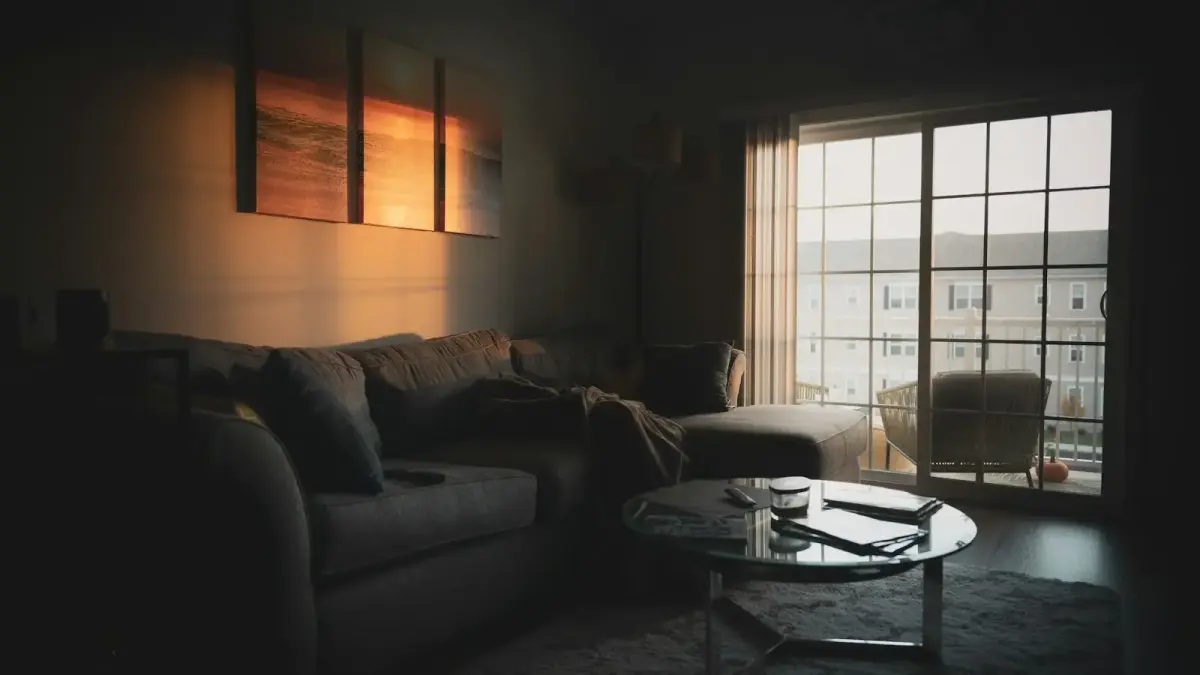
I still remember the exact sound of our living room. Not the conversations. Not the laughter. The television.
It was always on. Morning news bleeding into afternoon talk shows bleeding into the evening sitcoms nobody was really following. The volume sat at a specific number - eighteen - and I knew that number the way other children knew their phone number or their address. Eighteen meant the house was breathing normally. Eighteen meant nobody had slammed a door in the last hour. Eighteen meant tonight would probably be okay.
I didn’t understand any of this at the time. I just knew that when the TV went off - that sudden, thick silence that filled the room like something had been vacuumed out of it - my stomach dropped. Because the television going off was never neutral. It was never because the show ended or because someone wanted to read. It went off because someone was angry enough to reach for the remote and press the button like a statement. Like a warning shot.
If you grew up in a house like that, you already know exactly what I’m describing. And you probably have the TV on right now.
The soundtrack of safety
Here’s what most people don’t realize about homes where the television ran constantly: nobody was watching it.
It wasn’t entertainment. It was architecture. The noise was load-bearing. It held the emotional structure of the house together the same way walls held up the ceiling, and removing it felt just as dangerous.
In homes with unspoken tension - where anger didn’t announce itself with shouting but with withdrawal, with silence, with a specific quality of quiet that children learn to read before they can read actual words - background noise becomes the household’s emotional weather report. The TV being on is the sun coming out. The TV going off is the barometric pressure dropping before a storm.
A 2019 study published in the Journal of Family Psychology found that children in high-conflict homes develop what researchers call “emotional radar” - an enhanced ability to detect subtle shifts in their caregivers’ moods. These children weren’t just passively absorbing tension. They were actively monitoring for it, scanning the environment for signals that told them whether they were safe.
And in many of those homes, the most reliable signal wasn’t a facial expression or a tone of voice. It was whether the television was on.
Learning to listen for what isn’t being said
Children are remarkable pattern detectors. They don’t need anyone to explain the rules of their household. They simply observe, absorb, and build an internal map of cause and effect.
TV on during dinner means Dad came home in a decent mood. TV off during dinner means something happened at work and everyone should be small and quiet and careful. Laugh track in the background means the evening will pass without incident. Silence means someone is constructing a sentence in their head that will land like a brick through a window.
This is not dramatic interpretation. This is how a child’s nervous system learns to keep itself safe.
Developmental psychologist Ed Tronick, whose still-face experiments revealed how deeply infants track their caregivers’ emotional availability, showed that children begin reading environmental cues for safety almost from birth. By the time a child is five or six, they have built an extraordinarily detailed internal catalog of what different sounds, silences, and atmospheres in their home actually mean.
The television becomes part of that catalog. Not as a source of stories or information. As a source of data. Is it safe right now? Check the TV.
The moment you started needing background noise and never stopped
Here’s where it gets interesting - and where most people who lived this never connect the dots.
You’re forty-three years old. You walk into your apartment after work. Before you take off your shoes, before you set down your bag, before you do anything at all - you reach for the remote. Or your phone. Or you say “Hey Alexa, play something.”
You don’t choose what to play. It doesn’t matter. A podcast you’ve heard before. A show you’ve seen four times. The news, even though the news makes you anxious. Anything. The specific content is irrelevant. What matters is that the room is no longer quiet.
And if someone asked you why, you’d say something like “I just like having background noise” or “it helps me focus” or “I don’t like how quiet my apartment is.” All reasonable explanations. All completely missing the point.
Because what’s actually happening is much older than your apartment. What’s actually happening is that your nervous system - the one that was calibrated in a living room where silence meant danger - still treats quiet rooms the way it treated quiet rooms when you were seven. With suspicion. With a low-grade alertness that doesn’t feel like fear exactly, but sits in your chest like something you need to attend to.
You’re not filling silence because you enjoy noise. You’re filling silence because silence was never safe.
This is not about being an introvert or an extrovert
I want to be clear about something, because this gets misunderstood constantly.
People who need background noise to feel settled in their own homes are not doing it because they’re extroverts who crave stimulation. This is not a personality trait. This is a nervous system response.
The difference is detectable if you pay attention. An extrovert who likes having music on feels energized by it. They’re pulled toward the sound. A person whose childhood taught them that silence equals danger doesn’t feel energized by background noise. They feel relieved by it. The noise doesn’t add something positive. It removes something threatening.
That distinction matters enormously.
A 2021 study in Frontiers in Psychology examined how adults with adverse childhood experiences responded to silence versus ambient noise in controlled settings. Participants with histories of household tension showed measurably elevated cortisol levels during extended silence - not because anything threatening was happening, but because their bodies had learned, decades earlier, that nothing happening was often the prelude to everything happening.
Their nervous systems were still listening for the TV to go off.
The specific dread you cannot name
There’s a feeling that people who grew up this way know intimately but struggle to describe. It’s not anxiety exactly. It’s not fear. It’s something more ambient than that, more atmospheric.
You’re sitting in a quiet room. Maybe it’s a Sunday afternoon. Maybe your partner stepped out. Maybe you’re alone for the first time in days. And instead of feeling peaceful, instead of savoring the stillness the way magazine articles tell you to, you feel something creep in at the edges. A heaviness. An alertness. A sense that the quiet is holding something inside it that hasn’t revealed itself yet.
You might check your phone. You might turn on a podcast. You might go find someone to talk to - not because you have something to say but because another voice in the room would change the texture of the air.
What you’re feeling is the ghost of every evening in your childhood when the television clicked off and you held your breath. Your adult brain knows there’s nothing wrong. Your body doesn’t care what your adult brain knows.
This is what clinical psychologists call a “state-dependent memory” - your nervous system returning to an emotional state it learned in childhood, triggered not by a specific memory but by a sensory condition. The quiet room doesn’t remind you of anything specific. It puts your body back into the posture of a child who is waiting for something to go wrong.
The people who love you might not understand this
Partners, roommates, friends - they see you reach for the remote the moment you walk in the door and they think it’s a habit. Maybe a slightly annoying one. They suggest a “no screens evening” or a meditation retreat or a silent morning routine, and they don’t understand why you resist with a force that seems disproportionate to the suggestion.
They’re not wrong that silence can be healing. They’re not wrong that constant noise can be a way of avoiding yourself. But they’re missing the piece that changes everything: for you, silence was never neutral. They learned that quiet meant peace. You learned that quiet meant brace yourself.
Gabor Mate has written extensively about how the body stores childhood experiences not as stories but as sensations - that our earliest lessons about safety and danger live in the nervous system long after the conscious mind has moved on. You may have completely forgiven your parents. You may have processed your childhood in therapy for years. Your body is still listening for the television to go off.
The room was never actually empty
Here’s what I want you to sit with, if you recognize yourself in any of this.
The quiet room you’re afraid of - the one that makes you reach for your phone or the remote or another person’s voice - isn’t actually empty. It’s full of you. Your thoughts, your breathing, your own company.
The reason it feels threatening isn’t because something bad lives in silence. It’s because a version of you - a very young version, a version who was doing their absolute best with limited information - decided that silence was the opening credits of something painful. And that decision was correct at the time. In that house, in that living room, with those particular adults, quiet did mean danger. You weren’t wrong. You were paying attention.
But you’re not in that living room anymore.
The work isn’t to force yourself into silence like it’s medicine you need to swallow. The work is slower and gentler than that. It’s teaching your nervous system, one quiet moment at a time, that this silence - the one in your apartment, in your car, in your life right now - isn’t that silence. That the television being off doesn’t mean what it used to mean.
A 2022 study in Psychological Science found that gradual, supported exposure to previously threatening stimuli - in this case, environments that resembled early childhood stress conditions - could meaningfully reduce the cortisol response over time. Not by overriding the old learning, but by layering new learning on top of it. Your nervous system doesn’t need to forget that silence was once dangerous. It needs to discover that silence can also be something else.
You learned to track safety through sound before you learned to tie your shoes. That’s not a flaw. That’s a child who was extraordinary at reading the room - literally.
The television was your barometer, your early warning system, your proof that tonight was going to be okay. You don’t need it anymore. But it makes complete sense that your hand still reaches for the remote before you’ve taken off your coat.
You’re not broken for needing noise. You were brilliant for finding it.