Children who were the ones sent to check on a parent who had locked themselves in the bedroom - who knocked softly at seven years old and whispered 'are you okay' through the door when no child should have had to be the one asking - often become adults who cannot relax in any room until they have quietly verified that every person in it is fine
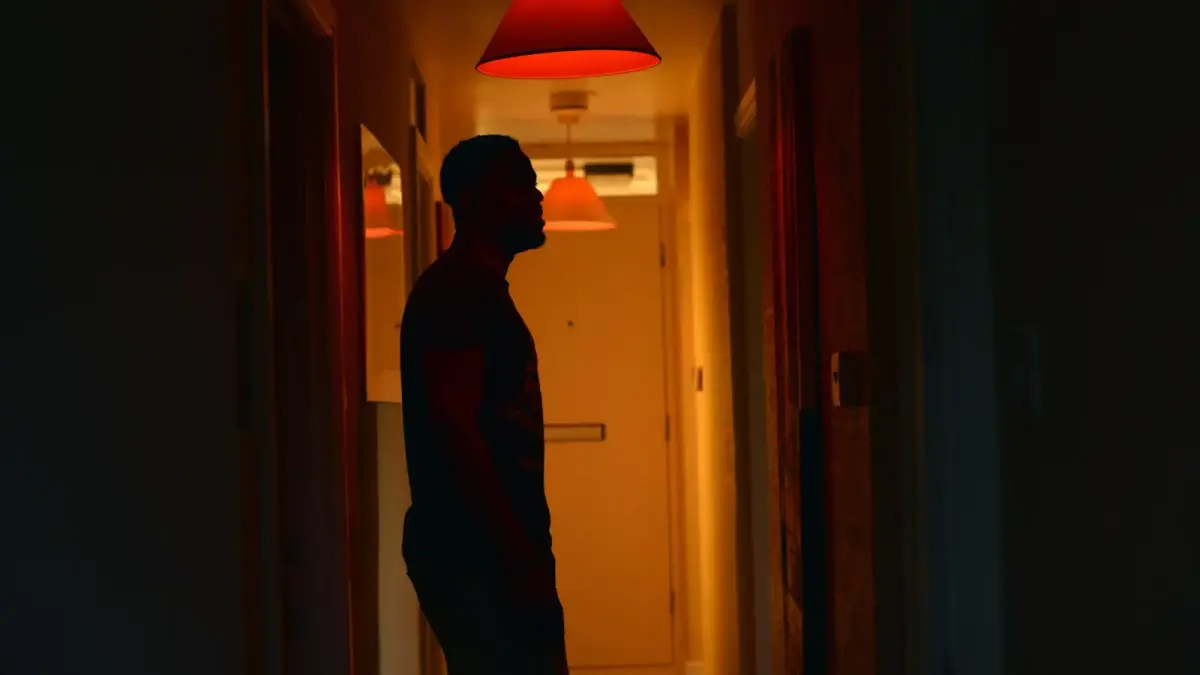
I was seven the first time I walked down the hallway alone.
The carpet was beige. The light coming from under the door was yellow and thin. I remember my hand looked impossibly small when I raised it to knock, and I remember thinking - even then, even at seven - that I needed to knock softly enough that it wouldn’t sound like a demand. It had to sound like an invitation. Like I was giving permission to be okay rather than asking for proof of it.
I whispered “are you okay?” and waited in that hallway for what felt like an hour. It was probably eleven seconds. And in those eleven seconds, something in my nervous system made a decision that would shape the next three decades of my life: someone behind a closed door is your responsibility. You don’t get to sit down until you know.
I didn’t have a word for it then. I don’t think most of us did. We just knew the hallway, the door, and the quiet that meant something was wrong. And we knew - somehow, without anyone telling us - that we were the ones who were supposed to fix it.
If you were that child, what I’m about to describe will feel less like reading and more like being recognized.
1. You scan every room for the person who seems “off”
You walk into a dinner party, a work meeting, a family gathering - and before you take off your coat, you’ve already done it. Your eyes have swept the room. Not for threats, exactly. For the person whose energy is slightly wrong.
The colleague whose laugh is half a beat late. The friend who’s standing near the food table but hasn’t eaten anything. Your partner’s mother whose posture changed when someone mentioned the holidays.
You catch it all, instantly, without trying.
A 2001 study published in the journal Development and Psychopathology found that children who served as emotional caregivers for their parents developed heightened perceptual sensitivity to emotional cues - they became, in the researchers’ language, “expert readers” of micro-expressions and mood shifts. Not because they were gifted. Because they had to be.
Your ability to read a room in two seconds isn’t a personality trait. It’s a survival skill you built in a hallway outside a locked door, and it still runs in the background every time you walk into a space with other humans in it.
2. You notice when someone’s smile doesn’t reach their eyes
Most people see a smile and accept it. You see a smile and cross-reference it against the person’s posture, their voice, the way their hands are resting, whether they laughed at the last joke or just nodded.
You do this automatically. You’ve been doing it since you were small enough that you had to read your parent’s face to know whether it was a good day or a day you’d need to be very, very careful.
The thing about growing up as the emotional first responder is that you learned early that people’s words and their internal states don’t always match. Your parent said “I’m fine” while their eyes were swollen. They said “go play” while their voice was flat as paper. You learned to ignore language and read the body instead.
Now, as an adult, you notice the micro-disconnect between someone’s mouth and their eyes the way a musician notices a note that’s slightly flat. It registers before you even process it consciously. And once you’ve noticed, you can’t un-notice. You’ll carry it with you for the rest of the evening, turning it over, wondering if you should say something.
3. You can’t enjoy a gathering until you’ve quietly checked on the one person who seems withdrawn
Here’s the scene: everyone is laughing. The music is right. The food is good. You should be having a wonderful time. But there’s one person on the edge of the group who’s been quiet for fifteen minutes, and until you’ve found a way to gently drift over and make contact - a soft question, a warm comment, some small bridge - you can’t actually settle into the evening.
Your friends might call this being thoughtful. And it is thoughtful. But it’s also compulsory.
You aren’t choosing to check. You are unable to not check. The quiet person in the corner activates the same part of your nervous system that activated when you stood outside your parent’s door at seven. Someone is withdrawn. Someone might be falling apart. And if you don’t go check, who will?
The answer, of course, is that other adults can take care of themselves. But the child in you - the one who learned that withdrawn meant dangerous, that quiet meant emergency - doesn’t believe that yet. Maybe hasn’t ever been given a reason to.
4. You ask “are you okay?” more than any other question in your life
You ask your partner when they pause too long before answering a question. You ask your coworker when they seem distracted on a call. You ask your friend when their text is shorter than usual.
You ask it gently. You ask it sideways sometimes - “how are you doing, really?” or “you seem a little quiet today” - because you learned early that the direct version can make people defensive, and the last thing you want is for someone to lock a door between you and them again.
A 2014 study in the Journal of Family Psychology found that adults who had been parentified as children reported significantly higher rates of what the researchers called “compulsive caregiving” - a pattern in which attending to others’ emotional states felt not like a choice but like a biological imperative. The nervous system, wired in childhood, continued to treat other people’s emotional distress as a personal emergency well into adulthood.
You know this pattern. You live inside it. “Are you okay?” isn’t just a question for you. It’s the first sentence you ever learned to mean “I’m here, please don’t disappear.”
5. You feel personally responsible when someone around you is struggling
Your friend is going through a divorce and you can’t sleep. Your sister seems stressed and you rearrange your entire week to be available. A coworker cries in a meeting and you carry a low hum of guilt for days, wondering if you could have noticed sooner, said something sooner, done something to prevent it.
The weight of other people’s pain doesn’t just touch you. It lands on you. It becomes yours.
This is what happens when your original job - your very first role in your family - was to be the person who caught the falling. You were three feet tall and someone’s emotional safety net, and your brain took that assignment and made it permanent. It generalized. It went from “I need to make sure Mom is okay” to “I need to make sure everyone is okay, everywhere, always.”
The exhaustion you feel at the end of a normal day - the kind where nothing bad even happened - isn’t weakness. It’s the cost of running a surveillance system that was installed before you started first grade.
6. You have a physical reaction to closed doors
This one is hard to explain to people who didn’t grow up this way.
A closed bathroom door at a party. A bedroom door shut during a family visit. Your partner closing the door to take a phone call. Something in your chest shifts. Your breathing changes. You might not even realize it’s happening until you notice that you’ve been standing near the door, listening for sounds, waiting for evidence that the person behind it is fine.
It isn’t rational. You know that. You’re a grown adult and you understand, intellectually, that people close doors for a thousand ordinary reasons. But your body learned its lessons before your intellect came online, and the body doesn’t forget.
Dr. Bessel van der Kolk’s research on somatic memory has shown that traumatic or high-stress childhood experiences are stored not just as thoughts but as physical patterns - muscle tension, breathing changes, autonomic nervous system activation. The closed door isn’t just a closed door to your body. It’s the original scene. The hallway. The thin yellow light. The not knowing.
Your body is still standing outside that door. It never left.
7. A locked door in your own home can make your chest tighten
This is the more intimate version. Not a door at a gathering, but the bathroom door in your own house. Your partner locks it - completely normal, completely reasonable - and something old and heavy rolls through your stomach.
You might hover near the hallway. You might find a reason to call out - “do you need anything?” - not because they need anything but because you need to hear their voice. You need proof of life. You need the sound of someone being okay behind a closed door because you spent too many childhood evenings without it.
Some of us have spent years learning not to react to this trigger. We’ve taught ourselves to breathe through it, to name it, to remind the child inside us that this is a different house, a different door, a different life. But the fact that we had to teach ourselves something that other people never think about - that’s the part that deserves tenderness. That’s the part that tells you how deep this goes.
8. You confuse vigilance with love
This might be the most important one.
When you grew up as the child who checked, who monitored, who scanned and assessed and quietly held the emotional pulse of the household, you learned a very specific definition of love. Love meant watching. Love meant noticing. Love meant never, ever letting someone fall apart without you there to witness it.
And so now, as an adult, you love people by monitoring them. You love your partner by tracking their moods. You love your friends by noticing every shift in their energy. You love your children by being so attuned to their emotional states that you sometimes know they’re upset before they do.
And it is love. It genuinely is.
But it’s also exhaustion. It’s also a cage. Because you’ve never learned how to love someone without watching them, and you’ve never learned how to be in a room without working. Every gathering is a shift. Every relationship is a post you’re manning. You don’t know what it feels like to just be somewhere - not monitoring, not assessing, not quietly holding the room together - because you’ve never been allowed to find out.
The vigilance kept your family together when you were small. It was brilliant. It was necessary. You did something extraordinary, and no one ever told you that.
But you were never supposed to be the one holding it.
You were seven. You were standing in a hallway. You were knocking softly on a door and whispering words that no child should have had to say first.
And the fact that you’re still doing it - still scanning, still checking, still arriving at every room in your life and immediately looking for the person who needs you - doesn’t mean something is wrong with you.
It means something happened to you. Something that asked too much of a very small person. And that small person rose to it, perfectly, every single time.
The work now isn’t to stop caring. You couldn’t if you tried, and you shouldn’t have to. The work is to learn that you’re allowed to sit down. That the room can hold itself. That people can close doors and be fine behind them, and that your job - your only job, the one you were always owed and never given - is to be one of the people in the room who gets to be okay too.
You spent your childhood making sure everyone else was alright.
You’re allowed to check on yourself now.