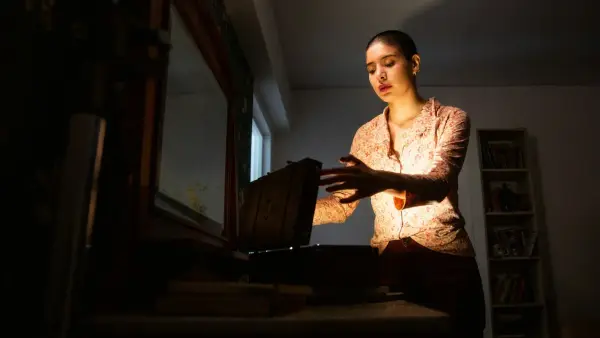
Children who were told 'wait until your father gets home' - who spent entire afternoons measuring every remaining minute by a sentence their mother delivered without raising her voice, who watched the clock and listened for the car and rehearsed explanations that might soften what was coming - often become adults who experience the worst part of any conflict not during the confrontation itself but in the hours before it arrives, because a child who learned that consequences were always deferred, always gathering force in a room she could not see, built a nervous system that treats anticipation as the punishment and the actual event as something close to relief
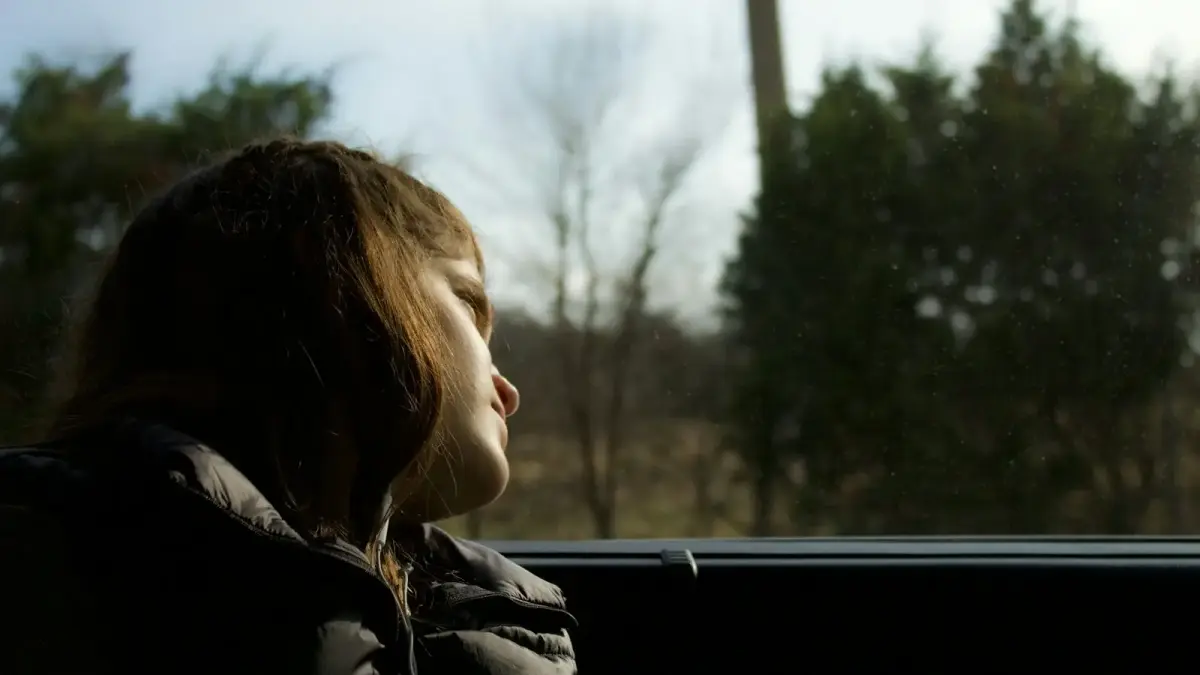
I remember the kitchen clock. It was round, white, cheap - the kind you buy at a hardware store. It had a second hand that didn’t glide but ticked, hard and deliberate, each movement a small snap that filled the entire room.
I was nine. I’d broken a lamp in the living room. Not through rebellion or carelessness, really - I was doing a cartwheel where cartwheels should not be done. My mother stood in the doorway, looked at the shattered glass on the carpet, and said seven words that rearranged the rest of my afternoon.
“Wait until your father gets home.”
She didn’t yell. She didn’t need to. The sentence itself was the mechanism. It took everything that was about to happen and moved it to a place I couldn’t reach - somewhere in the future, behind a door I couldn’t open, attached to the sound of a car engine I hadn’t heard yet. And then she went back to folding laundry, and I sat at the kitchen table and watched that clock tick for three hours.
The punishment wasn’t the conversation with my father. It never was. The punishment was every single minute between the sentence and the sound of his key in the lock.
The architecture of waiting
Most people assume that discipline happens in the moment of confrontation. The raised voice, the stern lecture, the consequence delivered. But for millions of children, the real discipline happened in the silence between the warning and the event.
“Wait until your father gets home” was never just a sentence. It was a temporal structure. It divided the day into before and after, and it trapped the child inside the before - a space where nothing had happened yet but everything was about to.
The child couldn’t resolve it. Couldn’t apologize and move on. Couldn’t face the consequence and begin recovering. Instead, the child sat inside the anticipation itself, which stretched and thickened and became something much larger than whatever the original offense had been.
A broken lamp became an entire afternoon of dread. A bad grade became three hours of rehearsing explanations. A sibling argument became an evening of listening for tires on gravel.
The consequence was always gathering force somewhere the child could not see. And the child’s only job was to wait and imagine how bad it might be.
What the nervous system learned
Here is what a child’s body does when consequence is deferred: it stays activated. The stress response fires - cortisol, adrenaline, the full alarm system - but there is no event to respond to. No lion to run from. No confrontation to navigate. Just time.
A 2004 study published in Psychoneuroendocrinology found that anticipatory stress - the stress of expecting a threatening event - produces cortisol patterns that are often more intense and more sustained than the stress of the event itself. The body prepares for the worst-case scenario because it has no information to calibrate against. It fills the unknown with maximum threat.
For a child, this is formative. The nervous system isn’t just responding to one afternoon of waiting. It’s building a template. It’s learning a fundamental lesson about how the world works: danger is not what happens to you. Danger is what hasn’t happened yet.
This is not a lesson the child chooses to learn. It installs itself automatically, the way language does, the way a flinch does. The body simply records: when consequence is announced but delayed, prepare for the worst and maintain that preparation indefinitely.
The rehearsal room
There’s a specific behavior that children in deferred-punishment households develop, and it follows them into adulthood with remarkable consistency. I call it rehearsal.
The child sits in her room after the sentence has been delivered and begins constructing scripts. She rehearses what she’ll say. She anticipates questions and prepares answers. She imagines different versions of the confrontation - the mild version, the moderate version, the catastrophic version - and she practices responses for each one.
She tries to predict her father’s mood from insufficient data. Was it a good day at work? Will he be tired? Will he have already heard from her mother, or will the telling happen in real time? Each variable creates a new branch of possibility, and she follows every branch to its end.
By the time the actual confrontation arrives, she has lived through it dozens of times. She has experienced twenty versions of the conversation, eighteen of which were worse than reality. The real event, when it finally comes, feels almost anticlimactic.
And this is the part that shapes everything: the relief she feels when the confrontation finally happens is enormous. Not because the outcome is good, necessarily. But because the waiting is over. The anticipation has ended. The thing she feared has arrived, and it is smaller than what she built in her mind.
Her body learns: waiting is worse than reality. Always.
The adult pattern
If you grew up this way, you probably recognize yourself in situations like these.
Your partner says, “We need to talk tonight.” It is 9 a.m. You have eleven hours before tonight. By hour two, you’ve already decided what the conversation is about, how it will go, and what it means for the relationship. By hour six, you’ve rehearsed your defense, anticipated their counterarguments, and emotionally processed a breakup that hasn’t happened and probably won’t.
By the time “tonight” arrives, you’re exhausted. You’ve already suffered through the worst-case scenario so many times that the actual conversation - which turns out to be about the vacation budget - feels like nothing. You’re relieved. Almost giddy. And your partner is confused because you seem strangely calm about a topic they expected you to have opinions about.
Or this: your boss sends an email on Friday afternoon that says, “Let’s connect Monday morning.” Two words that are probably routine. But your nervous system reads them as deferred consequence, and your entire weekend becomes a rehearsal room. You run scenarios. You update your resume, just in case. You can’t enjoy Saturday because Monday is gathering force somewhere you can’t see.
A 2019 study in the Journal of Anxiety Disorders found that individuals with high anticipatory anxiety often report that the period before a stressful event is significantly more distressing than the event itself. The researchers noted that these individuals tend to overestimate threat magnitude during anticipatory periods, generating emotional responses to scenarios that never materialize.
This isn’t a disorder in the clinical sense for most people. It’s a pattern - a deeply grooved neural pathway that was carved in childhood and reinforced every time consequence was separated from cause by a stretch of empty, terrifying time.
The quiet math of hypervigilance
Children who waited for deferred punishment became experts in environmental scanning. They learned to read micro-expressions, tone shifts, the weight of a footstep on the stairs. They could gauge a parent’s mood from the sound of the car door closing - was it a firm close or a slam? Each sound carried data. Each silence carried more.
This is hypervigilance, and in childhood it’s adaptive. It’s a survival skill. The child who can predict the severity of what’s coming can prepare accordingly, can adjust her script, can modulate her own behavior to minimize damage.
But in adulthood, this same skill becomes a kind of quiet exhaustion. You’re always reading the room. Always measuring the emotional temperature. Always listening for the car in the driveway - metaphorically, at least. A slight change in your partner’s texting pattern and your body goes on alert. A coworker’s clipped tone in a meeting and your mind begins its calculations.
Dr. Bessel van der Kolk, in his work on how trauma shapes the body, has described how the nervous system can become organized around the expectation of threat rather than the experience of safety. For children raised with deferred punishment, the threat was never sudden. It was scheduled. And a body that learned to prepare for scheduled threat becomes a body that is always preparing, even when nothing is scheduled at all.
Why the event feels like relief
This is the part that confuses people who didn’t grow up this way. They can’t understand why you seem almost calm during the actual difficult conversation, the actual conflict, the actual bad news. They watched you spiral for three days beforehand, and now that the thing is here, you’re steady.
It’s because the event was never the hard part. The anticipation was the hard part. The event is just the end of the anticipation.
Your nervous system spent hours, sometimes days, at full activation. It flooded your body with stress hormones. It ran simulations. It prepared for every possible outcome. And now that the outcome is here - now that it is real and concrete and knowable - the system can finally stand down. The unknown has become known. The car has pulled into the driveway. The footsteps are on the stairs.
There’s a strange comfort in the arrival of the thing you feared. Not because it’s pleasant, but because it’s here. You can deal with what’s here. You never could deal with what was coming.
The sentence that changed time
What “wait until your father gets home” really taught a child was not about fathers, or punishment, or obedience. It taught the child something about time itself.
It taught her that the present moment is not safe. That right now is just the space before the bad thing. That the future holds something she should be afraid of, and her job is to sit in the present and be afraid of it in advance.
This is why, decades later, you struggle to be present. Not because you don’t understand mindfulness, not because you haven’t read the books or tried the apps. But because your nervous system was trained - in the most literal, physiological sense - to live in the next hour, the next day, the space where the unresolved thing is waiting.
You are not anxious because something is wrong with you. You are anxious because you were taught, very early, that the space between a warning and its consequence is the most dangerous place to be. And your body never stopped believing that was true.
Finding your way back to now
If you recognize yourself in this - if you’ve spent your adult life experiencing the worst part of every conflict before the conflict even begins - I want you to know something that might take a while to land.
The car has already pulled into the driveway. The conversation has already happened. You survived every single one of those afternoons. Every rehearsal, every worst-case scenario, every silent hour of watching the clock - you came through all of it.
The thing your nine-year-old self couldn’t know, sitting at that kitchen table, is that the waiting would end. That it always ends. That the future she feared would become the present, and the present was always, always more manageable than what she’d imagined.
You can start to notice when your body enters the rehearsal room. When “we need to talk” sends you into three hours of script-writing. When a vague email triggers a weekend of preparation. You can notice it, name it, and gently remind your nervous system that you are no longer a child sitting at a kitchen table with no power and no information.
You have power now. You have information. You can ask, “What do you want to talk about?” You can respond to the email. You can close the gap between the warning and the event, because you are no longer a child who has to wait.
The clock is still ticking. But you don’t have to count the minutes anymore.