Children who always tracked when their parents would get home - who watched for headlights on the ceiling, who listened for the engine in the driveway, who could not fall asleep until the front door opened and a particular set of footsteps crossed the kitchen floor - often become adults who say 'text me when you get home' to everyone they love, because a child who appointed themselves the household lighthouse never learned how to turn the beam off
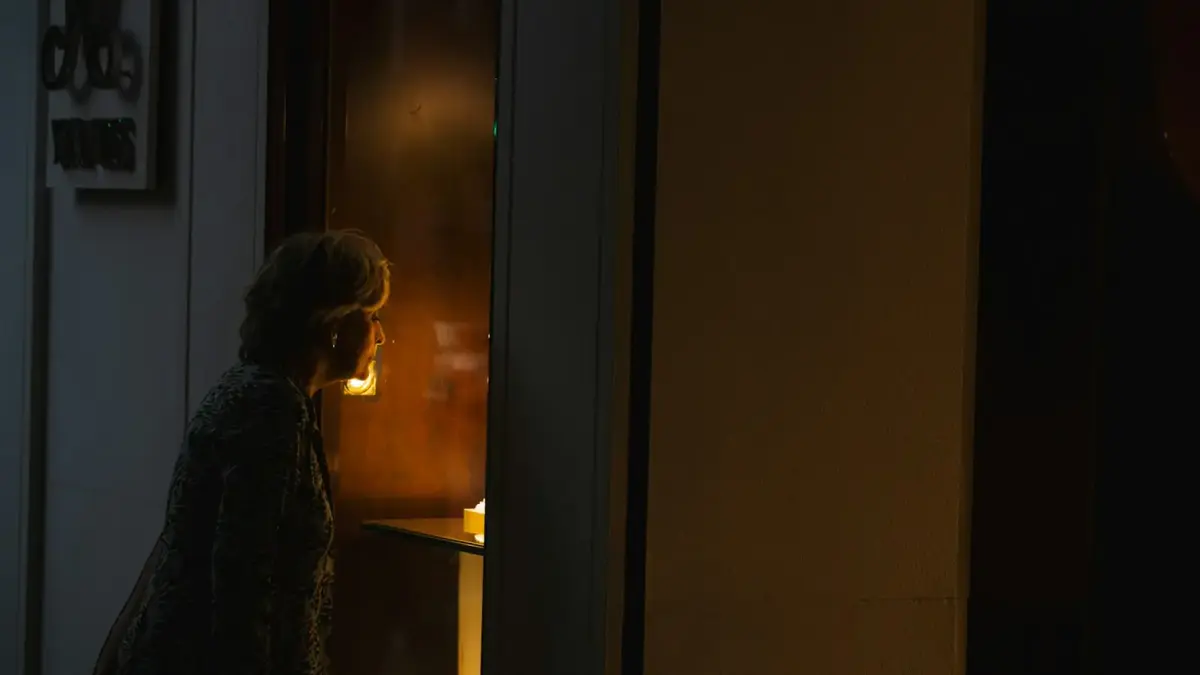
I was nine years old, lying in my bed with my eyes wide open, when I first realized I could identify my mother’s car by the sound of its engine alone.
Not just any car. Her car. The slight rattle in the exhaust pipe. The way the transmission whined a little when she pulled into the driveway. The specific rhythm of her door opening and closing - always two sounds, because she’d open it, pause to grab her bag, and then shut it with her hip.
I had the whole sequence memorized. Engine off. Door open. Pause. Door shut. Keys jangling. Front door lock turning. Footsteps across the kitchen tile. And only then - only after every single note in that symphony played in the right order - could my body unclench enough to let me fall asleep.
I didn’t know I was doing anything unusual. I thought every kid lay awake cataloguing the sounds of their parents’ arrival. I thought everyone’s ears were tuned to that frequency.
It took me thirty years to understand that what I’d built wasn’t a bedtime ritual. It was a surveillance system. And it never got decommissioned.
The sensory architecture of waiting
If you were one of these children, you already know exactly what I’m describing. You don’t need me to explain it. Your body remembers.
The headlights sweeping across the ceiling of your bedroom. That slow arc of light that meant someone was turning into the driveway. You learned to distinguish between a car passing by and a car pulling in. The angle was different. The speed was different. Your nervous system learned the geometry of arrival before you ever took a math class.
The sound of tires on gravel, or the specific pitch of a garage door opening. The weight of particular footsteps on the stairs - because you knew who each person was by how they walked. Dad was heavy and even. Mom was quick and light. A stranger’s footsteps would have sent your heart into your throat.
You built a catalog of sensory data without ever being asked to. Nobody assigned you this job. Nobody sat you down and said, “Your role in this family is to monitor everyone’s physical location at all times.”
You just… started doing it. Because something in the emotional weather of your household told your nervous system that someone needed to keep watch.
Why some children become the lighthouse
Not every child develops this pattern. It tends to emerge in households where a parent’s arrival was emotionally significant - and I don’t necessarily mean dramatic.
Sometimes it was a parent who worked late, and the house felt incomplete without them. Sometimes it was a parent whose mood upon arrival determined the temperature of the entire evening. Sometimes it was a parent who struggled with something the child couldn’t name but could feel - depression, addiction, marital unhappiness - and their safe return each night was never quite guaranteed in the child’s mind.
A 2015 study published in the Journal of Research in Personality found that children who exhibited heightened vigilance toward parental cues often developed what researchers called “ambient monitoring” - a low-grade, persistent scanning of their environment for signals about the emotional and physical status of attachment figures.
This isn’t the same as acute anxiety. It’s quieter than that. It’s a background process, like an app running on your phone that you forgot you installed. It drains the battery, but you don’t notice because it’s been running so long you think that’s just how much battery life you have.
The child doesn’t think of themselves as anxious. They think of themselves as responsible. Attentive. The one who notices things.
And in a way, they’re right. They did notice things. They noticed everything. That was the whole problem.
The monitoring system migrates
Here is where it gets interesting. The child grows up. They leave that house. They build their own life, their own relationships, their own home.
But the monitoring system doesn’t know the mission is over.
So it finds new targets. A partner who drives home from work. A teenager who goes out with friends. A parent who’s aging. A sibling across the country. A best friend who mentioned feeling down last Tuesday.
“Text me when you get home.”
You’ve said it. You’ve said it to everyone. You’ve said it to people you barely know - a coworker after a happy hour, a neighbor after a late walk. You’ve said it and meant it with every cell in your body, and if they don’t text, something in your chest starts to tighten in a way you can’t fully explain.
Because the monitoring system doesn’t distinguish between your mother’s car in 1987 and your daughter’s car in 2026. It only knows one thing: someone you love is out in the world and unaccounted for, and you cannot rest until they are not.
Research by developmental psychologist Mary Main and her colleagues on what’s known as the hyperactivation of the attachment system describes exactly this phenomenon. When a child’s attachment needs are met inconsistently - not necessarily neglected, just unpredictable - the nervous system learns to stay activated. It keeps the alarm on low, all the time, because it learned early that letting your guard down was when things went wrong.
The cost nobody talks about
People who carry this pattern pay a tax that’s almost invisible because it looks like virtue.
They’re the thoughtful friend. The caring partner. The parent who always worries but “in a sweet way.” Nobody sees it as a burden because it presents as love. And it is love. That’s what makes it so complicated.
But there’s a cost. You can’t fully relax when someone you care about is in transit. You do the math on how long a drive should take, and if they’re fifteen minutes past your internal estimate, your body starts preparing for something terrible. You check your phone. You check it again. You imagine the phone call. You rehearse what you’d do.
A 2021 study in Frontiers in Psychology found that adults who reported high levels of childhood vigilance showed elevated cortisol responses not during actual stressful events, but during ambiguous waiting periods - moments when the outcome was unknown. Their stress response had been calibrated not for danger, but for uncertainty.
That distinction matters enormously. You’re not afraid of bad news. You’re afraid of no news. The silence is where your nervous system learned to write its worst stories.
And so you fill the silence. “Just let me know you’re safe.” “Call me when you land.” “Text me when you get home.” These phrases aren’t requests. They’re pressure valves. They’re the only way you know to turn the alarm down for a few minutes.
What your partner doesn’t understand
If you’re with someone who didn’t grow up this way, there’s a conversation you’ve probably had more than once.
“You’re being controlling.”
Or: “You worry too much.”
Or the one that cuts the deepest: “Don’t you trust me?”
And you want to explain that it has nothing to do with trust. Nothing to do with control. You trust them completely. You’re not worried about what they’re doing. You’re worried about the space between when they left and when they arrive. That space - that gap of not-knowing - is where your childhood taught you to expect the worst.
But that’s a hard thing to articulate when you’re standing in the kitchen at 11 p.m. with your phone in your hand and your jaw clenched, trying to look casual.
Gabor Mate has written extensively about how the body stores what the mind tries to forget. The child who waited for headlights on the ceiling may not consciously remember the feeling of that waiting. But their body remembers. Their nervous system remembers. Every departure activates the old program, and no amount of rational thought can fully override what was installed before rational thought even came online.
The reframe you deserve
Here is what I want you to hear, if any of this sounds like your story.
You are not anxious. You are not controlling. You are not “too much.”
You are a person whose nervous system learned, very early, that love required monitoring. That care meant keeping watch. That the price of connection was eternal vigilance.
You became your family’s lighthouse. You kept the beam sweeping across the dark water because you believed - and maybe you were right - that if you stopped watching, someone might not make it home.
That was an extraordinary act of love from a very small person. You should know that. A child who teaches themselves to identify a car engine by sound, who maps the geometry of headlights on a ceiling, who builds a complete auditory profile of a parent’s arrival - that child did something remarkable. They built an entire early warning system out of nothing but devotion and fear.
The only problem is that lighthouse keepers don’t get to sleep. And you’ve been awake for a very long time.
A 2019 study in Psychological Science found that people with heightened attachment vigilance could learn to recalibrate their nervous system responses - not by suppressing the impulse to monitor, but by gradually building what the researchers called “earned security.” The monitoring doesn’t disappear. But it gets quieter. It learns, slowly, that the people you love can leave and still come back without you watching the entire time.
You don’t have to stop saying “text me when you get home.” That’s a beautiful sentence. It means I love you and the world is uncertain and I want to know you’re okay.
Just know where it comes from. Know that the child in you who couldn’t sleep until they heard those footsteps in the kitchen - that child did the best they could. They kept watch because nobody told them they didn’t have to.
And maybe, after all these years, someone should.
You can rest now. They made it home.